
In our manufacturing operations, we encountered a critical machining quality issue with a QT500-7 nodular cast iron wheel hub. During the machining process, a dimensional deviation occurred in a key installation hole, rendering the assembly unfit for use. Scrapping the component would have led to significant financial losses and delayed product delivery. After thorough analysis of the hub’s structure and the welding characteristics of QT500-7 nodular cast iron, we decided to employ a welding repair method. This approach not only salvaged the component but also ensured it met all performance requirements. The success of this repair underscores the importance of understanding the material properties and applying precise welding techniques for nodular cast iron components.
Nodular cast iron, particularly grade QT500-7, is widely used in automotive and heavy machinery parts due to its excellent combination of strength, ductility, and castability. However, its welding presents unique challenges. In this article, I will detail our comprehensive approach, from structural analysis to practical implementation, highlighting how we overcame these challenges. We will explore the welding metallurgy of nodular cast iron, the selection of appropriate filler materials, and the meticulous process controls that ensured a successful repair. Throughout, we emphasize the role of nodular cast iron in industrial applications and how its properties influence repair strategies.
The wheel hub in question is a critical component designed for heavy-duty use. Its structure includes a deep installation hole with specific dimensions that must be precise for proper assembly. The machining error resulted in an oversized diameter, which could not be corrected by further machining alone. The shallow depth of the affected area made it suitable for welding repair, but we had to ensure that the repair did not compromise other machined dimensions or the hub’s overall integrity. This required a deep dive into the welding behavior of nodular cast iron.
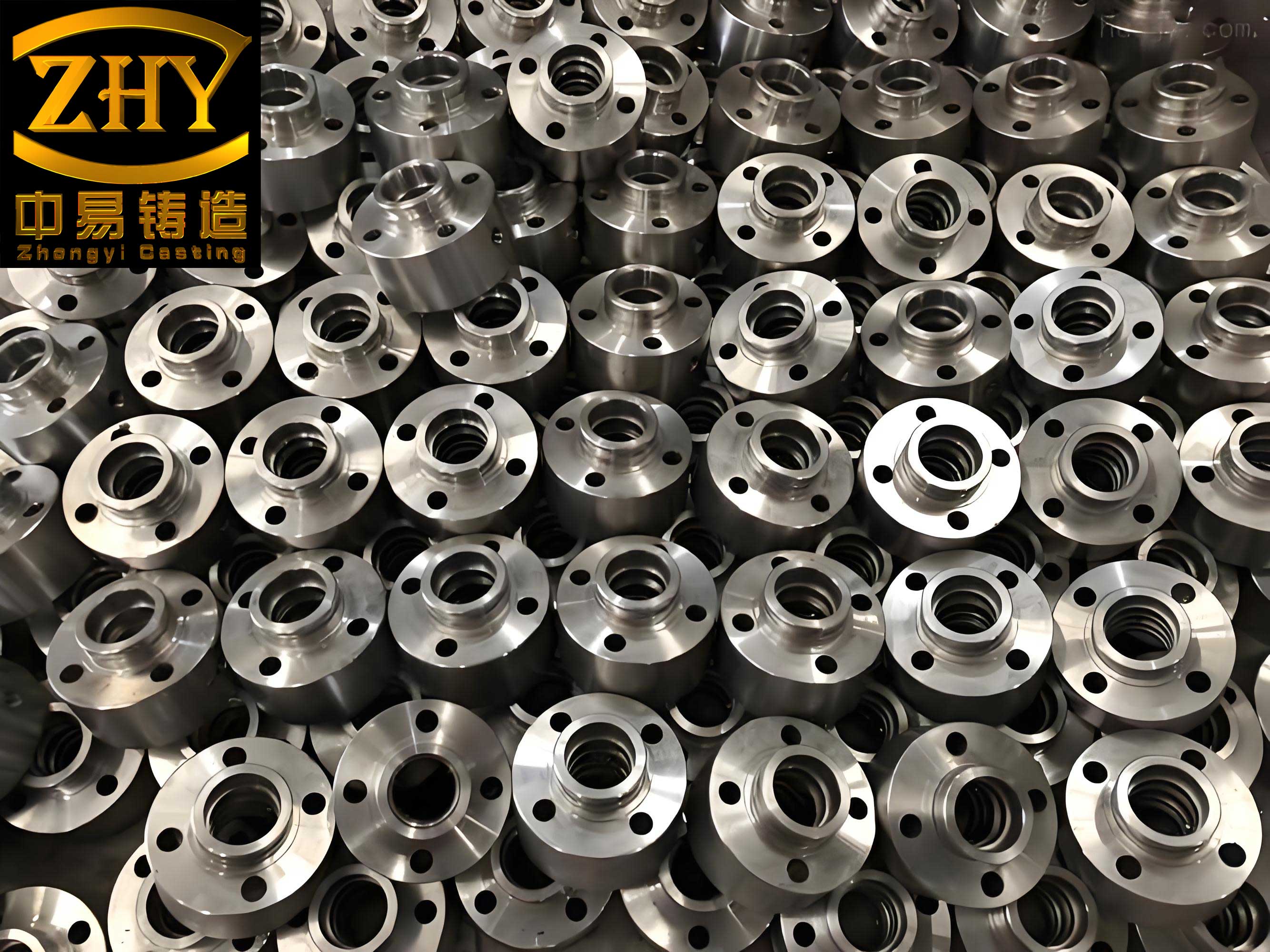
Nodular cast iron, such as QT500-7, derives its properties from its microstructure, which consists of graphite nodules in a ferritic-pearlitic matrix. This structure provides good tensile strength and elongation, but it is sensitive to thermal cycles during welding. The primary issues in welding nodular cast iron are the formation of white iron (cementite) and hardening phases in the heat-affected zone (HAZ), as well as the propensity for cracking due to residual stresses. To address these, we must consider both material selection and process parameters.
The welding of nodular cast iron involves complex metallurgical transformations. When heated during welding, the carbon in the base material can dissolve into the weld pool, leading to high carbon content in the fusion zone. Upon rapid cooling, this can result in the formation of hard, brittle phases like martensite or cementite. The cooling rate, $T(t)$, during welding is critical and can be approximated by the following equation for thin sections: $$ T(t) = T_0 + (T_{\text{peak}} – T_0) \cdot e^{-\alpha t} $$ where $T_0$ is the initial temperature, $T_{\text{peak}}$ is the peak temperature, $\alpha$ is a cooling coefficient, and $t$ is time. For nodular cast iron, controlling this cooling rate is essential to avoid undesirable phases.
Additionally, the risk of cracking in nodular cast iron welds is high due to thermal stresses. The stress development, $\sigma$, can be related to the thermal gradient, $\nabla T$, and material properties like the coefficient of thermal expansion, $\beta$, and Young’s modulus, $E$: $$ \sigma \approx E \cdot \beta \cdot \nabla T $$ Minimizing these stresses through process controls is key to successful repair. The following table summarizes the key challenges and mechanisms in welding nodular cast iron:
| Challenge | Mechanism | Impact on Nodular Cast Iron |
|---|---|---|
| White Iron Formation | Rapid cooling leads to cementite (Fe$_3$C) precipitation | Increased hardness, brittleness, and poor machinability |
| Martensite Formation | High carbon content and fast cooling result in martensitic transformation | High hardness and susceptibility to cracking |
| Thermal Cracks | Low melting point eutectics form due to impurities (S, P) with Ni | Cracks along grain boundaries during solidification |
| Cold Cracks | High residual stresses and brittle phases in HAZ | Delayed cracking, often in weld or HAZ |
To mitigate these issues, we focused on selecting a filler material that would provide a good match to the base nodular cast iron while offering superior ductility. For QT500-7 nodular cast iron, we chose a nickel-based electrode, specifically Z408, which is known for its ability to weld cast irons. The mechanical properties of QT500-7 nodular cast iron and Z408 electrode are compared below:
| Material | Tensile Strength (MPa) | Yield Strength (MPa) | Elongation (%) | Hardness (HBW) |
|---|---|---|---|---|
| QT500-7 Nodular Cast Iron | ≥ 500 | ≥ 320 | ≥ 7 | 170–230 |
| Z408 Electrode | ≥ 490 | ≥ 385 | ≥ 14 | — |
As seen, the Z408 electrode offers higher elongation, indicating better ductility, while maintaining comparable strength to the nodular cast iron base. This is crucial for absorbing welding stresses and preventing crack propagation. The nickel content in Z408 also helps in reducing the carbon migration and minimizing the formation of hard phases in the weld zone.
For the welding process, we opted for shielded metal arc welding (SMAW), commonly known as stick welding, due to its flexibility and low heat input capabilities. The process parameters were carefully controlled to minimize heat input, $Q$, which can be calculated as: $$ Q = \eta \cdot V \cdot I \cdot t $$ where $\eta$ is the arc efficiency, $V$ is voltage, $I$ is current, and $t$ is time. For nodular cast iron, a low heat input is preferred to reduce the cooling rate and thermal stresses. We used a current range of 80–120 A with a 3.2 mm diameter Z408 electrode, ensuring stable arc conditions.
The repair procedure involved several critical steps. First, the welding area was thoroughly cleaned to remove any oils or moisture, which could introduce hydrogen and lead to cracking. Preheating was avoided to prevent distortion of other machined dimensions, but local heating with an oxyacetylene torch was used to drive off residual moisture, followed by cooling to below 60°C before welding. This temperature control is vital for nodular cast iron to avoid phase transformations.
During welding, we employed a technique known as “cool welding” or “cold welding,” which involves short, intermittent welds to manage heat accumulation. Each weld segment was limited to 40 mm in length, and after depositing a segment, we immediately peened the weld with a small hammer to relieve residual stresses. The peening action helps in plastically deforming the weld metal, reducing stress concentrations. The interpass temperature was strictly maintained below 60°C to prevent overheating of the nodular cast iron base material.
To further distribute heat and minimize distortion, we used a staggered welding sequence. The weld was divided into 30 segments around the circumference, and welding was performed in a backstep manner, moving in the opposite direction of the overall progression. This approach, combined with rotation of the hub, ensured uniform heat distribution. The sequence can be represented as a set of instructions: weld segments 1–3, rotate 180°, weld segment 4, rotate 90°, weld segment 4, rotate 180°, weld segment 4, and repeat until all segments are filled. This method effectively reduces the peak temperatures in the nodular cast iron.
The success of welding nodular cast iron also depends on understanding the carbon equivalent (CE) of the material, which influences hardenability. For nodular cast iron, the carbon equivalent can be approximated using the formula: $$ \text{CE} = \text{C} + \frac{\text{Si} + \text{P}}{3} $$ where C, Si, and P are the weight percentages of carbon, silicon, and phosphorus, respectively. For QT500-7, the typical CE is around 4.3–4.5, indicating a high propensity for carbide formation. By using a nickel-based electrode, we lowered the effective CE in the weld metal, reducing the risk of white iron formation.
Post-welding, the hub was allowed to cool slowly to room temperature, avoiding any forced cooling that could induce stresses. Once cooled, the repaired area was machined back to the required dimensions. The final inspection confirmed that the weld repair met all mechanical and dimensional specifications. The hub was successfully assembled and tested in the field, validating the repair approach for nodular cast iron components.
In conclusion, the repair of QT500-7 nodular cast iron wheel hub via welding is a feasible solution when guided by a thorough understanding of material behavior and precise process controls. The key takeaways include the selection of a ductile filler material like nickel-based electrodes, the use of low heat input techniques, and the implementation of stress-relief measures such as peening and temperature management. Nodular cast iron, with its unique microstructure, requires careful handling during welding, but with the right strategies, it can be effectively repaired without compromising performance. This experience highlights the importance of adapting welding practices to the specific needs of nodular cast iron in industrial applications.
To further elaborate on the welding metallurgy of nodular cast iron, we can consider the phase transformations during heating and cooling. The continuous cooling transformation (CCT) diagram for nodular cast iron shows that rapid cooling from the austenite region can lead to the formation of pearlite, bainite, or martensite, depending on the cooling rate. The critical cooling rate, $V_c$, to avoid martensite can be estimated from the CCT diagram. For nodular cast iron, $V_c$ is relatively low due to its high carbon content, emphasizing the need for slow cooling during welding.
Another aspect is the effect of graphite nodules on welding. In nodular cast iron, the graphite nodules act as stress risers, which can initiate cracks under thermal stresses. During welding, the heat-affected zone may experience graphitization or decarburization, altering the nodule morphology. This can be modeled using diffusion equations, such as Fick’s law: $$ J = -D \frac{\partial C}{\partial x} $$ where $J$ is the diffusion flux, $D$ is the diffusion coefficient, and $\frac{\partial C}{\partial x}$ is the concentration gradient. In welding, carbon diffusion from the base metal into the weld pool can affect the microstructure, so controlling the thermal cycle is essential.
We also evaluated alternative welding methods for nodular cast iron, such as gas tungsten arc welding (GTAW) or brazing, but SMAW was chosen for its cost-effectiveness and ease of application in our facility. However, for critical applications, preheating and post-weld heat treatment (PWHT) might be considered to further reduce stresses in nodular cast iron welds. PWHT involves heating the component to a temperature below the eutectoid point (around 550–650°C) and holding for a specified time, then cooling slowly. This can temper martensite and relieve residual stresses, but it was not necessary in our case due to the successful cold welding technique.
The table below summarizes the recommended welding parameters for repairing QT500-7 nodular cast iron using Z408 electrode:
| Parameter | Value | Rationale |
|---|---|---|
| Electrode Type | Z408 (Nickel-based) | High ductility, reduces carbon migration |
| Electrode Diameter | 3.2 mm | Allows for controlled heat input |
| Welding Current | 80–120 A (DC+) | Minimizes heat input while ensuring stable arc |
| Arc Voltage | 20–25 V | Typical for SMAW with this electrode |
| Travel Speed | 100–150 mm/min | Prevents excessive heat buildup |
| Interpass Temperature | ≤ 60°C | Avoids overheating of nodular cast iron |
| Weld Segment Length | ≤ 40 mm | Limits heat concentration |
| Peening | Immediate after each segment | Relieves residual stresses |
In terms of quality assurance, we conducted non-destructive testing (NDT) on the repaired hub, including visual inspection and dye penetrant testing, to ensure there were no surface cracks. Additionally, hardness tests were performed across the weld and HAZ to verify the absence of hard zones. The hardness profile should show a gradual transition from the weld metal to the base nodular cast iron, without sharp increases indicative of martensite or cementite.
The economic impact of this repair was significant. By avoiding scrapping, we saved thousands of dollars and met the production schedule. This case study demonstrates that with proper technique, welding can be a viable repair method for nodular cast iron components, even in precision applications. It also underscores the need for continuous training and knowledge sharing among welding engineers and technicians working with nodular cast iron.
Looking forward, advancements in welding technology, such as pulsed arc welding or laser welding, may offer better control for welding nodular cast iron. However, the fundamental principles remain: understand the material, select appropriate filler metals, and control the thermal cycle. Nodular cast iron will continue to be a key material in industry, and mastering its repair techniques is essential for sustainable manufacturing.
In summary, the repair of the QT500-7 nodular cast iron wheel hub was a success due to a methodical approach that combined material science with practical welding skills. The repeated emphasis on nodular cast iron properties throughout the process ensured that every decision was informed by its unique characteristics. We hope this detailed account provides valuable insights for others facing similar challenges with nodular cast iron components.