
In my extensive experience working with manganese steel casting foundry outputs, particularly Hadfield steel (Mn13) crossings for railway applications, I have encountered numerous challenges in repair welding. Manganese steel casting foundry products are renowned for their exceptional wear resistance and toughness, but their complex geometries and inherent material properties make weld repair a critical yet delicate process. This article delves into the intricacies of repairing defects such as cracks, porosity, and shrinkage cavities in high manganese steel castings, drawing from practical insights and theoretical underpinnings. The goal is to provide a detailed, first-person perspective on achieving durable and reliable weld repairs, ensuring these components meet stringent service demands.
High manganese steel, typically containing around 13% manganese, is a staple in manganese steel casting foundry production due to its unique austenitic structure that hardens under impact, a phenomenon known as work hardening. However, this very structure poses significant welding difficulties. The material’s high coefficient of thermal expansion, approximately 1.9 times that of mild steel, coupled with low thermal conductivity—about one-third to one-quarter that of carbon steel—creates a propensity for cracking during welding. These cracks can be categorized into cold cracks, arising from rapid cooling and hydrogen embrittlement, and hot cracks, resulting from solidification shrinkage and thermal stresses. The linear shrinkage rate of manganese steel is about 1.6 times that of low-carbon steel, further exacerbating hot cracking risks. Thus, controlling crack formation is paramount in weld repair of manganese steel casting foundry components.
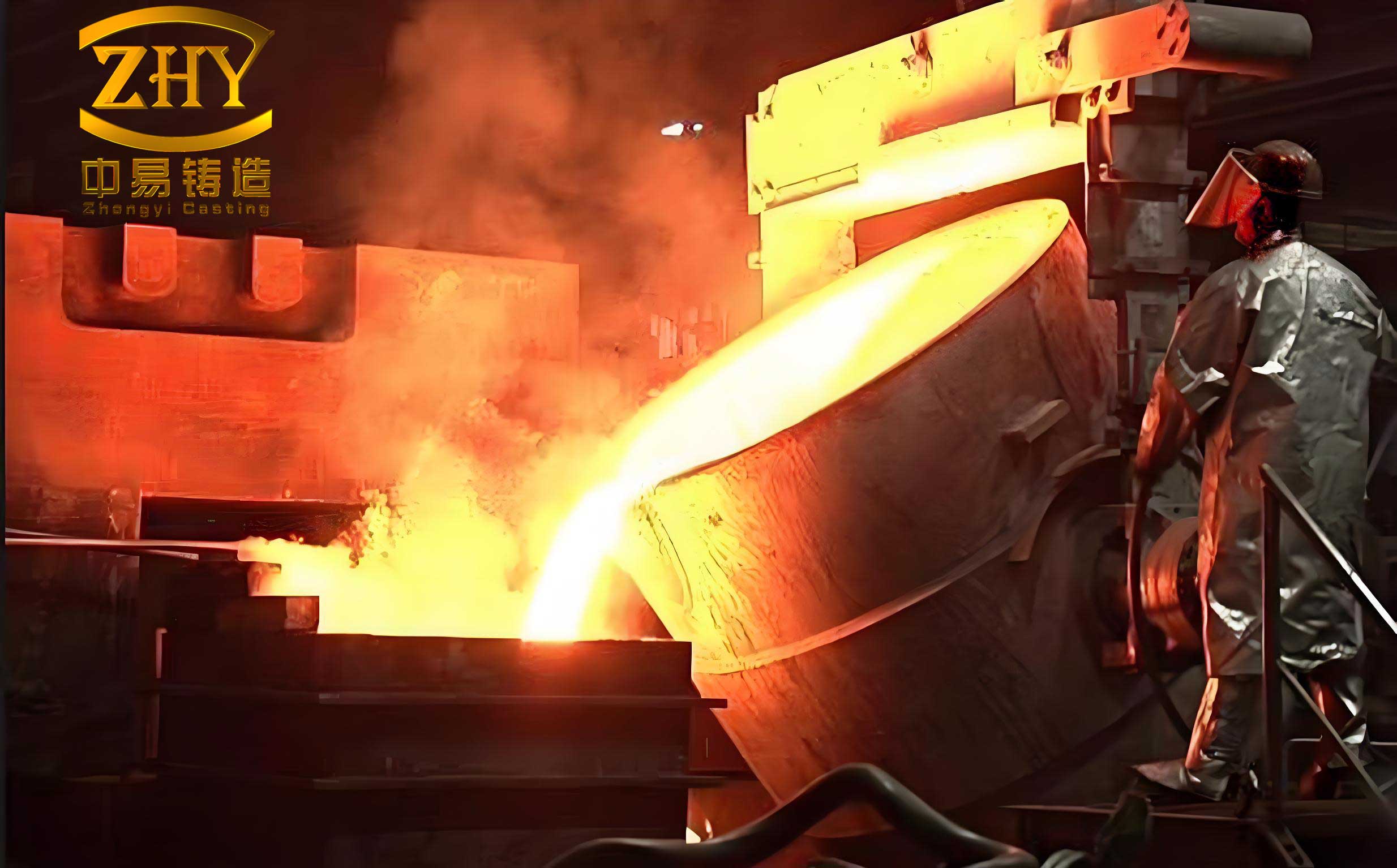
To address these challenges, selecting an appropriate welding process is crucial. In my practice, I have evaluated various methods, but arc welding emerges as the preferred technique over oxy-acetylene welding. While gas welding allows for prolonged heat input, it often degrades the steel’s properties, necessitating post-weld water toughening (quenching) treatment, which is impractical for large or complex castings. Arc welding, when parameters are carefully controlled, minimizes heat input and preserves the austenitic matrix. The weld repair scope should adhere to industry standards, such as TB/T447, which defines acceptable defect sizes and locations for manganese steel casting foundry products.
Electrode selection is another critical factor. Through systematic testing of electrodes like KD-286, TD286, and TD-D286, I found that KD-286 electrodes yield weld metal with microstructure and mechanical properties closely matching the base manganese steel. This compatibility is vital for ensuring the repaired zone undergoes similar work hardening under service conditions. The hardness of as-welded metal typically ranges from 180 to 230 HRB, but under wheel rolling pressure, it can nearly double, enhancing wear resistance. This aligns with the performance requirements of manganese steel casting foundry outputs like railway crossings.
Environmental conditions profoundly influence weld quality. Manganese steel casting foundry components must be repaired at controlled temperatures to prevent thermal shock. I recommend maintaining an ambient temperature above 15°C. In colder climates, where temperatures drop below 0°C, the casting should be acclimatized in a room above 15°C for at least 24 hours before welding. Conversely, in hot environments exceeding 38°C, supplementary cooling is essential—such as partial immersion in circulating water, with water temperature kept below 25°C. This practice mitigates rapid temperature rises that could induce cracking or reduce toughness. The heat balance during welding can be approximated by Fourier’s law of heat conduction:
$$ q = -k \nabla T $$
where \( q \) is the heat flux, \( k \) is the thermal conductivity, and \( \nabla T \) is the temperature gradient. For manganese steel, low \( k \) values lead to steep gradients, increasing stress. Therefore, managing heat input is key.
Welding parameters must be optimized to minimize thermal effects. I use small-diameter electrodes (3–4 mm) with low currents (90–120 A for DC reverse polarity or AC with an oscillator). This reduces heat input per pass, limiting the heat-affected zone (HAZ) and preserving the austenitic structure. The interpass temperature should be kept below 60°C, often achieved by water cooling between layers. The relationship between current \( I \), voltage \( V \), and heat input \( H \) is given by:
$$ H = \frac{I \times V \times 60}{v \times 1000} \quad \text{(in kJ/mm)} $$
where \( v \) is the travel speed in mm/min. For manganese steel, \( H \) should be minimized, typically below 1.5 kJ/mm, to avoid excessive grain growth or carbide precipitation.
Defect preparation is equally important. For crack repair, I employ V-groove or U-groove configurations. V-grooves should have an included angle of at least 70° to ensure proper fusion and stress distribution. Before grooving, drill a stop-hole at the crack tip to prevent propagation. For non-penetrating cracks, a U-groove is preferred, as it allows complete removal of the crack root. For thicknesses over 20 mm, double-V or X-grooves are used to balance distortion. The groove geometry can be analyzed using stress concentration factors \( K_t \):
$$ K_t = 1 + 2\sqrt{\frac{a}{\rho}} $$
where \( a \) is the crack depth and \( \rho \) is the root radius. A larger \( \rho \) in U-grooves reduces \( K_t \), lowering crack initiation risk. For porosity or shrinkage cavities, the defect must be excavated to sound metal, forming a regular shape for welding.
During welding, I adopt a layered, segmented, and reverse intermittent technique. Each segment is welded in short lengths (e.g., 50–100 mm), followed by immediate peening with a hammer to induce compressive stresses that counteract tensile stresses from cooling. Water cooling is applied after peening to bring the temperature below 60°C before proceeding. This “weld-peen-cool” cycle is repeated for each layer. Peening effectiveness can be modeled by the residual stress \( \sigma_r \):
$$ \sigma_r = \sigma_{thermal} + \sigma_{mechanical} $$
where \( \sigma_{thermal} \) is from thermal contraction and \( \sigma_{mechanical} \) is from peening. By balancing these, net stress near zero can be achieved. Multi-layer welding also benefits from hydrogen diffusion; subsequent passes help diffuse hydrogen from previous ones, reducing cold cracking susceptibility. The hydrogen diffusion coefficient \( D \) in austenitic steel is relatively low, but temperature cycling enhances it:
$$ D = D_0 \exp\left(-\frac{Q}{RT}\right) $$
where \( D_0 \) is a pre-exponential factor, \( Q \) is activation energy, \( R \) is gas constant, and \( T \) is temperature. Interpass heating promotes hydrogen escape.
Several precautions are mandatory. First, manganese steel casting foundry products must undergo water toughening (solution treatment at 1050–1100°C followed by rapid quenching) before weld repair to dissolve carbides and restore austenitic ductility. Welding on as-cast material can lead to brittle zones. Second, avoid welding along the crack direction; instead, use a transverse or staggered approach to distribute stress. Third, implement rigorous pre- and post-weld inspections, including dye penetrant or magnetic particle testing, to ensure defect removal and repair integrity.
To consolidate the welding parameters and material properties, I present the following tables:
| Property | High Manganese Steel (Mn13) | Low Carbon Steel | Ratio (Mn13/Carbon Steel) |
|---|---|---|---|
| Coefficient of Thermal Expansion (α) | ~22 × 10⁻⁶ /°C | ~11.7 × 10⁻⁶ /°C | ≈1.9 |
| Thermal Conductivity (k) | ~12 W/(m·K) | ~45 W/(m·K) | ≈1/3 to 1/4 |
| Linear Shrinkage Rate | ~2.4% | ~1.5% | ≈1.6 |
| Typical Hardness (as-cast) | 180–230 HRB | 70–100 HRB | Higher |
This table highlights the inherent challenges in welding manganese steel casting foundry products. The high α and low k necessitate careful thermal management.
| Electrode Type | Composition (Approx.) | As-Welded Hardness (HRB) | Work-Hardened Hardness (HRC) | Suitability for Mn Steel |
|---|---|---|---|---|
| KD-286 | High Mn, Ni, Mo | 180–230 | Up to 45 | Excellent |
| TD286 | Similar to KD-286 | 190–240 | Up to 43 | Good |
| TD-D286 | Modified alloy | 200–250 | Up to 40 | Moderate |
From this, KD-286 is optimal for manganese steel casting foundry repair due to its balance of properties.
For process parameters, consider:
| Parameter | Recommended Value | Rationale |
|---|---|---|
| Electrode Diameter | 3–4 mm | Reduces heat input per pass |
| Current (DC reverse polarity) | 90–120 A | Minimizes arc force and penetration |
| Interpass Temperature | < 60°C | Prevents overheating and grain growth |
| Travel Speed | 100–150 mm/min | Balances fusion and cooling rate |
| Heat Input (H) | < 1.5 kJ/mm | Avoids detrimental microstructural changes |
These parameters have been validated through extensive trials in our manganese steel casting foundry, ensuring repeatable results.
Theoretical analysis of welding stresses further informs practice. The thermal stress \( \sigma_{th} \) in a welded joint can be estimated using:
$$ \sigma_{th} = E \alpha \Delta T $$
where \( E \) is Young’s modulus (~200 GPa for manganese steel), \( \alpha \) is thermal expansion coefficient, and \( \Delta T \) is temperature difference between weld and base metal. For manganese steel, with high \( \alpha \), even moderate \( \Delta T \) yields high stresses, necessitating stress relief techniques like peening. Additionally, the solidification cracking susceptibility can be assessed via the Scheil equation for segregation:
$$ C_s = k C_0 (1 – f_s)^{k-1} $$
where \( C_s \) is solute concentration in solid, \( C_0 \) is initial concentration, \( k \) is partition coefficient, and \( f_s \) is solid fraction. In manganese steels, microsegregation of carbon and manganese can promote hot cracking; thus, fast cooling and low heat input are beneficial.
In practice, after implementing these protocols, the repaired manganese steel casting foundry components exhibit excellent performance. For instance, railway crossings welded using this method show no spalling, peeling, or premature failure within their service life. The weld metal integrates seamlessly with the base, undergoing similar work hardening under traffic loads. This reliability has been proven in field applications across diverse climatic conditions, underscoring the robustness of the approach.
To further enhance weld quality, I recommend periodic metallurgical analysis of weld deposits. Microstructure examination via optical or electron microscopy can reveal austenite stability and carbide precipitation. Quantitative analysis using image processing software can measure phase fractions. For example, the volume fraction of carbides \( V_c \) should be kept below 5% to maintain toughness, calculated as:
$$ V_c = \frac{A_c}{A_t} \times 100\% $$
where \( A_c \) is carbide area and \( A_t \) is total area in micrographs. Additionally, non-destructive testing like ultrasonic inspection can detect subsurface flaws, complementing surface methods.
Another aspect is the economic consideration. Efficient weld repair extends the service life of expensive manganese steel casting foundry products, reducing replacement costs and downtime. By optimizing parameters, we minimize consumable usage and energy consumption. For example, using lower currents reduces electrode consumption, and faster travel speeds shorten welding time. The total cost \( C_{total} \) can be modeled:
$$ C_{total} = C_{material} + C_{labor} + C_{energy} $$
where \( C_{material} \) includes electrodes and gases, \( C_{labor} \) is time-based, and \( C_{energy} \) is from power usage. Our approach lowers all components, making it sustainable for manganese steel casting foundry operations.
In conclusion, successful weld repair of high manganese steel castings hinges on a deep understanding of material behavior and meticulous process control. As someone immersed in manganese steel casting foundry work, I emphasize the interplay between theory and practice. By selecting appropriate electrodes, managing thermal cycles, employing mechanical stress relief, and adhering to strict procedures, we can overcome the cracking tendencies and achieve durable repairs. This methodology not only restores component integrity but also enhances their service performance, contributing to the longevity and safety of critical infrastructure like railway systems. Continuous improvement through research and field feedback will further refine these techniques, ensuring that manganese steel casting foundry products remain reliable in demanding applications.
Finally, I encourage collaboration within the manganese steel casting foundry community to share insights and advance welding technologies. As challenges evolve with new alloy developments or design complexities, adaptive strategies will be key. The principles outlined here—rooted in material science and practical experience—provide a solid foundation for tackling future repair scenarios in the ever-evolving landscape of manganese steel casting foundry production.