
The quest for high-performance, lightweight materials in modern industry has positioned aluminum alloys at the forefront of technological advancement. Characterized by an excellent combination of high specific strength, low density, good plasticity, alongside favorable electrical and thermal conductivity and corrosion resistance, aluminum alloys have become indispensable. However, the production of high-integrity casting parts from these alloys is persistently challenged by inherent metallurgical defects. During the melting and pouring stages, aluminum readily absorbs gases, primarily hydrogen. Despite advanced foundry techniques like vacuum suction casting or the addition of modifying elements to the melt, it is exceedingly difficult to completely prevent the formation of defects within the solidified casting parts. Porosity—manifesting as pinholes, gas bubbles, and shrinkage microporosity—remains an unavoidable consequence of solidification, leading to a significant degradation in the quality and operational reliability of the final components. As industrial demands evolve, requiring ever-higher levels of densification and performance from aluminum alloy casting parts, conventional casting technologies are increasingly seen as insufficient for fundamentally resolving these metallurgical imperfections. Consequently, the development of post-casting treatment processes to enhance the properties of aluminum alloys beyond their as-cast state has become a critical research direction.
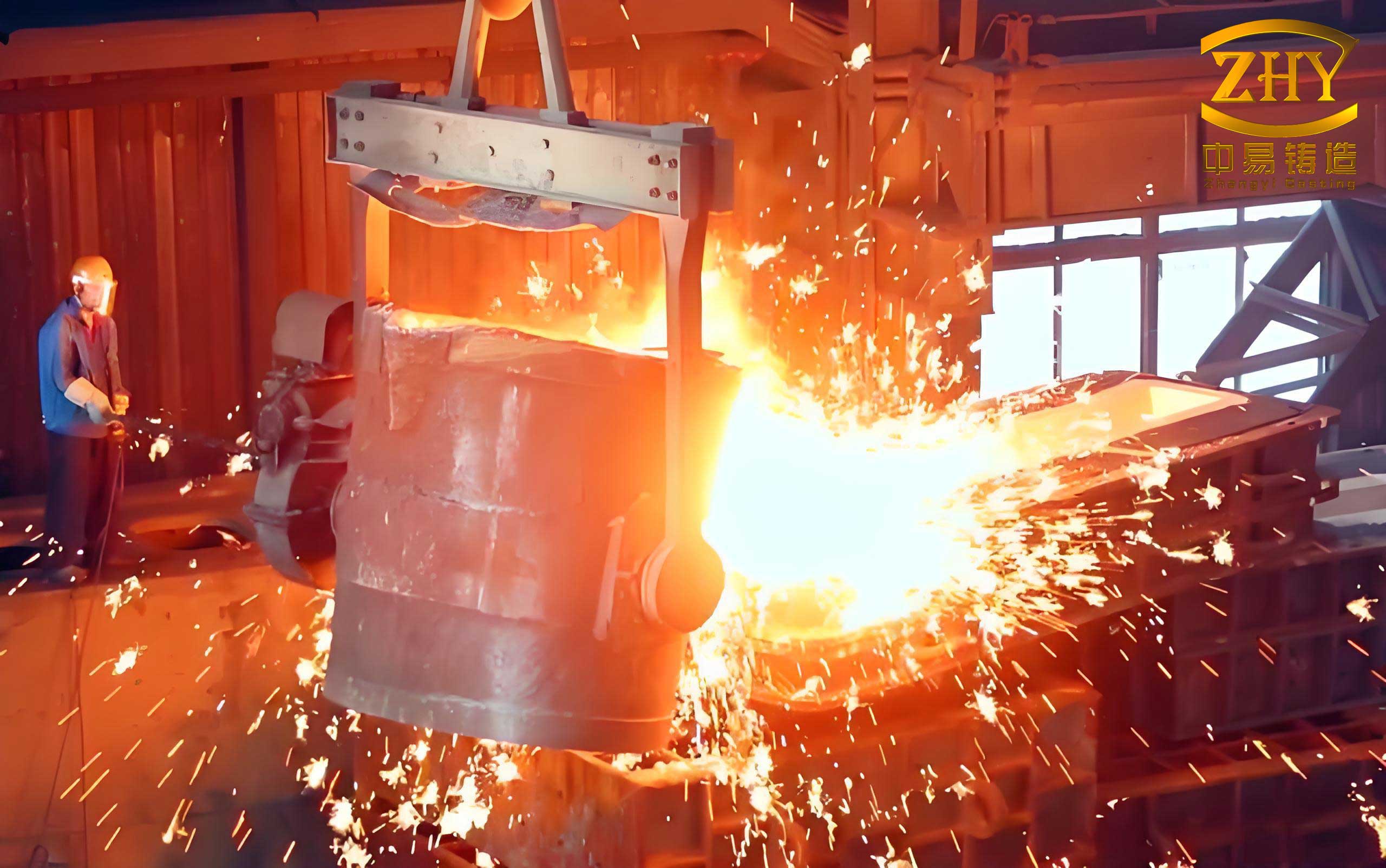
Hot Isostatic Pressing (HIP) emerges as a transformative technology capable of addressing these challenges. HIP is a materials processing technique that subjects components to simultaneously elevated temperature and isostatic gas pressure within a sealed vessel. Typical operational conditions can reach up to 2000°C and 200 MPa, utilizing inert gases like argon or helium as the pressure-transmitting medium. Under this uniform, multi-axial high-pressure environment at high temperatures, internal voids and pores within a component can be plastically collapsed, diffused, and bonded shut. The resulting casting parts exhibit dramatically improved density, microstructural homogeneity, and enhanced mechanical properties. The continuous refinement of HIP technology has unlocked its unique advantages for manufacturing complex, high-value components where quality is paramount. Its applications span the densification of refractory alloys, the healing of casting defects, and the production of advanced materials such as ceramics and metal-matrix composites. Among casting defects, shrinkage porosity and pinholes are particularly problematic due to their complex morphology and the severe limitations imposed by conventional foundry practice on their elimination. Therefore, the integration of HIP as a post-casting treatment to eradicate such defects and elevate the densification level of casting parts is not only beneficial but often necessary for critical applications.
This article delves into the mechanisms and effects of HIP treatment on aluminum alloy casting parts, with a focus on the common Al-Si-Mg alloy, ZL101A (a casting alloy analogous to A356). The core objective is to analyze the densification behavior and microstructural evolution induced by HIP, elucidate the underlying defect-healing mechanisms, and evaluate the consequent changes in mechanical properties. The study involves a comparative investigation of HIP-treated and untreated specimens, employing tensile testing, fracture surface analysis, metallographic examination, and hardness measurement.
Fundamental Principles of Densification via Hot Isostatic Pressing
The elimination of internal porosity in casting parts during HIP is a synergistic process driven by several concurrent mechanisms activated under high temperature and pressure. The primary driving force is the external isostatic pressure, $P_{ext}$, which acts on the pore surfaces. The material’s response to this stress, facilitated by the elevated temperature, leads to pore closure. The key mechanisms include:
- Plastic Yielding and Collapse: At temperatures significantly high enough to lower the alloy’s yield strength, the stress concentration around pores can cause the surrounding material to yield plastically. The applied isostatic pressure, $P_{ext}$, overcomes the material’s flow stress, $\sigma_y(T)$, causing the pore walls to deform inward and collapse. The condition for this mechanism is generally $P_{ext} > \sigma_y(T)$. The elevated temperature $T$ is crucial as it markedly reduces $\sigma_y(T)$.
- Power-Law Creep (Dislocation Creep): This is a time-dependent, thermally activated deformation mechanism dominant at high temperatures and intermediate stress levels. The creep strain rate, $\dot{\epsilon}$, is often described by:
$$\dot{\epsilon} = A \sigma^n \exp\left(-\frac{Q_c}{RT}\right)$$
where $A$ is a material constant, $\sigma$ is the applied stress (related to $P_{ext}$), $n$ is the stress exponent (typically 3-5 for dislocation creep), $Q_c$ is the activation energy for creep, $R$ is the gas constant, and $T$ is the absolute temperature. Creep allows for the gradual, sustained deformation necessary to close pores over the HIP dwell time. - Diffusion-Controlled Mechanisms: Atomic diffusion is significantly accelerated at HIP temperatures. Two main diffusion paths contribute:
- Surface Diffusion: Atoms migrate along the pore surface from areas of high curvature (convex) to low curvature (concave), smoothing and eventually eliminating the pore.
- Volume (Lattice) Diffusion: Atoms diffuse from the grain boundaries or the matrix to the pore surface, or vacancies diffuse away from the pore, leading to its shrinkage. The densification rate by volume diffusion can be modeled by:
$$\frac{d\rho}{dt} \propto \frac{D_v \Omega}{k_B T G^3} (P_{ext} – P_{int})$$
where $\rho$ is density, $D_v$ is the volume diffusion coefficient, $\Omega$ is the atomic volume, $k_B$ is Boltzmann’s constant, $G$ is the grain size, and $P_{int}$ is the internal gas pressure in the pore.
The HIP process parameters—Temperature ($T$), Pressure ($P$), and Time ($t$)—are intricately linked to these mechanisms. Temperature is arguably the most critical parameter. A higher $T$ exponentially increases diffusion coefficients (via the Arrhenius relationship, $D = D_0 \exp(-Q/RT)$) and drastically lowers the yield and creep strength of the alloy, making it more amenable to deformation under a given pressure. Pressure provides the driving force for pore closure. Time allows the diffusion and creep processes to proceed to completion. For aluminum alloy casting parts like ZL101A, the HIP temperature must be carefully selected: it must be high enough to activate these mechanisms effectively but must remain below the alloy’s solidus temperature to avoid incipient melting, especially in regions with eutectic phases.
Experimental Methodology for ZL101A Casting Parts
The material under investigation was ZL101A aluminum alloy, with its chemical composition detailed in Table 1. The casting parts and tensile test specimens were produced via sand casting, with a pouring temperature between 680°C and 690°C. Following casting, all components underwent a standard T5 heat treatment (solution heat treatment followed by artificial aging) to establish a baseline strengthened condition, as specified in Table 2.
| Element | Si | Mg | Mn | Fe | Cu | Ti | Zn | Al |
|---|---|---|---|---|---|---|---|---|
| Specification | 6.5-7.5 | 0.25-0.45 | ≤0.10 | ≤0.20 | ≤0.10 | 0.08-0.20 | ≤0.10 | Bal. |
| Actual | 6.95 | 0.38 | 0.11 | 0.10 | 0.07 | 0.17 | 0.03 | Bal. |
| Process Stage | Temperature (°C) | Time (h) | Cooling/Other |
|---|---|---|---|
| Solution Treatment | 530-540 | 4 | Quench in water ≤70°C, transfer time ≤25s |
| Artificial Aging | 195-205 | 4 | Air Cool |
To systematically evaluate the effect of HIP, a batch of 11 casting parts containing intentional, measurable levels of porosity (pinholes rated 3-4级, shrinkage rated 6-7级) was selected. Additionally, 6 sound tensile specimens (free from obvious defects as per X-ray inspection) from the same casting batch were chosen and divided into two groups: a control group (as-cast + T5) and an experimental group (as-cast + T5 + HIP).
The HIP treatment was conducted using the following parameters, chosen based on the principles discussed earlier:
$$T_{HIP} = 505°C, \quad P_{HIP} = 75 \, \text{MPa}, \quad t_{HIP} = 3.5 \, \text{h}$$
The atmosphere within the HIP vessel was high-purity argon. This temperature is below the alloy’s solidus but sufficiently high to promote creep and diffusion. The pressure of 75 MPa provides ample driving force for pore closure against the alloy’s softened state at 505°C.
Post-HIP, the defective casting parts were inspected via X-ray radiography to assess the effectiveness of pore closure. The tensile specimens from both groups were subjected to mechanical testing. Fractography was performed using scanning electron microscopy (SEM) to analyze failure modes. Metallographic samples were prepared, etched, and examined using optical microscopy to observe microstructural changes. Brinell hardness measurements were also taken to complement the tensile data.
Results and Analysis: Densification and Microstructural Evolution
Effectiveness of HIP in Defect Healing
The X-ray inspection results provided clear evidence of HIP’s efficacy. Out of the 11 originally defective casting parts, 7 were rendered free of detectable pinholes and shrinkage porosity after the HIP cycle, qualifying them as sound components. This corresponds to a success rate of approximately 64% for the given defect severity and HIP parameters. The 4 parts that remained defective showed residual porosity, but notably in localized regions of greater thickness (11.5 mm). This outcome highlights a critical aspect of HIP processing: the efficiency of pore closure is influenced by section thickness. In thicker sections, the time required for complete diffusion bonding or creep deformation at the core of the pore may exceed the 3.5-hour cycle, or the local thermal conditions might differ slightly. An interesting surface phenomenon was observed on some HIP-treated casting parts that originally contained sub-surface pinholes: the appearance of small, shallow surface depressions approximately 1 mm in diameter. These depressions are direct physical evidence of the internal pore collapse mechanism. As the sub-surface pore implodes under isostatic pressure and the material creeps to fill the void, the volume deficit can translate to a slight indentation on the component’s surface.
Microstructural and Fractographic Observations
The metallographic analysis of the sound tensile specimens revealed subtle but important microstructural differences between the HIP-treated and untreated conditions. The microstructure of ZL101A in both states consists primarily of α-Al dendrites (solid solution) and an interdendritic Al-Si eutectic network, with minor Mg₂Si precipitates.
- Untreated (T5 only): The silicon phase in the eutectic typically exhibits a coarse, acicular (needle-like) or lamellar morphology. The α-Al dendrites show a defined dendritic arm structure.
- HIP-treated (T5+HIP): Following HIP, a noticeable spheroidization and coarsening of the eutectic silicon particles occurred. The sharp edges of the silicon plates became rounded, and the particles tended to fragment into smaller, more equiaxed shapes. Concurrently, the α-Al dendrite arms appeared slightly coarsened and more rounded. This microstructural evolution is a direct result of the extended exposure to high temperature (505°C for 3.5 h) during HIP, which promotes Ostwald ripening and diffusional homogenization. The equation describing the growth of a particle radius $r$ over time $t$ by diffusion is:
$$r^3 – r_0^3 = \frac{8 \gamma C_\infty D V_m^2}{9 R T} t = K t$$
where $r_0$ is the initial radius, $\gamma$ is the interfacial energy, $C_\infty$ is the solute concentration in the matrix, $D$ is the diffusion coefficient, $V_m$ is the molar volume, and $K$ is the rate constant. The HIP cycle provides the time and temperature for this process to occur.
Fractographic analysis of the tensile specimens via SEM revealed a ductile fracture mode for both conditions. The fracture surfaces were populated with dimples—a signature of microvoid coalescence. Both equiaxed and elongated dimples were present, indicative of plastic deformation before failure. The presence of tear ridges and localized cleavage-like facets suggested a mixed-mode fracture, leaning towards quasi-cleavage. No drastic difference in the fundamental fracture mode was induced by HIP, confirming that the failure mechanism remained ductile in nature.
Mechanical Properties: The Trade-off from HIP Treatment
The mechanical property data, averaged from multiple tests, is summarized in Table 3. The results present a nuanced picture of the effect of HIP on sound casting parts.
| Condition | Tensile Strength (MPa) | Elongation at Break (%) | Brinell Hardness (HB) |
|---|---|---|---|
| As-Cast + T5 (Untreated) | 250.5 | 4.05 | 65.2 |
| As-Cast + T5 + HIP | 233.9 | 4.35 | 60.8 |
| Change (%) | -6.6% | +7.4% | -6.7% |
The data indicates that HIP treatment of initially sound casting parts leads to a slight decrease in tensile strength and hardness, but an increase in ductility (elongation). This can be rationalized through the interplay of several microstructural factors:
- Overaging and Thermal Exposure: The T5 heat treatment induces precipitation hardening, primarily through the formation of fine, coherent β” (Mg₂Si) precipitates. The subsequent HIP cycle at 505°C acts as a significant additional thermal exposure. This exposure can cause the metastable strengthening precipitates to coarsen (Ostwald ripening) or transform into more stable, less coherent phases (e.g., β’ or β). According to precipitation hardening theory, maximum strength is achieved with a high number density of small, coherent precipitates that effectively pin dislocations. Coarsening reduces the number density and increases the inter-precipitate spacing, $L$, making it easier for dislocations to bypass them via the Orowan looping mechanism. The increase in critical shear stress, $\Delta \tau$, from Orowan looping is inversely proportional to $L$:
$$\Delta \tau \approx \frac{G b}{L}$$
where $G$ is the shear modulus and $b$ is the Burgers vector. An increased $L$ from coarsening leads to a decrease in $\Delta \tau$ and thus lower yield and tensile strength. - Annihilation of Dislocations and Defects: The casting and quenching processes introduce a network of dislocations and lattice defects. The high temperature during HIP provides the activation energy for recovery processes. Dislocations can rearrange into lower-energy configurations, annihilate, or form sub-grain boundaries. This reduction in dislocation density and internal stress also contributes to a slight softening of the material.
- Silicon Phase Spheroidization: The change in eutectic silicon morphology from sharp, acicular plates to rounded particles has a dual effect. Sharp silicon particles act as potent stress concentrators and crack initiation sites, which can lower ductility. Their spheroidization reduces this stress concentration effect, which is the primary reason for the observed increase in elongation. However, the coarsening of the microstructure overall (both α-Al and Si) typically leads to a slight reduction in strength, as per the Hall-Petch relationship for the α-Al grains and the decreased effectiveness of the Si phase as a barrier to slip.
- Vacancy Annihilation: Quenching from the solution heat treatment fixes a high concentration of vacancies, which are crucial for the rapid diffusion needed during artificial aging to form fine precipitates. The HIP thermal cycle allows these excess vacancies to annihilate at sinks like dislocations and grain boundaries. A lower vacancy concentration can slow down or alter subsequent diffusion-controlled processes, potentially contributing to the observed softening.
Therefore, for casting parts that are initially free of major defects, the HIP process involves a trade-off: it slightly reduces strength and hardness due to microstructural coarsening and overaging but enhances ductility by blunting sharp, brittle second-phase particles. The most significant benefit of HIP is realized not in this scenario, but in the healing of defective casting parts, where the removal of stress-concentrating pores leads to dramatic improvements in fatigue life, fracture toughness, and reliability, often outweighing the minor strength reduction.
Optimization and Application Considerations for Casting Parts
The successful application of HIP to aluminum alloy casting parts requires careful parameter optimization tailored to the specific alloy, component geometry, and defect characteristics. The key lessons from this and similar studies can be summarized as follows:
| Parameter | Influence and Consideration | Typical Range for Al-Si Alloys |
|---|---|---|
| Temperature ($T_{HIP}$) | Most critical parameter. Must be high enough to activate creep & diffusion but below solidus (especially eutectic). Higher $T$ increases efficiency but risks overaging/coarsening. | 480°C – 530°C (Dependent on specific alloy composition) |
| Pressure ($P_{HIP}$) | Provides driving force for pore closure. Must exceed material’s flow stress at $T_{HIP}$. Higher pressure accelerates densification but increases equipment cost. | 70 MPa – 120 MPa |
| Time ($t_{HIP}$) | Allows diffusion and creep processes to complete. Depends on pore size, section thickness, $T$, and $P$. Insufficient time leaves residual defects in thick sections. | 2 – 6 hours (Longer for larger pores/thicker sections) |
The optimal combination minimizes $t_{HIP}$ while ensuring complete densification, often found at the higher end of the acceptable temperature range. For casting parts with severe porosity or large section sizes, a higher $P_{HIP}$ or longer $t_{HIP}$ may be necessary. Furthermore, the sequence of HIP relative to heat treatment is crucial. Performing HIP after solution treatment and quenching but before artificial aging (i.e., integrating HIP into the T6/T5 cycle) can be beneficial. This sequence allows the HIP cycle to also act as a pre-aging or stabilization step, and the final aging treatment can then be adjusted to re-optimize the precipitate structure and potentially recover some of the strength lost due to coarsening during HIP.
Conclusion
Hot Isostatic Pressing stands as a powerful and essential technology for enhancing the quality and performance of aluminum alloy casting parts. This investigation on ZL101A alloy demonstrates that HIP is highly effective in healing internal casting defects such as shrinkage microporosity and pinholes. The process leverages synergistic high-temperature mechanisms—including plastic yielding, power-law creep, and accelerated diffusion—to collapse and bond shut internal voids, thereby significantly improving the densification and structural integrity of the components. The study reveals that the efficiency of defect removal is contingent upon appropriate parameter selection, particularly with respect to component section thickness.
For casting parts that are initially sound, HIP treatment induces microstructural changes such as eutectic silicon spheroidization and slight phase coarsening. This leads to a characteristic trade-off in mechanical properties: a marginal decrease in tensile strength and hardness (approximately 6-7% in this case) is accompanied by a valuable increase in ductility (approximately 7%). This trade-off is attributed primarily to overaging of strengthening precipitates and the blunting of stress-concentrating silicon particles.
Therefore, the primary application of HIP for aluminum casting parts is justified in scenarios where the elimination of life-limiting defects is paramount—such as in aerospace, automotive safety components, or high-integrity structural parts. The improvement in fatigue strength, leak-tightness, and fracture resistance conferred by pore closure far outweighs the minor reduction in quasi-static strength. For critical applications, integrating HIP as a standard post-casting process, with carefully optimized parameters sequenced within the overall heat treatment cycle, represents a definitive step towards achieving the highest possible reliability and performance from aluminum alloy casting parts.