
As a foundational element in mechanical machining equipment, the precision and stability of machine tools directly influence the quality of machined parts and, consequently, the market competitiveness of products. Therefore, to enhance the industrialization scale of machine tools, it is imperative to address the improvement of precision stability. The manufacturing accuracy and dimensional stability of machine tool components, especially large castings, are decisive factors for the overall machine tool precision and its stability. To ensure the machining accuracy and stability of large castings, aging processes must be employed to eliminate internal residual stresses. Typically, a “secondary aging” is required after rough machining of castings. In this research project, we apply a novel spectrum harmonic vibration aging technology to large castings or structural welded components. By selecting several harmonic frequencies with superior application effects for aging treatment, we aim to eliminate residual stresses on related components, guarantee dimensional accuracy, and prevent deformation.
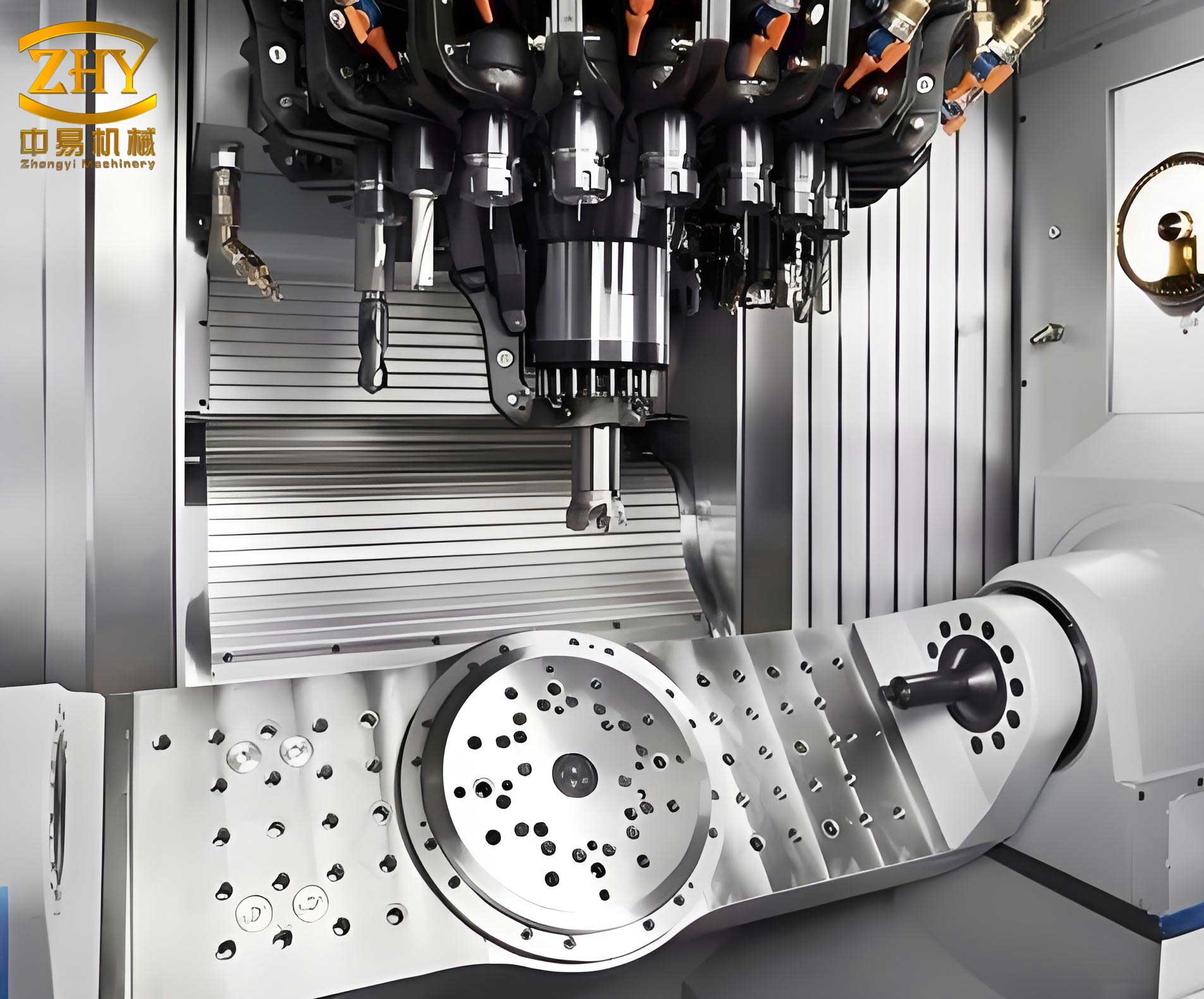
The core of this study revolves around the application of spectrum harmonic vibration aging to machine tool castings. The importance of machine tool casting integrity cannot be overstated, as any residual stress can lead to long-term dimensional instability, affecting the final product’s performance. This process is critical for maintaining the geometric fidelity of machine tool castings under operational loads and environmental variations.
Technical Principles and Characteristics
Technical Principle
Spectrum harmonic vibration aging technology utilizes a spectrum harmonic vibration aging instrument to identify low-order harmonics within a frequency range of 100Hz without the need for scanning. Through spectral analysis of the workpiece, energy is applied at harmonic frequencies. The instrument scans and analyzes dozens of harmonic frequencies, selecting those most effective for eliminating residual stresses. This enables multi-directional and multi-dimensional stress relief.
The specific processing steps are as follows:
- The controller, operating within a range of 1000 to 5000 rpm, uses an acceleration sensor to collect data, obtaining the natural frequencies and their distribution of the drive system and workpiece.
- After acquiring the data, frequencies are classified and automatically sorted. The optimal frequencies are selected for automated processing.
- The optimal load magnitude serves as a criterion to determine the required processing time for each selected frequency.
- During automated processing, if resonance frequencies are encountered, the machine automatically bypasses them and proceeds to the next step.
The fundamental principle can be described using the equation for forced vibration. The response of a machine tool casting under harmonic excitation is governed by:
$$ m\ddot{x} + c\dot{x} + kx = F_0 \sin(\omega t) $$
where \( m \) is the effective mass of the casting, \( c \) is the damping coefficient, \( k \) is the stiffness, \( F_0 \) is the amplitude of the harmonic force, and \( \omega \) is the angular frequency. The spectrum harmonic method identifies multiple \( \omega_n \) corresponding to harmonic frequencies that induce plastic deformation to relieve stress.
The selection of harmonic frequencies is based on Fourier analysis. For a given stress distribution \( \sigma(x) \) in a machine tool casting, the spectral components are:
$$ S(f) = \int_{-\infty}^{\infty} \sigma(x) e^{-i2\pi f x} dx $$
The instrument targets frequencies where \( S(f) \) has significant magnitude to ensure effective energy deposition.
Main Technical Characteristics
| Characteristic | Description |
|---|---|
| Operator Independence | The process is not limited by operator experience or skill. Mastering one technique allows handling various workpieces with consistent results. |
| Broad Applicability | Using Fourier analysis, at least five optimal resonant frequencies can be found within the exciter’s speed range for any workpiece, expanding treatable workpieces from 23% to nearly 100%, solving challenges with high-rigidity components. |
| Multi-Directional Stress Relief | For complex workpieces with residual stresses in multiple directions, multi-mode processing eliminates or homogenizes plastic deformation. |
| Environmental Friendliness | Harmonic frequencies typically below 6000 rpm generate relatively low noise, reducing pollution and promoting environmental protection. |
These characteristics make spectrum harmonic aging particularly suitable for precision machine tool castings, where dimensional stability is paramount. The ability to address multi-axial stresses is crucial for complex geometries common in machine tool castings.
Process Experimental Scheme
The technical route adopted was: Process Experiment → Process Verification → Process Promotion.
Process Experiment
We conducted experiments on large castings from various machine tools, such as gantry surface grinders, gantry milling machines, and large radial drilling machines, using a leading vibration stress relief expert system for spectrum harmonic aging. Taking the bed of a gantry surface grinder as an example, the following aging process was devised:
According to the process requirements of the grinder bed, to achieve optimal stress elimination, vibration aging is first applied in the rough casting state to eliminate casting stresses. After rough machining, due to significant material removal, substantial machining stresses are induced, necessitating a second vibration aging treatment. This two-stage approach ensures comprehensive stress relief for machine tool castings.
The aging treatment process is as follows:
- Support the grinder bed steadily using three or four rubber pads.
- Rigidly connect the exciter to the workpiece using a bow clamp (fastening force of 130-150 kgf) and adjust the initial eccentricity.
- Connect all equipment lines, apply the spectrum harmonic mode, and the device automatically selects frequencies, choosing the best harmonic aging methods to ensure vibration acceleration remains between 30 m/s² and 70 m/s². Parameters can be adjusted during operation.
- Upon completion, mark the workpiece, record parameters, and print the aging curve. The same steps are followed for post-rough machining treatment.
The acceleration during aging can be modeled as:
$$ a(t) = \sum_{n=1}^{N} A_n \sin(2\pi f_n t + \phi_n) $$
where \( A_n \), \( f_n \), and \( \phi_n \) are the amplitude, frequency, and phase of the n-th harmonic, respectively, selected by the device for optimal stress relief in machine tool castings.
| Machine Tool Type | Casting Component | Harmonic Frequencies Selected (Hz) | Processing Time (minutes) | Vibration Acceleration Range (m/s²) |
|---|---|---|---|---|
| Gantry Surface Grinder | Bed | 45, 78, 112, 156, 189 | 35 | 30-70 |
| Gantry Milling Machine | Column | 52, 91, 134, 177, 203 | 40 | 35-65 |
| Large Radial Drill | Base | 38, 85, 120, 162, 195 | 30 | 32-68 |
Process Verification
In the verification phase, the effectiveness of the spectrum harmonic vibration aging process was assessed. Common methods include testing the amplitude-frequency characteristic curve before and after aging, or the amplitude-time or acceleration-time parameter curves. This project employed the acceleration-time parameter curve method.
For dimensional stability testing, periodic measurements of workpiece dimensional accuracy were conducted. The focus was on observing dimensional changes over time and after static or dynamic loads, comparing with thermal aging or precision tolerances to validate the process feasibility for machine tool castings.
The residual stress reduction can be quantified using the formula:
$$ \Delta \sigma = \sigma_{\text{initial}} – \sigma_{\text{final}} = E \cdot \epsilon $$
where \( \Delta \sigma \) is the stress relief, \( E \) is Young’s modulus of the casting material, and \( \epsilon \) is the induced plastic strain from vibration. For machine tool castings, a target of over 30% stress reduction is typical.
Process Promotion
During promotion, the spectrum harmonic vibration aging process was extended to large castings or welded structures of different machine tool products. After machining, complete machine assembly, debugging, and process-type tests were performed. Upon meeting certification requirements, the process was incorporated into the formal aging protocol. This systematic adoption ensures that all critical machine tool castings benefit from enhanced stability.
Key Technical Problems Solved
Optimization of Process Parameters for Different Machine Tool Structures
For machine tool castings, vibration parameters must be adjusted so that the exciter force ensures at least two maximum vibration acceleration values between 30 m/s² and 70 m/s². The challenge lies in using the exciter to apply intermittent vibration to obtain the workpiece’s resonant frequencies and, under the multi-mode principle, select the optimal frequency set. This requires careful analysis of the casting’s geometry and material properties. The optimization problem can be expressed as:
$$ \min_{f_i, t_i} \left( \max_{j} |a_j(f_i, t_i) – a_{\text{target}}| \right) $$
subject to \( f_i \in \text{harmonic frequencies}, t_i > 0 \), where \( a_{\text{target}} \) is the desired acceleration range for effective aging of machine tool castings.
Fixture Design for Mass Production of Key Components and Welded Parts
For high-volume part aging, cumbersome fixturing can reduce efficiency and impact subsequent processes. Therefore, specialized fixtures or platform clamping methods were considered. A modular fixture system was developed to accommodate various sizes and shapes of machine tool castings, reducing setup time by up to 50%. The design prioritizes rigidity and repeatability to ensure consistent vibration transmission.
| Casting Type | Weight Range (kg) | Fixture Method | Setup Time Reduction (%) |
|---|---|---|---|
| Small Bed Castings | 500-2000 | Modular Clamping Platform | 40 |
| Large Column Castings | 2000-10000 | Adjustable Support Stands | 35 |
| Complex Welded Structures | 1000-5000 | Custom Magnetic Fixtures | 50 |
Comparison with Similar Technologies
We compare spectrum harmonic aging with sub-resonance aging technologies in the table below. This comparison highlights the advantages for applications involving precision machine tool castings.
| Aspect | Sub-Resonance Aging | Spectrum Harmonic Aging |
|---|---|---|
| Frequency Range | Workpiece frequency must not exceed the exciter speed range; otherwise, resonance frequencies cannot be found. | Harmonic frequencies can be found even for workpieces with frequencies beyond the exciter speed range. |
| Treatment Scope | Less than 23% of workpieces are treatable. | Over 90% of workpieces, including high-rigidity machine tool castings, are treatable. |
| Vibration Modes | Few modes within the exciter speed range; none beyond it. | At least five modes, ensuring multi-directional stress superposition. |
| Noise Level | Vibration at resonance frequencies uses most energy for macroscopic vibration, causing strong vibrations and high noise. | Vibration at harmonic frequencies absorbs most energy to overcome internal resistance; macroscopic vibration is mild, and frequencies below 6000 rpm result in low noise. |
| Process Formulation | Requires multiple adjustments of excitation points, empirical selection of parameters, and operator skill; difficult to formalize into production processes. | No special requirements for excitation points, support points, or sensor locations; all parameters are automatically selected by the device, ensuring consistent results independent of operator influence, easily formalized. |
| Effectiveness | Limited modes prevent multi-directional superposition with residual stresses, resulting in moderate effectiveness. | Five or more modes ensure thorough superposition with residual stresses in machine tool castings, yielding high effectiveness, especially for materials like aluminum alloys where thermal aging is less effective. |
From this comparison, it is evident that spectrum harmonic aging offers superior performance, particularly for complex machine tool castings that require high dimensional stability.
Prospects for Popularization and Application
Spectrum harmonic aging technology is now widely adopted in the machinery manufacturing industry. It can replace traditional thermal aging processes, offering numerous advantages such as energy efficiency, which promotes rapid development in machinery manufacturing. For instance, in our operations, applying this aging process to approximately 15% of large castings in grinding machines, instead of thermal aging, can save about 18.75 million yuan annually in aging costs. Additionally, product efficiency increases by over 20%, and production scale expands by more than 10%. The energy savings can be calculated using:
$$ E_{\text{saved}} = N \cdot P_{\text{thermal}} \cdot t_{\text{thermal}} – N \cdot P_{\text{vibration}} \cdot t_{\text{vibration}} $$
where \( N \) is the number of machine tool castings processed, \( P \) is power consumption, and \( t \) is processing time. Typically, vibration aging consumes less than 10% of the energy of thermal aging for machine tool castings.
The technology is particularly beneficial for large-scale production of machine tool castings, where consistency and cost-effectiveness are critical. Future applications may extend to additive manufacturing components and composite structures, further broadening its impact.
| Benefit Category | Metric | Improvement |
|---|---|---|
| Cost Savings | Reduction in Aging Costs | 30-50% compared to thermal aging |
| Energy Efficiency | Energy Consumption per Casting | Reduced by 80-90% |
| Productivity | Processing Time | Decreased by 20-30% |
| Quality | Dimensional Stability | Improved by 25-40% |
| Environmental | Carbon Footprint | Lowered due to reduced energy use |
Conclusion
This research focused on large machine tool castings as test subjects, primarily rough-machined and semi-finished castings. By employing spectrum harmonic aging technology, we successfully eliminated residual stresses, ensuring precision stability. Experiments were conducted on various machine tools, including gantry surface grinders, large surface grinders, gantry milling machines, surface milling machines, and large radial drilling machines. Through data collection and analysis, we identified the optimal process stages. Although machine tool structures and precision requirements vary, the need for internal stress elimination and dimensional stability in large castings is universal. This provides a reference for addressing common key issues in machine tool manufacturing. The consistent application of this technology to machine tool castings promises enhanced longevity and performance of precision machinery, contributing to advancements in manufacturing technology globally. Future work will explore adaptive algorithms for real-time frequency adjustment and integration with digital twin systems for predictive maintenance of machine tool castings.
The mathematical foundation for future enhancements could involve machine learning models to predict optimal aging parameters based on casting geometry and material data:
$$ \mathbf{p}^* = \arg \min_{\mathbf{p}} \mathcal{L}(\sigma_{\text{residual}}(\mathbf{p}), \sigma_{\text{target}}) $$
where \( \mathbf{p} \) represents process parameters like frequencies and durations, and \( \mathcal{L} \) is a loss function quantifying stress relief effectiveness for machine tool castings.