
The occurrence of cracks remains one of the most critical and perilous defects encountered in the production of engine castings. Within the demanding operational environment of an engine, characterized by cyclic thermal loads and mechanical vibration, an undetected crack can initiate a catastrophic failure sequence. These defects propagate, potentially leading to leakage of fluids or, in severe cases, complete structural failure of the component, resulting in significant economic loss and safety risks. My extensive experience in foundry process development has consistently highlighted the necessity of a deep, mechanistic understanding of crack formation to implement effective and robust preventative measures.
In the realm of grey iron castings, cracks are fundamentally categorized by the temperature regime of their formation: hot tears (hot cracks) and cold cracks. This distinction is paramount for accurate root-cause analysis. Hot tearing occurs during the final stages of solidification, when a coherent solid skeleton has formed but residual liquid films persist at the grain boundaries. If tensile stresses develop within the casting at this vulnerable stage, these liquid films can be pulled apart. Crucially, if feeding is insufficient to heal these incipient ruptures, a permanent hot tear defect is established. Characteristically, hot tears exhibit a jagged, torn appearance and their surfaces are heavily oxidized, often lacking metallic luster due to exposure to high temperatures in an oxidizing environment.
In contrast, cold cracks form after the casting has completely solidified, when localized stresses exceed the fracture strength of the material at that temperature. While cold cracks formed at elevated temperatures may also show oxidation, their defining feature is the ability to virtually perfectly mate the two fracture surfaces together, a trait not shared by hot tears. This provides a quick, practical method for differentiation on the foundry floor.
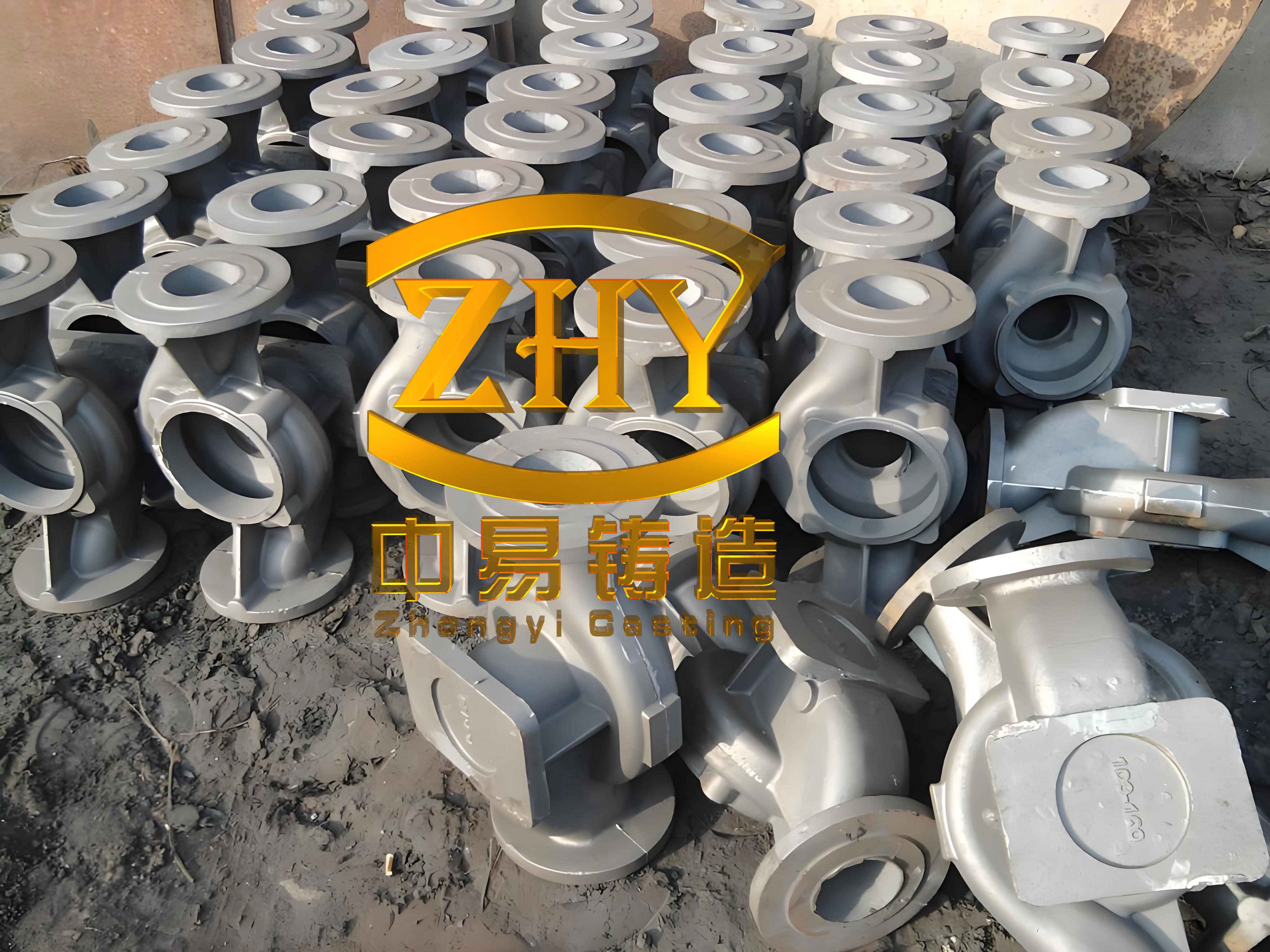
A specific case study involved the production of a V-type, 12-cylinder engine block, a complex grey iron casting with a weight of approximately 1172 kg. The material specification was HT280 grey iron, and the molding process utilized cold-box cores for the intricate internal passages and alkaline phenolic resin no-bake sand for the molds. The pouring practice employed a bottom-gating system with the oil pan joint face oriented upward. A persistent quality issue manifested as cracks in the thick sections connecting the cylinder banks at the joint face, identified as classic hot tears based on their morphology and location.
1. Theoretical Foundation of Hot Tearing in Grey Iron Castings
The formation of hot tears is not a random event but a predictable outcome of the interplay between alloy solidification characteristics, casting geometry, and the evolving stress state during cooling. For grey iron castings, the unique solidification behavior involving graphite precipitation plays a moderating role, yet the risk remains significant in poorly designed sections.
The susceptibility to hot tearing, \( S \), can be conceptually framed by a relationship incorporating material and process variables:
$$ S \propto \frac{\sigma_t \cdot \delta T}{\Gamma \cdot \varepsilon_c} $$
Where:
\( \sigma_t \) = Tensile stress developed in the mushy zone.
\( \delta T \) = Temperature range of brittle (coherent solid + liquid) behavior.
\( \Gamma \) = Material’s resistance to tear propagation (influenced by graphite morphology, eutectic cell count).
\( \varepsilon_c \) = Casting’s ability to accommodate strain via feeding or mold yield.
In our V-block case, the problematic “connecting web” sections are deep within the mold cavity, surrounded by core sand. This geometry leads to slow cooling, prolonging the time the section spends in the critical temperature range (\( \delta T \)). Simultaneously, the bottom-gating system creates a severe thermal gradient. The top sections (including the webs) cool and begin contracting first. However, the massive lower sections of the casting remain hot and liquid for a longer period.
As the lower sections finally solidify and undergo substantial linear contraction, they exert a pulling force. This force is transmitted through the already-solidified upper structure. Due to the geometry—where the solid top is connected across a core—this transmitted force can manifest as a tensile stress (\( \sigma_t \)) on the still-semi-solid webs. If this stress exceeds the very low cohesive strength of the dendritic network with liquid films, a hot tear initiates. The stress transmission can be likened to a lever effect, amplifying the strain on the last-to-freeze areas.
A critical factor is the rigidity of the mold/core. If the core yields slightly, it can relieve some stress. Measurements from defective castings supported this theory: the cracked webs were measurably thicker than sound ones, indicating that the core surface had displaced inwards under stress, allowing the hot section to be stretched and torn before final solidification. The average measured difference was significant, confirming the presence of tensile strain during solidification.
2. Statistical Analysis and Problem Characterization
A systematic statistical analysis was conducted over a four-month production period to identify patterns. Each potential crack location on the left and right banks of the V-engine was numbered. The data revealed a pronounced asymmetry and clustering.
| Defect Location Trend | Count | Percentage (%) |
|---|---|---|
| Right Bank (Total Defects) | 24 | 70.6 |
| Left Bank (Total Defects) | 10 | 29.4 |
| Middle Web Positions (2 & 3) | 26 | 74.3* |
The right bank showed a defect rate 2.4 times higher than the left. Furthermore, defects were heavily concentrated in the central webs of the block (positions 2 and 3 counting from the front), accounting for over 70% of occurrences. Temporally, defects appeared in clusters, with specific days showing defect rates as high as 50% for that day’s output, suggesting a potential interaction with process parameter drift, though metallurgical analysis of the grey iron castings chemistry (C, Si, S, P, Mn) ruled out major composition shifts as the primary cause.
The root cause was therefore traced to a combination of geometric vulnerability and the inherent stress state created by the bottom-gating of this specific heavy-section casting. The solution needed to alter the solidification sequence at the critical location.
3. Experimental Investigation and Process Improvement
3.1 Solution Development and Selection
Several potential solutions were evaluated theoretically:
- Modification of Local Solidification: Accelerating the solidification of the connecting webs to ensure they gain mechanical strength before the peak tensile stress develops. This is achievable by adding chills (cold iron).
- Alloy Design: Reducing elements like Sulfur and Phosphorus that widen the solidification range or form low-strength phases at grain boundaries can lower hot tearing susceptibility. However, this impacts other properties and was not a quick fix for existing production.
- Process Parameter Adjustment: Lowering pouring temperature reduces total contraction and can refine structure, but it increases the risk of mistruns and cold shuts in thin sections of complex grey iron castings like engine blocks.
Based on effectiveness, reliability, and ease of implementation, the application of external chills was selected as the primary experimental solution.
3.2 Design of Experiment and Validation
To conclusively prove the mechanism and the solution’s efficacy, a controlled experiment was designed. Chills were applied only to the more defect-prone right bank webs. The left bank served as the internal control, maintaining the original process. This allowed for a direct A/B comparison on the same casting under identical metallurgical and pouring conditions.
| Experiment Batch | Number of Castings | Defects (Right Bank with Chills) | Defects (Left Bank, No Chills) | Result Interpretation |
|---|---|---|---|---|
| 1 | 8 | 0 | 1 | Chill effective; defect migrated to untreated side. |
| 2 | 10 | 0 | 2 | Further confirmation of effect. |
| 3 | 9 | 0 | 1 | Consistent prevention on chilled side. |
| 4 | 8 | 0 | 0 | No defects in final batch. |
| Total / Average | 35 | 0 | 4 | 100% prevention on chilled areas. |
The results were unequivocal. Over 35 castings, the right bank (with chills) exhibited zero hot tears. However, four hot tears occurred on the untreated left bank. This not only proved the chilling method’s effectiveness but also powerfully validated the initial hypothesis: the defect was caused by a specific, addressable thermal/stress condition, not a random metallurgical flaw. The chills worked by increasing the local solidification rate, \( R \), described simplistically by Chvorinov’s rule modified for a chilled surface:
$$ t_f = k \left( \frac{V}{A_{eff}} \right)^n $$
Where \( t_f \) is freezing time, \( V \) is volume, \( A_{eff} \) is the effective cooling surface area (greatly increased by the high-thermal-conductivity chill), and \( k \) and \( n \) are constants. By reducing \( t_f \) for the web, its solidification was completed earlier in the overall cooling sequence, allowing it to withstand the subsequent tensile stresses elastically rather than failing in a brittle manner while mushy.
3.3 Process Implementation and Standardization
Following successful validation, the solution was standardized for full production. Engineering the chill placement for consistency was critical. Powerful permanent magnets were embedded in the pattern at the chill locations. During molding, the steel chills are held firmly against the pattern by these magnets, ensuring precise and repeatable positioning even during sand compaction and pattern withdrawal. This robust tooling modification ensured the reliable application of the corrective measure for every casting produced thereafter, effectively eliminating the hot tear defect from regular production.
4. Generalized Principles for Hot Tear Prevention in Grey Iron Castings
The insights gained from this case study extend to a broader set of guiding principles for designing and producing sound, heavy-section grey iron castings.
Principle 1: Solidification Sequence Control. The thermal gradient and order of solidification are paramount. Gating design should aim to establish a temperature gradient that supports directional solidification towards feeders or non-critical areas. In geometries where this is impossible (like our V-block), targeted local cooling (chills) is essential to “synchronize” the solidification of vulnerable sections with the surrounding structure, minimizing the time they spend mechanically weak under high stress.
Principle 2: Stress Management through Geometry and Mold Compliance. Casting design should avoid creating “hot spots” and sections that are mechanically restrained during contraction. Where restraints are inevitable, the use of mold and core materials with controlled yield (e.g., certain sand mixes or crushed ceramic media) can absorb strain. The design must balance the need for dimensional accuracy (requiring rigid molds) with the need to prevent hot tears (benefiting from some compliance). For grey iron castings, the expansive force of graphite precipitation can help counteract contraction stresses, but this benefit is lost in the very late stages of solidification where hot tears form.
Principle 3: Holistic System Analysis. Hot tearing is a systems failure. A practical analysis framework must simultaneously consider:
- Material Factors (MF): Solidification range, graphite morphology, eutectic cell count.
- Geometric Factors (GF): Section thickness transitions, core restraint, overall casting modulus.
- Process Factors (PF): Pouring temperature, gating design, mold material, cooling rate.
A qualitative risk index \( RI \) can be conceptualized:
$$ RI = f(MF, GF, PF) $$
The goal of process engineering is to manipulate the PF to compensate for unfavorable MF and GF.
| Preventative Measure | Primary Mechanism of Action | Key Consideration for Grey Iron |
|---|---|---|
| Strategic Chill Placement | Increases local solidification rate (R), shortens vulnerable period. | Chill design must not cause excessive chilling leading to hard, unmachinable white iron spots. |
| Optimized Gating/Risering | Controls thermal gradient, promotes directional solidification, ensures feeding. | Bottom gating can be problematic for tall castings; side or step-gating may be preferred to reduce thermal differential. |
| Mold/Core Material Selection | Provides controlled yield to relieve stress. | Excessive yield can lead to dimensional inaccuracy or veining defects. |
| Alloy Modification | Reduces freezing range, improves grain boundary strength. | Balanced against required mechanical properties (tensile strength, machinability). |
5. Conclusion
This investigation into hot tearing in a complex V-type engine block provides a clear, validated pathway from problem diagnosis to sustainable solution. The defect was conclusively linked to a thermally-induced tensile stress state in the final-stage mushy zone of thick, restrained sections, exacerbated by the casting’s geometry and bottom-gating practice. The experimental application of chills demonstrated 100% effectiveness in preventing the defect in treated areas, confirming the thermal-stress mechanism. The successful implementation involved not just the technical fix but also the design of robust tooling (magnetic chill holders) to ensure production reliability.
The broader conclusion for foundries producing heavy-section grey iron castings is that hot tearing is fundamentally a disease of solidification sequence and stress development. Prevention is not merely a matter of correct chemistry but requires intelligent geometric and thermal management through casting design and process planning. By understanding the interplay between the alloy’s solidification characteristics, the casting’s geometry, and the mold’s behavior, process engineers can proactively design systems that minimize the risk of this costly defect. This case underscores that even in well-established processes for alloys like grey iron, a physics-based, analytical approach to problem-solving is indispensable for achieving and maintaining world-class quality in metalcasting.