
In the pursuit of enhancing the durability and performance of machine tool castings, our research team embarked on an extensive investigation into boron-containing cast iron. This material has emerged as a promising alternative to traditional wear-resistant alloys, offering a blend of excellent mechanical properties, cost-effectiveness, and simplified processing. The focus of this study is to optimize boron-enhanced cast iron specifically for machine tool castings, which are critical components in manufacturing industries due to their need for high precision, stability, and longevity. The integration of boron into cast iron matrices has shown potential in significantly improving wear resistance without compromising other essential characteristics, making it an ideal candidate for applications such as guideways, beds, and other structural parts in machine tools. Our work spans from melting and casting processes to microstructural analysis and performance evaluations, all aimed at establishing a reliable production framework for boron-containing cast iron in industrial settings.
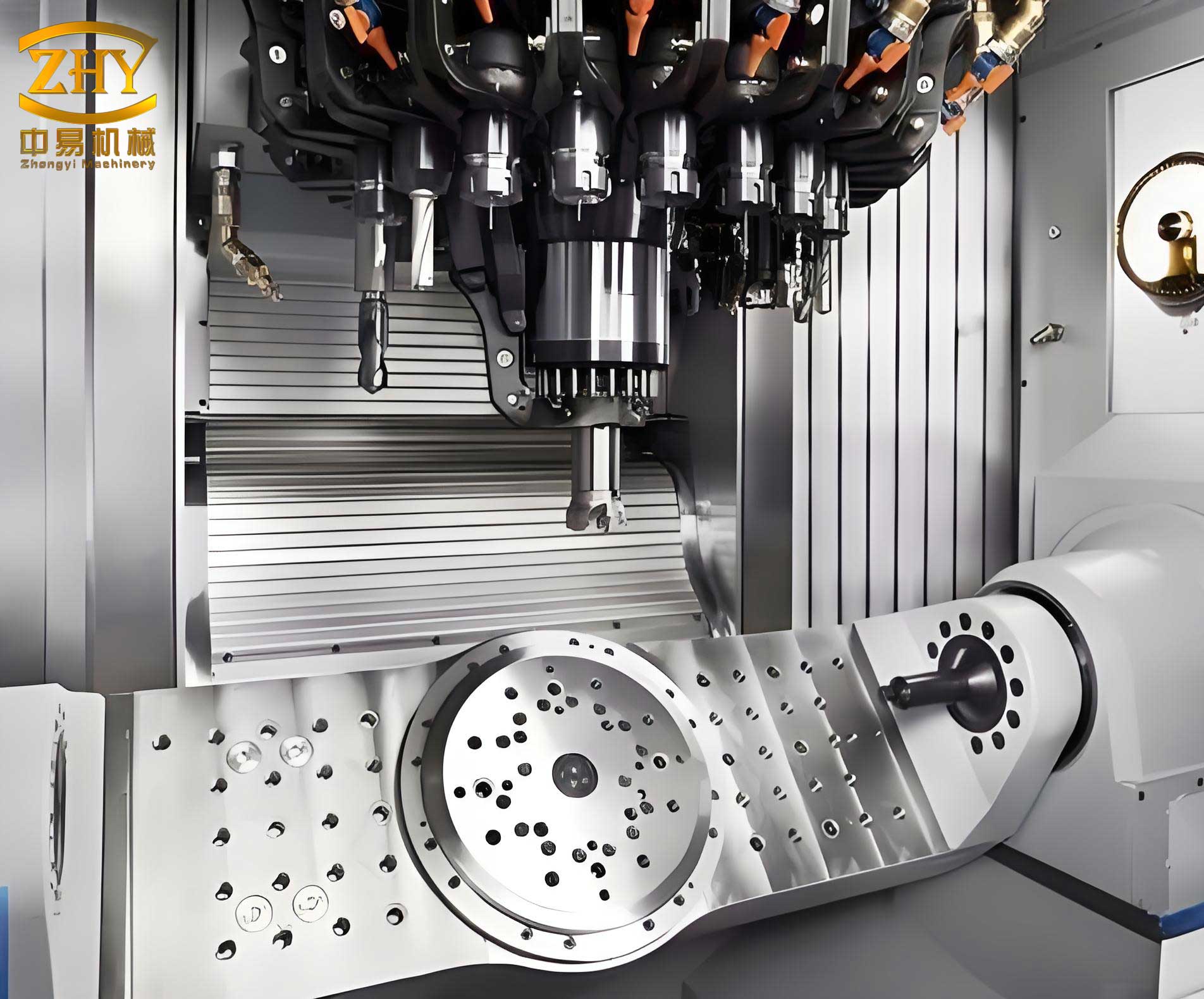
The development of boron-containing cast iron for machine tool castings began with a comprehensive review of existing wear-resistant materials, particularly high-phosphorus cast iron, which has been widely used but suffers from drawbacks like brittleness, cracking, and processing difficulties. Our goal was to leverage boron, an abundant element, to create a material that overcomes these limitations while maintaining or enhancing key properties. This article details our findings across various aspects, including melting techniques, casting behavior, microstructural evolution, mechanical performance, wear characteristics, and machinability. By employing a systematic approach involving laboratory experiments and pilot production runs, we have validated the suitability of boron-containing cast iron for machine tool castings, paving the way for its broader adoption in the industry. The following sections elaborate on each phase of our research, supported by data, tables, and formulas to provide a thorough understanding of this advanced material.
Melting and Processing Techniques for Boron-Containing Cast Iron
The melting process is a critical step in producing high-quality boron-containing cast iron for machine tool castings. We utilized cupola furnaces, which are common in foundry operations, to melt the base iron. Boron was introduced through two primary methods: adding boron iron or boron sand (dehydrated borax). Our experiments revealed that the choice of boron source significantly affects absorption rates and overall consistency. When boron iron was added at the furnace spout, along with inoculants, the boron absorption rate consistently exceeded 80%, whereas using boron sand resulted in an absorption rate above 70%. This difference underscores the importance of selecting appropriate additives for efficient boron incorporation. To ensure stability in boron content, we maintained an iron tapping temperature above 1400°C and processed batches of at least 0.5 tons. The absorption rate can be expressed using the formula: $$ \text{Boron Absorption Rate (\%)} = \frac{\text{Actual Boron Content in Cast Iron}}{\text{Boron Added}} \times 100. $$ This formula helps in calculating the required boron addition to achieve target compositions for machine tool castings.
After boron addition, proper slag removal is essential to prevent defects like inclusions in the final castings. Moreover, boron tends to increase the chilling tendency of cast iron, necessitating adjustments in carbon equivalent and inoculation levels. We increased the carbon equivalent to counteract this effect and used inoculants at rates above 0.3% to promote graphite formation and reduce white iron formation. The following table summarizes key parameters from our melting trials:
| Parameter | Value Range | Remarks |
|---|---|---|
| Tapping Temperature | >1400°C | Critical for boron absorption |
| Boron Source | Boron Iron or Boron Sand | Boron iron preferred for higher absorption |
| Boron Absorption Rate | 80-85% (Boron Iron), 70-75% (Boron Sand) | Based on experimental measurements |
| Inoculation Amount | >0.3% | To reduce chilling and improve microstructure |
| Batch Size | ≥0.5 tons | Ensures processing consistency |
These parameters form the foundation for reliable production of boron-containing cast iron for machine tool castings. In remelting scenarios, we observed that boron loss is less than 10%, indicating good recyclability of scrap material, which is advantageous for sustainable manufacturing of machine tool castings.
Casting Properties of Boron-Containing Cast Iron
The casting properties of boron-containing cast iron are vital for producing defect-free machine tool castings. We evaluated fluidity and linear shrinkage, comparing boron-containing cast iron with conventional gray cast iron. Fluidity was measured using spiral test molds, and linear shrinkage was determined through standardized specimen casting. Our results indicate that the addition of trace amounts of boron (up to 0.1%) has minimal impact on these properties, making it compatible with existing casting practices for machine tool castings. The fluidity data is presented in the table below, showing that boron-containing cast iron exhibits similar flow characteristics to gray cast iron, which is crucial for filling complex molds in machine tool castings.
| Material Type | Pouring Temperature (°C) | Spiral Length (mm) |
|---|---|---|
| Boron-Containing Cast Iron | 1350 | 620 |
| Gray Cast Iron | 1350 | 615 |
Linear shrinkage was also comparable, with boron-containing cast iron showing a shrinkage rate of approximately 1.0%, akin to gray cast iron. This similarity ensures that pattern allowances and gating systems designed for traditional cast iron can be applied to boron-containing variants for machine tool castings. Additionally, we assessed section sensitivity by casting step-shaped test blocks with thicknesses of 15 mm, 30 mm, and 45 mm. Hardness measurements across these sections revealed greater uniformity in boron-containing cast iron compared to gray cast iron, as summarized in the following table:
| Material Type | Hardness at 15 mm (HB) | Hardness at 30 mm (HB) | Hardness at 45 mm (HB) |
|---|---|---|---|
| Boron-Containing Cast Iron | 210 | 205 | 200 |
| Gray Cast Iron | 190 | 180 | 170 |
This uniformity reduces the risk of distortion and stress concentrations in intricate machine tool castings, enhancing their dimensional stability. The relationship between boron content and shrinkage can be modeled using a linear approximation: $$ \text{Shrinkage} = k_1 – k_2 \cdot [B], $$ where [B] is the boron content in weight percent, and \(k_1\) and \(k_2\) are constants derived from experimental data. For typical machine tool castings, this equation helps in predicting dimensional changes during solidification.
Microstructural Characteristics of Boron-Containing Cast Iron
The microstructure of boron-containing cast iron plays a pivotal role in determining its performance for machine tool castings. Boron primarily forms hard phases, such as borocarbides, which contribute to wear resistance. We identified three types of boron-containing phases: boron carbides, boron-containing complex compounds, and ternary eutectic compounds. The latter can degrade properties and is generally avoided when the phosphorus-to-boron ratio is less than 3. In machine tool castings, where phosphorus content is typically low, the hard phases are predominantly of the first two types, which are beneficial. At low boron levels (below 0.1%), the microstructure consists of finely dispersed borocarbides within a pearlitic matrix. The pearlite in boron-containing cast iron is notably refined compared to that in gray cast iron, as observed through microscopic examination. The microhardness of pearlite increases from about 250 HV in gray cast iron to 320 HV in boron-containing cast iron, indicating matrix strengthening. This refinement can be quantified using the Hall-Petch relationship: $$ \sigma_y = \sigma_0 + \frac{k}{\sqrt{d}}, $$ where \(\sigma_y\) is the yield strength, \(\sigma_0\) and \(k\) are material constants, and \(d\) is the pearlite interlamellar spacing. Boron addition reduces \(d\), thereby enhancing strength.
When boron content exceeds 0.1% or under inadequate inoculation, ledeburite structures may appear, which are detrimental to toughness and should be minimized in machine tool castings. The volume fraction of hard phases can be estimated using the formula: $$ V_f = \alpha \cdot [B]^{\beta}, $$ where \(V_f\) is the volume fraction of borocarbides, [B] is the boron content, and \(\alpha\) and \(\beta\) are empirical coefficients (typically \(\alpha \approx 0.5\) and \(\beta \approx 1.2\) for low-boron cast iron). This relationship aids in tailoring the microstructure for optimal balance between hardness and ductility in machine tool castings. Additionally, boron promotes the formation of a low-carbon ferrite layer at the interface between borocarbides and pearlite, which may improve overall toughness. The table below summarizes key microstructural features:
| Feature | Boron-Containing Cast Iron | Gray Cast Iron |
|---|---|---|
| Pearlite Microhardness (HV) | 300-320 | 240-260 |
| Boron Carbide Volume Fraction | 2-5% (at 0.1% B) | 0% |
| Graphite Morphology | Fine Flakes | Coarser Flakes |
| Eutectic Cell Size | Reduced by 20-30% | Standard |
These microstructural attributes directly influence the mechanical and wear properties, making boron-containing cast iron suitable for demanding applications in machine tool castings.
Mechanical Properties of Boron-Containing Cast Iron
The mechanical properties of boron-containing cast iron are crucial for ensuring the reliability and longevity of machine tool castings. We conducted tensile, bending, and hardness tests on specimens with varying boron contents. The results demonstrate that low boron additions (up to 0.1%) enhance hardness and strength while maintaining adequate toughness. Specifically, the Brinell hardness increases linearly with boron content, as described by the equation: $$ \text{HB} = 180 + 400 \cdot [B], $$ where [B] is in weight percent. For instance, at 0.1% boron, the hardness reaches approximately 220 HB, compared to 180 HB for gray cast iron. This increase is attributed to the hard phases and pearlite refinement. Bending strength and deflection were found to be comparable to those of grade HT250 gray cast iron, indicating that boron-containing cast iron meets standard requirements for machine tool castings. Impact toughness, however, shows a slight decline with higher boron levels, but remains superior to that of high-phosphorus cast iron. The following table presents a summary of mechanical properties from our experiments:
| Property | Boron-Containing Cast Iron (0.1% B) | Gray Cast Iron (HT250) | High-Phosphorus Cast Iron |
|---|---|---|---|
| Tensile Strength (MPa) | 260-280 | 250-270 | 240-260 |
| Bending Strength (MPa) | 450-470 | 440-460 | 420-440 |
| Deflection (mm) | 3.5-4.0 | 3.8-4.2 | 3.0-3.5 |
| Impact Toughness (J/cm²) | 8-10 | 10-12 | 6-8 |
| Hardness (HB) | 210-230 | 180-200 | 220-240 |
Elastic modulus, a key parameter for stiffness in machine tool castings, was also measured using wedge-shaped specimens. Boron addition raised the elastic modulus from 120 GPa in gray cast iron to 135 GPa in boron-containing cast iron, which can be expressed as: $$ E = E_0 + \gamma \cdot [B], $$ where \(E_0\) is the modulus of base iron (120 GPa) and \(\gamma\) is a constant (approximately 150 GPa per weight percent boron). This increase contributes to improved rigidity of machine tool castings, reducing deformation under load. The overall mechanical performance confirms that boron-containing cast iron is a viable material for machine tool castings, offering a balance of strength, hardness, and toughness.
Wear Resistance of Boron-Containing Cast Iron
Wear resistance is a paramount consideration for machine tool castings, especially for components like guideways that experience continuous friction. We performed wear tests on an Amsler machine, comparing boron-containing cast iron with gray cast iron and high-phosphorus cast iron. The relative wear resistance, defined as the inverse of wear volume loss, showed significant improvement with boron addition. At 0.1% boron, the relative wear resistance was 1.5 times that of high-phosphorus cast iron and 2.5 times that of gray cast iron. Even at 0.05% boron, the wear resistance approached that of high-phosphorus cast iron, which is known to be 1.8 times more wear-resistant than gray cast iron. These results validate the efficacy of boron in enhancing durability for machine tool castings. The wear mechanism involves the hard borocarbides acting as abrasion-resistant particles, while the refined pearlite matrix provides support. The wear rate can be modeled using the Archard equation: $$ W = k \cdot \frac{F \cdot L}{H}, $$ where \(W\) is the wear volume, \(F\) is the applied load, \(L\) is the sliding distance, \(H\) is the material hardness, and \(k\) is a wear coefficient. For boron-containing cast iron, the increased hardness reduces \(W\), and the presence of borocarbides lowers \(k\), leading to superior performance. Field visits to users of machine tool castings made from boron-containing cast iron revealed that guideway surfaces retained lubrication better and showed less wear-induced discoloration, corroborating our laboratory findings. The table below summarizes wear test data:
| Material Type | Boron Content (%) | Relative Wear Resistance (vs. Gray Cast Iron) | Observation in Service |
|---|---|---|---|
| Gray Cast Iron | 0 | 1.0 | Rapid oil blackening |
| High-Phosphorus Cast Iron | 0 | 1.8 | Moderate wear |
| Boron-Containing Cast Iron | 0.05 | 1.7 | Improved surface retention |
| Boron-Containing Cast Iron | 0.1 | 2.5 | Minimal wear, stable lubrication |
This enhanced wear resistance, combined with other properties, makes boron-containing cast iron an excellent choice for machine tool castings subjected to abrasive conditions.
Machinability and Cold Working of Boron-Containing Cast Iron
The machinability of boron-containing cast iron is a practical concern for manufacturing machine tool castings, as it affects processing costs and efficiency. We evaluated cold working operations such as turning, milling, planing, grinding, and hand scraping. For boron contents below 0.1%, the presence of finely dispersed borocarbides does not pose significant challenges; in fact, cutting performance is similar to that of gray cast iron and better than high-phosphorus cast iron. However, hand scraping becomes slightly more difficult due to the hard phases, with increased tool wear. We conducted comparative scraping tests, assessing effort, time, and tool wear. The results indicated that low-boron cast iron (0.05-0.1% B) requires about 20% more scraping time than gray cast iron but is 30% easier to scrape than high-phosphorus cast iron. Tool wear rates followed a similar trend. This can be quantified using a machinability index \(M\), defined as: $$ M = \frac{1}{t \cdot w}, $$ where \(t\) is the scraping time and \(w\) is the tool wear weight loss. For boron-containing cast iron with 0.1% B, \(M\) is approximately 0.8 relative to gray cast iron (set at 1.0), whereas high-phosphorus cast iron scores 0.5. Thus, by controlling boron content and avoiding ledeburite formation, machinability remains acceptable for machine tool castings. The table below outlines key machinability metrics:
| Material Type | Scraping Time (min/cm²) | Tool Wear Rate (mg/cm²) | Machinability Index (M) |
|---|---|---|---|
| Gray Cast Iron | 10 | 5 | 1.0 |
| High-Phosphorus Cast Iron | 25 | 15 | 0.5 |
| Boron-Containing Cast Iron (0.1% B) | 12 | 8 | 0.8 |
| Boron-Containing Cast Iron (0.05% B) | 11 | 7 | 0.9 |
These findings suggest that with proper process control, boron-containing cast iron can be efficiently machined for machine tool castings, balancing wear resistance and workability.
Recommended Composition and Process Control for Machine Tool Castings
Based on our comprehensive research, we recommend specific chemical compositions and process controls for producing boron-containing cast iron for machine tool castings. The goal is to optimize wear resistance, mechanical properties, and machinability. For castings requiring hand-scraped surfaces, such as guideways, boron content should be maintained between 0.05% and 0.1%. For other components not needing scraping, boron can be increased to 0.1-0.15% for enhanced wear resistance. To counteract boron’s chilling effect, carbon equivalent should be adjusted upward, and inoculation must be robust. The recommended composition ranges are as follows: Carbon (C) 3.2-3.6%, Silicon (Si) 1.8-2.2%, Manganese (Mn) 0.8-1.2%, Phosphorus (P) <0.15%, Sulfur (S) <0.12%, and Boron (B) 0.05-0.1%. For our production of machine tool castings, we used a slightly modified composition: C 3.3-3.5%, Si 1.9-2.1%, Mn 0.9-1.1%, P <0.1%, S <0.1%, and B 0.06-0.09%. This ensures a balance of properties suitable for various machine tool castings.
Process control at the furnace front is critical. We rely on wedge test samples to assess chilling tendency. Compared to gray cast iron, boron-containing cast iron with 0.1% B shows a 2-3 mm larger white iron width on wedge tests, while at 0.05% B, the increase is 1-2 mm. This guides inoculation adjustments; we recommend inoculation amounts above 0.4%, iron temperatures above 1400°C, and batch sizes over 0.5 tons to ensure consistent boron absorption and microstructure. The boron content can be predicted using the absorption formula: $$ [B]_{\text{final}} = [B]_{\text{added}} \cdot \text{Absorption Rate}. $$ With these controls, boron-containing cast iron achieves 2-5% borocarbide volume, meeting mechanical standards like HT250, and is cost-effective. Using boron sand, the cost increase per ton of machine tool castings is about $5, whereas boron iron adds $10, compared to $50 for high-phosphorus cast iron. Moreover, scrap management is simpler, as boron-containing cast iron does not require segregated recycling like high-phosphorus variants. The table below summarizes the recommendations:
| Aspect | Recommended Value/Range | Rationale |
|---|---|---|
| Boron Content | 0.05-0.1% (scraped); 0.1-0.15% (non-scraped) | Balances wear resistance and machinability |
| Carbon Equivalent | 3.8-4.2% | Counters chilling effect |
| Inoculation Amount | >0.4% | Promotes graphite formation |
| Pouring Temperature | >1350°C | Ensures fluidity and reduces defects |
| Wedge Test White Iron Width | 2-5 mm larger than gray iron | Indicator of chilling control |
These guidelines facilitate the widespread adoption of boron-containing cast iron for machine tool castings, leveraging its advantages in performance and economy.
Conclusion
Our research and trials have conclusively demonstrated that boron-containing cast iron is a superior material for machine tool castings, offering enhanced wear resistance, stable mechanical properties, and favorable processing characteristics. By integrating trace amounts of boron into cast iron matrices, we have developed a cost-effective alternative to high-phosphorus cast iron, with the added benefits of reduced brittleness, lower scrap rates, and improved machinability. The melting and casting processes are straightforward, requiring minimal changes to existing foundry setups, making it accessible for widespread use in producing machine tool castings. Key findings include boron absorption rates of 80-85% with boron iron, microstructural refinement leading to increased hardness and elastic modulus, and wear resistance up to 2.5 times that of gray cast iron. Furthermore, cold working operations remain feasible with proper boron control, ensuring that machine tool castings can be manufactured efficiently. We recommend boron contents of 0.05-0.1% for most applications, coupled with adjusted carbon equivalents and robust inoculation. This material not only elevates the quality and longevity of machine tool castings but also contributes to cost savings and resource efficiency. Future work may explore higher boron levels for specialized applications or combine boron with other alloying elements for further optimization. Overall, boron-containing cast iron represents a significant advancement in the field of wear-resistant materials for machine tool castings, promising to drive innovation and reliability in manufacturing industries worldwide.