
In my extensive work within the foundry industry, I have dedicated significant effort to understanding and improving the dimensional accuracy of sand castings. This aspect is critical because it directly impacts manufacturing efficiency, product quality, and cost-effectiveness. Sand castings are widely used in various sectors, from automotive to machinery, and their precision determines how well they integrate into final assemblies. The challenge lies in controlling the numerous variables that affect dimensions during the casting process. Through this research, I aim to share insights into evaluation methods, influencing factors, and predictive techniques that can enhance the consistency of sand castings. By focusing on these elements, we can achieve tighter tolerances, reduce waste, and boost overall productivity in sand casting operations.
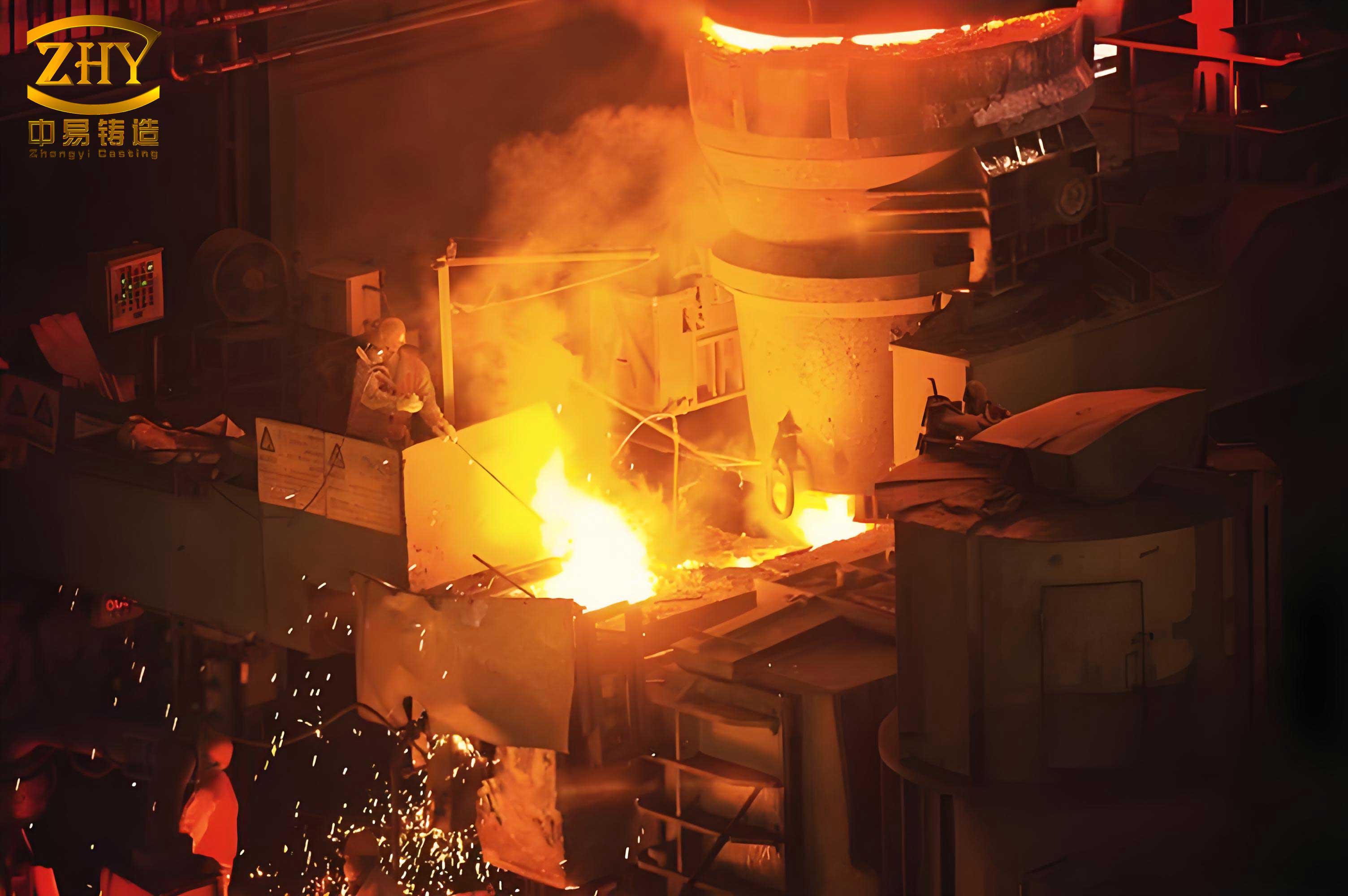
The importance of dimensional accuracy in sand castings cannot be overstated. In my observations, high precision leads to multiple benefits. Firstly, it reduces machining costs by allowing sand castings to be directly mounted on machine tool fixtures via定位 points, eliminating certain processing steps and minimizing machining allowances for expensive or hard-to-machine alloys. Secondly, assembly costs are lowered, as seen in cases where manual labor is reduced, and components previously assembled from multiple parts can be integrated into a single sand casting due to improved accuracy. Thirdly, weight savings are achieved; tighter tolerances mean less overweight in sand castings, enabling thinner wall designs with reduced safety factors. Fourthly, casting costs themselves can be decreased by advancing casting technologies to consistently produce thin-walled sand castings, significantly cutting weight and material expenses, especially for precious metals. Fifthly,外观 is enhanced, as many sand castings, whether painted or not, show improved appearance with higher precision, boosting market competitiveness. Lastly, structural designs become more compact, facilitating设备小型化. Designers often prefer high-accuracy sand castings over assembled部件, as they offer reliability and simplicity. These advantages underscore why investing in dimensional accuracy research for sand castings is essential for modern manufacturing.
To assess the dimensional accuracy of sand castings, I rely on statistical methods that are internationally recognized. The process involves measuring a specific dimension across a batch of sand castings—typically more than 25 pieces—to calculate the average size and the distribution around it. The average may not align with the drawing尺寸 due to system deviations caused by patterns, core boxes, core assembly, and core-setting fixtures. These are considered permanent or semi-permanent errors and can be corrected in production. The formula for the average dimension is:
$$ \bar{x} = \frac{\sum_{i=1}^{n} f_i x_i}{\sum_{i=1}^{n} f_i} $$
where \( \bar{x} \) is the mean dimension, \( f_i \) is the frequency of measurement \( x_i \), and \( n \) is the number of sand castings measured. The distribution around the mean is expressed using standard deviation, which reflects the dimensional precision of sand castings and indicates the foundry’s工艺 level. It accounts for random factors like molding, coring, assembly, pouring, melting, and solidification. The calculation involves: a) computing the arithmetic mean, b) finding the difference between each measurement and the mean, c) squaring these differences, d) summing the squared values, e) dividing by the number of sand castings minus one to get the sample variance, and f) taking the square root for the standard deviation. The formula is:
$$ S.D. = \sqrt{ \frac{\sum_{i=1}^{n} (x_i – \bar{x})^2 }{n-1} } $$
where \( x_i \) is the ith measured dimension, \( \bar{x} \) is the mean, and \( n \) is the sample size. Given the many influencing factors, dimensions in mass production of sand castings tend to follow a normal distribution around the mean. Thus, most countries use ±3 times the standard deviation as the tolerance range, i.e., \( L \pm 3 \times S.D. \), where \( L \) is the nominal dimension. For large samples (e.g., >50), this provides a 99.73% confidence level, meaning 99.73% of sand castings will have dimensions within this range. This statistical approach forms the backbone of evaluating sand castings’ precision in my research.
Understanding the factors affecting dimensional accuracy in sand castings is crucial for improvement. In my analysis, I categorize these factors based on the specific工艺过程 and the nature of errors. Below is a table summarizing key influences according to the工艺过程:
| Process Stage | Specific Factors Affecting Sand Castings |
|---|---|
| Pattern and Design | Excessive pattern wear; insufficient sand in deep cavities;不合理 core/core head间隙; machining定位面 in hard-to-mold areas; deep wet sand in repaired cores; small core heads offering inadequate support; pattern design causing excessive cleaning; using cores for small holes (<20mm); improper openings for core setting; sharp corners hindering solidification; inappropriate core支撑大小; pattern deformation during handling. |
| Gating and Risering | Excessive cleaning and grinding of gating; gating causing hot spots, stress, or mold deformation; gating leading to unstable contraction in sand castings. |
| Mold Boxes and Equipment | Over-vibration during molding;不合理上下箱定位; core lift during pouring; worn pins and bushes in mold boxes;沉箱;不合理 machine core setting; poor venting in mold cavities; improper mold cooling; rough handling during shakeout. |
| Raw Materials | Improper sand grain distribution; inadequate bentonite quality/quantity to compensate for silica sand expansion; improper clay/water ratio; incorrect coal dust amount; insufficient new sand addition; lack of dextrin等 binders. |
| Molding Machines | Inadequate squeeze pressure for uniform hardness >90; uneven sand filling causing pressure variations; non-parallel boxes, plates, or supports; sand bridging in deep/narrow cavities; insufficient box stiffness; over-vibration causing collapse; excessive release agent; uncleaned sand between boxes or plates; low pressure for contour distribution around patterns. |
| Sand Preparation and Mixing | Short mixing time failing to meet requirements; undersized or不合理 sand systems; high metal-to-sand ratio raising temperature, affecting clay and combustibles; poor sand permeability; uneven return sand distribution. |
| Cores | Unstable dimensions due to coring工艺; core box wear; core expansion or yielding from heat; metal erosion; thickness变化 from erosion; damage during core handling. |
| Metal Composition, Temperature, and Pouring | Variations in composition affecting收缩 and expansion; changes in elements influencing microstructure; unstable pouring temperature. |
Additionally, I classify errors into system errors and random errors. System errors in sand castings are permanent (e.g., from pattern inaccuracies) or semi-permanent (e.g., from gradual changes in equipment or materials), while random errors arise from工艺 factors and exhibit variability. System errors do not inherently relate to nominal dimensions and are not typically included in tolerance standards; they can be corrected through adjustments. In contrast, random errors, often combined with semi-permanent ones, define the inherent precision of sand castings. Distinguishing these is vital for accurate assessment, as pattern-related errors are systematic, whereas production factors introduce randomness. My findings show that system errors in sand castings are unpredictable and cannot be generalized into尺寸精度 data, emphasizing the need for tailored process controls.
Predicting the dimensional accuracy of sand castings is a proactive step I employ to anticipate variations and optimize designs. Two primary methods I use are the ST-71 Committee approach and the dimensional chain method. The ST-71 method provides a formula to estimate standard deviation based on drawing尺寸, core projection area, and main wall thickness, adjusted for material and dimension type. The general form is:
$$ S.D. = 10^{-2} \left( 860 \times \text{Drawing Dimension} + 1.969 \times \text{Core Projection Area} + 50.20 \times \text{Main Wall Thickness} \right) – 10^{-2} \left[ 21.84 \times I_{\text{half-mold}} + 1.27 \times I_{\text{core-fixed}} + 26.67 \times I_{\text{fixture-core}} + 7.37 \times I_{\text{two-cores}} – 15.75 \times I_{\text{gray iron}} – 22.1 \times I_{\text{white iron}} – 32.51 \times I_{\text{malleable iron}} – 69.6 \times I_{\text{steel}} – 32.26 \times I_{\text{aluminum}} \right] \text{ mm} $$
where \( I \) indicators are 1 if applicable, else 0. Core projection area is the core’s投影 on the parting plane minus areas outside the cavity. This formula shows that more complex sand castings tend to have lower precision. For instance, dimensions across parting lines add \( +4.32 \times 10^{-2} \text{ mm} \) to standard deviation. Using fixtures for cores improves accuracy, while dimensions formed by two cores have slightly higher precision. Material coefficients account for differences in收缩 behavior. The predicted standard deviation assumes the pattern is adjusted so the mean matches the drawing尺寸. Below is a table comparing predicted and actual standard deviations for various sand castings, based on my application of this method:
| Case No. | Drawing Dimension (mm) | Alloy | Dimension Type | Predicted S.D. (mm) | Actual S.D. (mm) |
|---|---|---|---|---|---|
| 1 | 920.62 | Gray Iron | Mold and core-fixed core | 0.302 | 0.336 |
| 2 | 352.36 | Gray Iron | Entirely in one half-mold | 0.046 | 0.043 |
| 3 | 119.76 | Gray Iron | Mold-to-mold across parting | 0.305 | 0.686 |
| 4 | 144.45 | Gray Iron | Entirely in one half-mold | 0.305 | 0.152 |
| 5 | 377.42 | Gray Iron | Core-to-core | 1.092 | 0.711 |
| 6 | 82.17 | Gray Iron | Entirely in one core | 0.660 | 0.483 |
| 7 | 73.15 | Malleable Iron | Entirely in one half-mold | 0.305 | 0.152 |
| 8 | 60.96 | Malleable Iron | Entirely in one core | 0.254 | 0.178 |
| 9 | 152.4 | Malleable Iron | Entirely in one core | 0.305 | 0.660 |
| 10 | 189.71 | Malleable Iron | Mold and core-fixed core | 0.737 | 0.406 |
| 11 | 60.96 | White Iron | Entirely in one core | 0.178 | 0.178 |
| 12 | 92.25 | White Iron | Entirely in one half-mold | 0.203 | 0.076 |
| 13 | 146.1 | White Iron | Mold and core across parting | 0.635 | 0.483 |
From this table, we see that predictions often align with actual measurements for sand castings, validating the method. If the predicted distribution is unacceptable, I recommend actions like redesigning to keep dimensions within a single core or half-mold, using fixture-fixed cores, allowing修整, implementing special工艺, or expanding tolerances with customer consent. This approach helps in early design stages to ensure sand castings meet required精度.
The dimensional chain method is another predictive tool I apply, especially in foundries with extensive experience. It involves mapping the工艺路线 for position or wall thickness dimensions from the theoretical model through molding, coring, assembly, and closing operations. By listing deviations from historical data for each step, I construct a dimensional chain diagram and solve it using probability-based formulas. The key equation is:
$$ \Delta_{\text{closing}} = \sum_{i=1}^{n} A_i \cdot \Delta_i \pm H \sqrt{ \sum_{i=1}^{n} (A_i \cdot T_i)^2 } $$
where \( \Delta_{\text{closing}} \) is the tolerance of the closing link (final dimension), \( A_i \) is the conversion coefficient (+1 for increasing links, -1 for decreasing, 1 for zero links), \( \Delta_i \) is the mid-point deviation coordinate, \( T_i \) is half the tolerance of link i, and \( H \) is a correction factor typically around 1. This method accounts for cumulative errors in sand castings production. For example, in predicting water jacket wall thickness for an engine block, I calculated a deviation of \( 5.62 \pm 1.89 \text{ mm} \), which matched实测 data from hundreds of sand castings, showing consistency. By adjusting定位 methods in newer designs, such as switching to core-based positioning, I predicted reduced deviations, and subsequent production data confirmed this, with deviations around ±1.6 mm. This demonstrates how dimensional chain analysis can effectively forecast accuracy in sand castings, enabling process optimizations.
In conclusion, my research on dimensional accuracy of sand castings highlights the multifaceted nature of this field. Through statistical evaluation, I can quantify precision using standard deviation and mean calculations, which are essential for quality control. The numerous influencing factors—from pattern design to metal composition—require systematic management to minimize errors in sand castings. Predictive methods like the ST-71 formula and dimensional chain analysis offer valuable tools for anticipating variations and guiding design decisions. Practically, improving accuracy in sand castings leads to cost savings, weight reduction, and enhanced product performance. As foundries adopt these insights, they can produce more reliable and efficient sand castings, meeting the growing demands of modern industry. Continuous monitoring and adjustment based on these principles will drive further advancements in sand casting technology, ensuring that sand castings remain a cornerstone of manufacturing.