
In the field of sand casting, green sand molding has been widely adopted for its efficiency and cost-effectiveness in producing cast components. Our company operates multiple vertical parting line molding systems that utilize green sand for manufacturing various parts, including refrigerator compressor cylinder blocks. Traditionally, coal powder has been incorporated into green sand to prevent defects like metal penetration and improve surface finish, owing to its low cost and availability. However, the use of coal powder in sand casting introduces significant drawbacks, such as poor working conditions due to airborne particles and harmful gas emissions during pouring. Additionally, the residual ash and coke from coal powder necessitate higher additions of water and bentonite to maintain optimal mold properties, and it can even lead to spontaneous combustion. Consequently, since the mid-20th century, efforts have been made globally to develop coal-free green sand systems, and our research aligns with this trend to enhance the sustainability and quality of sand casting processes.
The refrigerator compressor cylinder block, made of HT200 cast iron with a weight of approximately 2 kg, is a high-volume product in our sand casting operations. Despite its significance, persistent issues with sand burning in the internal cavities, particularly the silencing chamber, have been challenging to resolve. This defect manifests as rough, white-speckled surfaces, compromising the component’s integrity. To address this, we embarked on a study to evaluate the feasibility of eliminating coal powder from green sand while maintaining or improving casting quality. Our analysis began by examining the role of coal powder in sand casting. In conventional green sand, coal powder serves multiple functions: it generates reducing gases during pouring to prevent oxidation of the molten metal, softens under heat to absorb thermal expansion stresses, forms a colloidal barrier that blocks metal penetration, and produces a lustrous carbon layer that enhances surface finish. However, historical practices, such as the use of fine-grained red sand from specific regions without coal powder, demonstrated that adequate surface quality could be achieved in thin-walled castings through fine sand granulometry and surface sintering. This insight prompted us to explore the potential of coal-free green sand in industrial-scale sand casting.
Our initial experiments focused on adjusting the sand granulometry to combat sand burning defects. By increasing the average fineness number (AFS) of the green sand through the addition of fine-grained silica sand (100/200 mesh), we observed a significant reduction in sand adhesion on cylinder block castings. For instance, sand casting trials with AFS values raised from 57 to 62 showed that castings could be cleaned in a single shot blasting cycle, whereas lower AFS values required multiple cycles. This confirmed that finer sand particles could effectively prevent metal penetration by reducing pore sizes and promoting surface densification. Building on this, we proceeded to conduct comprehensive tests with coal-free green sand, targeting both sand burning and gas hole defects commonly encountered in sand casting.
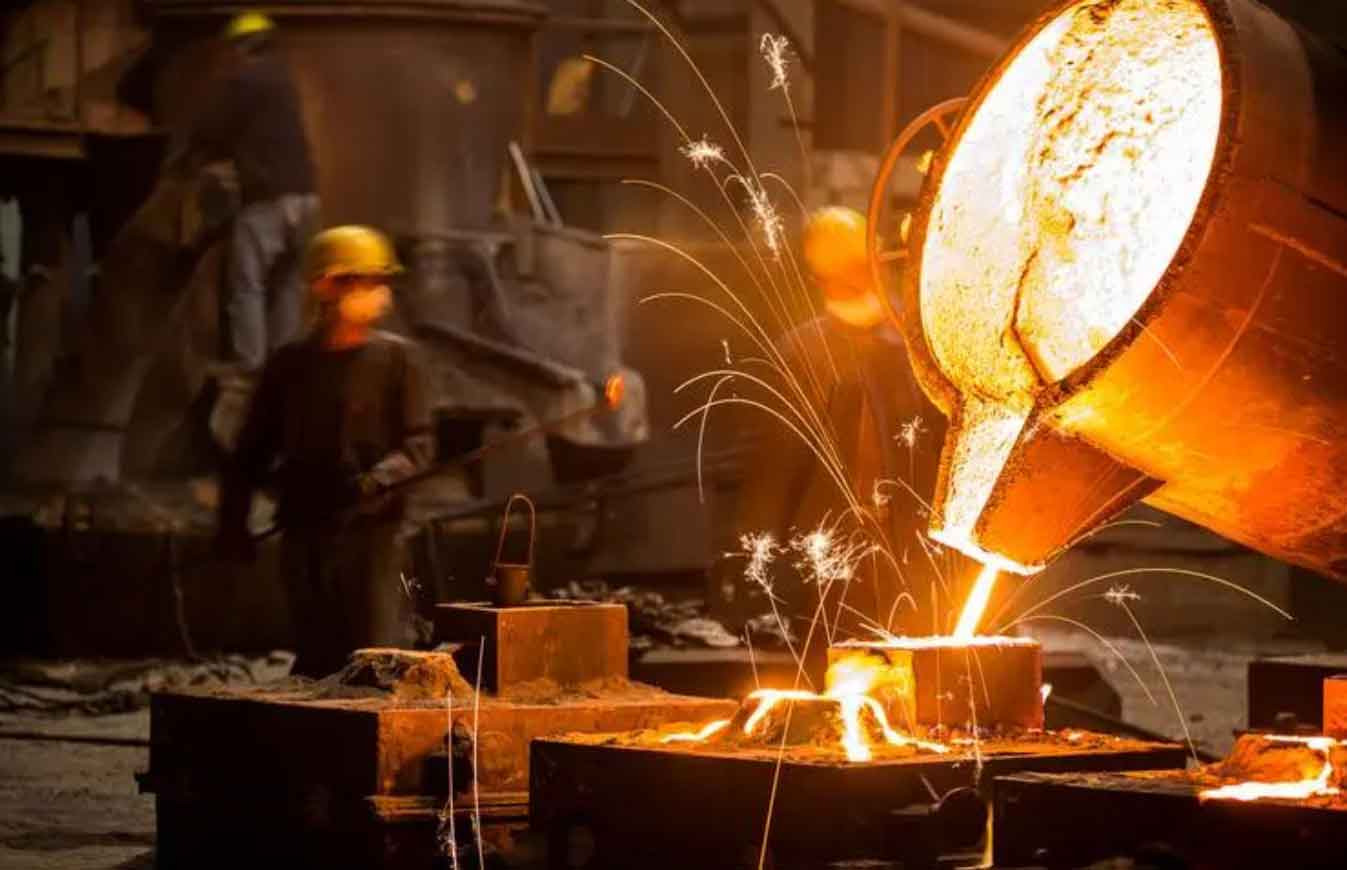
For the sand burning experiments, we formulated a coal-free green sand mixture consisting of 1500 kg of silica sand (100/200 mesh), 148 kg of bentonite (9%), and 42-45 liters of water, mixed for 480 seconds. This was compared to a conventional coal-powder-containing sand. The properties of both sand types were evaluated, as summarized in Table 1. The coal-free sand exhibited higher average fineness and lower loss on ignition, but lower compactability and green strength initially. In sand casting trials for the cylinder block, we poured 10 molds with coal-free sand and 5 with coal-containing sand, using identical pouring parameters: molten iron at 1420°C with specific composition and inoculation. The results indicated that while the coal-free sand had slightly higher surface roughness, both sand types produced castings free of sand burning in the silencing chambers. Moreover, the coal-free sand eliminated the blue flames and smoke associated with coal powder during pouring, improving environmental conditions in the sand casting process.
| Parameter | Coal-Free Sand | Coal-Containing Sand |
|---|---|---|
| Compactability (%) | 44-49 | 38-31 |
| Moisture Content (%) | 2.5-2.4 | 3.0-3.5 |
| Permeability | 70-78 | 83-115 |
| Green Strength (kPa) | 134-137 | 158-176 |
| Effective Bentonite (%) | 8.4-8.57 | – |
| Loss on Ignition (%) | 1.4 | 3.7 |
| Clay Content (%) | 8.18 | 11.38 |
| Average Fineness (AFS) | 89.18 | 65.83 |
However, when we transitioned to coal-free green sand in production-scale sand casting, gas holes emerged as a new defect in the gating systems and internal cavities of the cylinder blocks. We identified that this issue was linked to the oolitization rate of the sand, which refers to the percentage of dead-burned bentonite layers adhering to sand grains after repeated use. A higher oolitization rate correlates with increased moisture absorption and reduced shear strength, leading to gas evolution during pouring. The oolitization rate can be calculated using the formula: $$ \text{Oolitization Rate} = \frac{M_r}{M_o} \times 100\% $$ where \( M_r \) is the mass of residual sand after acid and alkali treatment, and \( M_o \) is the original mass of the sand sample. In sand casting, controlling this rate is crucial for defect prevention. Our tests showed that sands with oolitization rates above 15% resulted in significant gas holes, whereas rates below 15% minimized such defects. Table 2 illustrates the relationship between oolitization rate, shear strength, and gas hole occurrence in sand casting. By increasing the addition of new sand to the recycled sand system, we reduced the oolitization rate and eliminated gas holes, demonstrating the importance of sand regeneration in coal-free sand casting processes.
| New Sand Addition (%) | Oolitization Rate (%) | Gas Hole Incidence (%) | Shear Strength (kPa) |
|---|---|---|---|
| 0.30 | 19.86 | 6 | 27-29 |
| 0.50 | 17.34 | 3 | 45-46 |
| 0.70 | 15.66 | 1 | – |
| 1.00 | 14.82 | 0 | – |
To ensure the sustainable reuse of coal-free green sand in sand casting, we further experimented with enhancing the clay content to improve sand properties. In one trial, we used a mixture of 1500 kg silica sand (100/200 mesh), 200 kg bentonite (11.8%), and 35-50 liters of water, targeting moisture contents of 2.5% and 3.0%. The resulting sand had higher clay content and average fineness, as detailed in Table 3. Castings produced with this coal-free sand exhibited superior surface quality and no sand burning or gas holes, even after internal inspection. This confirms that with proper control of sand composition and oolitization rate, coal-free green sand can be reliably recycled in sand casting applications, reducing environmental impact while maintaining high standards.
| Parameter | Coal-Free Sand (Low Moisture) | Coal-Free Sand (High Moisture) | Coal-Containing Sand |
|---|---|---|---|
| Compactability (%) | 34 | 50 | 30 |
| Moisture Content (%) | 2.4 | 3.3 | 3.3 |
| Permeability | 85 | 85 | 97 |
| Green Strength (kPa) | 177 | 174 | 171 |
| Effective Bentonite (%) | 11.2 | – | 8.0 |
| Loss on Ignition (%) | 1.6 | – | 3.2 |
| Clay Content (%) | 11.56 | – | 12.08 |
| Average Fineness (AFS) | 83.41 | – | 65.12 |
In conclusion, our research demonstrates that coal-free green sand is a viable alternative in sand casting for refrigerator compressor cylinder blocks. By optimizing sand granulometry, controlling the oolitization rate below 15%, and adjusting bentonite and moisture levels, we can eliminate sand burning and gas hole defects. The transition to coal-free sand not only improves workplace safety and environmental conditions but also supports the circular economy through effective sand recycling. This advancement in sand casting technology underscores the potential for greener foundry practices without compromising on quality, paving the way for broader adoption in the industry. Future work will focus on refining these parameters for other cast components and scaling up the process for high-volume sand casting production.