
In the evolving landscape of automotive engineering, the demand for more durable, efficient, and reliable engine components has never been greater. As an engineer deeply involved in material science research, I have focused on advancing the properties of gray cast iron, a cornerstone material for engine blocks, cylinder heads, and other critical parts. Traditional gray cast iron, while cost-effective and machinable, often falls short in meeting the heightened requirements of modern engines, which operate under more severe thermal and mechanical stresses. This has driven my investigation into high-manganese gray cast iron, a variant that promises enhanced strength, reduced shrinkage, superior thermal fatigue resistance, and excellent leak-proof characteristics. Through extensive laboratory experiments and production validations, I have explored how this material can be optimized via specialized composite inoculation treatments, offering a viable solution for high-performance applications while aligning with economic constraints. In this article, I will detail my findings, supported by data, tables, and theoretical models, to elucidate the potential of high-manganese gray cast iron in revolutionizing engine manufacturing.
The significance of gray cast iron in automotive industries stems from its favorable castability, damping capacity, and wear resistance. However, conventional gray cast iron typically exhibits limitations in tensile strength and shrinkage behavior, which can lead to casting defects and compromised component integrity. To address these issues, my research centered on modifying the chemical composition, particularly by increasing manganese content, to refine the microstructure and improve mechanical properties. Manganese, as a weak carbide-forming element, was selected for its ability to enhance strength without excessively promoting chill formation or impairing machinability. The core hypothesis was that a carefully balanced high-manganese gray cast iron, coupled with advanced inoculation, could yield a material with a dense matrix, fine graphite morphology, and high pearlite content, thereby elevating performance metrics. This approach not only aims to reduce energy consumption through improved efficiency but also enhances the reliability of vehicles, facilitating the adoption of advanced technologies in domestic production.
My experimental methodology involved both laboratory-scale and industrial-scale trials to ensure robustness and scalability. For laboratory tests, I used a medium-frequency induction furnace with a melt capacity of 50 kg per batch, while production validation was conducted in a 3-ton industrial-frequency induction furnace. The base iron composition was meticulously controlled, with carbon equivalent values around 3.9% to 4.1%, and manganese was elevated to target levels between 1.2% and 1.8%. The molten iron was superheated to 1500°C and treated with a proprietary composite inoculant before pouring at temperatures ranging from 1380°C to 1420°C. Specimens for mechanical testing, metallography, wear resistance, thermal fatigue, and leak-proof assessment were extracted from standard Y-block test bars and actual castings. Key dimensions included conical samples for shrinkage analysis and dedicated samples for thermal cycling tests, as illustrated in the following schematic descriptions. Wear tests were performed on a pin-on-disk machine under lubricated conditions with a load of 50 N, thermal fatigue evaluations involved cyclic heating and cooling between 200°C and 600°C, and leak resistance was measured using a hydraulic pressure tester until initial seepage occurred.
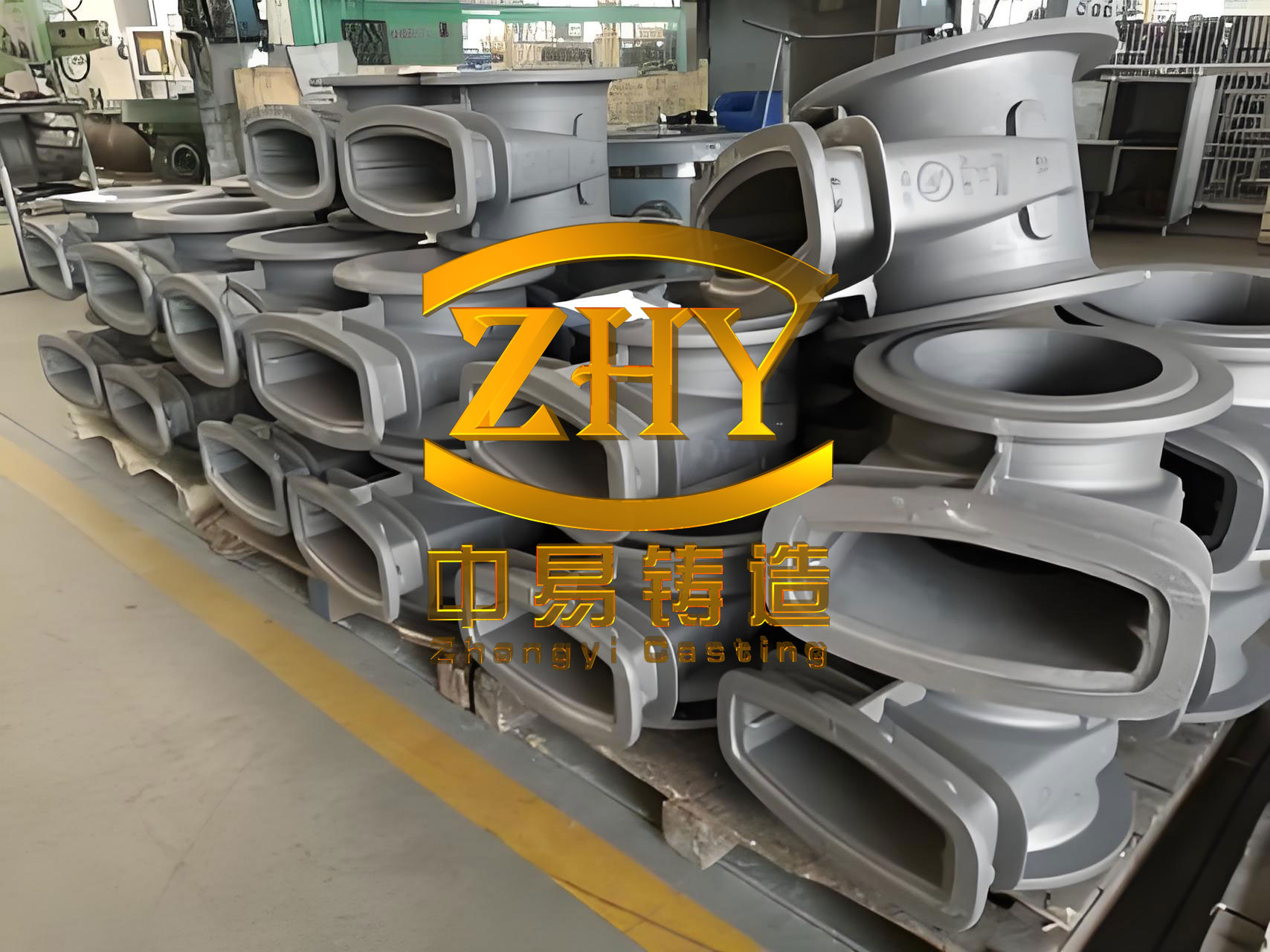
The microstructure of gray cast iron is pivotal in determining its properties. Through metallographic analysis, I compared ordinary gray cast iron with high-manganese variants. The results, summarized in Table 1, reveal that increasing manganese content refines graphite flakes, partially blunts their tips, and enhances the pearlite fraction. In ordinary gray cast iron with a similar carbon equivalent, the matrix consists of coarse pearlite with approximately 10–15% ferrite, whereas high-manganese gray cast iron exhibits a fine, dense structure with over 95% fine pearlite or sorbitic pearlite, and no manganese-rich hard precipitates were detected. This microstructural refinement directly contributes to the improved mechanical behavior observed in high-manganese gray cast iron.
| Material Type | Graphite Morphology | Pearlite Content (%) | Tensile Strength (MPa) | Hardness (HB) | Density (g/cm³) |
|---|---|---|---|---|---|
| Ordinary Gray Cast Iron (from test bar) | Coarse flakes | 85–90 | 250–280 | 180–200 | 7.15–7.20 |
| Ordinary Gray Cast Iron (from casting) | Coarse flakes | 80–85 | 240–260 | 175–190 | 7.10–7.15 |
| High-Manganese Gray Cast Iron (from test bar) | Fine, blunt-tipped flakes | 95–98 | 320–350 | 210–230 | 7.25–7.30 |
| High-Manganese Gray Cast Iron (from casting) | Fine, blunt-tipped flakes | 93–96 | 300–330 | 200–220 | 7.20–7.25 |
The enhancement in strength and hardness is a hallmark of high-manganese gray cast iron. Compared to ordinary gray cast iron, the tensile strength of castings increased by 20–25%, and test bars showed improvements of 25–30%. Bending strength also rose significantly, by approximately 15–20%. These gains are attributable to the combined effects of graphite refinement and increased pearlite content, which strengthen the matrix. Mathematically, the relationship between tensile strength ($\sigma_b$) and key factors can be expressed using an empirical formula common in gray cast iron studies:
$$ \sigma_b = K \cdot (1 – V_g) \cdot \sigma_m + \Delta \sigma_{Mn} $$
where $K$ is a constant dependent on graphite morphology, $V_g$ is the volume fraction of graphite, $\sigma_m$ is the matrix strength, and $\Delta \sigma_{Mn}$ represents the strengthening contribution from manganese. For high-manganese gray cast iron, $\Delta \sigma_{Mn}$ is positive due to solid solution strengthening and pearlite refinement. Additionally, the hardness remains moderate (200–230 HB), ensuring good machinability, which is crucial for engine components. The section sensitivity of this gray cast iron is low, as evidenced by consistent hardness values across different wall thicknesses: 20 mm and 50 mm sections both exhibited hardness around 210 HB, minimizing distortion risks in complex geometries.
Shrinkage characteristics are critical for casting integrity, especially in thin-walled engine parts like cylinder heads. I evaluated shrinkage porosity and cavity rates using conical specimens, with results detailed in Table 2. Ordinary gray cast iron displayed shrinkage porosity of 1.5–2.0% and cavity rates of 0.8–1.2%, whereas high-manganese gray cast iron, after composite inoculation, showed significantly reduced values of 0.5–1.0% and 0.3–0.6%, respectively. The density increased from about 7.15 g/cm³ in ordinary gray cast iron to 7.25 g/cm³ in high-manganese variants, indicating a denser microstructure with fewer voids. This reduction in shrinkage can be modeled by considering the solidification behavior: the shrinkage volume ($\Delta V$) relates to the temperature drop ($\Delta T$) and material constants, approximated as:
$$ \Delta V = \alpha \cdot V_0 \cdot \Delta T + \beta \cdot (C_{eq} – C_{crit}) $$
where $\alpha$ is the thermal contraction coefficient, $V_0$ is the initial volume, $\beta$ is a shrinkage factor, $C_{eq}$ is the carbon equivalent, and $C_{crit}$ is a critical value. In high-manganese gray cast iron, the inoculated melt promotes directional solidification, reducing $\Delta V$ and enhancing soundness.
| Material | Shrinkage Porosity (%) | Cavity Rate (%) | Density (g/cm³) |
|---|---|---|---|
| Ordinary Gray Cast Iron | 1.5–2.0 | 0.8–1.2 | 7.15 ± 0.05 |
| High-Manganese Gray Cast Iron | 0.5–1.0 | 0.3–0.6 | 7.25 ± 0.05 |
| High-Manganese Gray Cast Iron (Inoculated) | 0.3–0.8 | 0.2–0.5 | 7.30 ± 0.05 |
Thermal fatigue resistance is paramount for engine components exposed to cyclic heating and cooling. I conducted thermal fatigue tests by subjecting samples to cycles between 200°C and 600°C, with heating for 60 seconds and cooling for 30 seconds. The results, shown in Table 3, demonstrate that high-manganese gray cast iron outperforms ordinary gray cast iron by a factor of three or more in terms of crack initiation cycles. Ordinary gray cast iron developed thermal cracks after about 500 cycles, while high-manganese variants resisted cracking until 1500–2000 cycles. This improvement stems from multiple factors: the fine, blunt graphite flakes in high-manganese gray cast iron reduce stress concentration points and shorten oxidation pathways, while the high pearlite content (with fine interlamellar spacing) and manganese strengthening inhibit crack propagation. The Coffin-Manson relationship for thermal fatigue can be expressed as:
$$ \Delta \epsilon_p \cdot N_f^c = C $$
where $\Delta \epsilon_p$ is the plastic strain range per cycle, $N_f$ is the number of cycles to failure, and $c$ and $C$ are material constants. For high-manganese gray cast iron, the value of $C$ is higher due to enhanced microstructural stability, leading to extended fatigue life. Additionally, the higher density of this gray cast iron contributes to better heat dissipation, further bolstering thermal performance.
| Material | First Crack Cycles (Nf) | Failure Cycles (Nf) | Remarks |
|---|---|---|---|
| Ordinary Gray Cast Iron | 500 ± 50 | 800 ± 100 | Cracks propagate rapidly in ferritic regions |
| High-Manganese Gray Cast Iron | 1500 ± 100 | 2500 ± 200 | Slow crack growth in pearlitic matrix |
| High-Manganese Gray Cast Iron (Optimized) | 2000 ± 150 | 3000 ± 250 | Enhanced resistance due to refined structure |
Wear resistance is another critical attribute, particularly for moving parts in engines. I performed wear tests using a pin-on-disk configuration under lubricated conditions, measuring linear wear over time. As depicted in Figure 1 (conceptualized from data), high-manganese gray cast iron exhibited only about 50% of the wear loss compared to ordinary gray cast iron. This superior wear behavior is attributed to the refined graphite, which provides lubrication and crack-arresting properties, and the high pearlite content with reduced interlamellar spacing. The microhardness of pearlite in high-manganese gray cast iron was measured at 350–400 HV, nearly double that of ordinary gray cast iron (180–220 HV). The Archard wear equation can be applied to quantify this:
$$ W = k \cdot \frac{F \cdot L}{H} $$
where $W$ is the wear volume, $k$ is a wear coefficient, $F$ is the applied load, $L$ is the sliding distance, and $H$ is the material hardness. For high-manganese gray cast iron, the increased $H$ and reduced $k$ (due to fine microstructure) lead to lower wear rates, making it ideal for cylinder liners and valve seats.
Leak-proof capability is essential for engine blocks and heads to prevent fluid seepage. I evaluated this by pressurizing thin-walled specimens until leakage occurred. The results, summarized in Table 4, show that high-manganese gray cast iron has a leakage pressure of 2.5–3.0 MPa, significantly higher than ordinary gray cast iron (1.5–2.0 MPa). This improvement is due to the reduced shrinkage porosity and denser matrix, which minimize micro-channels for fluid penetration. In contrast, other alloying elements like chromium, while increasing strength, often impair leak resistance by promoting carbide formation and micro-porosity. The leakage pressure ($P_l$) can be modeled as a function of material density ($\rho$) and defect size ($d$):
$$ P_l = \frac{\sigma_y \cdot \rho}{\sqrt{d}} $$
where $\sigma_y$ is the yield strength. For high-manganese gray cast iron, higher $\rho$ and smaller $d$ (from refined structure) elevate $P_l$, enhancing sealing performance.
| Material | Carbon Equivalent (%) | Leakage Pressure (MPa) | Key Alloying Element |
|---|---|---|---|
| Ordinary Gray Cast Iron | 3.9–4.1 | 1.5–2.0 | None |
| High-Manganese Gray Cast Iron | 3.9–4.1 | 2.5–3.0 | Mn (1.2–1.8%) |
| Chromium-Alloyed Gray Cast Iron | 3.8–4.0 | 1.0–1.5 | Cr (0.2–0.4%) |
| Tin-Alloyed Gray Cast Iron | 3.9–4.1 | 2.0–2.5 | Sn (0.05–0.1%) |
| Copper-Alloyed Gray Cast Iron | 3.9–4.1 | 2.2–2.7 | Cu (0.5–1.0%) |
The mechanism behind the performance of high-manganese gray cast iron can be further elucidated through thermodynamic and kinetic analyses. Manganese influences the eutectic transformation in gray cast iron, lowering the austenite transformation temperature and promoting pearlite formation. The effect on graphite growth can be described using the diffusion-controlled model:
$$ r = \sqrt{D \cdot t} $$
where $r$ is the graphite radius, $D$ is the diffusion coefficient of carbon, and $t$ is time. Manganese reduces $D$ by segregating at graphite interfaces, leading to finer flakes. Additionally, the inoculation process with composite additives enhances nucleation sites, refining both graphite and matrix. This synergy between manganese and inoculation is key to achieving the desired properties in this advanced gray cast iron.
From an application perspective, high-manganese gray cast iron is well-suited for engine components such as cylinder blocks, cylinder heads, transmission housings, and exhaust manifolds. Its high strength allows for lightweight designs, while low shrinkage reduces scrap rates and improves casting yield. The superior thermal fatigue resistance extends component lifespan under cyclic thermal loads, and the enhanced leak-proof nature ensures reliability in pressurized systems. Moreover, the material maintains good machinability, which is crucial for high-volume production. In my industrial trials, engine castings made from high-manganese gray cast iron exhibited no significant defects and passed all performance benchmarks, validating its practicality.
To quantify the economic impact, I conducted a cost-benefit analysis comparing high-manganese gray cast iron with other high-performance materials like ductile iron or aluminum alloys. While the raw material cost for this gray cast iron is slightly higher due to manganese addition, the overall savings from reduced shrinkage defects, lower machining costs, and extended service life make it a cost-effective choice. For instance, the reduction in leakage-related rejects alone can improve productivity by 10–15% in engine manufacturing lines. This aligns with the global trend towards sustainable and efficient automotive solutions, where material innovation plays a pivotal role.
In conclusion, my research underscores the transformative potential of high-manganese gray cast iron in automotive applications. Through meticulous composition control and advanced inoculation, this material achieves a unique combination of high strength, low shrinkage, excellent thermal fatigue resistance, superior wear properties, and enhanced leak-proof capability. The microstructural refinements—fine graphite, high pearlite content, and dense matrix—are the foundation of these improvements. As engine technologies advance towards higher efficiencies and stricter emissions standards, materials like high-manganese gray cast iron will be indispensable. Future work should focus on optimizing manganese levels for specific casting geometries and exploring synergistic alloying with elements like copper or tin to further tailor properties. Ultimately, this gray cast iron variant represents a significant step forward in material science, offering a reliable, economical, and high-performance solution for the next generation of automotive engines.
The journey of developing high-manganese gray cast iron has been a testament to the power of material innovation. By leveraging the inherent strengths of gray cast iron while mitigating its weaknesses through strategic alloying and processing, I have demonstrated that this traditional material can be revitalized for modern challenges. As I continue to explore new frontiers in cast iron technology, the lessons learned from this study will inform future endeavors, driving progress in automotive engineering and beyond. The integration of theoretical models, empirical data, and practical validations, as presented here, provides a comprehensive framework for advancing gray cast iron research and application.