
In recent years, the demand for lightweight and high-performance components in industries such as automotive, aerospace, and electronics has driven significant interest in aluminum and magnesium alloys. These alloys offer excellent properties, including high strength-to-weight ratio, good corrosion resistance, and superior damping capacity. However, traditional casting methods, including conventional lost foam casting, often introduce defects like gas porosity, slag inclusion, and poor surface finish, which limit their application. To address these issues, the lost foam shell casting process, also known as Expendable Pattern Shell Casting (EPSC), has emerged as a promising alternative. This process combines the advantages of lost foam casting, such as the use of foam patterns for complex geometries, with the high-strength ceramic shells from investment casting, resulting in improved dimensional accuracy and reduced defects. In this article, I will explore the current research status, applications, and future directions of lost foam shell casting for aluminum and magnesium alloys, emphasizing key aspects like foam patterns, shell coatings, process parameters, and forming techniques. Throughout, the term “lost foam casting” will be frequently referenced to highlight its evolution and integration into this advanced method.
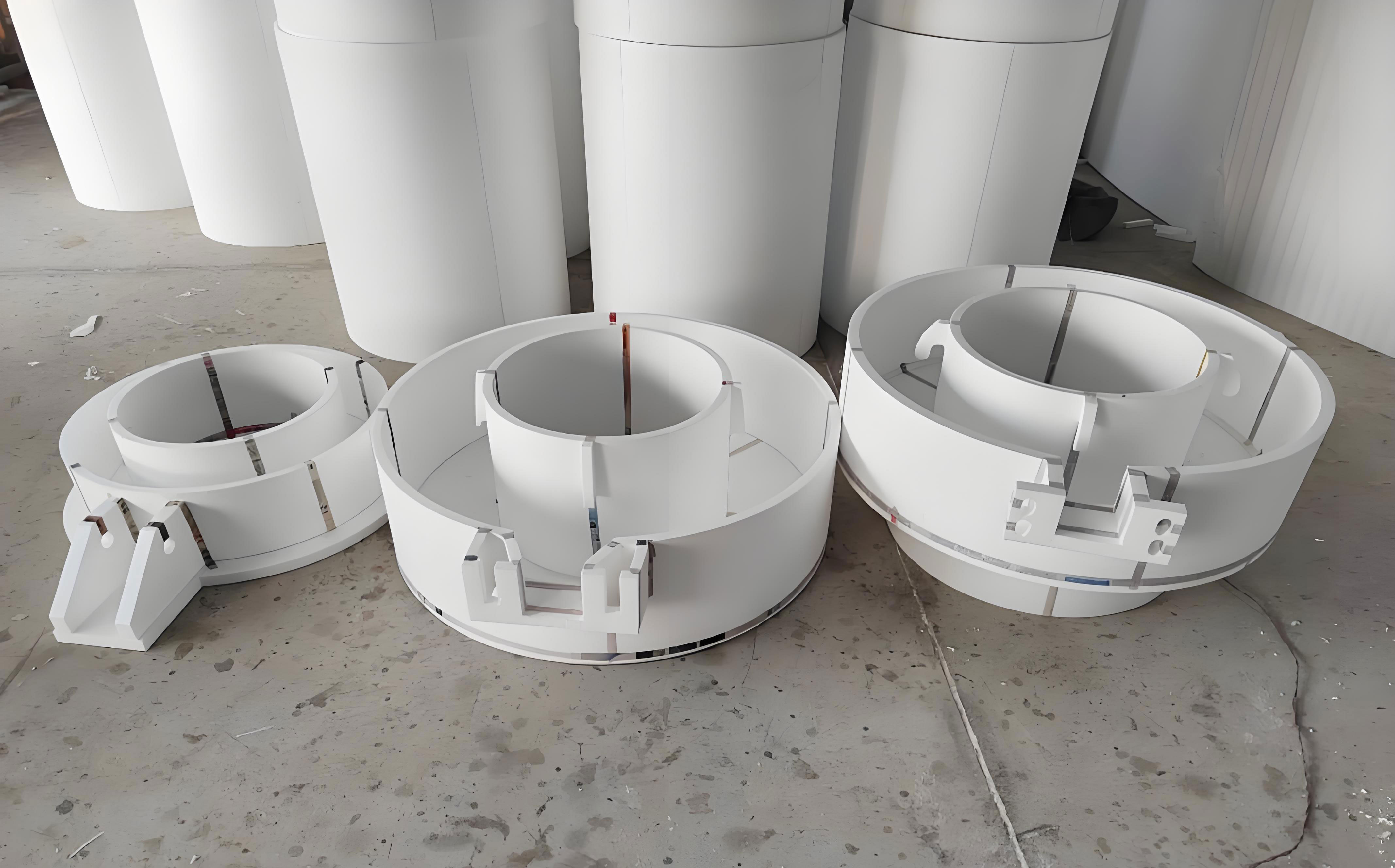
The lost foam shell casting process involves several critical steps: creating a foam pattern that matches the desired part geometry, coating it with a ceramic slurry to form a shell, removing the foam pattern through heating or solvent dissolution, sintering the shell to enhance strength, and then pouring molten metal into the shell under vibration and vacuum conditions. This approach mitigates many issues associated with standard lost foam casting, as the foam is completely eliminated before metal pouring, reducing gas evolution and improving metal flow. For aluminum and magnesium alloys, which are prone to oxidation and shrinkage defects, this process offers better control over microstructure and mechanical properties. Research in this field has focused on optimizing each step to achieve high-quality castings, and I will delve into these aspects in detail, supported by tables and formulas to summarize key findings.
Foam patterns are the cornerstone of the lost foam shell casting process, as their quality directly influences the final casting’s surface finish and dimensional accuracy. Typically made from expandable polystyrene (EPS) beads, these patterns require precise control over pre-foaming, molding, and aging parameters to ensure adequate density, strength, and minimal surface irregularities. Studies have shown that pattern density plays a crucial role in defect formation; for instance, higher densities reduce surface roughness but increase gas evolution during pattern removal, potentially causing shell cracking. The optimal density range for EPS patterns in lost foam casting applications is between 0.050 g/cm³ and 0.065 g/cm³. To achieve this, pre-foaming temperature and time must be carefully regulated. Based on research, I can summarize key parameters in the following table:
| Process Parameter | Optimal Range | Effect on Pattern Properties |
|---|---|---|
| Pre-foaming Temperature | 100°C – 102°C | Controls bead expansion and final density; lower temperatures may lead to incomplete foaming. |
| Pre-foaming Time | 2 – 3 minutes | Longer times decrease density but may cause bead degradation. |
| Bead Size | 0.4 mm – 1.2 mm | Smaller beads improve surface detail but require tighter molding pressure. |
| Steam Pressure in Molding | 0.12 MPa – 0.16 MPa | Higher pressure enhances bead fusion and pattern strength. |
| Aging Temperature | 50°C | Stabilizes the pattern by allowing residual pentane to escape; critical for dimensional stability. |
| Aging Time | > 12 hours | Ensures uniform drying and reduces internal stresses. |
Surface treatment of foam patterns is another vital area in lost foam casting research. Due to the granular nature of EPS, patterns often exhibit网状纹 (mesh-like marks) from bead boundaries, which can transfer to the casting surface. To address this, coatings or光整剂 (smoothing agents) are applied. For example, cellulose nitrate has been found effective as a film-forming agent, filling gaps between beads and reducing surface roughness from 17.54 µm to 6.04 µm. Alternative methods include dipping patterns in wax-based mixtures or applying pastes containing emulsified wax, stearic acid, and polyethylene glycol. The effectiveness can be modeled using a roughness reduction formula: $$ R_f = R_i – \Delta R \cdot e^{-k t} $$ where \( R_f \) is the final roughness, \( R_i \) is the initial roughness, \( \Delta R \) is the maximum possible reduction, \( k \) is a constant dependent on the coating material, and \( t \) is the treatment time. This highlights the importance of material selection in enhancing lost foam casting outcomes.
Shell coatings are pivotal in lost foam shell casting, as they provide the mold strength and surface quality necessary for precision castings. The coatings typically consist of refractory fillers, binders, and additives, with common binders including silica sol, sodium silicate, and ethyl silicate. Among these, silica sol is preferred for its high-temperature strength and ease of use, but it often requires long drying times. Research has focused on optimizing the powder-to-liquid ratio (P/L ratio) and incorporating additives to improve properties like strength, permeability, and drying speed. For aluminum and magnesium alloys, coatings must also resist metal penetration and thermal shock. The following table summarizes typical coating compositions and their effects:
| Coating Component | Typical Composition | Role in Lost Foam Casting |
|---|---|---|
| Refractory Filler | Alumina, zircon, mullite | Provides thermal stability and resistance to metal erosion; alumina-based fillers are common for aluminum alloys. |
| Binder (Silica Sol) | P/L ratio: 2.2:1 to 3.2:1 | Higher ratios increase green strength but may reduce permeability; optimal for shell integrity. |
| Additives (e.g., PVA, fibers) | 2.5% – 3% by weight | Polyvinyl alcohol (PVA) accelerates drying by absorbing water; fibers like nylon enhance permeability after burnout. |
| Low-melting Glass | 2.5% addition | Acts as a sintering aid, filling microcracks and boosting high-temperature strength by up to 30%. |
| Boric Acid | Controlled amounts | For magnesium alloys, forms a protective glaze to prevent oxidation during pouring. |
The strength of the shell can be described by a sintering model: $$ \sigma_s = \sigma_0 + A \cdot \exp\left(-\frac{E_a}{RT}\right) $$ where \( \sigma_s \) is the sintered strength, \( \sigma_0 \) is the initial strength, \( A \) is a pre-exponential factor, \( E_a \) is the activation energy for sintering, \( R \) is the gas constant, and \( T \) is the sintering temperature. This formula underscores how temperature control during shell baking is critical in lost foam casting. Studies indicate that baking at 800°C for 1 hour can yield shells with high-temperature bending strengths of up to 12 MPa, suitable for withstanding the thermal stresses of aluminum and magnesium alloy pouring.
Pattern removal and shell baking are interlinked steps in lost foam shell casting that require precise thermal management. The foam pattern must be eliminated without causing shell cracks, which can occur due to gas pressure or thermal expansion. Two common methods are thermal degradation, where the pattern is heated to decompose, and solvent dissolution using chemicals like dichloromethane. For thermal removal, a stepped heating profile is often employed: first heating to 250°C to melt the EPS, then to 500°C to vaporize it, and finally to 800°C for shell sintering. The risk of cracking correlates with pattern density and size, as described by the stress equation: $$ \sigma_c = \frac{E \cdot \alpha \cdot \Delta T}{1 – \nu} $$ where \( \sigma_c \) is the thermal stress, \( E \) is the shell’s elastic modulus, \( \alpha \) is the thermal expansion coefficient, \( \Delta T \) is the temperature change, and \( \nu \) is Poisson’s ratio. To minimize this, slow heating rates and controlled holds are recommended. The table below outlines optimal parameters for pattern removal and baking in lost foam casting:
| Process Stage | Temperature Range | Time | Key Considerations |
|---|---|---|---|
| Pattern Melting | 200°C – 250°C | 30 minutes | Ensures EPS liquefies without rapid gas generation. |
| Pattern Vaporization | 500°C – 600°C | 30 – 60 minutes | Complete removal reduces residual carbon; higher temperatures risk shell damage. |
| Shell Baking | 800°C – 1200°C | 1 – 2 hours | Enhances strength through sintering; temperature depends on coating composition. |
| Cooling Rate | Controlled, < 5°C/min | Varies | Prevents thermal shock and cracking, especially for thin shells. |
Forming工艺, or the actual metal pouring and solidification in lost foam shell casting, significantly impacts the microstructure and mechanical properties of aluminum and magnesium alloys. Key parameters include pouring temperature, vibration frequency and amplitude, vacuum level, and wall thickness of the casting. For aluminum alloys like ZL101A and magnesium alloys like AZ91D, research has shown that mechanical vibration during pouring refines grains by disrupting dendritic growth, leading to improved tensile strength and elongation. The effect of vibration can be modeled using a grain size equation: $$ d = k \cdot (f \cdot A)^{-\frac{1}{3}} $$ where \( d \) is the grain diameter, \( k \) is a material constant, \( f \) is the vibration frequency, and \( A \) is the amplitude. Studies indicate that for AZ91D magnesium alloy, a vibration frequency of 100 Hz and an amplitude of 1.0 mm yield the finest equiaxed grains. Pouring temperature also plays a critical role; lower temperatures reduce grain coarseness but may impair fluidity, especially for thin sections. The following table summarizes the influence of forming parameters in lost foam casting:
| Parameter | Optimal Range for Aluminum Alloys | Optimal Range for Magnesium Alloys | Effect on Casting Quality |
|---|---|---|---|
| Pouring Temperature | 700°C – 750°C | 720°C – 780°C | Lower temperatures refine grains but may cause cold shuts; must balance with alloy fluidity. |
| Vibration Frequency | 50 – 150 Hz | 80 – 120 Hz | Higher frequencies enhance grain refinement and reduce porosity; 100 Hz is often optimal. |
| Vibration Amplitude | 0.5 – 1.5 mm | 0.8 – 1.2 mm | Increased amplitude improves filling and structure homogeneity; excessive amplitude may cause mold erosion. |
| Vacuum Pressure | 0.04 – 0.06 MPa | 0.03 – 0.05 MPa | Enhances metal flow and reduces gas entrapment; critical for complex geometries. |
| Wall Thickness | 10 – 40 mm | 5 – 30 mm | Thicker sections cool slower, leading to coarser grains; vibration mitigates this effect. |
The mechanical properties of castings produced via lost foam shell casting can be expressed through empirical relationships. For example, the ultimate tensile strength (UTS) of an aluminum alloy casting might correlate with grain size and pouring temperature: $$ \text{UTS} = \sigma_0 + \frac{B}{\sqrt{d}} – C \cdot (T_p – T_{ref}) $$ where \( \sigma_0 \), \( B \), and \( C \) are constants, \( d \) is the grain size, \( T_p \) is the pouring temperature, and \( T_{ref} \) is a reference temperature. Such formulas help optimize process conditions for specific alloy systems, underscoring the precision achievable with lost foam casting techniques.
In terms of application, lost foam shell casting has been successfully implemented for producing components like valve bodies, automotive intake manifolds, and aerospace parts. Companies in China and Europe have adopted this method to manufacture castings weighing up to 450 kg, leveraging its ability to produce near-net-shape parts with minimal machining. Compared to traditional lost foam casting, the shell-based approach eliminates many defects, resulting in higher performance parts. However, challenges remain, particularly for aluminum and magnesium alloys. These include the need for specialized coatings to prevent metal-shell reactions, longer cycle times due to shell drying, and the risk of shell cracking during pattern removal for large or complex geometries. Additionally, most research has focused on ferrous metals, leaving gaps in knowledge for non-ferrous applications. Future advancements in lost foam casting should address these issues through material innovations and process automation.
Looking ahead, the development of lost foam shell casting for aluminum and magnesium alloys will likely focus on three key areas. First, composite coatings with multi-component binders and nano-additives could enhance shell properties, such as faster drying times and better permeability. For instance, incorporating high-absorbency polymers like polyacrylic acid into撒砂 (stucco) materials has been shown to reduce drying time by up to 60%, making the process more efficient. Second, advanced simulation tools, such as computational fluid dynamics (CFD) and finite element analysis (FEA), can model metal flow and solidification in lost foam casting, optimizing parameters like vibration and temperature gradients. These simulations might use equations like the Navier-Stokes for fluid flow: $$ \rho \left( \frac{\partial \mathbf{v}}{\partial t} + \mathbf{v} \cdot \nabla \mathbf{v} \right) = -\nabla p + \mu \nabla^2 \mathbf{v} + \mathbf{f} $$ where \( \rho \) is density, \( \mathbf{v} \) is velocity, \( p \) is pressure, \( \mu \) is viscosity, and \( \mathbf{f} \) represents body forces. Third, integration with other technologies, such as low-pressure casting or additive manufacturing for pattern production, could expand the capabilities of lost foam casting, enabling the fabrication of larger and more intricate parts. As industries continue to demand lightweight materials, lost foam shell casting will play a crucial role in meeting these needs, provided that ongoing research addresses current limitations.
In conclusion, lost foam shell casting represents a significant advancement over conventional lost foam casting, particularly for aluminum and magnesium alloys. By combining foam patterns with ceramic shells, it reduces defects like porosity and improves dimensional accuracy. Research has made strides in optimizing foam pattern production, shell coating formulations, thermal processing, and forming parameters, as summarized in the tables and formulas throughout this article. However, challenges in coating performance, process efficiency, and application to large non-ferrous castings persist. Future work should prioritize material development, process modeling, and hybrid techniques to unlock the full potential of lost foam casting. As I have discussed, this process holds promise for producing high-integrity components across various industries, and continued innovation will ensure its growth as a key manufacturing technology.