
In modern construction, steel frame structures are widely adopted due to their excellent seismic performance, light weight, ease of construction, and standardization. However, historical earthquake damages have shown that joint failures are a critical factor leading to overall structural collapse, and post-earthquake repair of damaged joints is often extremely difficult. Therefore, in-depth research on the mechanical behavior of joints is essential. Traditional joint forms, such as welded or bolted connections, often involve complex manufacturing processes, significant welding thermal effects, long construction times, and high costs. To address these issues, the engineering community has proposed the use of steel casting joints, which offer advantages like simplified processing, reduced thermal impact, lower costs, and shorter construction periods. This study focuses on the seismic performance of steel casting joints for H-shaped beams to tube columns under biaxial bending, combining experimental investigations and finite element analyses to evaluate their behavior under multidirectional seismic loads.
The seismic response of frame joints exhibits clear multidimensional force characteristics. Previous research has primarily focused on uniaxial bending or static performance, with limited studies on the biaxial bending behavior of steel casting joints. This gap highlights the need for comprehensive investigations into the biaxial seismic performance of such joints. Our research aims to fill this gap by examining the effects of parameters like column wall thickness and loading ratios on the failure modes, load-bearing capacity, ductility, stiffness degradation, and energy dissipation capabilities of steel casting joints. The findings will provide valuable insights for the design and application of steel casting joints in seismic regions.
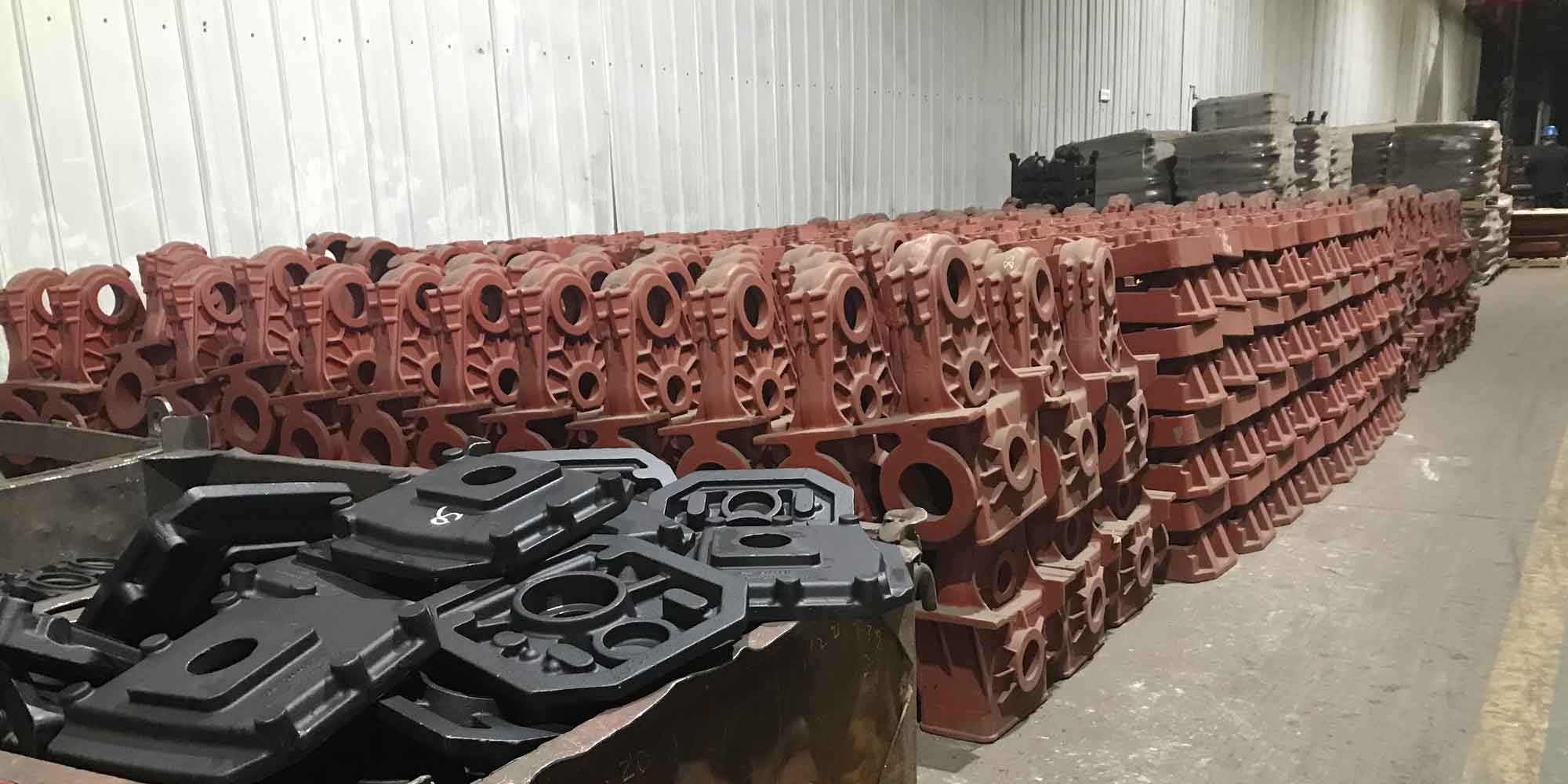
The experimental program involved designing and testing full-scale middle column joints with steel casting stiffeners. These steel casting components were manufactured using advanced techniques to ensure high precision and material consistency. A total of seven specimens were prepared, including four square tube column joints and three circular tube column joints. The key design parameters included column wall thickness (8 mm, 12 mm, and 16 mm) and biaxial loading ratios (1:1 and 1:3). The specimens represented typical middle joints in multi-story frames, with column heights of 1.5 m and beam lengths of 2 m. The steel casting rings had a thickness of 20 mm and a height of 35 mm, with an inner diameter of 203 mm. The axial load ratio was set at 0.2 to simulate realistic conditions. The materials used were ZG230-450 for the steel casting parts and Q345B for the tube columns and H-shaped beams. Material properties were determined through tensile tests according to standard protocols, as summarized in the table below.
| Material Type | Thickness (mm) | Yield Strength (MPa) | Tensile Strength (MPa) |
|---|---|---|---|
| ZG230-450 (Steel Casting) | 35 | 359.4 | 435.6 |
| Q345B (Circular Tube) | 8 | 443.9 | 533.7 |
| Q345B (Circular Tube) | 12 | 449.8 | 563.8 |
| Q345B (Circular Tube) | 16 | 453.8 | 549.2 |
| Q345B (Square Tube) | 8 | 409.3 | 509.0 |
| Q345B (Square Tube) | 12 | 436.9 | 525.8 |
| Q345B (Square Tube) | 16 | 391.8 | 465.4 |
| Q345B (H-Shaped Beam) | 6 (Web) | 353.3 | 456.2 |
| Q345B (H-Shaped Beam) | 9 (Flange) | 358.2 | 448.6 |
The testing setup was designed to simulate biaxial seismic loading. The specimens were installed with universal rigid spherical hinges at the column ends to allow free rotation while constraining horizontal movements. Quasi-static cyclic loads were applied at the beam ends using hydraulic jacks in two orthogonal directions (x and y). The loading protocol followed displacement control, with the total displacement magnitude kept constant while varying the ratio between x and y directions. For instance, a loading ratio of 1:1 meant equal displacements in both directions, whereas 1:3 indicated a higher displacement in one direction. The loading history included incremental cycles up to failure, as illustrated in the following formula for displacement amplitude: $$\Delta_i = \Delta_y \times i$$ where $\Delta_y$ is the yield displacement and $i$ is the cycle number. Strain gauges and displacement transducers were strategically placed to measure strains in critical areas like beam flanges, webs, steel casting rings, and the joint panel zone. The joint rotation angle $\theta$ was calculated from displacement readings at points 500 mm from the joint.
The experimental results revealed distinct failure modes based on column wall thickness. For specimens with thicker walls (12 mm to 16 mm), failure occurred due to the formation of plastic hinges at the beam ends, accompanied by beam twisting. In contrast, specimens with thinner walls (8 mm) experienced shear failure in the tube column joint panel, with square tube joints showing potential fracture at welded corners due to stress concentration. The steel casting joints demonstrated robust performance, with no severe damage to the steel casting components, indicating their suitability for seismic applications. The hysteresis curves for all specimens were full and stable, showing significant energy dissipation. The key mechanical properties, including yield moment $M_y$, ultimate moment $M_u$, yield rotation $\theta_y$, ultimate rotation $\theta_u$, ductility coefficient $\mu$, initial stiffness $K_0$, and energy dissipation coefficient $E$, are summarized in the table below.
| Specimen ID | Column Type | Wall Thickness (mm) | Loading Ratio | $M_y$ (kN·m) | $\theta_y$ (10-3 rad) | $M_u$ (kN·m) | $\theta_u$ (10-3 rad) | $\mu$ | $K_0$ (MN·m/rad) | $E$ |
|---|---|---|---|---|---|---|---|---|---|---|
| JD-S-8-1 | Square | 8 | 1:1 | 169.72 | 24.3 | 196.04 | 97.7 | 4.03 | 16.895 | 2.51 |
| JD-S-8-2-x | Square | 8 | 1:3 | 142.12 | 19.1 | 180.12 | 49.2 | 2.58 | 15.784 | 2.07 |
| JD-S-8-2-y | Square | 8 | 1:3 | 197.12 | 26.4 | 232.24 | 70.4 | 2.67 | 12.358 | 2.11 |
| JD-S-12-1 | Square | 12 | 1:1 | 215.60 | 23.6 | 281.72 | 79.3 | 3.36 | 19.158 | 2.24 |
| JD-S-16-1 | Square | 16 | 1:1 | 240.96 | 22.1 | 318.40 | 62.5 | 2.82 | 22.693 | 1.68 |
| JD-C-8-1 | Circular | 8 | 1:1 | 135.92 | 23.9 | 217.52 | 94.7 | 3.96 | 12.989 | 2.30 |
| JD-C-12-1 | Circular | 12 | 1:1 | 199.36 | 22.6 | 242.08 | 59.1 | 2.62 | 15.833 | 2.14 |
| JD-C-16-1 | Circular | 16 | 1:1 | 209.96 | 21.3 | 272.48 | 45.3 | 2.12 | 18.119 | 1.63 |
The ductility coefficient $\mu$ is defined as $\mu = \theta_u / \theta_y$, and the energy dissipation coefficient $E$ is calculated from the area of hysteresis loops. The results indicate that square tube joints generally exhibited higher ductility and energy dissipation than circular tube joints. For square tube joints, $\mu$ ranged from 2.58 to 4.03, and $E$ from 1.68 to 2.51. For circular tube joints, $\mu$ ranged from 2.12 to 3.96, and $E$ from 1.63 to 2.30. These values demonstrate favorable seismic performance for steel casting joints. The initial stiffness $K_0$ increased with wall thickness, approximately linearly. For square tubes, $K_0$ rose by about 41% as thickness increased from 8 mm to 16 mm, while for circular tubes, the increase was about 44%. Stiffness degradation was analyzed using the secant stiffness $K_i$, computed as: $$K_i = \frac{|+M_i| + |-M_i|}{|+\theta_i| + |-\theta_i|}$$ where $M_i$ and $\theta_i$ are the moment and rotation at the i-th load cycle. The degradation curves showed that thicker-walled joints experienced faster stiffness reduction but retained higher stiffness at failure.
Under biaxial loading, the coupling effects between directions were significant. As the loading ratio shifted from 1:1 to 1:3, the yield load in the direction with higher displacement increased, while stiffness in both directions decreased. For example, in square tube joints, the yield load in the y-direction increased by about 21%, and stiffness in the x-direction decreased by 29% when the loading ratio changed from 1:1 to 1:10. The stiffness degradation rate increased in the less-loaded direction but decreased in the more-loaded direction. These trends underscore that uniaxial design approaches may not fully capture the real seismic behavior, and biaxial coupling must be considered in steel casting joint design.
To complement the experimental study, finite element analysis (FEA) was conducted using ANSYS software. Models were developed with SOLID186 elements, incorporating material nonlinearities via a multilinear kinematic hardening model. The steel stress-strain relationship was idealized as a trilinear curve, with yield strength $f_y$, ultimate strength $f_u$, yield strain $\epsilon_y$, ultimate strain $\epsilon_u$, and fracture strain $\epsilon_c$. The elastic modulus was $E = 2.06 \times 10^5$ MPa, and the post-yield modulus $E_{st}$ was given by: $$E_{st} = \frac{f_u – f_y}{\epsilon_u – \epsilon_y}$$ The von Mises yield criterion was applied. Boundary conditions replicated the experimental setup, with constraints applied to column ends and beam ends to allow rotation. The FEA models were validated against experimental results, showing good agreement in hysteresis curves, failure modes, and load capacities. The comparison of moment capacities is summarized below.
| Specimen ID | Experimental $M_1$ (kN·m) | FEA $M_2$ (kN·m) | $M_1/M_2$ |
|---|---|---|---|
| JD-S-8-1 | 169.72 | 144.27 | 1.18 |
| JD-S-8-2-x | 142.12 | 123.12 | 1.15 |
| JD-S-8-2-y | 197.12 | 166.76 | 1.18 |
| JD-S-12-1 | 215.60 | 208.35 | 1.03 |
| JD-S-16-1 | 240.96 | 216.52 | 1.11 |
| JD-C-8-1 | 135.92 | 134.83 | 1.01 |
| JD-C-12-1 | 199.36 | 186.76 | 1.07 |
| JD-C-16-1 | 209.96 | 215.62 | 0.97 |
The average error between experimental and FEA results was 8.9%, with a standard deviation of 0.074, confirming the model’s accuracy. Based on the validated models, parametric studies were performed to investigate the differences between biaxial bending middle joints and uniaxial bending plane joints, as well as the effects of various loading ratios on biaxial coupling. For the comparison, 64 models were analyzed, covering square and circular tube columns with diameters from 203 mm to 500 mm and wall thicknesses as per design variations. The steel casting rings had thicknesses from 20 mm to 50 mm and heights from 35 mm to 100 mm. The loading ratios $\gamma = \Delta_x / \Delta_y$ ranged from 0 (uniaxial) to 1 (biaxial equal).
The FEA results showed that biaxial bending reduced the load-bearing capacity compared to uniaxial bending. For circular tube steel casting joints, the reduction rate was approximately 22%, while for square tube steel casting joints, it was about 11%. The reduction rate decreased with increasing wall thickness. Ductility, however, was higher in biaxial bending joints. The biaxial load coupling effect was most pronounced at a loading ratio of 1:1. For square tube joints, the biaxial moment capacity $M_x$ and $M_y$ were 861.72 kN·m each, which was 16.29% higher than the simple superposition of uniaxial components (741.04 kN·m). For circular tube joints, the biaxial capacity was 958.48 kN·m, 3.03% higher than the superposition value (930.28 kN·m). This indicates that square tube steel casting joints exhibit stronger coupling effects. The relationship between biaxial moments can be expressed as: $$\left( \frac{M_x}{M_{2D}} \right)^\alpha + \left( \frac{M_y}{M_{2D}} \right)^\alpha = 1$$ where $M_{2D}$ is the uniaxial capacity and $\alpha$ is a coupling exponent derived from FEA.
The parametric analysis also examined stiffness and energy dissipation under different loading ratios. As $\gamma$ varied from 1:1 to 1:10, the stiffness in both directions decreased, with the degradation rate increasing in the less-loaded direction but decreasing in the more-loaded direction. The energy dissipation coefficient $E$ ranged from 2.29 to 3.35 for square tubes and 1.99 to 3.33 for circular tubes, demonstrating excellent energy absorption. The following table summarizes key FEA results for various loading ratios on representative specimens.
| Column Type | Loading Ratio $\gamma$ | Direction | $\theta_y$ (10-3 rad) | $\theta_u$ (10-3 rad) | $\mu$ | $E$ |
|---|---|---|---|---|---|---|
| Square Tube (□500×16) | 0 (Uniaxial) | x | 13.11 | 270.96 | 20.67 | 3.13 |
| 1:1 | x | 9.19 | 95.79 | 10.43 | 3.12 | |
| 1:1 | y | 9.19 | 95.79 | 10.43 | 3.12 | |
| 1:2 | x | 7.84 | 112.90 | 14.40 | 3.35 | |
| 1:2 | y | 10.30 | 195.55 | 18.99 | 3.16 | |
| 1:3 | x | 7.55 | 100.23 | 13.28 | 3.31 | |
| 1:3 | y | 10.51 | 201.95 | 19.22 | 3.13 | |
| 1:4 | x | 6.81 | 63.62 | 9.34 | 3.15 | |
| 1:4 | y | 11.10 | 257.04 | 23.16 | 3.09 | |
| 1:5 | x | 6.25 | 43.80 | 7.01 | 2.87 | |
| 1:5 | y | 11.46 | 175.24 | 15.29 | 3.07 | |
| 1:6 | x | 5.68 | 36.96 | 6.50 | 2.90 | |
| 1:6 | y | 11.85 | 287.82 | 24.29 | 3.07 | |
| 1:10 | x | 5.07 | 30.46 | 6.01 | 2.69 | |
| 1:10 | y | 12.02 | 200.43 | 16.67 | 3.05 | |
| 1:10 | x | 4.57 | 15.72 | 3.44 | 2.29 | |
| 1:10 | y | 12.42 | 157.26 | 12.66 | 3.02 | |
| Circular Tube (φ500×16) | 0 (Uniaxial) | x | 11.04 | 123.20 | 11.16 | 3.14 |
| 1:1 | x | 8.45 | 130.68 | 15.47 | 3.33 | |
| 1:1 | y | 8.45 | 130.68 | 15.47 | 3.33 | |
| 1:2 | x | 7.35 | 69.30 | 9.43 | 3.24 | |
| 1:2 | y | 9.73 | 120.02 | 12.34 | 3.31 | |
| 1:3 | x | 7.03 | 55.08 | 7.84 | 3.14 | |
| 1:3 | y | 10.07 | 110.20 | 10.94 | 3.21 | |
| 1:4 | x | 5.80 | 43.83 | 7.56 | 2.97 | |
| 1:4 | y | 10.94 | 131.49 | 12.02 | 3.20 | |
| 1:5 | x | 4.78 | 41.09 | 8.60 | 2.83 | |
| 1:5 | y | 11.41 | 164.34 | 14.41 | 3.22 | |
| 1:6 | x | 4.84 | 27.18 | 5.62 | 2.75 | |
| 1:6 | y | 11.71 | 135.90 | 11.61 | 3.17 | |
| 1:10 | x | 4.26 | 20.24 | 4.76 | 2.70 | |
| 1:10 | y | 11.92 | 121.52 | 10.19 | 3.12 | |
| 1:10 | x | 4.67 | 12.24 | 2.62 | 1.99 | |
| 1:10 | y | 12.23 | 122.60 | 10.03 | 3.22 |
The discussion highlights several key points. First, the steel casting joints demonstrated robust seismic performance, with ductility and energy dissipation meeting seismic design requirements. The use of steel casting allows for complex geometries that enhance load transfer, reducing stress concentrations. Second, biaxial loading induces coupling effects that reduce capacity compared to uniaxial loading, but this reduction is mitigated by thicker column walls. For design purposes, the biaxial moment capacity can be estimated using interaction equations. For square tube steel casting joints, a proposed formula is: $$M_x + M_y \leq \eta M_{2D}$$ where $\eta$ is a reduction factor (e.g., 0.89 for square tubes, 0.78 for circular tubes) derived from FEA. Third, the loading ratio significantly influences behavior; equal biaxial loading (1:1) maximizes coupling, while unequal ratios shift performance towards the dominant direction. Engineers should consider these factors in seismic design to ensure safety and efficiency.
In conclusion, this study comprehensively investigated the seismic performance of steel casting joints for H-shaped beams to tube columns under biaxial bending. Experimental tests on full-scale specimens and finite element analyses provided detailed insights into failure modes, load-bearing capacity, ductility, stiffness, and energy dissipation. The steel casting joints exhibited excellent performance, with square tube joints showing higher ductility and circular tube joints higher initial stiffness. Biaxial loading reduced capacity by up to 22% for circular tubes and 11% for square tubes compared to uniaxial loading, but the joints maintained good energy dissipation. The coupling effects were most significant at equal biaxial loading, enhancing capacity beyond simple superposition. These findings underscore the importance of considering biaxial effects in the design of steel casting joints for seismic regions. Future work could explore optimizing steel casting geometries for improved performance or extending studies to dynamic loading conditions.
The integration of steel casting technology in joint design offers promising avenues for advancing seismic resilience in steel structures. By leveraging the manufacturing flexibility of steel casting, joints can be tailored to specific load conditions, enhancing overall structural integrity. This research contributes to the growing body of knowledge on steel casting applications in civil engineering, paving the way for more innovative and reliable construction solutions.