
In the pursuit of advanced manufacturing techniques for lightweight components, my research focuses on overcoming the inherent challenges of casting magnesium alloys using rapid tooling methods. The work detailed here explores the development and application of a selective laser sintering (SLS) process for fabricating coated sand molds and cores specifically engineered for magnesium alloy castings. Traditional sand casting offers advantages like good permeability and low hot tearing tendency but struggles with dimensional accuracy and surface finish for complex parts. SLS presents a transformative solution, enabling the direct digital fabrication of intricate sand molds with integrated cores, achieving dimensional tolerances comparable to metal mold casting. However, the high reactivity of molten magnesium poses a significant barrier, leading to oxidation and violent interfacial reactions with conventional sand molds, which deteriorates the surface quality and mechanical properties of the final sand castings. This study addresses this core issue by developing a novel three-component flame-retardant additive for SLS-coated sand materials, successfully enabling the production of high-quality ZM2 magnesium alloy sand castings.
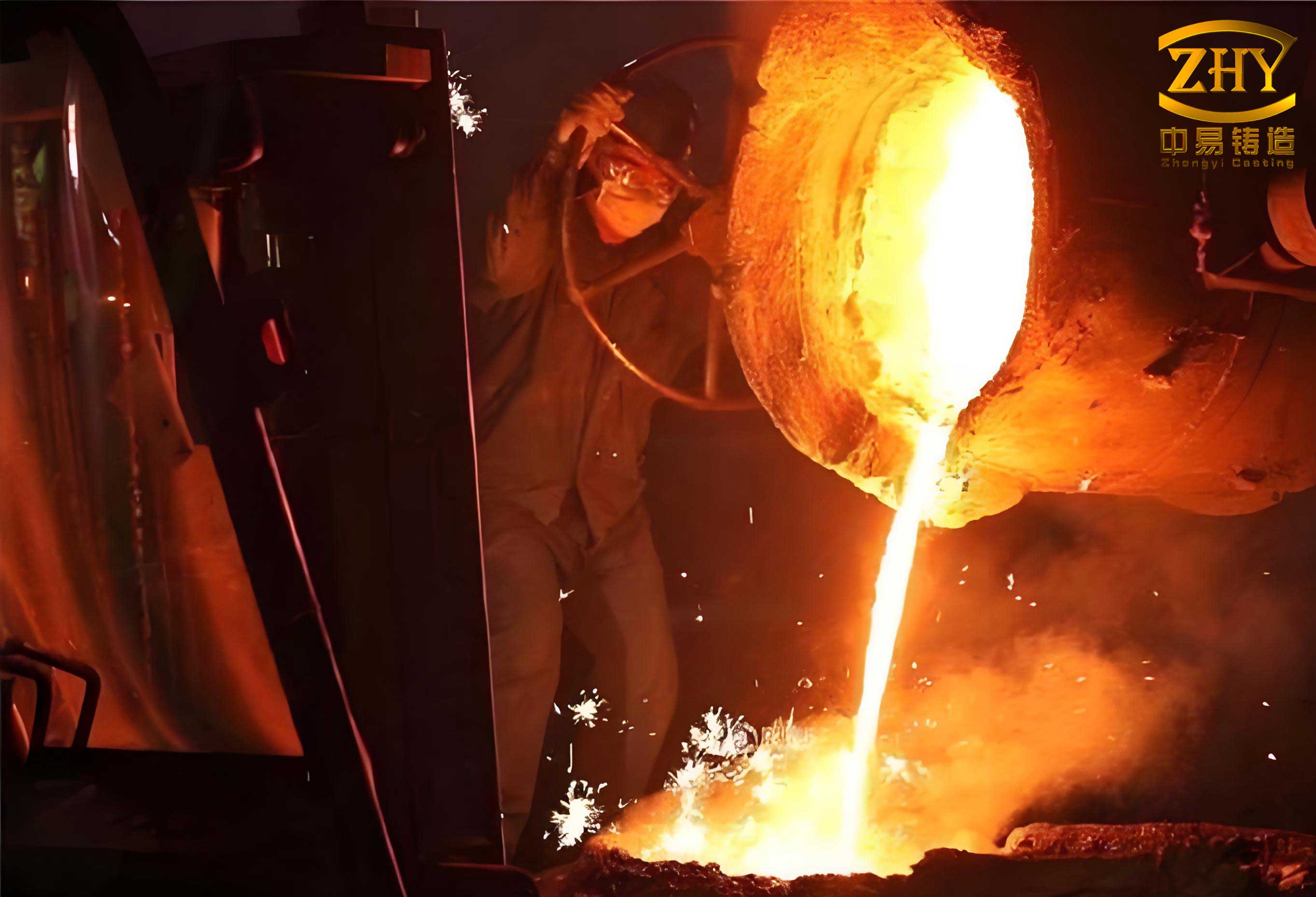
The fundamental appeal of magnesium alloys for structural applications lies in their exceptional specific strength and stiffness, good thermal conductivity, and excellent damping capacity. These properties make them ideal candidates for aerospace, automotive, and electronics industries. Sand casting remains one of the most versatile and cost-effective methods for producing metal components, particularly for large or complex geometries. The process involves creating a cavity within a compacted sand aggregate—the mold—into which molten metal is poured. The success of producing sound sand castings heavily relies on the mold’s properties: its strength to retain shape, its permeability to allow gases to escape, and its chemical inertness towards the molten metal. For magnesium, this last point is critical due to its strong thermodynamic driving force to oxidize, especially when in contact with silica (SiO2) present in most foundry sands.
Selective Laser Sintering (SLS) is an additive manufacturing (AM) technology that builds parts layer-by-layer using a laser to selectively fuse powder particles. When applied to foundry sand coated with a heat-activated binder (typically phenolic resin), SLS can directly produce complex sand molds and cores from a digital model without the need for a physical pattern. This offers unparalleled freedom in designing conformal cooling channels, lightweight lattice structures for cores, and consolidating multiple core pieces into a single, precision-built component. The typical process chain involves designing the mold assembly in CAD, slicing it, and then sintering it in an SLS machine. The initial “green” strength of the sintered mold is sufficient for handling, but a post-curing thermal treatment is usually applied to achieve the final strength required for handling molten metal and resisting the metallostatic pressure during pouring. The surface roughness of SLS-produced sand molds is significantly better than that of conventionally rammed molds, opening the door for near-net-shape sand castings with reduced need for finishing.
The central challenge in applying SLS sand mold technology to magnesium alloys is combustion prevention. During pouring, the extremely reactive molten magnesium can reduce silica (SiO2) in the sand according to the reaction: $$2Mg(l) + SiO_2(s) \rightarrow 2MgO(s) + Si(s)$$ This highly exothermic reaction releases substantial heat, often igniting the magnesium and causing severe burning onto the mold surface, resulting in rough, oxidized, and defective casting surfaces. Traditional mitigation involves applying protective coatings (often based on boric acid) onto the mold surface. However, for SLS sand molds with complex internal geometries and fine features, uniform coating application is difficult, and the coating layer alone may be insufficient to prevent localized burning, especially at higher pouring temperatures. A more robust solution is to incorporate flame-retardant compounds directly into the sand mixture, creating a mold body with inherent protective properties.
This investigation was therefore centered on formulating a modified SLS-coated sand material integrated with a multi-component flame-retardant system. The primary objective was to maintain the excellent laser sinterability and final strength of the base sand material while imparting effective suppression of the magnesium-silica reaction. The performance was evaluated by laser sintering test specimens and actual molds, measuring key foundry sand properties like green strength, post-cured strength, and gas evolution. Finally, the practical efficacy was validated by pouring ZM2 magnesium alloy into the developed molds and assessing the quality, microstructure, and mechanical properties of the resulting sand castings.
Materials and Experimental Methodology
The foundation of this work was a pre-developed SLS-coated sand material with a bimodal particle size distribution of 140/270 mesh. This distribution is crucial for achieving high packing density, which translates to better surface finish and strength in the final sand castings. The sand particles are coated with a phenolic resin binder that cures under laser heat. To this base material, three different powdered flame-retardant agents were selected and added: carbon powder, pyrite (FeS2), and boric acid (H3BO3). All additives were sieved to a particle size of ≤150 mesh to ensure homogeneity within the sand mixture and minimize interference with the laser sintering process. The ZM2 magnesium alloy, conforming to its standard composition, was used as the casting metal. Its nominal composition is provided in the table below.
| Element | Zn | Zr | RE (Rare Earth) | Cu | Ni | Mg |
|---|---|---|---|---|---|---|
| Content (wt.%) | 3.5-5.0 | 0.5-1.0 | 0.7-1.7 | < 0.1 | < 0.01 | Bal. |
Flame Retardant Selection and Mechanism
The choice of these three agents is based on complementary mechanisms for protecting magnesium during casting:
- Carbon Powder: Acts primarily as a thermal conductor, helping to dissipate heat rapidly from the mold/metal interface, thereby reducing the local temperature and slowing down the reduction reaction. It may also help in creating a slightly reducing atmosphere.
- Pyrite (FeS2): Upon heating, pyrite decomposes, releasing sulfur. The sulfur vapor can react with molten magnesium to form a protective MgS layer on the metal surface, acting as a barrier against further oxidation. Furthermore, the decomposition reaction itself is endothermic, absorbing heat from the interfacial zone. The heat effect can be described conceptually as: $$FeS_2(s) + \Delta H \rightarrow FeS(s) + S(g)$$ where $\Delta H > 0$ signifies heat absorption.
- Boric Acid (H3BO3): When heated, boric acid dehydrates to form boron oxide (B2O3), a glassy substance that can coat sand grains and the metal surface. This viscous, glassy layer acts as a physical barrier, isolating the molten magnesium from the silica sand. The dehydration reaction is: $$2H_3BO_3(s) \xrightarrow{\Delta} B_2O_3(l) + 3H_2O(g)$$
The synergistic effect of these three components was hypothesized to provide superior protection compared to any single agent. The composite was designed with specific weight percentages to balance flame retardancy with sinterability.
Mold Design and SLS Fabrication
The test casting was a component featuring complex, streamlined blades with a minimum thickness of 5 mm. Using traditional pattern-making, producing the internal cavity of this part would require a separate core, introducing potential assembly errors. The SLS process allowed for the mold and core to be manufactured as a single, monolithic piece (see design schematic). This not only guarantees perfect alignment but also eliminates core printing and assembly steps, showcasing a key advantage of AM for fabricating tooling for complex sand castings.
The sintering was performed on an SLS machine with the following optimized parameters: laser power of 45 W, scan speed of 3000 mm/s, layer thickness of 0.20 mm, scan spacing of 0.20 mm, and a preheating temperature of 60°C. The “green” strength of the sintered sand was measured using standard dog-bone tensile specimens. The post-processing involved a two-step treatment: first, flame-sealing the surface with a torch to improve surface finish and seal loose particles, and second, a thermal curing cycle in an oven at 170°C while the mold was supported by glass microbeads to control dimensional shrinkage.
Results and Analysis: Process and Material Properties
Effect of Flame Retardants on Sinterability and Strength
Initial experiments focused on understanding the impact of individual flame-retardant additives on the laser sintering behavior and the resulting strength of the sand molds, which is paramount for producing viable sand castings.
The green strength ($\sigma_g$) is a critical parameter indicating the handleability of the mold after sintering but before curing. It depends on the degree of partial resin cure induced by the laser energy. The relationship can be conceptually tied to the laser energy density ($E_d$) and the resin’s cure kinetics:
$$E_d = \frac{P}{v \cdot h \cdot d_s}$$
where $P$ is laser power, $v$ is scan speed, $h$ is hatch spacing, and $d_s$ is layer thickness. A higher degree of cure typically leads to higher $\sigma_g$. Additives that absorb or scatter laser light, or that undergo competing endothermic reactions, can reduce the effective energy delivered to the resin, lowering $\sigma_g$.
The findings were systematic:
1. Boric Acid: Additions ≥1 wt.% caused a dramatic decrease in green strength. This is likely because boric acid’s endothermic dehydration reaction during laser heating consumes a significant portion of the incident energy, starving the resin binder of the heat needed for cross-linking.
2. Pyrite: At low contents (≤2 wt.%), pyrite slightly increased the green strength. Pyrite’s exothermic decomposition upon laser irradiation may provide supplementary heat, enhancing resin curing. However, beyond 2%, the strength decreased, possibly due to excessive gas generation or interference with resin bonding.
3. Carbon Powder: Only very small additions (≤0.2 wt.%) marginally improved strength, likely due to improved thermal conductivity, ensuring more uniform heat distribution. Higher amounts likely caused laser energy absorption without contributing to curing.
Based on these results, an optimal ternary composite was formulated: 2% pyrite, 0.1% carbon powder, and 0.5% boric acid. This composition yielded a green strength of 0.58 MPa, which was approximately 3.6% higher than the base coated sand material without additives. The synergy is evident: the exothermic effect of pyrite counteracts the endothermic effect of boric acid, while the carbon aids in thermal management, resulting in a net positive effect on initial sintering. After post-curing, the tensile strength reached 2.34 MPa with a gas evolution of 9.7 mL/g—properties fully adequate for magnesium alloy casting and very close to those of the unmodified sand (2.40 MPa, 9.0 mL/g).
| Material Composition | Green Strength (MPa) | Post-Cured Strength (MPa) | Gas Evolution (mL/g) |
|---|---|---|---|
| Base Coated Sand (No Additive) | 0.56 | 2.40 | 9.0 |
| + 1% Boric Acid Only | ~0.30 (Estimated) | N/A | N/A |
| + 2% Pyrite Only | ~0.65 (Estimated) | N/A | N/A |
| Ternary Composite (2% Pyrite, 0.1% C, 0.5% H3BO3) | 0.58 | 2.34 | 9.7 |
Casting Trials and Evaluation of Sand Castings
ZM2 magnesium alloy was melted in a crucible furnace under a protective flux cover (RJ-5). After refining and holding at 780°C, the melt was poured at 750°C into three different types of SLS molds: 1) plain (unmodified) coated sand molds, 2) plain molds coated with a saturated boric acid wash, and 3) molds made from the ternary composite flame-retardant sand material.
The results were starkly different:
1. Plain SLS Sand Molds: The resulting sand castings exhibited severe surface burning. The surface was rough, blackened with magnesium oxide/nitride, and showed significant localized erosion (burn-on), rendering the casting unacceptable.
2. Plain Molds with Surface Coatings: While improved, these sand castings still displayed scattered burn spots and localized defects where the coating was presumably inadequate or compromised. The surface quality was inconsistent and generally poor.
3. Ternary Composite Flame-Retardant Molds: The sand castings produced were markedly superior. The surface was clean and exhibited a metallic luster, with no visible black oxidation spots or burn-on defects. This demonstrated the effectiveness of the integrated flame-retardant system in suppressing the interfacial reaction throughout the entire mold cavity, including complex internal surfaces that are difficult to coat uniformly.
Metallurgical Quality and Mechanical Properties of Sand Castings
The sand castings from the ternary composite molds underwent comprehensive inspection. Chemical analysis confirmed the composition remained within the specification for ZM2 alloy, indicating no significant pick-up of impurities from the mold. Non-destructive testing (fluorescent penetrant and X-ray) revealed no shrinkage porosity, gas holes, or inclusions, confirming the mold’s good permeability and the effectiveness of the flame retardant in preventing mold-metal reaction defects.
Microstructural examination of the casting showed a typical as-cast structure of a magnesium alloy with zirconium grain refinement. The matrix was primarily α-Mg, with fine intermetallic phases (containing Zn, Zr, and RE elements) dispersed at grain boundaries and within grains. The absence of oxidation products or reaction layers at the subsurface confirmed the protective action of the mold. The microstructure was dense and sound, a prerequisite for good mechanical properties in sand castings.
Tensile tests were conducted on specimens taken from the castings. The results were highly encouraging:
$$ \sigma_{UTS} = 172 \text{ MPa}, \quad \varepsilon_f = 4\% $$
These properties represent a significant 36% increase in tensile strength compared to castings produced from molds with only surface coatings (which had a strength of ~126 MPa). The elongation also reached a respectable 4%. This improvement can be directly attributed to the flawless surface and sound subsurface region free from oxide burns and reaction-induced defects, which typically act as stress concentrators and crack initiation sites. The relationship between defect-free microstructure and tensile strength ($\sigma$) can be broadly described by fracture mechanics principles, where the presence of surface flaws of size $a$ reduces the effective strength: $$\sigma \propto \frac{K_{IC}}{\sqrt{\pi a}}$$ where $K_{IC}$ is the material’s fracture toughness. By eliminating surface burns (large $a$), the achievable strength increases substantially.
| Mold Type for Sand Castings | Tensile Strength (MPa) | Elongation (%) | Surface Quality |
|---|---|---|---|
| Plain SLS Sand Mold | N/A (Defective) | N/A | Severe Burning, Unacceptable |
| SLS Mold with Surface Coating Only | ~126 | Low | Poor, with Localized Burns |
| SLS Mold with Ternary Flame-Retardant Sand | 172 | 4.0 | Good, Metallic Luster |
Discussion and Implications for Advanced Sand Castings
The successful integration of a multi-component flame retardant into an SLS-processable coated sand material opens a new avenue for the digital and rapid manufacturing of high-integrity magnesium alloy components. The key achievement lies in solving the fundamental incompatibility between reactive magnesium melts and silica-based sand molds within the context of additive manufacturing. The ternary system works synergistically: the sulfur from pyrite and the boron oxide from boric acid collaborate to form a persistent, protective barrier at the metal-mold interface, while the carbon powder helps moderate the interfacial temperature. Crucially, this is achieved without compromising the essential laser sintering characteristics and the final mechanical strength of the mold, which are non-negotiable for producing viable sand castings.
This research demonstrates that the SLS process is not merely a tool for making geometrically complex molds but can be a platform for creating functionally graded or engineered mold materials. By tweaking the additive composition within the sand blend, one can potentially tailor mold properties like conductivity, reactivity, or collapsibility in specific regions of a casting. For instance, higher flame retardant concentration could be used in sections with high surface-area-to-volume ratios (like thin fins) that are more prone to burning.
The economic and time-saving benefits are substantial for prototype development and low-volume production of complex sand castings. The ability to go directly from a CAD model to a ready-to-pour, high-precision sand mold in a matter of days eliminates weeks of lead time associated with pattern and core box design and fabrication. This is particularly valuable for aerospace and defense applications where magnesium alloys are prevalent and part geometries are often intricate. The case study of the complex magnesium housing with intricate oil gallery cores, which was manufactured as a single-piece mold, underscores this advantage. Traditional methods would struggle with the fabrication and assembly of such delicate cores, inevitably affecting the dimensional accuracy and quality of the final sand castings.
Conclusion and Future Outlook
This work has conclusively shown that high-quality ZM2 magnesium alloy sand castings can be reliably produced using Selective Laser Sintering of specifically formulated coated sand materials containing a synergistic ternary flame-retardant system. The optimized composite, comprising pyrite, carbon powder, and boric acid, effectively suppressed the violent magnesium-silica reaction during pouring while maintaining excellent laser sinterability and adequate mold strength. The resulting sand castings exhibited clean, metallic surfaces free from burns, sound internal metallurgical quality, and significantly enhanced mechanical properties (172 MPa UTS, 4% elongation) compared to those from protected but unmodified molds.
The implications extend beyond the specific ZM2 alloy. The material design philosophy and process knowledge are transferable to other reactive alloys, such as titanium-containing steels or certain aluminum alloys prone to reaction with sand. Future research directions could involve:
1. Quantifying the individual and synergistic contributions of each flame-retardant component through more detailed thermal analysis and interface characterization.
2. Exploring alternative or additional compounds (e.g., other sulfur donors, fluorides) to further improve protection or reduce gas evolution.
3. Investigating the long-term recyclability and environmental impact of using modified sands in foundry operations.
4. Integrating process simulation tools to predict and optimize laser sintering parameters for new sand compositions and to simulate mold filling and solidification specifically for these novel mold materials.
In summary, the marriage of additive manufacturing with advanced material engineering for mold-making represents a significant step forward in the field of metal casting. It transforms SLS from a rapid prototyping tool for sand castings into a viable rapid manufacturing solution for producing high-performance, complex magnesium components, bridging the gap between digital design and functional metal part production with unprecedented efficiency and quality.