
As a researcher specializing in casting metallurgy, I have dedicated significant effort to understanding the evolution of gray cast iron, particularly in the context of producing high-strength, thin-wall cast iron parts. Gray cast iron remains a cornerstone in the casting industry due to its excellent castability, machinability, and vibration damping properties. However, the modern industrial landscape demands components that are not only strong but also lightweight and dimensionally stable, driving the need for advanced research into high-strength, low-stress cast iron parts. In this comprehensive analysis, I will delve into the methodologies for enhancing the strength of cast iron, the factors influencing residual stress, and the integrated approaches to achieve optimal performance in cast iron parts. The goal is to provide a detailed overview that can guide engineers and foundry professionals in developing superior cast iron parts for applications ranging from automotive engines to machine tool structures.
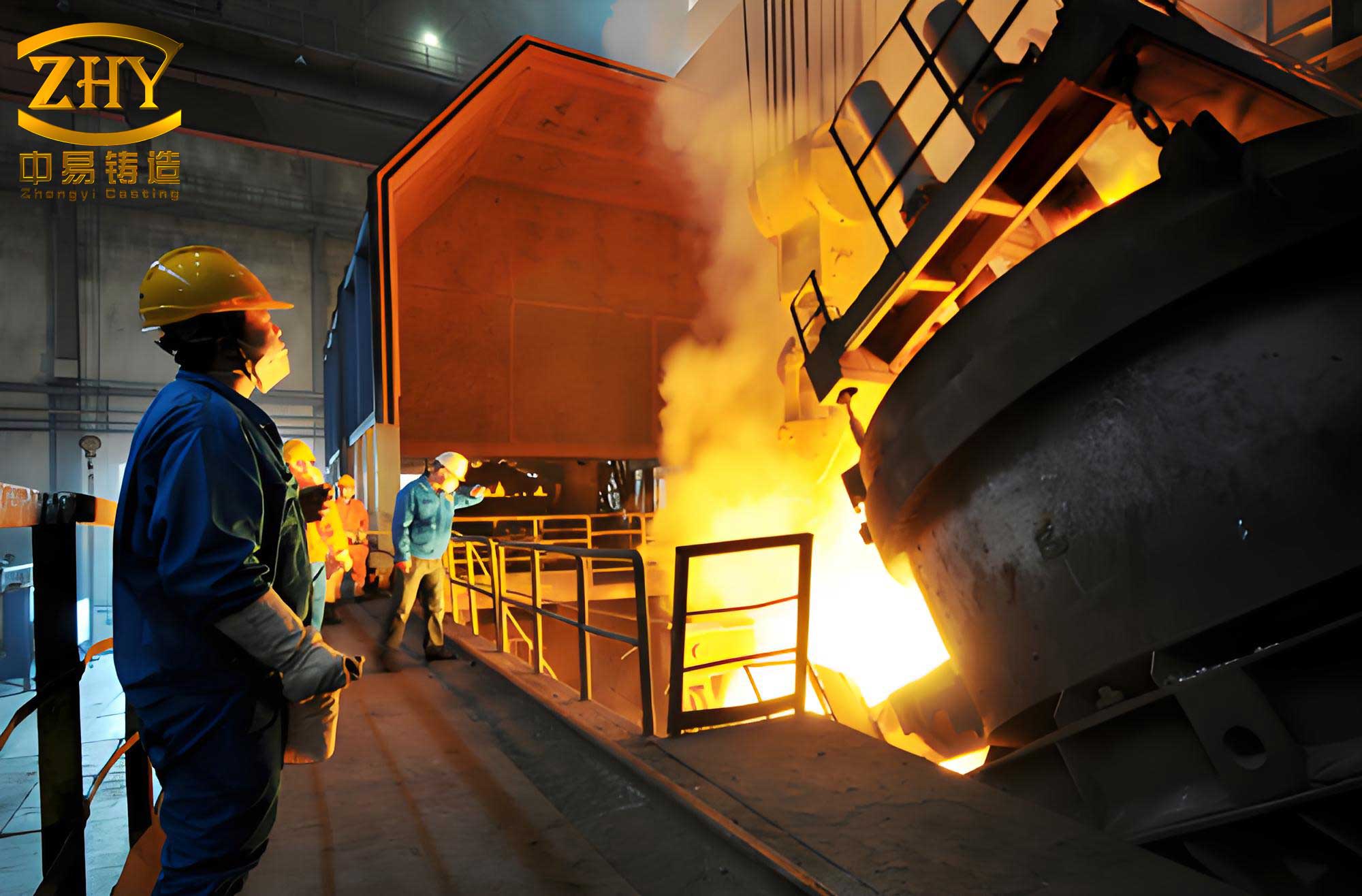
The image above exemplifies the potential of modern casting techniques to produce intricate, thin-wall cast iron parts that maintain high integrity and strength. Such advancements are crucial for reducing weight and improving energy efficiency in various sectors. The pursuit of high-strength thin-wall cast iron parts is motivated by the imperative to minimize material usage while enhancing performance. For instance, in the production of machine tool castings, reducing wall thickness by just 1 mm can lead to a weight reduction of 10–15%, resulting in substantial cost savings and improved dynamic characteristics. Moreover, achieving low residual stress in these cast iron parts eliminates the need for stress-relief annealing, streamlining manufacturing processes and reducing energy consumption. Throughout this article, I will emphasize the importance of optimizing both strength and stress characteristics to meet the growing demands for high-quality cast iron parts.
To set the stage, let me outline the traditional and contemporary methods for improving the strength of gray cast iron. Historically, increasing the strength of cast iron parts involved lowering the carbon and silicon contents while raising the manganese content. This approach, while effective to some extent, often compromises castability and increases the risk of defects such as chilling and cracking. For example, for cast iron parts with a wall thickness of 20–40 mm and a tensile strength requirement of 200 MPa, the typical adjustment involves reducing carbon by 0.1–0.2%, silicon by 0.1–0.15%, and increasing manganese by 0.1–0.2%. However, this method becomes less viable for thin-wall cast iron parts due to heightened sensitivity to composition changes and processing conditions. The following table summarizes the relationship between wall thickness and chemical composition for achieving specific strength levels in gray cast iron parts.
| Wall Thickness Range (mm) | Carbon Content (wt%) | Silicon Content (wt%) | Manganese Content (wt%) | Typical Tensile Strength (MPa) |
|---|---|---|---|---|
| 20–40 | 3.2–3.4 | 1.7–2.0 | 0.6–0.8 | 200–250 |
| 40–60 | 3.0–3.2 | 1.5–1.8 | 0.8–1.0 | 250–300 |
| 60–80 | 2.8–3.0 | 1.3–1.6 | 1.0–1.2 | 300–350 |
| 80–100 | 2.6–2.8 | 1.1–1.4 | 1.2–1.4 | 350–400 |
From Table 1, it is evident that as the wall thickness of cast iron parts increases, carbon and silicon contents must be decreased, and manganese content raised to maintain strength. This trend underscores the limitations of the traditional approach, especially for thin-wall cast iron parts where low carbon equivalent can lead to poor fluidity and increased shrinkage defects. Therefore, alternative strategies have been developed to achieve high strength without sacrificing processability. One such strategy is the control of the silicon-to-carbon (Si/C) ratio, which has garnered considerable attention in recent research on cast iron parts.
The silicon-to-carbon ratio plays a pivotal role in determining the microstructure and mechanical properties of cast iron parts. By increasing the Si/C ratio while keeping the carbon equivalent (CE) constant, it is possible to enhance tensile strength and reduce chilling tendency. The carbon equivalent is calculated using the formula:
$$ CE = C + \frac{1}{3}(Si + P) $$
where C, Si, and P are the weight percentages of carbon, silicon, and phosphorus, respectively. For gray cast iron, a higher Si/C ratio promotes the formation of primary austenite and reduces the volume fraction of graphite, thereby strengthening the metallic matrix. The relationship between tensile strength (σ_b) and Si/C ratio can be empirically expressed as:
$$ \sigma_b = A \cdot \left( \frac{Si}{C} \right) + B $$
where A and B are constants that depend on the base composition and processing conditions. Research indicates that for a given CE, there exists an optimal Si/C ratio that maximizes strength. For instance, at a CE of 3.8%, the optimal Si/C ratio is approximately 0.6–0.7, beyond which strength may plateau or even decline. This optimization is crucial for designing high-strength cast iron parts with balanced properties.
To illustrate the effect of Si/C ratio on mechanical properties, consider the following data derived from experimental studies on cast iron parts. The table below shows how varying the Si/C ratio influences tensile strength, hardness, and microstructure for a fixed carbon equivalent of 3.8%.
| Si/C Ratio | Tensile Strength (MPa) | Hardness (HB) | Primary Austenite Volume (%) | Graphite Morphology |
|---|---|---|---|---|
| 0.4 | 220–240 | 180–200 | 25–30 | Type A, coarse |
| 0.6 | 280–300 | 210–230 | 40–45 | Type A, refined |
| 0.8 | 260–280 | 200–220 | 50–55 | Type D, undercooled |
| 1.0 | 240–260 | 190–210 | 55–60 | Mixed types |
The data in Table 2 highlight that an intermediate Si/C ratio yields the highest strength and hardness, making it suitable for high-strength cast iron parts. However, excessively high Si/C ratios can lead to the formation of undercooled graphite and increased ferrite content, which may compromise strength. Therefore, precise control of the Si/C ratio is essential for optimizing the performance of cast iron parts, especially those with thin walls where microstructural homogeneity is critical.
In addition to adjusting the Si/C ratio, microalloying with elements such as chromium, molybdenum, copper, and nickel has been explored to further enhance the strength of cast iron parts. These alloying elements, typically added in amounts of 0.1–0.3%, act as pearlite stabilizers and solid solution strengtheners. For example, chromium additions of 0.1–0.2% can significantly increase hardness and wear resistance, but excessive chromium may promote carbide formation and reduce machinability. The synergistic effects of microalloying with proper Si/C ratio control can yield cast iron parts with tensile strengths exceeding 350 MPa, even at moderate carbon equivalents. The following equation approximates the contribution of alloying elements to strength:
$$ \sigma_b = \sigma_0 + \sum (k_i \cdot X_i) $$
where σ_0 is the base strength, k_i is the strengthening coefficient for element i, and X_i is its weight percentage. For instance, k for chromium is approximately 50–100 MPa/wt%, while for molybdenum it ranges from 80–120 MPa/wt%. These values underscore the potential of microalloying in developing high-strength cast iron parts for demanding applications.
Another cornerstone of modern cast iron technology is the use of high-temperature molten iron combined with effective inoculation treatments. Elevated pouring temperatures, achievable through advanced melting practices like induction furnaces or high-quality coke in cupolas, improve fluidity and reduce casting defects. Inoculation, the addition of small amounts of active elements such as silicon, calcium, strontium, or barium, refines the eutectic structure, reduces chilling, and enhances mechanical properties. The effectiveness of inoculation for cast iron parts depends on the inoculant type, addition rate, and treatment timing. Below is a comparative analysis of common inoculants used in the production of high-strength cast iron parts.
| Inoculant Type | Typical Addition Rate (wt%) | Tensile Strength Increase (%) | Chilling Depth Reduction (%) | Optimal Inoculation Time (minutes) | Remarks |
|---|---|---|---|---|---|
| 75% FeSi | 0.2–0.4 | 10–15 | 30–40 | 5–10 | Cost-effective, widely used |
| CaSi (Calcium Silicide) | 0.1–0.3 | 12–18 | 40–50 | 10–15 | Good for reducing undercooling |
| SrSi (Strontium Silicide) | 0.05–0.15 | 15–20 | 50–60 | 15–20 | Excellent for thin-wall sections |
| BaSi (Barium Silicide) | 0.1–0.2 | 10–15 | 35–45 | 10–15 | Less prone to fading |
| Complex Inoculants (e.g., FeSi-Ca-Al) | 0.3–0.5 | 20–25 | 60–70 | 5–10 | Superior for high-strength applications |
Table 3 demonstrates that strontium-based inoculants are particularly effective for thin-wall cast iron parts due to their potent chilling reduction and fading resistance. Inoculation not only improves strength but also reduces section sensitivity, ensuring uniform properties across varying thicknesses in cast iron parts. The mechanism involves the formation of heterogeneous nucleation sites for graphite, leading to finer eutectic cells and improved graphite distribution. The inoculation process can be modeled using kinetic equations, such as:
$$ N = N_0 \cdot e^{-t/\tau} $$
where N is the number of effective nuclei, N_0 is the initial nucleus count, t is time, and τ is the fading time constant. For instance, τ for SrSi inoculants is typically 20–30 minutes, allowing a longer window for pouring cast iron parts without significant property degradation.
While enhancing strength is vital, controlling residual stress is equally important for the dimensional stability and service life of cast iron parts. Residual stress arises primarily from thermal gradients during cooling and can lead to distortion, cracking, and reduced fatigue resistance. The residual stress (σ_r) in a casting can be described by a semi-empirical formula derived from thermal stress analysis:
$$ \sigma_r = E \cdot \alpha \cdot (T_{el} – T_0) \cdot \left( \frac{h_2}{h_1} \right)^n \cdot f(\lambda, \beta) $$
In this equation, E represents the elastic modulus, α is the linear thermal expansion coefficient below the elastic-plastic transition temperature (T_el), T_0 is the ambient temperature, h_1 and h_2 are the equivalent thicknesses of thin and thick sections, respectively, n is an exponent between 0.5 and 1 (depending on geometry and material), λ is the thermal conductivity, and β is a coefficient accounting for plastic deformation below T_el. This formulation highlights the multifaceted nature of stress generation in cast iron parts and provides a framework for identifying key influencing factors.
Let me delve into each factor in detail, starting with the elastic modulus (E). The elastic modulus of gray cast iron is influenced by composition and microstructure. A higher elastic modulus generally correlates with higher residual stress, but it also contributes to stiffness, which is desirable for many cast iron parts. The elastic modulus can be estimated using the following relationship:
$$ E_0 = 100 – 90 \cdot CE + 0.01 \cdot \sigma_b $$
where E_0 is in GPa, CE is the carbon equivalent, and σ_b is the tensile strength in MPa. However, this formula is approximate, and experimental data show that E_0 often peaks at a CE around 3.8–4.0% for gray cast iron. For high-strength cast iron parts, typical E_0 values range from 110–140 GPa, depending on alloying and processing. It is worth noting that the elastic modulus decreases with temperature, and this temperature dependence must be considered in stress analysis for cast iron parts operating under thermal cycles.
The thermal expansion coefficient (α) is another critical parameter. Lower α values tend to reduce thermal stress, as per the equation above. The expansion coefficient of gray cast iron varies with temperature and composition, particularly silicon content. Higher silicon levels generally reduce α, which is beneficial for low-stress cast iron parts. The table below provides typical α values for gray cast iron across different temperature ranges.
| Temperature Interval (°C) | Average Linear Expansion Coefficient α (10^{-6} °C^{-1}) | Notes |
|---|---|---|
| 20–200 | 11.0–12.0 | Applicable for stress relief below 200°C |
| 200–400 | 12.0–13.0 | Critical range for stress development |
| 400–600 | 13.0–14.0 | High-temperature behavior |
| 600–800 | 14.0–15.0 | Approaching austenitic region |
Data in Table 4 indicate that α increases with temperature, emphasizing the importance of cooling rate control during solidification and cooling of cast iron parts. By optimizing the composition to achieve lower α, especially in the critical 200–400°C range, residual stress can be mitigated. For instance, cast iron parts with a silicon content of 2.0–2.5% often exhibit α values at the lower end of these ranges, contributing to reduced stress.
Thermal conductivity (λ) plays a dual role: higher λ promotes uniform temperature distribution, reducing thermal gradients and stress, but it may also accelerate cooling, potentially increasing stress if not managed properly. Gray cast iron typically has a thermal conductivity of 50–60 W/(m·K) at room temperature, which is higher than that of ductile or malleable cast iron. The conductivity varies with temperature and microstructure; for example, pearlitic matrices have lower λ than ferritic ones. The relationship between λ and temperature for gray cast iron can be approximated by:
$$ \lambda(T) = \lambda_0 – k_\lambda \cdot (T – T_0) $$
where λ_0 is the conductivity at reference temperature T_0, and k_λ is a negative constant (typically around -0.05 to -0.1 W/(m·K²)). Ensuring high thermal conductivity through composition control (e.g., minimizing alloying elements that reduce λ) is advantageous for low-stress cast iron parts, as it facilitates heat dissipation and minimizes internal temperature differences.
The elastic-plastic transition temperature (T_el) is the temperature below which the material behaves elastically and above which plastic deformation occurs. Lower T_el values generally lead to lower residual stress because plastic flow can accommodate thermal strains at higher temperatures. T_el for gray cast iron depends on composition and strain rate; it typically ranges from 350°C to 500°C. Determining T_el involves high-temperature tensile tests, where the yield strength drops significantly. The following equation relates T_el to silicon content:
$$ T_{el} = T_{el,0} – m \cdot Si $$
where T_el,0 is the base transition temperature (around 500°C for low-silicon iron), and m is a positive constant (approximately 10–15°C/wt% Si). Thus, increasing silicon content not only strengthens cast iron parts but also lowers T_el, which can be beneficial for stress reduction. However, this must be balanced against other properties, as excessive silicon may degrade thermal conductivity.
Wall thickness ratio (h_2/h_1) is a geometric factor that profoundly impacts residual stress in cast iron parts. For frame-like castings, stress is maximized when the thickness ratio is between 2 and 3, as per experimental observations. Beyond this ratio, stress decreases due to altered constraint conditions. This nonlinear relationship underscores the importance of design optimization for thin-wall cast iron parts. Using finite element analysis, designers can simulate stress distributions and adjust wall thicknesses to minimize peak stresses. The exponent n in the stress equation typically falls between 0.5 and 1, with higher values for materials with lower ductility. For gray cast iron, n is often around 0.7, indicating moderate sensitivity to thickness variations.
Integrating all these factors, the pathway to achieving high-strength, low-stress cast iron parts involves a synergistic approach. First, select a carbon equivalent in the range of 3.8–4.2% to ensure good castability and moderate chilling tendency. Second, optimize the Si/C ratio to 0.6–0.7 for enhanced strength without excessive brittleness. Third, employ inoculation with strontium or complex inoculants to refine microstructure and improve uniformity, especially for thin-wall cast iron parts. Fourth, consider microalloying with elements like chromium (0.1–0.3%), molybdenum (0.1–0.2%), or copper (0.5–1.0%) to further boost strength and suppress ferrite formation. Fifth, control melting and pouring practices to achieve high superheat (e.g., 150–200°C above liquidus) and rapid inoculation to maximize effectiveness.
From a stress perspective, aim for compositions that yield a moderate elastic modulus (110–130 GPa), low thermal expansion coefficient (11–12 × 10^{-6} °C^{-1} in the 20–400°C range), and high thermal conductivity (55–60 W/(m·K)). Additionally, design cast iron parts with gradual transitions between sections, avoiding sharp corners and sudden thickness changes. Post-casting treatments such as controlled cooling or vibration stress relief can also be employed to reduce residual stress without full annealing.
The tensile strength of gray cast iron can be predicted using an empirical formula that accounts for carbon equivalent and wall thickness:
$$ \sigma_b = K \cdot (CE – 0.01 \cdot h_e) $$
where K is a constant ranging from 80 to 120 MPa per unit CE, and h_e is the equivalent wall thickness in mm. For thin-wall cast iron parts, h_e is small, so maintaining a high CE through inoculation and alloying allows for high strength. For example, with CE = 4.0% and h_e = 10 mm, σ_b can reach 300–350 MPa with proper processing. This formula underscores the interplay between composition and geometry in determining the performance of cast iron parts.
In conclusion, the research trends in high-strength thin-wall cast iron parts are centered on advanced metallurgical control, innovative processing techniques, and holistic design principles. By leveraging insights from silicon-carbon ratio optimization, microalloying, inoculation, and stress analysis, it is possible to produce cast iron parts that meet stringent requirements for strength, lightweightness, and dimensional stability. Future directions may include the development of novel inoculants with enhanced fading resistance, computational tools for predicting microstructure and stress evolution, and sustainable practices that reduce energy consumption and environmental impact. As industries continue to demand higher performance from cast components, the ongoing innovation in cast iron technology will ensure that cast iron parts remain a viable and competitive choice for a wide array of applications. The journey towards perfecting high-strength, low-stress cast iron parts is a testament to the dynamic nature of materials science and engineering.