
In my extensive experience with resin sand casting, primarily using furan systems, I can confidently state that it is a process capable of yielding castings of superior dimensional accuracy and surface finish compared to traditional green sand methods. The low scrap rates often reported are a testament to its potential. However, this potential is fully realized only through meticulous control. The quality of the final casting is not guaranteed by the process itself but is a direct result of disciplined choices in raw materials, process design, molding and core-making operations, and production management. Failures in any of these areas can lead to a variety of defects, sometimes resulting in costly batch rejections. This guide synthesizes my practical observations with established principles to detail the common defects in furan resin sand castings and the comprehensive measures required to prevent them.
The very characteristics that make resin sand casting attractive also dictate its failure modes. The organic binder system, while providing excellent strength and dimensional stability, introduces new variables related to gas evolution, thermal expansion, and cooling dynamics that must be actively managed.
Gas Porosity and Pinholes
While the macro-permeability of resin sand is excellent, the specific high gas generation from the decomposition of organic binders creates a pronounced risk for gas-related defects like blowholes and pinholes. The sources are multifaceted and often cumulative.
The gas generation potential, $G$, in a resin sand mold can be conceptually modeled as a function of several key variables:
$$G = k_1 \cdot R + k_2 \cdot LOI + k_3 \cdot H_2O + k_4 \cdot t_{cure}$$
Where $R$ is resin/additive content, $LOI$ is the loss on ignition of the reclaimed sand, $H_2O$ is residual moisture, $t_{cure}$ is a function of curing time and temperature, and $k_n$ are proportionality constants specific to the materials used.
The primary sources and controls are summarized below:
| Source of Gas | Root Cause | Preventive Measure | Target Parameter |
|---|---|---|---|
| Binder System | Excessive resin & hardener addition; High nitrogen (N) content resin; Incomplete curing before pouring. | Minimize binder addition; Use high-furfuryl alcohol, low-N resins; Optimize hardener type/amount for season; Ensure full cure (often >12 hrs). | Resin: 0.9-1.2% (Iron), lower for steel. N-content < 1-2%. Use silane coupling agent (0.2-0.3% of resin) to reduce resin need. |
| Base Sand & Reclaim | Fine sand grading; High LOI and micro-fines in reclaimed sand; High sand-to-metal ratio. | Use coarse, well-distributed sand (AFS 50-70); Control reclaimed sand LOI and micro-fines; Reduce sand-to-metal ratio. | Sand LOI < 3% (Iron), < 1.5% (Steel). Micro-fines < 0.5%. Sand/Metal ratio < 3:1. |
| Coatings | Insufficient drying; Low solids content; Solvent with high water content. | Use coatings > 40° Bé; Ensure thorough flame or air drying post-application; Control solvent quality (H2O < 0.5%). | Coating layer dry, porous, and well-adhered. |
| Gating & Venting | Poor venting of mold/core; Unpressurized gating causing turbulence; Low pouring head. | Design ample vents in cope, especially over large areas; Use pressurized sprue-runner-gate systems (e.g., 1.0 : 1.1 : 1.3); Consider ceramic sprues for depth. | Vent area ~ 0.2-0.5 x choke area. Maintain steady, rapid pour without interruption. |
A critical, often overlooked, factor is the condition of reclaimed sand. The LOI is a direct indicator of residual carbonaceous material that will gas violently during pouring. The relationship between LOI and gas pressure ($P_{gas}$) is exponential, not linear, explaining why small increases in LOI beyond a critical point can lead to dramatic increases in defect rates. Implementing rigorous sand regeneration and consistent LOI monitoring is non-negotiable for stable resin sand casting production.
Mechanical Penetration (Burn-On)
Despite good refractoriness, mechanical penetration of metal into sand interstices remains a risk. It occurs when the metal pressure overcomes the resistance of the sand matrix at the mold-metal interface. The key factors are sand porosity, coating integrity, and mold surface stability.
The capillary pressure preventing penetration can be described by:
$$P_c = \frac{2\sigma \cos\theta}{r}$$
Where $\sigma$ is the surface tension of the metal, $\theta$ is the contact angle, and $r$ is the effective pore radius of the sand-coating layer. A large pore radius (coarse sand, low packing density) reduces $P_c$, facilitating penetration.
| Cause | Mechanism | Prevention |
|---|---|---|
| Coarse/Concentrated Sand Grading | Large pore size ($r$) reduces capillary resistance ($P_c$). | Use finer or multi-modal sand distribution to decrease $r$. |
| Inadequate Coating | Thin coating or poor sintering fails to reduce effective $r$. | Use high-solids coatings; Apply dual layers (penetrating sealer + refractory topcoat) for heavy sections. |
| Low Mold Hardness | Unstable surface erodes, increasing local $r$. | Achieve uniform, high compaction; Avoid using sand beyond its work time. |
| High New Sand Percentage | New sand grains are more angular and may pack less efficiently than reclaimed, rounded grains. | Maximize use of properly reclaimed sand in the system. |
For demanding iron castings, zircon- or chromite-based coatings significantly raise the threshold for penetration due to their higher thermal stability and lower wettability by molten iron.
Veining
Veining is a defect almost characteristic of silica-based resin sand casting. It appears as fine, vein-like projections of metal on the casting surface, following sand grain boundaries. The root cause is the rapid, disruptive thermal expansion of silica sand ($\alpha_{SiO_2} \approx 15 \times 10^{-6} /K$ near $\beta$-quartz inversion at 573°C), which creates micro-cracks in the restraining coating layer. Molten metal invades these cracks, solidifying into the characteristic veins.
The thermal stress ($\sigma_{th}$) at the sand-coating interface is proportional to the difference in expansion:
$$\sigma_{th} \propto E \cdot \Delta \alpha \cdot \Delta T$$
Where $E$ is the effective modulus, $\Delta \alpha$ is the difference in thermal expansion coefficients between sand and coating, and $\Delta T$ is the temperature change. The primary mitigation is to reduce $\Delta \alpha$ by making the sand’s expansion behavior more compatible with the coating.
Prevention Strategy: The most effective and practical method is to use a high percentage of reclaimed sand. Repeated thermal cycling in the resin sand casting process alters the silica grains, often through micro-fracturing and calcination, which lowers their effective thermal expansion. A molding sand mix with >80% reclaimed sand shows markedly reduced veining compared to one using primarily new sand. For critical applications, partial or complete replacement of silica sand with low-expansion aggregates like chromite ($\alpha \approx 7 \times 10^{-6} /K$) or zircon sand is the definitive solution.
Hot Tears and Cracks
The high rigidity and low yield of furan resin sand molds can increase the hot tearing susceptibility of castings, particularly in steel and complex, restrained geometries of iron. The mold resists the contraction of the solidifying casting, imposing tensile stresses in vulnerable, poorly-fed sections during the late stages of solidification.
The susceptibility can be related to the strain accumulation during the vulnerable “brittle temperature range”:
$$\epsilon_{acc} = \int_{T_1}^{T_2} \alpha(T) \, dT – \frac{\delta}{L}$$
Where $T_1$ to $T_2$ is the brittle temperature range, $\alpha(T)$ is the thermal contraction coefficient, $\delta$ is the allowed deformation (mold yield/feeding), and $L$ is a characteristic length. A rigid mold minimizes $\delta$, maximizing strain $\epsilon_{acc}$ and tear risk.
| Approach | Action | Effect on Strain ($\epsilon_{acc}$) |
|---|---|---|
| Improve Mold Yield | Add cellulose (wood flour)溃散剂 at 0.5-1.0%; Use hollow cores; Reduce sand backing with foam blocks. | Increases $\delta$, reducing $\epsilon_{acc}$. |
| Reduce Restraint | Modify casting design (fillets); Use loose core prints; Apply mold washes to core roots. | Reduces effective restraint $L$. |
| Modify Thermal Gradient | Use chills (metal or exothermic); Switch to chromite/zircon sand in hot spots; Lower pouring temperature. | Alters solidification sequence, shifting stress concentration. |
| Modify Metallurgy | For iron: Add pearlite stabilizers (Cu, Sn); For steel: Control sulfur/phosphorus. | Increases strength in the brittle temperature range. |
| Avoid Sulfur Pickup | For critical steel/ductile iron, use phosphate-based hardeners instead of sulfonic acids. | Prevents grain boundary embrittlement from surface sulfur infusion. |
Slag Inclusions and Dross
Inclusions in resin sand casting often originate from the reaction between the metal (especially early, oxidizing-prone stream) and the binder pyrolysis products, forming silicate-based slags. A second source is the erosion/scabbing of mold or core surfaces due to prolonged thermal exposure from a slow pour.
The governing principle for prevention is “quick, quiet, and sealed” filling. The initial, turbulent, and oxide-laden metal must be prevented from entering the main cavity. This is achieved through:
- Pressurized, Bottom-Gated Systems: Ensuring the gating system is full quickly, minimizing air aspiration and oxide formation. A ratio like Sprue : Runner : Gate = 1.0 : 0.9 : 0.7 promotes this.
- Effective Skimming: Designing runners with turns and dams to trap slag.
- Use of Pouring Basins and Ceramic Filters: To calm the stream and physically filter out particles.
- Strategic Use of Overflow Risers: For large flat surfaces (e.g., plates), tilt pouring and placing overflow risers at the highest point opposite the gate collects cold, slag-laden metal and allows it to overflow, keeping the casting surface clean.
Hardness Deficiency
The excellent insulating properties of resin sand result in slower cooling rates compared to metal or even dense green sand molds. For ferrous castings, this can shift the transformation products, leading to lower than specified hardness, typically in the form of increased ferrite or coarse pearlite, particularly in heavier sections.
The cooling rate $(\frac{dT}{dt})$ is a critical parameter. The relationship between cooling rate and hardness (HV) for a given composition can be approximated for a specific section size:
$$HV \approx A + B \cdot \ln\left(\frac{dT}{dt}\right)$$
Where $A$ and $B$ are material-dependent constants. Slower cooling (low $\frac{dT}{dt}$) reduces HV.
Mitigation Measures:
- Metallurgical Adjustment: For iron, slightly lower Carbon Equivalent (CE) and/or small additions of pearlite stabilizers (0.3-0.5% Cu, 0.04-0.08% Sn) counteract the slow-cooling effect.
- Accelerated Cooling: Strategic use of internal or external chills (cast iron, graphite, exothermic) is the most direct method to locally increase $\frac{dT}{dt}$.
- Process Control: Reduce pouring temperature; Shorten mold-closed time before shakeout (early, controlled shakeout).
- Measurement Note: A surface-softened layer (0.5-2 mm) often exists due to mold-metal interface reactions. Accurate bulk hardness measurement requires removing this layer.
Surface Alloying: Carburization, Sulfurization, and Spheroidization Degradation
The reducing atmosphere created by the decomposing carbonaceous binder can lead to surface alloying. In low-carbon and stainless steels, carbon from the binder can diffuse into the surface, creating a carburized layer (up to 1-2 mm deep). When using sulfonic acid hardeners, sulfur can be released and diffuse into the surface of steels or ductile iron, causing embrittlement or impaired graphite spheroidization.
The diffusion depth $x$ follows Fick’s law approximation: $x \propto \sqrt{D t}$, where $D$ is the diffusion coefficient (temperature-dependent) and $t$ is the exposure time at high temperature. Prevention focuses on creating a barrier or altering the interface chemistry.
| Defect | Mechanism | Preventive Solution |
|---|---|---|
| Carburization | Carbon diffusion from mold/atmosphere into steel surface. | Apply coatings containing oxidizing agents (e.g., iron oxide). Use chromite or zircon facing sand. Double-layer coating (barrier + refractory). |
| Sulfurization & Nodule Degradation | Sulfur diffusion from hardener breakdown products. | Use low-sulfur or phosphate-based hardeners for critical castings. Apply specialty “desulfurizing” mold washes. For ductile iron, increase nodulizer (Mg, Ce) allowance slightly to counteract sulfur pickup. |
Dimensional Inaccuracy
While renowned for accuracy, resin sand casting can still produce out-of-tolerance parts if process details are neglected. The errors stem from pattern issues, incorrect allowance application, and operational inconsistencies.
- Pattern/Tooling Distortion: Wooden patterns must be thoroughly seasoned and stabilized. Humidity and temperature changes can warp them, directly imprinting error.
- Incorrect Allowances: Transitioning from green sand to resin sand requires re-evaluating all allowances:
- Shrinkage: The hindered contraction in rigid resin molds often results in different (usually slightly lower) shrinkage factors than for green sand. These must be determined empirically for each part family/geometry.
- Core Print Clearances: Can be significantly smaller than in green sand due to higher precision and strength.
- Draft & Machining Allowances: Often can be reduced due to better accuracy and finish.
- Operational Variability: Loose pattern locating pins, inconsistent coating thickness, and core setting errors all introduce variation. The process excels in repeatability, but only when the setup is consistent.
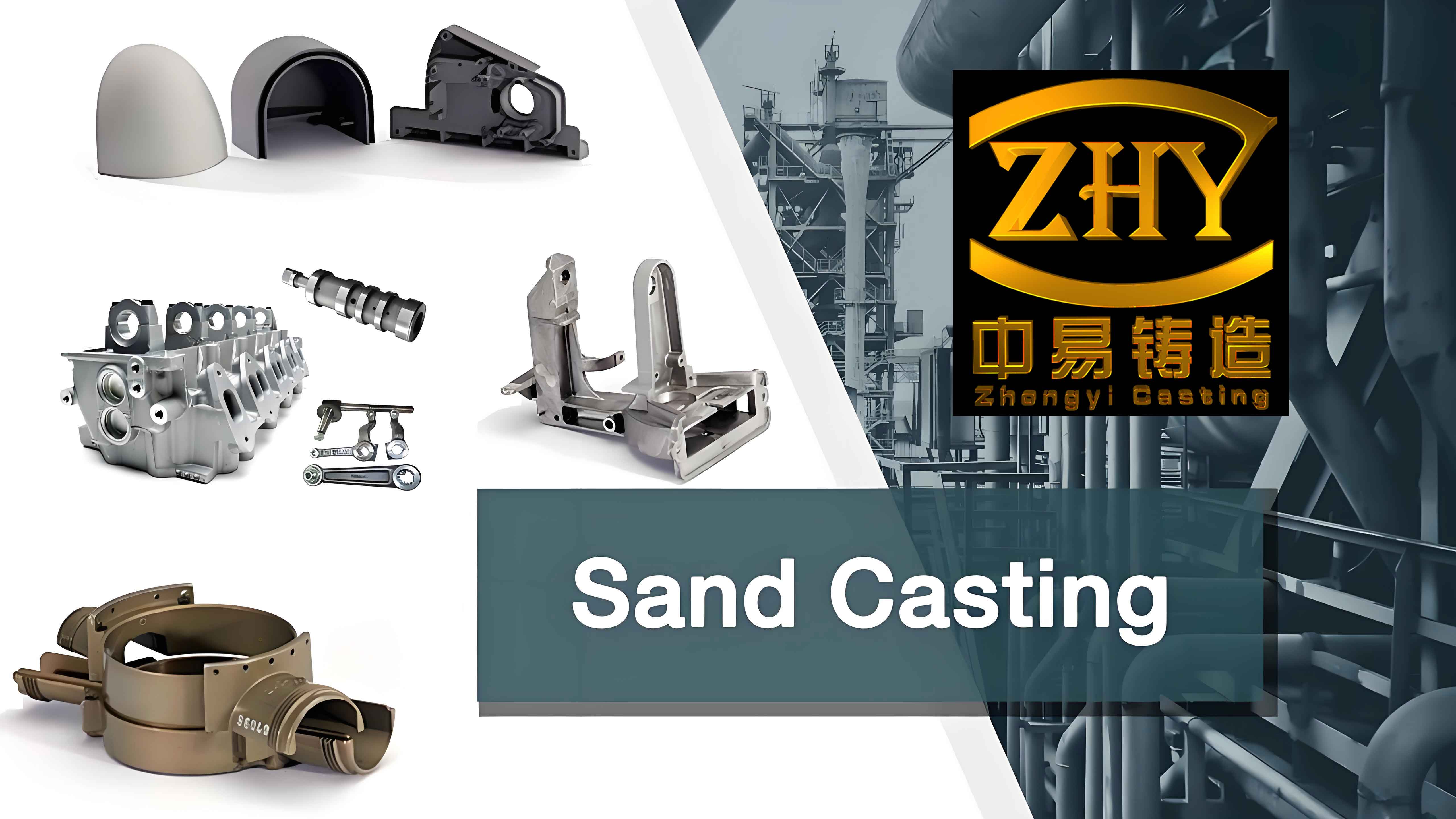
The successful implementation of resin sand casting is an exercise in systems thinking. Each defect interrelates with process parameters: reducing binder to lower gas may impact veining resistance; changing sand distribution for surface finish may affect permeability. The key is establishing and maintaining a stable, controlled process foundation—characterized by high-quality, consistent reclaimed sand, minimized binder levels, optimized gating and venting, and disciplined operational standards. From this stable base, specific corrections for defects like veining (via sand reuse), cracks (via mold yield), or hardness (via cooling control) can be effectively applied. The goal is not merely to react to defects, but to design the resin sand casting process proactively to prevent them, thereby consistently achieving the high-quality potential this versatile molding method offers.