
As a foundry engineer specializing in high-volume production, I have consistently faced the challenge of improving surface quality and reducing defects in sand casting products. One of the most persistent and damaging issues encountered in clay sand molding lines is the phenomenon of gas explosion sand adhesion. This defect not only compromises the cosmetic appearance of the casting but can also lead to significant post-cleaning costs, dimensional inaccuracies, and, in severe cases, scrapped parts. The problem is particularly acute in complex, thin-walled sand casting products like engine components, where large core assemblies and intricate geometries can trap gas. My experience with a specific flywheel housing casting, produced on a high-pressure clay sand molding line, perfectly illustrates this struggle and the transformative role that casting simulation software, specifically MAGMA, can play in diagnosing and permanently solving such issues.
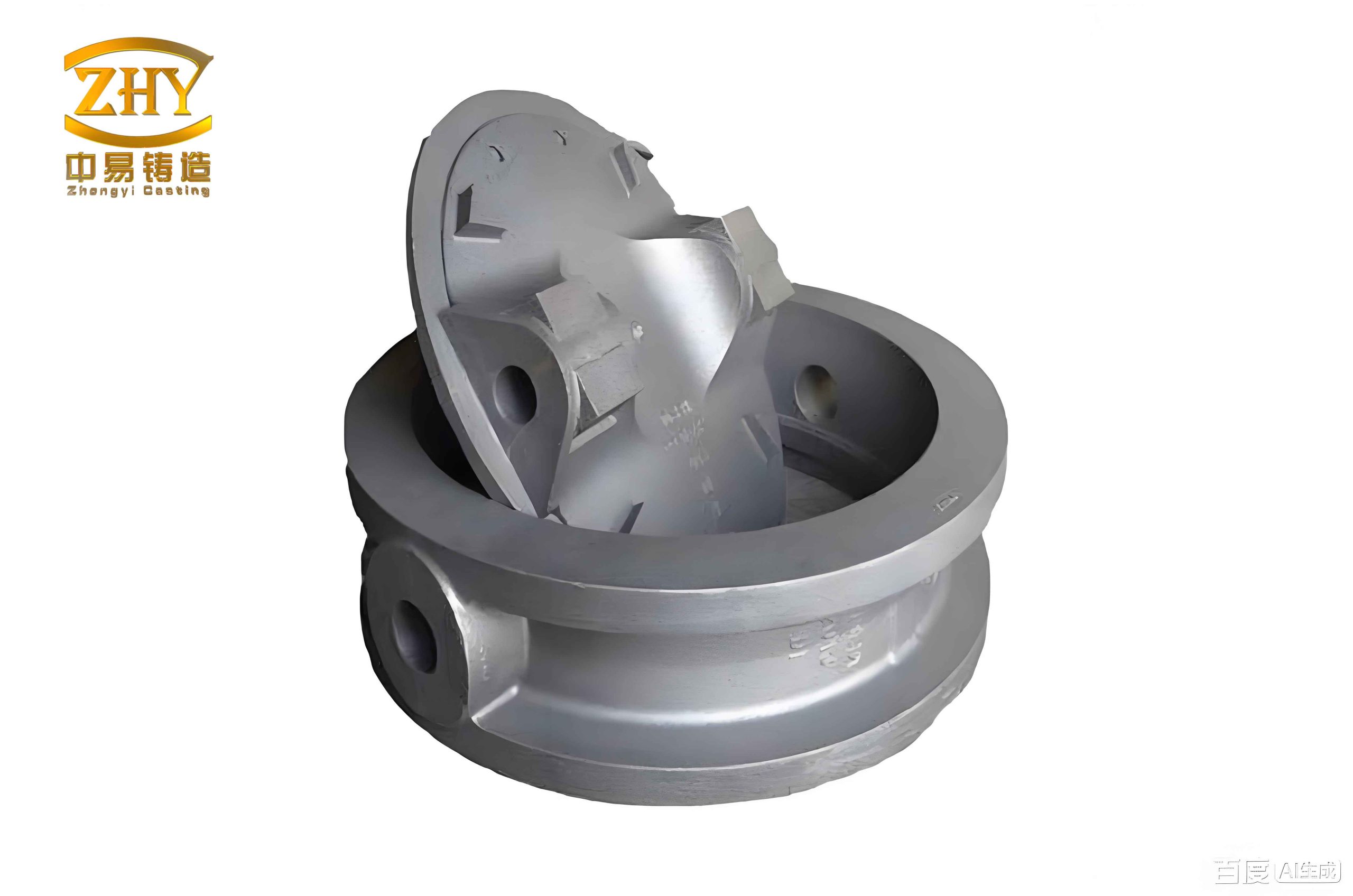
The casting in question was a gray iron (HT250) flywheel housing with a weight of approximately 20.5 kg. It was produced using a green sand static pressure molding line for the mold and shell sand cores. Despite stable melting and chemical composition, the component suffered from intermittent but severe surface defects ranging from localized rough patches to full-blown gas explosion blows, where molten metal violently penetrated the sand mold, creating a fused, rough surface that was difficult to remove. For any foundry producing precision sand casting products, this level of variability and defect rate is unacceptable, driving extensive and often costly corrective actions.
Our initial approach, grounded in traditional foundry wisdom, focused on optimizing the sand mixture and enhancing venting. We systematically adjusted a suite of parameters, each targeting a suspected root cause of the gas generation or entrapment. The table below summarizes the range of these empirical adjustments made to the green sand system:
| Parameter | Original Control Range | Adjusted Control Range | Intended Effect |
|---|---|---|---|
| Moisture Content | 3.4 – 3.6% | 2.95 – 3.15% | Reduce total gas volume from moisture vaporization. |
| Active Bentonite | 7.5 – 9.0% | 7.0 – 7.5% | Lower gas from clay minerals and improve permeability. |
| Volatile Content (from coal dust) | 2.0 – 2.5% | 1.8 – 2.0% | Reduce pyrolysis gases from carbonaceous additives. |
| Loss on Ignition (LOI) | 4.5 – 6.0% | 3.5 – 4.5% | Lower overall combustibles and gas potential. |
| Clay Content | 12 – 14% | 10 – 12% | Increase sand permeability for better gas escape. |
Concurrently, we modified the tooling: we reduced the choke area in the gating system to slow down the fill time, added more ingates to distribute the metal flow and reduce localized turbulence, and maximized the number and diameter of vent holes in the cope, including adding vent pins at core prints. The results were frustratingly ambiguous. While we observed periods of improvement, the defect would inevitably recur. The process was not robust. We were treating symptoms—reducing the overall gas load and providing more escape paths—without a precise understanding of *where* and *why* the gas was accumulating to explosive pressures in the first place. This is a common plateau in troubleshooting complex sand casting products, where empirical adjustments yield diminishing returns.
This is where digital simulation provided a paradigm shift. We employed MAGMA software to create a virtual prototype of the entire casting process. The goal was to move from guesswork to physics-based analysis. The simulation model accurately represented the geometry of the mold cavity, the sand cores, the gating system, and the properties of the iron and sand materials. By solving the fundamental equations governing fluid flow, heat transfer, and gas generation/pressure, the software could visualize the casting process in minute detail. The key analyses we focused on were fill pattern, temperature progression, dynamic pressure development, and crucially, gas concentration and flow.
The simulation revealed the inadequacies of our original gating and venting strategy with stark clarity. The fill pattern showed undesirable turbulence as the metal entered the cavity, promoting early gas entrainment. More critically, the gas pressure analysis identified a specific, large-volume pocket at the highest point of the casting where the geometry created a natural trap. The existing vents were insufficient to evacuate gas from this pocket quickly enough. The pressure buildup in this zone during filling could be described by a simplified relation accounting for gas generation from the sand and core, and the restrictive flow through vents:
$$ P_{trap}(t) = \int_0^t (Q_{gen} – Q_{vent}) dt $$
where $P_{trap}$ is the pressure in the trapped gas pocket, $Q_{gen}$ is the rate of gas generation from heated sand and core binders, and $Q_{vent}$ is the rate of gas evacuation through available vents. The simulation showed that for the original design, $Q_{vent}$ was chronically less than $Q_{gen}$ at this location, leading to a rapid pressure rise $P_{trap}$ that would exceed the metallostatic head pressure, resulting in a gas explosion blow—the severe sand adhesion we observed.
Armed with this precise diagnostic information, we redesigned the tooling. The changes were targeted and derived directly from the simulation insights:
- Gating System Redesign: We modified the ingate sizes and positions to achieve a more uniform, tranquil fill front, minimizing turbulence and primary gas entrainment.
- Strategic Venting: The most important change was modifying the mold parting line at the highest point of the casting to incorporate a small, functional blind riser/vent. This provided a dedicated, low-resistance volume for gas to accumulate and be pushed out ahead of the metal, rather than being compressed into a dead-end sand wall.
The table below contrasts the key features of the old and new casting process designs:
| Feature | Original Process | New, Simulation-Optimized Process |
|---|---|---|
| Fill Behavior | Turbulent, uneven progression leading to early gas entrainment. | Smooth, controlled fill front minimizing turbulence. |
| Gas Evacuation Path | Reliance on small-diameter vertical vents in the cope; gas trapped at high point. | Dedicated, large-volume vent/riser at the highest point provides a positive escape path. |
| Peak Gas Pressure in Cavity | High, localized pressure exceeding metallostatic pressure in traps. | Dramatically reduced; pressure remains below the threshold for metal invasion. |
| Predicted Defect Severity | High probability of gas explosion sand adhesion. | Negligible probability of gas-related defects. |
The production trial of the new tooling was a definitive success. The severe gas explosion blows were completely eliminated. The surface of the sand casting product was consistently clean, requiring minimal finishing. The process became stable and reliable. Encouraged by this success, we applied the same simulation-driven diagnostic approach to other similar sand casting products in our portfolio, such as different flywheel housing models, which had historically suffered from the same issue. In each case, by using MAGMA to identify the specific gas pressure problem areas and then redesigning the venting strategy accordingly, we achieved a permanent solution, dramatically improving the quality and yield of these sand casting products.
This experience underscores a critical evolution in foundry engineering for sand casting products. While traditional methods of sand control and venting are necessary foundation practices, they have limits when dealing with complex interactions in the mold cavity. Casting simulation software like MAGMA acts as a powerful diagnostic tool that visualizes the invisible—the flow of metal and the behavior of gases. It allows engineers to move from reactive, empirical troubleshooting to proactive, physics-based process design. The return on investment is measured not only in reduced scrap and rework but also in faster new product introduction, as potential defects can be identified and corrected in the virtual design phase, long before first metal is poured. For any foundry committed to producing high-integrity, complex sand casting products reliably and efficiently, integrating casting simulation into the standard development workflow is no longer a luxury; it is an essential component of modern, competitive manufacturing.