
As a professional in the field of sand casting, I have observed that the quality of casting molds has significantly improved over years of development through the relentless efforts of casting process design engineers and mold practitioners. However, overall independent innovation capability remains insufficient, lacking core competitiveness. I believe this stems from the fact that most design personnel in mold manufacturing enterprises lack specialized knowledge or practical experience in sand casting, leading to inadequate design capabilities for casting processes. Consequently, many designed molds do not meet the actual production requirements of sand casting, often necessitating extensive modifications by casting enterprises after receiving the molds. Therefore, for casting enterprises, cultivating in-house mold designers and enhancing mold design proficiency, or fostering closer collaboration between casting process design engineers and mold designers, is a prerequisite for ensuring mold quality and a detail that must be highly prioritized.
In this article, I will delve into the critical aspects of sand casting mold design, emphasizing the importance of integrating casting process knowledge with mold design. I will explore strategies for casting enterprises to develop their own design capabilities, detail key elements of casting process design, discuss the role of simulation analysis, and provide insights into material selection for various mold components. Throughout, I will incorporate tables and formulas to summarize best practices and technical parameters, ensuring a comprehensive understanding of sand casting mold design.
Cultivating In-House Mold Design Engineers in Sand Casting Enterprises
Currently, some casting enterprises still fully outsource the design and manufacturing of required molds to suppliers. While this approach allows enterprises to avoid investing excessive effort in mold design and manufacturing, it can introduce numerous hidden risks and losses into sand casting production. If the mold designed by a supplier does not align with the process requirements of the cast part, the casting enterprise must undertake significant modifications and optimizations. However, fundamental details such as shrinkage allowances, parting surfaces, template layouts, and gating systems, once finalized, are often challenging to modify comprehensively. In severe cases, this may render the mold unusable or even lead to scrap. Based on these reasons, casting enterprises must cultivate their own mold design engineers. These engineers can be concurrently held by casting process technicians, which offers the advantage of making the designed molds more aligned with actual sand casting production, reducing or avoiding post-design changes, and providing more rational mold processes for the development of new casting products, thereby ensuring a higher success rate in new product development. Although mold manufacturing requires substantial investment in precision machining equipment and numerous mold practitioners, as a casting enterprise, we may not need in-house mold manufacturing capabilities. However, to guarantee the feasibility of mold processes and the success rate of new product development, it is essential to have our own casting process designers and mold designers.
To illustrate the benefits of in-house design, consider the following table comparing outsourced versus in-house mold design approaches in sand casting:
| Aspect | Outsourced Design | In-House Design |
|---|---|---|
| Control Over Process | Limited; relies on supplier expertise | High; direct integration with casting knowledge |
| Modification Flexibility | Low; costly and time-consuming changes | High; proactive adjustments during design |
| Cost Implications | Potential for hidden costs from rework | Lower long-term costs due to reduced errors |
| Innovation Potential | Constrained by supplier capabilities | Enhanced through continuous improvement |
From my experience, the formula for calculating the potential cost savings from in-house design can be expressed as:
$$ \text{Savings} = C_o – C_i – I_d $$
where \( C_o \) is the cost of outsourced design including modifications, \( C_i \) is the cost of in-house design, and \( I_d \) is the initial investment in training and resources. Over time, \( \text{Savings} \) becomes positive as in-house expertise reduces errors and accelerates development.
Casting Process Design in Sand Casting
Casting process design is the core task in mold design for sand casting. Regardless of how excellent the mold’s material, surface quality, and geometric dimensions are, if there is no suitable casting formation process for the part, it will ultimately fail to meet the quality and mass production requirements of the casting. Therefore, before mold manufacturing, we must fully recognize the importance of casting process design to avoid situations where the designed and manufactured molds cannot be used in sand casting production or are even scrapped. For casting process design, I recommend focusing on the following aspects to ensure optimal outcomes in sand casting.
Drawing Software
Currently, the most widely used software in casting process design and mold design include UG, SolidWorks, PRO/E, Cimatron, and CATIA. For sand casting, as long as the methodology is correct, any of these software can be used to design a relatively rational process. Therefore, before engaging in casting process design and mold design, it is crucial to master at least one software application thoroughly. In sand casting, the choice of software often depends on the complexity of the part and the level of simulation integration required.
Selection of Parting Surface
In sand casting, the parting surface is the contact surface set between various parts of the mold to facilitate molding. Since most castings produced by sand casting have complex shapes, whether it is a horizontal or vertical parting surface, a single plane often cannot completely separate all shapes. Thus, the parting surface in sand casting is generally a curved surface. The selected parting surface should ensure casting quality while facilitating molding operations. For sand casting processes using automatic molding machines, the selection of the parting surface should typically consider the following factors:
- Place as much or all of the casting in the same mold to avoid excessive misalignment and large burrs or flashes due to poor mold closing.
- Prefer a flat surface as the main parting surface. Under the premise of meeting casting requirements, the number of parting surfaces should be minimized.
- The parting surface should facilitate demolding, core setting, and mold assembly, ensuring that sand cores and chills are stably placed and allowing for easy inspection of mold strength and cavity condition.
- The parting surface should generally avoid functional surfaces of the casting and minimize the use of sand cores and chills.
- The parting surface should facilitate the smooth discharge of gases from the cavity during filling.
- The parting surface should not increase the grinding allowance of the riser neck residue and gate residue.
- The parting surface should not affect subsequent machining and assembly and should ideally not impact the casting’s appearance.
To summarize these principles for sand casting, I have compiled them into a table:
| Principle | Description | Impact on Sand Casting |
|---|---|---|
| Maximize Casting in One Mold | Reduce misalignment and burrs | Improves dimensional accuracy and surface finish |
| Minimize Parting Surfaces | Use flat surfaces where possible | Simplifies mold construction and reduces errors |
| Facilitate Operations | Ease of demolding and core setting | Enhances production efficiency and mold life |
| Avoid Functional Surfaces | Prevent defects on critical areas | Ensures casting integrity and performance |
| Promote Gas Venting | Allow gases to escape during filling | Reduces porosity and inclusion defects |
The optimal parting surface in sand casting can be modeled mathematically to minimize defects. For instance, the efficiency \( E_p \) of a parting surface can be approximated by:
$$ E_p = \frac{1}{N_s} \sum_{i=1}^{N_s} \left( \frac{A_{f,i}}{A_{t,i}} \right) $$
where \( N_s \) is the number of parting surfaces, \( A_{f,i} \) is the area facilitating operations for surface \( i \), and \( A_{t,i} \) is the total area of surface \( i \). A higher \( E_p \) indicates a better design for sand casting.
Determination of Shrinkage Allowance
Metals undergo liquid contraction during the transition from liquid to solid and solidification contraction from solid to room temperature. Typically, before cooling to room temperature, casting dimensions continuously shrink as the temperature decreases, which is commonly known as “thermal expansion and contraction.” To prevent the final casting dimensions from being smaller than the drawing requirements, a certain proportion of shrinkage allowance is generally added to the original casting dimensions during mold design. For sand casting, the selection of shrinkage allowance is mainly influenced by factors such as molding equipment, alloy type, casting shape, and sand quality. For ductile iron, the graphitization expansion that offsets the shrinkage allowance proportion must also be considered. Therefore, the shrinkage allowance for ductile iron is generally between 0.3% and 0.7%, for gray iron and compacted graphite iron between 0.4% and 0.9%, and for cast aluminum, cast copper, and other non-ferrous alloys, it is usually designed at around 1%.
The shrinkage allowance \( S_a \) in sand casting can be calculated using the formula:
$$ S_a = \alpha \cdot (T_p – T_r) \cdot L $$
where \( \alpha \) is the coefficient of thermal expansion of the metal, \( T_p \) is the pouring temperature, \( T_r \) is room temperature, and \( L \) is the characteristic length of the casting. For sand casting, adjustments are made based on mold rigidity and alloy behavior.
Here is a table summarizing typical shrinkage allowances for various alloys in sand casting:
| Alloy Type | Shrinkage Allowance Range (%) | Key Considerations in Sand Casting |
|---|---|---|
| Ductile Iron | 0.3 – 0.7 | Graphitization expansion compensates for shrinkage |
| Gray Iron | 0.4 – 0.9 | Depends on section thickness and cooling rate |
| Compacted Graphite Iron | 0.4 – 0.9 | Similar to gray iron but with intermediate properties |
| Cast Aluminum | ~1.0 | High thermal conductivity requires careful design |
| Cast Copper | ~1.0 | Influenced by alloy composition and mold type |
Design of Gating System
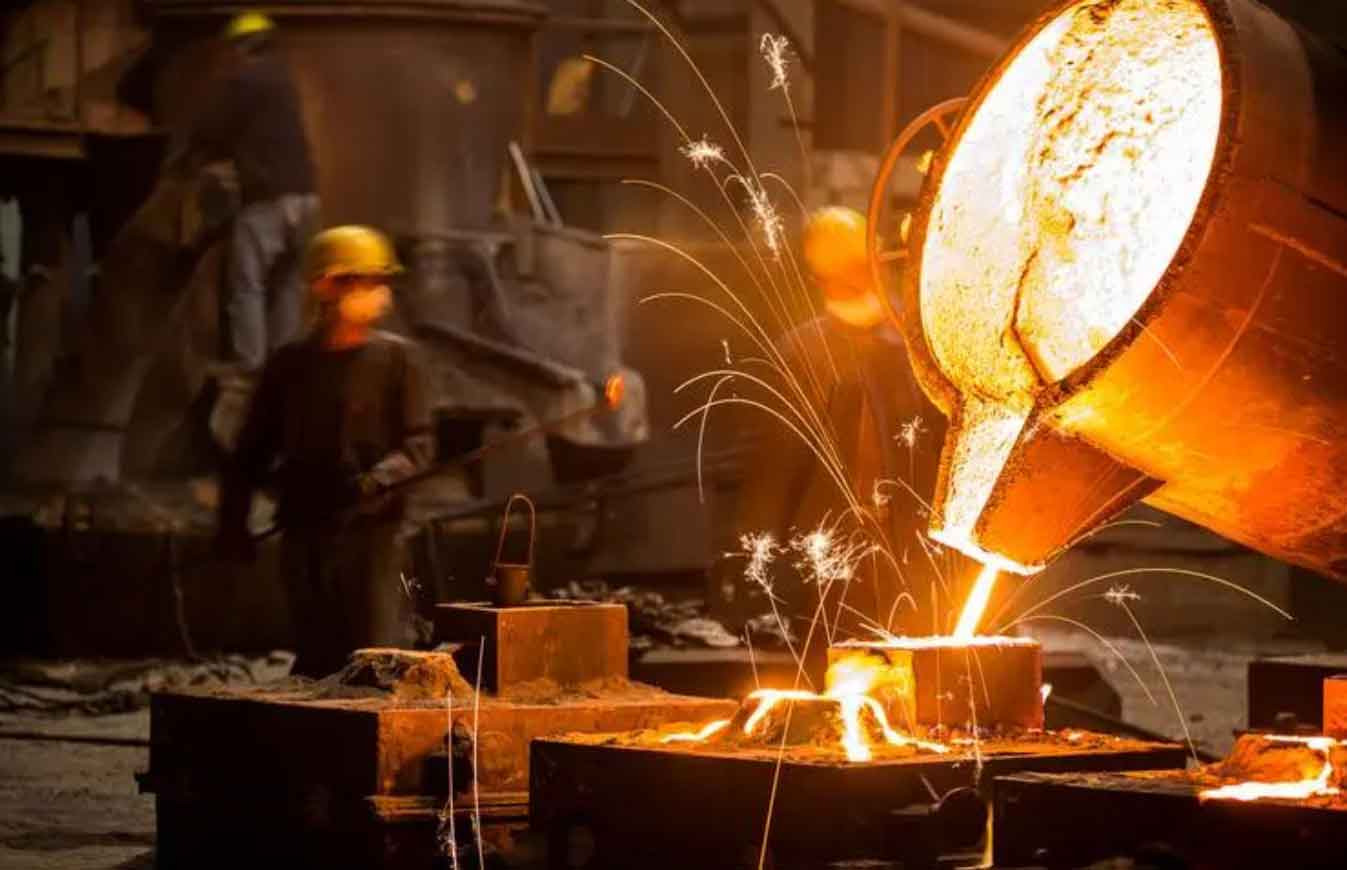
Whether it is an open, closed, or semi-open gating system, each has its advantages, and no single gating system is the best; only the one more suitable for the type of casting being produced. The purpose of a well-designed gating system is to form a stable filling pattern during pouring, reduce or avoid the entrainment of gases and inclusions, minimize heat and kinetic energy loss, and ultimately produce qualified castings that meet quality requirements. In the design of the gating system for sand casting, the following factors should be fully considered:
- Ensure that the distance from the gate to various parts of the cavity is as equal as possible, minimizing the filling flow path for the entire cavity.
- Enable molten metal to fill the mold smoothly, avoiding excessive turbulence in the cavity to effectively reduce gas entrainment and sand washing.
- Minimize the number of turns in the gating system to prevent excessive oxidation, excessive pressure loss, and excessive metal consumption.
- Risers should be located at the thicker sections of the casting to prevent premature solidification of the feeding channel; however, they should not be placed in extremely thick areas to avoid coarse graphite or shrinkage defects in iron castings.
- Gates should not be set in areas that obstruct metal flow or where metal directly impacts mold walls or cores, as this can cause erosion, collapse, or displacement. Gates should also not be placed on casting surfaces with high roughness requirements that are not machined. Prefer a single gate; if multiple gates are necessary, prevent mutual impact of metal streams in the cavity causing vortices, oxidation, and gas entrainment. Additionally, avoid forming hot spots at gate locations that could lead to shrinkage defects.
- Chills should be placed at the areas most needing rapid cooling and not near risers, gates, or runners. In sand casting processes, using chills should avoid defects such as carbides, surface collapse, or wrinkles due to over-chilling. If possible, integrate chills into the core as chill cores or apply insulating coatings on chill surfaces.
- Design for sequential filling to avoid premature blocking of vents during filling. Typically, sufficient numbers and areas of venting channels should be set on the parting surface to allow smooth discharge of gases from the cavity.
- All gating systems are set for casting filling, feeding, and venting needs and are removed from the casting during cleaning, becoming returns. Therefore, the designed gating system dimensions must be as small as possible to improve metal yield and facilitate easy removal from the casting.
In practical design of gating systems for sand casting molds, many aspects not mentioned here need to be set based on experience. Moreover, the above details cannot all be satisfied simultaneously;取舍 must be determined through thorough review, simulation, and demonstration based on molten metal and casting characteristics, as well as customer standards, to avoid counterproductive outcomes.
The design of gating systems in sand casting can be optimized using fluid dynamics principles. For example, the flow rate \( Q \) through a gate can be described by:
$$ Q = A_g \cdot v_g $$
where \( A_g \) is the gate area and \( v_g \) is the flow velocity. To minimize turbulence, the Reynolds number \( Re \) should be kept low:
$$ Re = \frac{\rho v D_h}{\mu} $$
where \( \rho \) is density, \( v \) is velocity, \( D_h \) is hydraulic diameter, and \( \mu \) is viscosity. In sand casting, maintaining \( Re < 2000 \) helps ensure laminar flow.
Casting Process Simulation Analysis in Sand Casting
When conditions permit, casting simulation analysis software such as HuaZhu CAE, MAGMA, Flow-3D, or ProCAST should be used to perform numerical simulation analysis on the designed gating system. Through analysis, the actual conditions during filling and solidification, as well as the location and size of casting defects, can be clearly determined. Based on this, the shape and dimensions of the gating system can be adjusted multiple times, and multiple simulation analyses can be conducted to ultimately determine the most suitable gating system before mold manufacturing, thereby minimizing economic and time losses caused by late-stage changes in sand casting.
Simulation in sand casting often involves solving the Navier-Stokes equations for fluid flow and heat transfer. The energy equation during solidification can be expressed as:
$$ \frac{\partial (\rho c_p T)}{\partial t} + \nabla \cdot (\rho c_p \mathbf{v} T) = \nabla \cdot (k \nabla T) + S_h $$
where \( \rho \) is density, \( c_p \) is specific heat, \( T \) is temperature, \( t \) is time, \( \mathbf{v} \) is velocity vector, \( k \) is thermal conductivity, and \( S_h \) is heat source term accounting for latent heat release in sand casting.
Mold Material Design for Sand Casting
The design and selection of mold materials are aspects that mold designers must carefully consider to ensure the materials meet the requirements for strength, plasticity, hardness, wear resistance, impact toughness, and fatigue strength of the designed mold in sand casting.
Mold Plate
The mold plate is the frame structure that supports the mold core and connects to the molding equipment. In the past, many casting enterprises, for convenience and ease of mold making, used cast blanks to integrate the mold plate and mold core into one piece of cast iron material. However, since the mold plate and mold core have different functions and withstand different pressures in sand casting molds, to fully leverage the advantages of different materials and meet the needs of different parts of the mold, most casting enterprises now select and process the mold plate and mold core separately. As the main function of the mold plate in the mold is to connect the mold core to the molding machine and accommodate parting and molding needs, and since in sand casting molding processes, the mold plate and mold core are typically heated together to 30–70°C, the mold plate material must have sufficient strength and hardness within this temperature range. Generally, using cast iron as the mold plate material can meet the mechanical properties and hardness requirements during the molding process in sand casting.
Mold Core
The mold core is the heart of the mold and the key part that forms the casting. Therefore, for the mold core material, it is essential to select materials with high strength and hardness, excellent plasticity and wear resistance, and high impact toughness and fatigue strength. Generally, depending on the mold type and the basic requirements of the cast part, different grades of mold steel should be selected as the mold core material. Additionally, the rough-processed mold core should be embedded into the mold plate using镶嵌 methods before subsequent fine processing to avoid inaccurate positioning between the mold core and mold plate due to multiple assemblies, ensuring the precision of the processed mold in sand casting.
Gating System
The main function of the gating system on the mold is to provide a filling channel for molten metal to enter the casting cavity during pouring. In sand casting molding processes, the gating system and mold core are both subjected to long-term impact and friction from molding sand and airflow. Design should also consider the lightweight of the overall mold. Therefore, wear-resistant high-alloy cast aluminum or materials with high hardness and heat resistance, such as surface-chromed materials, are generally selected for the gating system in sand casting.
Core Box
Core boxes are generally manufactured from higher-grade cast iron materials through mechanical processing. For hot core boxes using cast iron as the base material, the core box typically needs to be heated to 210–300°C during the core-making process, and the issue of material decarburization under long-term thermal conditions must be fully considered. Therefore, for hot core boxes, cast iron materials with low carbon equivalent should be used to extend service life. Additionally, the core box’s shot sleeve is in long-term contact with silica sand accompanied by high airflow during core making and must have sufficient wear resistance. Thus, the shot sleeve must undergo quenching treatment to achieve a hardness of 40–48 HRC, and then be embedded into the core box using镶嵌 methods in sand casting.
Ejector Pins
Ejector pins are rod-like ejection devices installed in the core box to eject sand cores, mainly facilitating the removal of sand cores after core box opening. While ensuring certain strength, the primary consideration is that the top of the ejector pin must have good wear resistance. Typically, A3 steel material can be used for processing, or for higher requirements, 45# steel can be used, heat-treated to achieve a wear hardness of 40–48 HRC in sand casting applications.
Core Setting Frame
The core setting frame is a core-setting device installed on the molding machine, aimed at precisely placing pre-made sand cores, chills, or filters into the corresponding positions in the cavity. During the molding process, the core setting frame continuously repeats the action of clamping sand cores and other objects into the cavity. For the material requirements of the core setting frame, lightweight and wear resistance are generally prioritized. Therefore, cast aluminum or resin materials are usually selected for the frame of the core setting frame, and wear-resistant steel sheets are used as clamping surfaces and contact points for sand cores, chills, or filters to reduce local wear caused by friction during long-term use in sand casting.
Positioning Pins and Bushings
Positioning pins and bushings are widely used in molds to precisely position mutually matching modules such as mold plates, core boxes, and core setting frames. In casting production, we rely on the cooperation of positioning pins and bushings to achieve positioning and prevent errors in installation position and direction. Since the cooperation accuracy of positioning pins and bushings directly determines the dimensional accuracy of the produced castings, their precision requirements in molds are particularly high. Based on the function and purpose of positioning pins and bushings, their materials must withstand frequent impacts and friction during mutual cooperation. 45# steel can be toughened-treated + semi-finished processed + high-frequency surface quenching + low-temperature tempering to obtain wear-resistant material with a hardness of 55–58 HRC; alternatively, GCr15 steel can undergo salt bath graded quenching + low-temperature tempering, with处理后 hardness up to 58–62 HRC for sand casting molds.
After mold design completion and material preparation, the mold can proceed to substantive machining. However, before mechanical processing, the manufacturability of the designed mold should be ensured. Especially for fine engravings on the mold, it must be confirmed whether existing tools can meet processing needs; if not, electrical discharge machining should be considered. For deeply recessed areas of the mold, whether the tool holder is long enough should be considered; if not, layered processing methods should be used to process the deep recessed areas first and then assemble them into the corresponding positions of the mold.
To summarize the material selection for various mold components in sand casting, I have created the following table:
| Mold Component | Recommended Material | Key Properties for Sand Casting | Processing Notes |
|---|---|---|---|
| Mold Plate | Cast Iron | Strength and hardness at 30-70°C | Separate processing from mold core |
| Mold Core | Mold Steel (e.g., P20, H13) | High strength, hardness, wear resistance | Embed into plate before fine machining |
| Gating System | High-Alloy Cast Aluminum or Chromed Steel | Wear resistance, heat resistance, lightweight | Minimize weight to reduce overall mold mass |
| Core Box | High-Grade Cast Iron | Low carbon equivalent for hot boxes | Quench shot sleeves to 40-48 HRC |
| Ejector Pins | A3 Steel or 45# Steel | Wear resistance at the tip | Heat treat to 40-48 HRC |
| Core Setting Frame | Cast Aluminum or Resin with Steel Inserts | Lightweight,耐磨 at contact points | Use steel sheets for high-wear areas |
| Positioning Pins/Bushings | 45# Steel or GCr15 Steel | High hardness (55-62 HRC) for wear resistance | Apply heat treatments for durability |
The lifetime \( L_m \) of a mold component in sand casting can be estimated using the formula for wear resistance:
$$ L_m = \frac{K \cdot H}{F \cdot v} $$
where \( K \) is a material constant, \( H \) is hardness, \( F \) is applied force, and \( v \) is relative velocity. Selecting materials with high \( H \) and optimizing \( F \) and \( v \) through design can extend mold life in sand casting.
Conclusion
The design of process and materials for sand casting molds affects the difficulty of mold processing, mold manufacturing costs, and mold service life, as well as the feasibility and reliability of casting production. Therefore, as casting enterprises, to improve the overall quality of molds, we should start with mold design, especially the casting process design on the mold, increasing investment in design and research and development. We must尽量避免 insufficient consideration of casting processes during the design phase that leads to multiple late-stage changes, avoiding a series of losses caused by such changes in sand casting. By integrating in-house design capabilities, leveraging simulation tools, and selecting appropriate materials, sand casting enterprises can achieve higher efficiency, reduced costs, and improved product quality. The continuous emphasis on innovation and collaboration between process and design teams will drive the advancement of sand casting technology, ensuring competitiveness in the global market.
In summary, the key to success in sand casting mold design lies in a holistic approach that combines practical experience with scientific analysis. As I have outlined, focusing on aspects such as parting surface selection, shrinkage allowance calculation, gating system optimization, and material science can lead to significant improvements. The formulas and tables provided in this article serve as a reference for implementing these principles in real-world sand casting applications. Moving forward, I encourage casting enterprises to prioritize these details and foster environments where design and process expertise converge for excellence in sand casting.