
As a researcher deeply involved in the advancement of aerospace manufacturing technologies, I have witnessed the transformative role of sand casting in producing high-performance magnesium-aluminum (Mg-Al) alloy components for critical applications such as aeroengines and transmission systems. This article synthesizes decades of industrial experience, recent advancements, and emerging trends in sand casting, with a focus on Mg-Al alloys. Through detailed analyses, mathematical models, and comparative data, I aim to elucidate the technical nuances, address existing gaps, and propose actionable strategies for enhancing the global competitiveness of sand casting in aerospace.
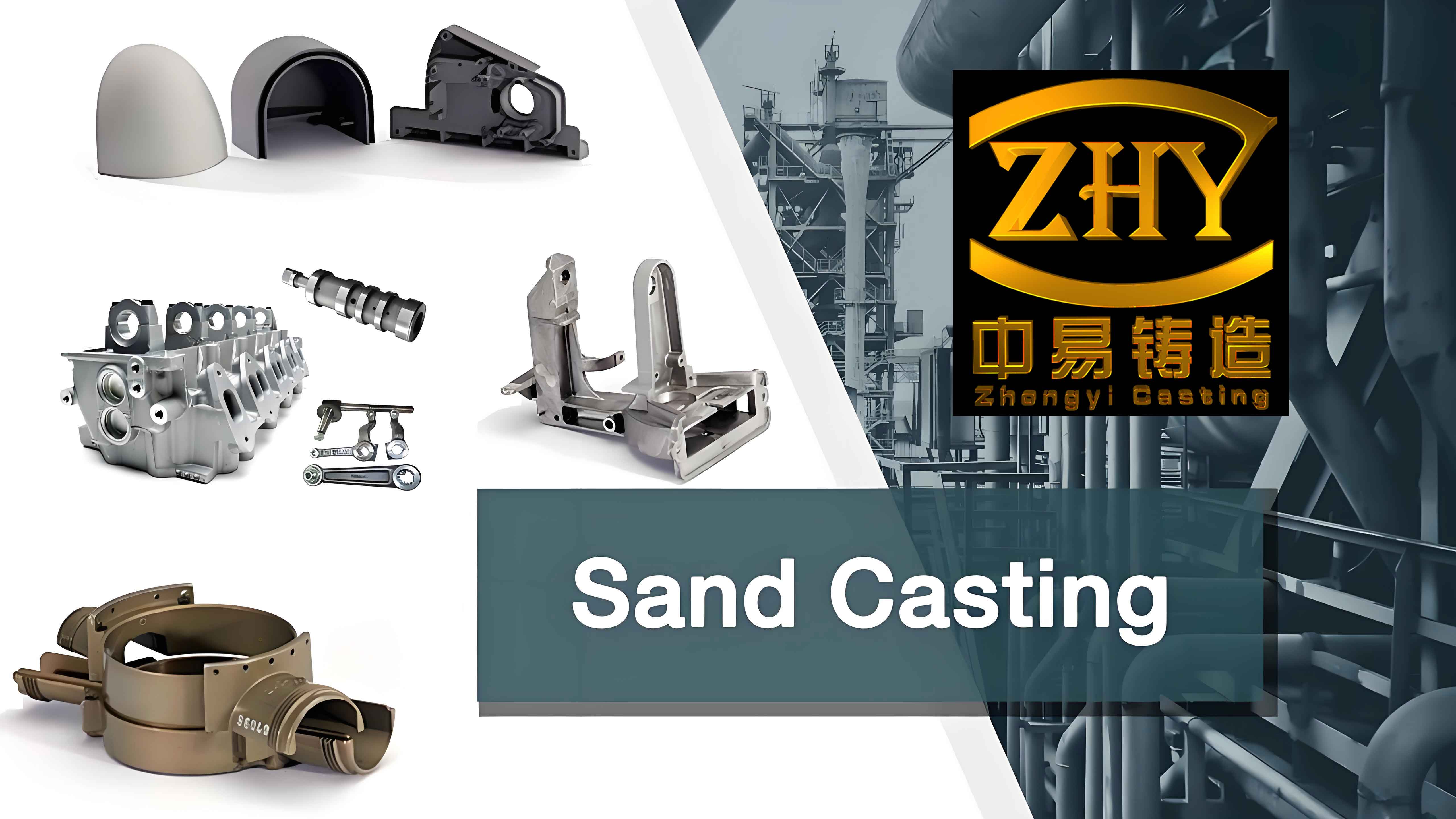
1. Introduction to Sand Casting and Mg-Al Alloys
Sand casting, one of the oldest and most versatile metal-forming processes, remains indispensable in aerospace due to its adaptability for complex geometries and cost-effectiveness. Mg-Al alloys, renowned for their high strength-to-weight ratio, thermal stability, and corrosion resistance, are increasingly favored for lightweight engine components like turbine housings, gearbox casings, and structural brackets.
The fundamental steps of sand casting involve:
- Pattern Design: Creating a replica of the final part using wood, plastic, or metal.
- Mold Preparation: Packing resin-bonded sand around the pattern to form the mold cavity.
- Melting and Pouring: Heating Mg-Al alloys to ~650°C and pouring into the mold.
- Solidification and Cooling: Controlled cooling to minimize defects like porosity.
- Finishing: Removing excess material and surface treatment.
A critical advantage of sand casting lies in its compatibility with intricate designs, enabling the production of near-net-shape components with minimal machining. However, challenges such as dimensional inaccuracies, sand-related defects, and limited process control persist.
2. Material Properties and Performance of Mg-Al Alloys
Mg-Al alloys (e.g., AZ91, AM50) exhibit exceptional mechanical properties, making them ideal for high-stress aerospace environments. Table 1 summarizes key characteristics compared to traditional aluminum alloys.
Table 1: Mechanical Properties of Mg-Al vs. Aluminum Alloys
| Property | Mg-Al (AZ91) | Aluminum (A356) |
|---|---|---|
| Density (g/cm³) | 1.81 | 2.68 |
| Tensile Strength (MPa) | 230 | 260 |
| Yield Strength (MPa) | 150 | 180 |
| Elongation (%) | 3–7 | 6–12 |
| Thermal Conductivity (W/m·K) | 72 | 160 |
While Mg-Al alloys offer superior lightweighting benefits, their lower ductility and thermal conductivity necessitate optimized casting parameters. For instance, the solidification time (tsts) can be modeled using:ts=V⋅ΔHA⋅h⋅(Tm−T0)ts=A⋅h⋅(Tm−T0)V⋅ΔH
Where:
- VV = Volume of the casting
- ΔHΔH = Latent heat of fusion
- AA = Surface area
- hh = Heat transfer coefficient
- TmTm = Melting temperature
- T0T0 = Ambient temperature
This equation highlights the need for precise thermal management to avoid shrinkage cavities.
3. Current State of Sand Casting Technology
Despite advancements, the sand casting industry faces significant hurdles:
3.1 Process Limitations
- Dimensional Variability: Sand molds often deform under thermal stress, leading to tolerances of ±1.5–2.0 mm, unsuitable for high-precision parts.
- Defect Formation: Gas porosity, sand inclusion, and hot tearing occur due to inadequate venting or improper binder ratios.
- Slow Production Cycles: Traditional sand casting requires 8–12 hours per cycle, lagging behind die casting or additive manufacturing.
3.2 Equipment and Automation Gaps
Most foundries rely on semi-automated systems, resulting in inconsistent quality. For example, only 30% of Chinese foundries employ real-time monitoring systems, compared to 70% in Europe.
Table 2: Automation Levels in Global Sand Casting
| Region | Automated Mold Lines (%) | Real-Time Monitoring (%) |
|---|---|---|
| North America | 45 | 65 |
| Europe | 55 | 70 |
| Asia | 25 | 30 |
4. Bridging the Gap: Innovations in Sand Casting
To address these challenges, the following innovations are critical:
4.1 Advanced Binder Systems
New resin binders (e.g., phenolic-urethane) improve mold strength and reduce gas emissions. The binder-to-sand ratio (RR) is optimized using:R=mbms×100%R=msmb×100%
Where mbmb = binder mass and msms = sand mass. Trials show that R=1.2–1.5%R=1.2–1.5% minimizes defects while maintaining collapsibility.
4.2 Digital Twin Technology
Integrating digital twins enables virtual simulations of mold filling, solidification, and stress distribution. For instance, the Navier-Stokes equations govern fluid flow during pouring:ρ(∂u∂t+u⋅∇u)=−∇p+μ∇2u+fρ(∂t∂u+u⋅∇u)=−∇p+μ∇2u+f
Where ρρ = density, uu = velocity vector, pp = pressure, μμ = viscosity, and ff = body forces.
4.3 Additive Manufacturing Hybridization
3D-printed sand molds eliminate pattern-making steps, reducing lead times by 40%. A cost-benefit analysis is shown in Table 3.
Table 3: Cost Comparison: Traditional vs. 3D-Printed Sand Molds
| Parameter | Traditional Sand Casting | 3D-Printed Molds |
|---|---|---|
| Mold Preparation Time | 48 hours | 12 hours |
| Defect Rate | 8–12% | 3–5% |
| Per-Unit Cost | $220 | $180 |
5. Future Directions for Mg-Al Sand Casting
The next decade will focus on:
- AI-Driven Process Optimization: Machine learning algorithms to predict defects using datasets from thermal cameras and sensors.
- Sustainable Practices: Recycling sand and adopting bio-based binders to reduce environmental impact.
- High-Performance Alloys: Developing Mg-Al-Zn-RE (Rare Earth) alloys for enhanced creep resistance at elevated temperatures.
6. Conclusion
Sand casting remains a cornerstone of aerospace manufacturing, particularly for Mg-Al alloys. By embracing digitalization, advanced materials, and automation, the industry can overcome existing limitations and align with global standards. As we navigate this transformative era, collaboration between academia, foundries, and policymakers will be pivotal in shaping the future of sand casting.