
The enduring prevalence of sand casting in metal component manufacturing is a testament to its remarkable versatility, cost-effectiveness, and capacity for producing parts ranging from a few grams to hundreds of tons. As a foundational foundry process, it involves creating a mold from a sand mixture into which molten metal is poured. The subsequent solidification yields the desired shape. My focus here is to delve into the core principles, significant technological advancements, and the quantitative data that underpins modern sand casting practices. This analysis will move beyond basic descriptions to explore the engineering calculations, material science, and process innovations that define state-of-the-art production.
sand casting remains the most widely used casting process globally, accounting for a dominant share of all metal castings produced. Its applications span critical industries: automotive engine blocks and cylinder heads, heavy machinery components, piping, and intricate art pieces. The fundamental process involves several key stages: pattern making, mold and core making, melting, pouring, cooling, shakeout, and finishing. The central element, the mold, is traditionally made from silica sand bonded with clay and water (green sand). However, the evolution towards higher precision and efficiency has driven the development of advanced binder systems and mold-making techniques.
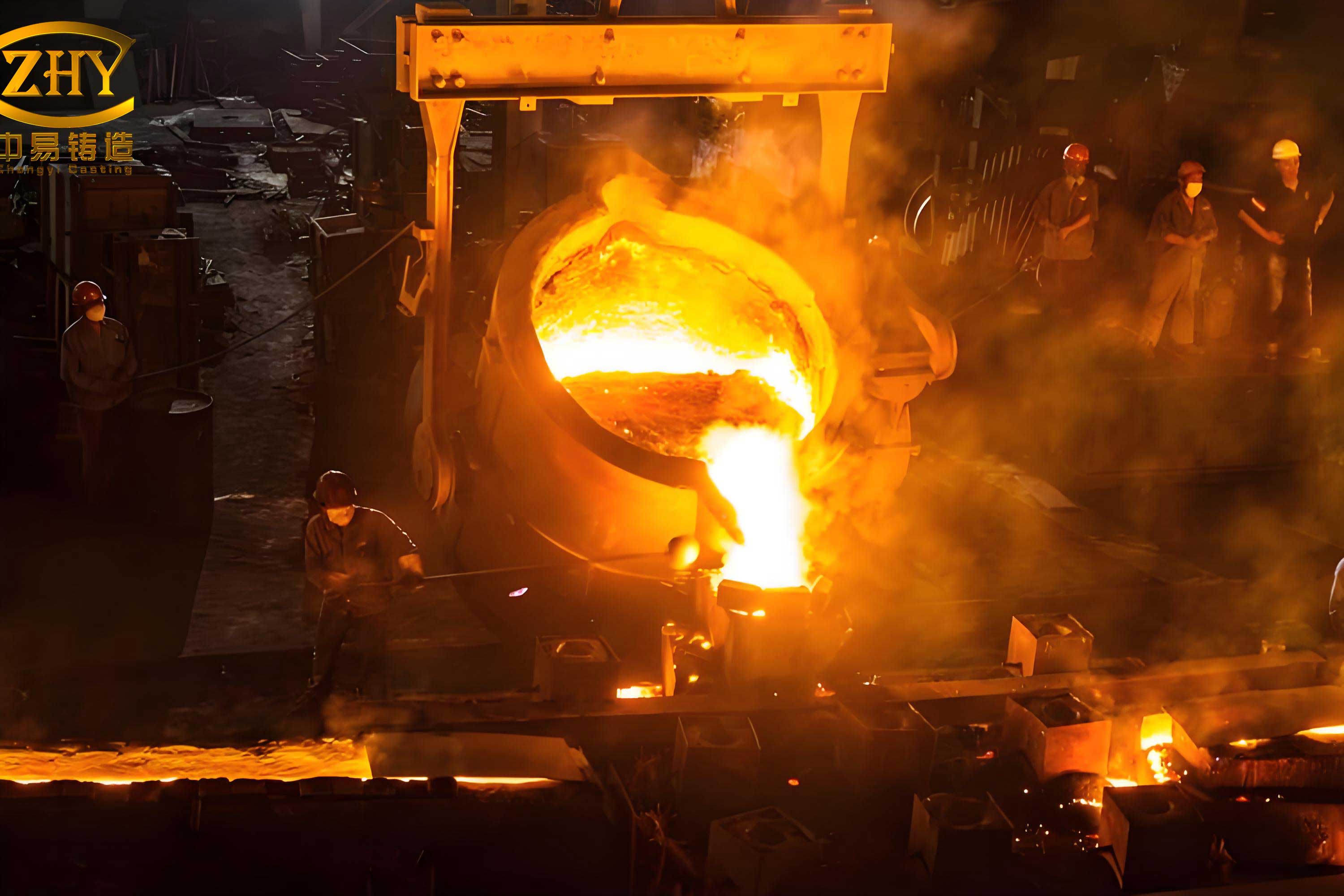
The performance and quality of a sand casting are governed by a complex interplay of variables. These can be broadly categorized into material variables (metal composition, sand grain size and distribution, binder type), process variables (mold compaction, pouring temperature and speed, cooling rate), and geometric variables (part design, section thickness). Understanding and controlling these variables through empirical data and mathematical models is key to achieving dimensional accuracy, superior surface finish, and desired mechanical properties while minimizing defects like porosity, shrinkage, and sand inclusions.
Fundamentals of the Sand Mold
The mold is the heart of the sand casting process. Its primary functions are to provide the negative cavity of the part, withstand the thermal and mechanical loads of molten metal, and allow for the escape of gases during pouring. The properties of the molding sand are therefore critical. Key parameters include:
- Permeability: The ability of the mold to allow gases to escape. It is a function of grain size, shape, and distribution, as well as binder content. Low permeability can lead to gas defects.
- Green Strength: The strength of the moist, compacted sand mixture to retain its shape during pattern removal and handling.
- Dry Strength: The strength of the mold after drying or curing, crucial for resisting metalostatic pressure during pouring.
- Collapsibility: The ability of the sand mold to break down during cooling and shakeout, preventing hot tearing or cracking of the casting.
- Refractoriness: The resistance of the sand to fusion or melting at the high temperatures of the molten metal.
The traditional green sand mold uses a mixture of silica sand (85-95%), bentonite clay (4-10%) as a binder, water (2-5%), and often coal dust or other additives to improve surface finish. While economical, this method often struggles with achieving high dimensional accuracy and surface finish for complex cores and thin walls. This limitation has spurred the development of advanced chemically-bonded sand systems.
The Rise of Chemically-Bonded Sands and Precision Core Making
The shift from conventional clay-bonded sand casting to chemically-bonded systems represents a major leap in precision manufacturing. Self-setting resin sands, often called “no-bake” sands, cure at room temperature through a chemical reaction between the sand, a resin binder (e.g., furan, phenolic urethane, epoxy), and a catalyst. This process offers distinct advantages:
| Parameter | Green Sand (Clay-Bonded) | Self-Setting Resin Sand |
|---|---|---|
| Binder System | Bentonite Clay + Water | Organic Resin + Catalyst |
| Strength Development | Requires mechanical compaction | Chemical curing, minimal compaction needed |
| Dimensional Accuracy | Moderate | High |
| Surface Finish | Fair to Good | Excellent |
| Collapsibility | Good | Excellent (can be tailored) |
| Complex Core Feasibility | Limited | Excellent, enables thin walls (~2.5 mm) |
| Production Environment | Dusty, higher moisture | Cleaner, lower operational labor intensity |
The high strength and precision of self-setting resin sands make them ideal for creating complex cores. The “precise sand core molding” technology, which has evolved from cold-box core-making processes, allows for the production of extremely intricate castings like engine blocks, cylinder heads, and exhaust manifolds with wall thicknesses as low as 2.5 mm. The process flow for a typical no-bake sand casting operation can be summarized as:
1. Sand, resin, and catalyst are mixed in a continuous mixer.
2. The mixture is blown or rammed into a core box or pattern.
3. The chemical reaction cures the sand into a rigid shape.
4. The cured core/mold is removed from the box.
5. Cores and molds are assembled for pouring.
The core-making process is governed by kinetics. The work time (the period the sand remains flowable) and strip time (the time required before the core can be removed from the box) are critical process controls, determined by resin chemistry, catalyst amount, and ambient temperature. The tensile strength development over time can be modeled empirically:
$$ \sigma(t) = \sigma_{\infty} (1 – e^{-k t^n}) $$
where $\sigma(t)$ is the tensile strength at time $t$, $\sigma_{\infty}$ is the ultimate tensile strength, $k$ is a rate constant dependent on temperature and catalyst level, and $n$ is an empirical exponent.
High-Density Molding and Compaction Dynamics
Parallel to advances in binder chemistry, innovations in mold compaction have been pivotal. A high and uniform mold density is a primary objective in modern sand casting. It directly enhances mold hardness, rigidity, and accuracy, which in turn reduces mold wall movement during metal pouring and solidification. This reduction in wall movement is critical for improving yield, lowering metal consumption, and minimizing defects like shrinkage and dimensional inaccuracy.
High mold density is achieved through various advanced compaction methods, each with its own physics. The table below summarizes the prevalent technologies:
| Method | Principle | Key Advantages | Typical Mold Hardness (Brinell Scale) |
|---|---|---|---|
| Jolt-Squeeze | Mechanical jolting settles sand, followed by hydraulic squeeze. | Robust, well-understood. | 75-85 |
| Impact (Impulse) | A controlled gas explosion or rapid pressure wave compacts the sand. | Very high, uniform density. | 90-95 |
| Vacuum (V-Process) | Sand is held in shape by a vacuum through a plastic film. | Excellent surface finish, no binder needed. | N/A (held by vacuum) |
| Air Flow (Pneumatic) | High-velocity air fluidizes and then compacts the sand. | Good uniformity for complex patterns. | 85-92 |
The benefits of high-density molding are quantifiable. By increasing mold hardness from a conventional 80 to above 90, the dimensional tolerance of the resulting casting can be improved by 1-2 grades according to international casting tolerance standards (e.g., ISO 8062). Surface roughness (Ra) can be reduced by 2-3 levels, significantly decreasing the need for subsequent machining. This is particularly advantageous for high-volume production runs of automotive components.
The physics of high-pressure compaction can be analyzed. The final compacted density ($\rho_f$) relates to the applied pressure ($P$), the initial sand bulk density ($\rho_0$), and the compressibility of the sand-binder mixture. A simple model is:
$$ \rho_f = \rho_0 \left(1 + \beta P\right)^\alpha $$
where $\beta$ is a compressibility coefficient and $\alpha$ is an exponent typically less than 1, reflecting the non-linear compaction behavior of granular materials.
Quantitative Analysis of Casting Parameters
Successful sand casting relies on the precise calculation and control of thermal and fluid dynamics. Key engineering calculations include:
1. Solidification Time (Chvorinov’s Rule): The time ($t_s$) for a casting to solidify is proportional to the square of its volume-to-surface-area ratio ($V/A$).
$$ t_s = C \left( \frac{V}{A} \right)^n $$
where $C$ is the mold constant (dependent on mold material, metal properties, and pouring temperature) and $n$ is an exponent, typically close to 2 for simple shapes in sand molds. This rule is fundamental for designing feeding systems (risers) to prevent shrinkage porosity.
2. Gating System Design: The goal is to fill the mold cavity smoothly without turbulence, which causes oxide inclusions. The flow rate ($Q$) is governed by Bernoulli’s principle applied to the sprue:
$$ Q = A_{sprue\_base} \cdot \sqrt{2 g h} $$
where $A_{sprue\_base}$ is the cross-sectional area at the sprue base, $g$ is gravity, and $h$ is the effective sprue height. The gating ratio (Sprue area : Runner area : Gate area) is carefully designed to control metal velocity and pressure. A common ratio for non-ferrous metals is 1 : 2 : 4 to promote laminar flow.
3. Reynolds Number in the Mold Cavity: To assess flow turbulence during mold filling, the Reynolds number ($Re$) is estimated:
$$ Re = \frac{\rho v D_h}{\mu} $$
where $\rho$ is metal density, $v$ is flow velocity, $D_h$ is the hydraulic diameter of the flow channel, and $\mu$ is the dynamic viscosity of the molten metal. A $Re$ below 2000 is generally desired for laminar flow in the cavity to minimize air entrapment and oxide formation.
Quality Metrics and Defect Analysis in Sand Casting
The pursuit of quality in sand casting is a battle against defects. A data-driven approach is essential for diagnosis and correction. Common defects, their root causes in the sand system, and typical control parameters are listed below:
| Defect | Primary Sand-Related Cause | Key Control Parameters to Monitor |
|---|---|---|
| Sand Inclusions/Burns | Low mold/core strength, erosion from high-velocity metal. | Green/Dry Tensile Strength, Mold Hardness, Permeability. |
| Gas Porosity (Pinholes, Blows) | Low sand permeability, high moisture/binder content, inadequate venting. | Permeability Number, Loss on Ignition (LOI), Volatile content. |
| Shrinkage Porosity | Mold wall movement due to low rigidity, inadequate feeding. | Mold Hardness, Compaction Density, Chvorinov calculation. |
| Veining/Finning | Cracks in the sand mold due to thermal stress, often from high thermal expansion of sand. | Sand Expansion characteristics, use of additives (e.g., iron oxide), binder type. |
| Poor Surface Finish (Roughness) | Large sand grain size, low mold density, sand-metal reaction. | AFS Grain Fineness Number (GFN), Mold Hardness, Binder chemistry. |
Statistical Process Control (SPC) is widely implemented in high-volume sand casting foundries. Control charts for parameters like sand strength, compactability, moisture content, and core weight are maintained to ensure process stability. The capability of the sand casting process ($C_{pk}$) for critical dimensions is continuously evaluated against drawing tolerances.
Future Trends and Sustainability
The future of sand casting is oriented towards “smart foundries” and sustainable practices. Key trends include:
- Digital Simulation and Digital Twins: Advanced simulation software (e.g., based on Finite Element Analysis) models filling, solidification, stress, and microstructure prediction virtually. This reduces costly trial-and-error, optimizes gating/risering, and predicts defects before making a single mold.
- Additive Manufacturing (3D Printing) of Molds and Cores: Binder Jetting technology allows for the direct printing of complex sand molds and cores from a CAD model, eliminating the need for traditional patterns. This enables unprecedented design freedom, rapid prototyping, and mass customization.
- Sustainable Sand Reclamation: Chemically-bonded sands are expensive to discard. Thermal and mechanical reclamation systems are becoming more efficient, aiming to recover 90-95% of sand for reuse, significantly reducing waste and raw material consumption.
- Advanced Binder Development: Research continues into “greener” binders with lower volatile organic compound (VOC) emissions, higher strength-to-binder ratios, and improved breakdown properties for enhanced collapsibility and shakeout.
- Integrated Process Monitoring: In-line sensors for sand properties, real-time pyrometry for pouring temperature, and vision systems for mold inspection are being integrated with IoT platforms for predictive maintenance and real-time process adjustment.
The quantitative analysis of sand casting processes, from the kinetics of resin curing to the fluid dynamics of mold filling and the statistical control of mold properties, transforms it from a traditional craft into a precision engineering discipline. The synergy between advanced binder systems like self-setting resins, high-density molding technologies, and data-driven process control ensures that sand casting will continue to be a vital, competitive, and innovative manufacturing method for complex metal components well into the future. The ability to produce high-integrity castings with thin walls and excellent dimensional accuracy, as evidenced by engine components with walls around 2.5 mm, underscores the technological maturity and ongoing potential of this ancient yet perpetually modern process.