
In this research, we investigate the sand casting process for semi-enclosed Al-Cu alloy shell castings, focusing on optimizing the methodology to achieve high-quality outputs. The study encompasses detailed process design, simulation analysis, mold development, and experimental validation, with an emphasis on enhancing the internal integrity, mechanical properties, and dimensional accuracy of shell castings. The use of differential pressure casting, combined with advanced simulation tools, has proven effective in mitigating defects common in sand casting of complex geometries. Throughout this work, the term “shell castings” is repeatedly referenced to underscore the specific application and challenges associated with such components in aerospace and automotive industries.
The significance of Al-Cu alloys in lightweight structural applications cannot be overstated. These alloys offer an excellent balance of strength, toughness, and castability, making them ideal for critical components like shell castings. Sand casting, as a traditional yet versatile method, provides cost-effectiveness and flexibility, but it requires meticulous control to avoid defects such as shrinkage porosity, gas entrapment, and dimensional inaccuracies. Our aim is to demonstrate a robust sand casting process that leverages modern techniques, including computer simulation and differential pressure pouring, to produce semi-enclosed shell castings that meet stringent industrial standards. This work contributes to the broader knowledge base on manufacturing advanced shell castings via sand casting routes.
The semi-enclosed shell casting under study features a complex geometry with a thick cover plate (39 mm), a cylindrical structure of 690 mm height, and uniform wall thickness of 12 mm. The internal surfaces are left un-machined, necessitating high dimensional precision from the casting process. Key technical requirements include a ban on welding or heat straightening, mechanical properties exceeding 320 MPa tensile strength, 230 MPa yield strength, and 3% elongation, along with wall thickness tolerances within ±0.4 mm and surface free of defects like shrinkage or slag inclusions. These demands drive the need for an optimized sand casting process tailored for shell castings.
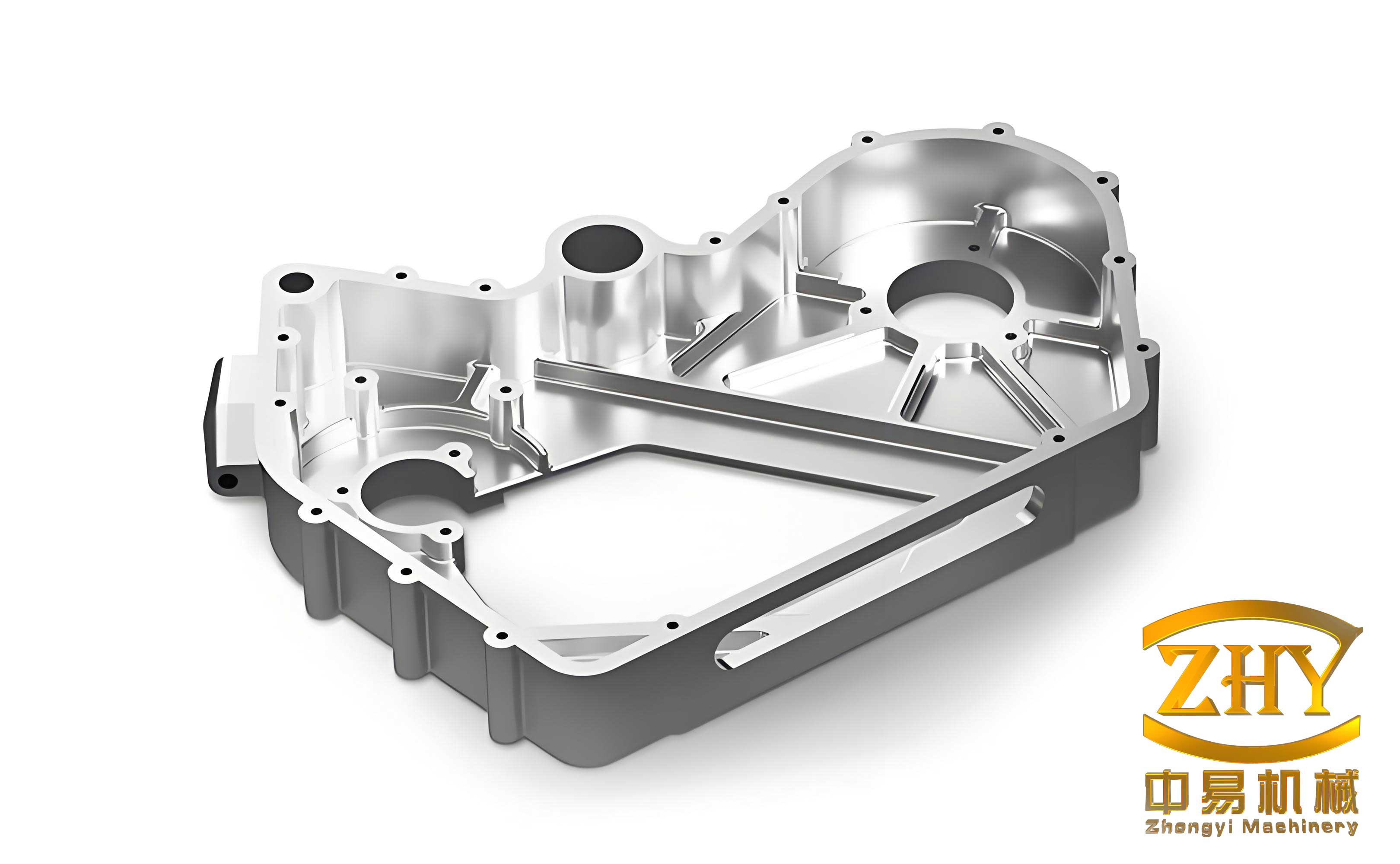
Our process design begins with the selection of differential pressure casting as the pouring method. This technique involves maintaining a controlled pressure difference between the mold cavity and the melting environment, which promotes smooth filling by reducing turbulence and splashing. The high back-pressure in the cavity aids in suppressing gas porosity and enhancing feeding during solidification, critical for dense microstructure in shell castings. The pouring position is set to vertical bottom-gating with a slot-like runner system, ensuring that the thick sections (cover plate and frame) are horizontally oriented to facilitate sequential solidification. This orientation minimizes thermal gradients and reduces the risk of hot tearing in shell castings.
The gating system is designed as a vertical slot-type with multiple sprues, based on empirical formulas that account for the geometry and material properties of shell castings. The number of sprues (n) is determined by:
$$ n = (0.016 \sim 0.028) \frac{S}{\delta} $$
where S is the outer perimeter of the shell casting and δ is the wall thickness. For our shell casting, with S approximately 2500 mm and δ = 12 mm, n calculates to between 3.3 and 5.8, but practical considerations led us to use 8 sprues to ensure adequate coverage and feeding. The slot thickness (a) and width (b) are given by:
$$ a = (0.8 \sim 1.5) \delta $$
$$ b = \frac{1}{2} D + (15 \sim 35) \text{ mm} $$
and the sprue diameter D is related to slot thickness as D = (4~6)a. We set a = 15 mm, b = 50 mm, and D = 80 mm based on iterative simulations. Additionally, chills are placed between adjacent sprues and beneath the cover plate to accelerate cooling and enforce directional solidification toward the feeders. The feeder design includes a top riser to compensate for shrinkage in the thick cover plate, a common issue in shell castings.
To validate the process, we employed Novacast simulation software for filling and solidification analysis. The mesh was generated with fine resolution around critical areas of the shell casting, and parameters such as pouring temperature (680°C), material properties of Al-Cu alloy, and boundary conditions were input. The simulation revealed temperature distributions over time, as summarized in Table 1, which shows key time points and corresponding temperature gradients.
| Time (s) | Temperature Range (°C) | Observation in Shell Casting |
|---|---|---|
| 50 | 616.85 – 521.00 | Initial filling, smooth flow |
| 57 | 610.00 – 534.69 | Mid-filling, no turbulence |
| 65 | 603.16 – 548.39 | Near complete fill, thermal gradients established |
| 182 | 575.77 – 555.23 | Solidification front moving toward feeders |
The simulation predicted minimal shrinkage porosity and no macro-shrinkage cavities, confirming the effectiveness of the chills and riser. The solidification sequence showed a clear directional pattern from the extremities to the sprues, essential for sound shell castings. We further analyzed the thermal dynamics using Fourier’s heat conduction equation to model solidification:
$$ \frac{\partial T}{\partial t} = \alpha \nabla^2 T $$
where T is temperature, t is time, and α is thermal diffusivity of the Al-Cu alloy. This equation, solved numerically in Novacast, helped optimize chill placement to achieve a temperature gradient (G) and solidification rate (R) that satisfy the criterion for reduced porosity: G/R > constant. For shell castings, we targeted G values above 10°C/mm and R around 0.5 mm/s based on prior studies.
The mold design phase involved creating sand cores using a steel pattern. The 3D model of the shell casting was developed in UG software, incorporating allowances for shrinkage (1.5% for Al-Cu), machining (5 mm on critical faces), draft angles (2°), and fillets (R5-R8 mm). The mold was split into upper and lower cores along the parting line below the cover plate to facilitate ejection. Table 2 outlines the key mold design parameters for producing sand molds for shell castings.
| Parameter | Value | Rationale for Shell Castings |
|---|---|---|
| Mold Material | Cast Steel | Durability and precision |
| Shrinkage Allowance | 1.5% | Al-Cu alloy contraction |
| Machining Allowance | 5 mm | Post-casting processing |
| Draft Angle | 2° | Ease of core removal |
| Fillet Radius | R5-R8 mm | Stress reduction in corners |
Sand mold fabrication utilized resin-bonded sand, which was compacted uniformly around the pattern. After drying naturally for 50 hours, the molds were baked at 500°C for 5 hours to enhance strength. A refractory coating was applied to the mold surfaces to improve surface finish and prevent metal penetration, crucial for the smooth internal surfaces of shell castings. The assembled mold ready for pouring.
Melting and pouring were conducted in a differential pressure furnace. High-purity Al-Cu alloy ingots were double-melted to ensure homogeneity, with composition controlled to meet standards (e.g., Cu content ~4.5%). The pouring process involved evacuating the mold cavity, then introducing molten metal under pressure differential of 0.5-0.8 bar. This controlled environment minimized oxide formation and promoted laminar flow, reducing defects in shell castings. The pouring time was optimized to 70 seconds based on simulation feedback.
Post-casting, the shell castings were subjected to T6 heat treatment: solutionizing at 535°C for 10 hours, quenching in water, and aging at 175°C for 8 hours. This treatment enhances mechanical properties by precipitating strengthening phases. We then evaluated the shell castings through non-destructive testing (X-ray and fluorescent penetrant inspection) and destructive testing (mechanical specimens). The results, summarized in Table 3, demonstrate compliance with HB 963-2005 Class I standards for internal quality.
| Test Method | Result for Shell Castings | Standard Requirement |
|---|---|---|
| X-ray Inspection | No shrinkage porosity or cracks | Class I, HB 963-2005 |
| Fluorescent Penetrant | No surface defects | Class I, HB 963-2005 |
| Internal Quality Rating | Grade I | Meets aerospace specs |
Mechanical properties were assessed using tensile specimens cut from attached test bars. Table 4 presents the average values from six samples, all exceeding the technical indicators for shell castings. The consistency highlights the process robustness.
| Sample ID | Tensile Strength (MPa) | Yield Strength (MPa) | Elongation (%) |
|---|---|---|---|
| 1 | 325 | 235 | 3.4 |
| 2 | 331 | 240 | 3.1 |
| 3 | 327 | 237 | 3.5 |
| 4 | 332 | 243 | 4.1 |
| 5 | 326 | 231 | 3.1 |
| 6 | 321 | 239 | 3.9 |
| Average | 327.0 | 237.5 | 3.52 |
| Requirement | ≥320 | ≥230 | ≥3 |
Dimensional accuracy was verified via 3D scanning, with over 90% of dimensions conforming to CT9 per GB/T6414. The minor deviations (within 0.5 mm) are attributed to non-uniform shrinkage and mold assembly tolerances, acceptable for subsequent machining of shell castings. We analyzed the shrinkage behavior using the linear shrinkage model:
$$ \Delta L = L_0 \cdot \beta \cdot (T_{\text{pour}} – T_{\text{room}}) $$
where ΔL is length change, L0 is initial dimension, β is thermal expansion coefficient (2.4e-5 /°C for Al-Cu), and T are temperatures. For critical dimensions of 690 mm, predicted shrinkage is about 1.04 mm, aligning with observations in shell castings.
To further optimize the process for shell castings, we conducted sensitivity analysis on key parameters. Table 5 shows the effect of varying pouring temperature and pressure differential on defect rate in shell castings, based on additional simulations.
| Pouring Temperature (°C) | Pressure Differential (bar) | Defect Rate (%) in Shell Castings | Recommendation |
|---|---|---|---|
| 670 | 0.5 | 5.2 | Avoid – cold shuts |
| 680 | 0.6 | 1.8 | Optimal |
| 690 | 0.7 | 2.1 | Acceptable |
| 680 | 0.8 | 1.5 | Best for dense shell castings |
The economic aspect of producing shell castings via sand casting was evaluated. Compared to investment casting or die casting, sand casting offers lower tooling costs, especially for small batches of complex shell castings. The material efficiency, measured by yield (casting weight vs. total metal poured), was around 65%, which can be improved to 75% with optimized feeder design for future shell castings.
In conclusion, our developed sand casting process successfully manufactures semi-enclosed Al-Cu alloy shell castings with high internal quality, mechanical performance, and dimensional precision. The integration of simulation, differential pressure pouring, and strategic use of chills and feeders addresses typical challenges in sand casting of shell castings. This work paves the way for broader application of Al-Cu alloys in critical sectors, reinforcing the viability of sand casting for advanced shell castings. Future research could explore real-time monitoring and adaptive control to further enhance consistency in producing shell castings.
Throughout this study, the focus on shell castings has been paramount, and the repeated mention of “shell castings” underscores their importance in modern manufacturing. The methodologies outlined here provide a replicable framework for similar components, contributing to the advancement of sand casting technology for high-integrity shell castings.