
The pursuit of advanced wear-resistant materials is a critical engineering challenge with significant economic implications. In industrial applications, particularly those involving abrasive wear, the longevity of components directly impacts operational costs and productivity. This has driven extensive research into developing composite materials that combine high surface wear resistance with a tough, ductile substrate. One highly effective and commercially viable approach leverages established sand casting services. This article details my experience and methodology in utilizing sand casting services to fabricate a surface composite material, using low-chromium cast iron as the matrix and tungsten carbide (WC) particles as the reinforcing phase. The process, often referred to as “cast infiltration” or “foundry infiltration,” exemplifies how traditional sand casting services can be innovatively adapted for manufacturing high-performance gradient materials.
The core principle involves placing a preform containing the hard reinforcing particles (WC) against the mold cavity wall. Upon pouring, the molten metal infiltrates the interstitial spaces of this preform, binding the particles and creating a distinct, particle-rich composite layer on the surface of the cast part. The choice of sand casting services for this purpose is strategic. The flexibility of sand molds allows for the easy placement and fixation of various preform shapes and compositions. Furthermore, the relatively low thermal conductivity of sand can help control the solidification gradient, which is crucial for achieving a sound metallurgical bond between the composite layer and the underlying base metal. The entire process, from pattern making to finishing, can be seamlessly integrated into standard sand casting services workflows with specific modifications.
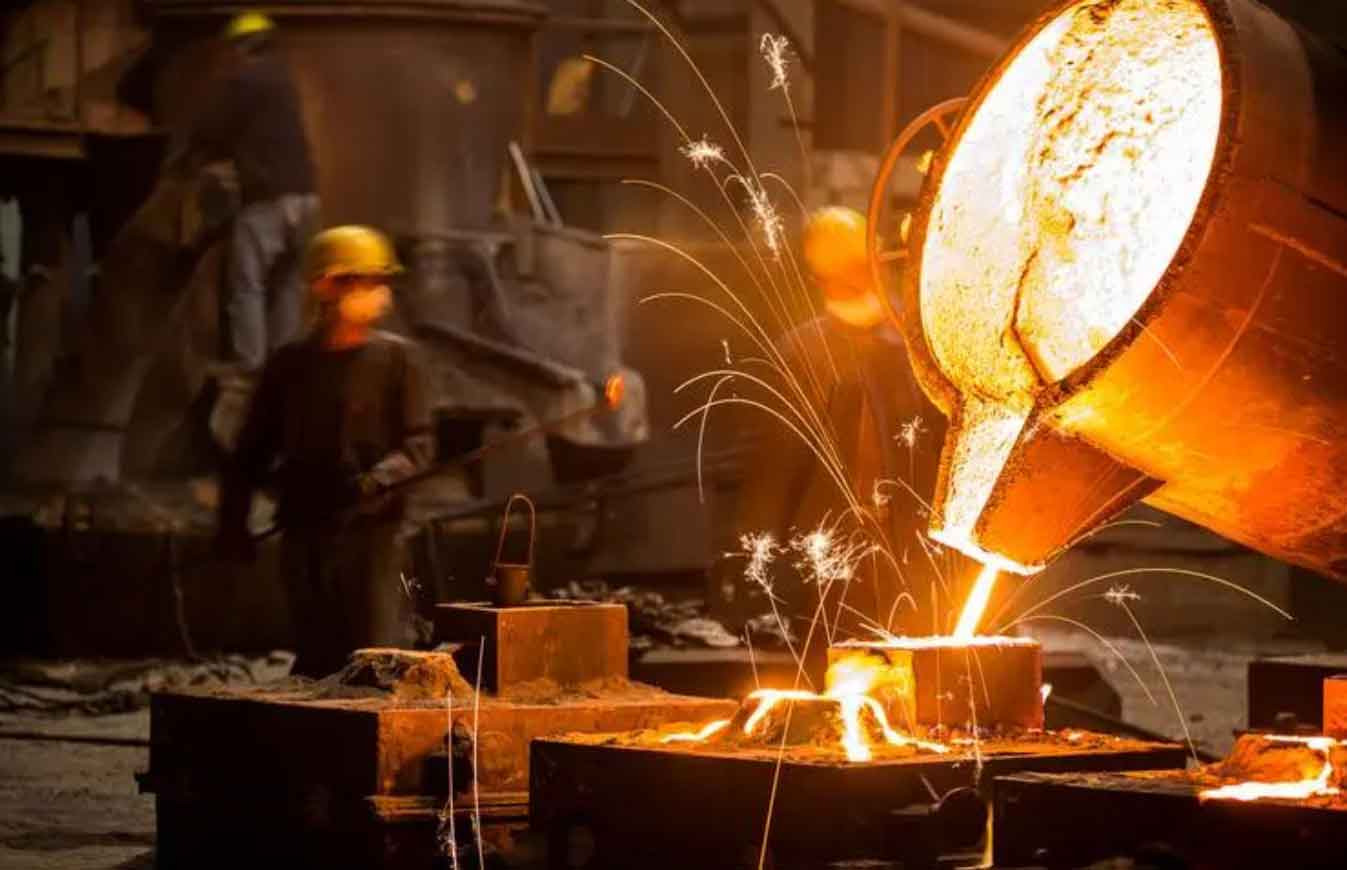
The design of the composite system is paramount. For the matrix, low-chromium white iron (approximately 2.5-3.5% Cr) was selected. This alloy offers a favorable balance of abrasion resistance, provided by chromium carbides, and reasonable toughness, making it an excellent substrate that is also widely processed through conventional sand casting services. The reinforcing phase consists of angular WC particles. Tungsten carbide possesses an extremely high hardness (approx. 2400-2800 HV) and excellent stability in ferrous melts, making it an ideal candidate for resisting severe abrasive wear. The success of the infiltration process hinges on the characteristics of the preform placed within the sand mold. The preform is not merely a loose aggregate; it is a formulated “paste” or compact designed to facilitate infiltration and bonding.
The preform composition is a critical variable. A typical formulation I use is shown in Table 1. WC particles form the skeletal structure. Chromium powder is added to locally increase the chromium content in the infiltrated zone, promoting the formation of hard carbides within the matrix surrounding the WC particles and enhancing the matrix’s intrinsic hardness. Boron carbide (B4C) and sodium fluoroborate (NaBF4) act as fluxing agents; they help reduce the viscosity of the molten metal and lower the surface tension, thereby improving the wettability of the WC particles by the iron melt. This is described by the Young-Dupré equation for wetting in a solid-liquid-vapor system:
$$ \cos \theta = \frac{\gamma_{sv} – \gamma_{sl}}{\gamma_{lv}} $$
Where $\theta$ is the contact angle, $\gamma_{sv}$ is the solid-vapor interfacial energy, $\gamma_{sl}$ is the solid-liquid interfacial energy, and $\gamma_{lv}$ is the liquid-vapor interfacial energy (surface tension of the melt). The flux additives work to decrease $\gamma_{sl}$ and/or $\gamma_{lv}$, leading to a lower contact angle ($\theta < 90^\circ$), signifying improved wetting. Water glass (sodium silicate) is the standard binder used in sand casting services for core making; here, it binds the powder mixture into a coherent, porous preform that can withstand the initial thermal shock and metal pressure during pouring.
| Component | Function | Weight Percentage (%) |
|---|---|---|
| Tungsten Carbide (WC) Particles (60-100 mesh) | Primary Wear-Resistant Phase | 70 – 80 |
| Chromium Powder (Cr) | Matrix Alloying Element | 5 – 10 |
| Boron Carbide (B4C) | Flux / Wettability Enhancer | 2 – 4 |
| Sodium Fluoroborate (NaBF4) | Flux / Degassing Agent | 1 – 3 |
| Water Glass (Na2SiO3) | Binder | Balance (10-15) |
The metal matrix composition is designed for compatibility with the preform and the intended service conditions. The low-chromium cast iron chemistry is carefully balanced to ensure adequate fluidity for infiltration while developing a hard, supportive microstructure. A standard composition is presented in Table 2. This alloy is readily melted in induction furnaces commonly used in industrial sand casting services. For performance benchmarking, a standard high-chromium cast iron (Hi-Cr Iron, ~15% Cr) was also produced via the same sand casting services for comparative wear testing.
| C | Cr | Mo | Si | Mn | P | S | Fe |
|---|---|---|---|---|---|---|---|
| 2.6 – 3.2 | 2.8 – 3.5 | 0.3 – 0.5 | 0.6 – 1.2 | 0.5 – 1.0 | < 0.10 | < 0.05 | Bal. |
The manufacturing process utilizing sand casting services involves several key, controlled steps:
- Preform Fabrication & Placement: The powder mixture from Table 1 is thoroughly blended with the liquid binder to form a paste. This paste is then compacted into the desired shape and thickness (e.g., 3-5 mm) and placed firmly against the cope or drag surface of the sand mold. The mold itself is prepared using standard silica sand and binders typical of sand casting services.
- Mold Preheating: To prevent thermal shock to the preform and to reduce the viscosity of the molten metal upon contact, the assembled sand mold is preheated. A temperature range of 200-300°C is optimal. This step is crucial for ensuring complete infiltration and minimizing gas entrapment or premature solidification that could block pore channels.
- Melting and Pouring: The low-chromium iron is melted in a medium-frequency induction furnace to a temperature significantly higher than its normal pouring temperature. While standard low-chromium iron might be poured at ~1350-1380°C, the composite casting requires a superheat to maintain fluidity long enough to infiltrate the preform. A pouring temperature of 1480-1520°C is typically employed. This is a critical process parameter within the sand casting services protocol for this application.
- Solidification and Cooling: After pouring, the component solidifies under the conditions defined by the sand mold. The thermal gradient from the composite surface (in contact with the sand and preform) inward to the core of the casting is instrumental in forming the distinct microstructural zones.
- Shakeout and Finishing: Once cooled, the casting is shaken out, and the feeder and gating systems are removed, following standard post-casting procedures in sand casting services.
Microstructural analysis reveals the successful formation of a gradient material. A cross-sectional view shows three distinct zones:
- The Composite Layer (Surface Zone): This is the functional wear-resistant layer, typically 1-3 mm thick. It consists of the original WC particles embedded in a metal matrix. The matrix in this zone is significantly alloyed with chromium and carbon from the preform, leading to a very fine, hard microstructure of martensite, retained austenite, and complex carbides. The WC particles remain largely undissolved, maintaining their sharp angularity and extreme hardness. The interface between the WC particles and the iron matrix is clean and well-bonded, indicative of good wetting achieved by the process parameters and flux additives.
- The Transition Zone: Beneath the composite layer, there exists a region where the concentration of alloying elements (like Cr and C) diffused from the preform decreases gradually. This zone exhibits a gradient in microstructure and hardness, providing a crucial mechanical buffer that mitigates the stress concentration that could arise from a sharp property discontinuity between the hard surface and the softer core.
- The Base Metal (Core): This constitutes the bulk of the casting and possesses the as-cast microstructure of the low-chromium iron: primary austenite dendrites (which transform to martensite and/or pearlite depending on cooling rate) with interdendritic networks of M7C3 and M3C carbides. This region provides the necessary toughness and load-bearing capacity.
The mechanical properties, specifically hardness and wear resistance, validate the effectiveness of this approach using sand casting services. Hardness measurements taken from the cross-section using a Rockwell C scale demonstrate a clear gradient, as summarized in Table 3. The composite layer hardness often exceeds 55 HRC, rivaling that of specialized high-alloy white irons. The transition zone shows intermediate values, while the base metal hardness is characteristic of low-chromium iron. The high hardness of the composite layer can be conceptually approximated by a modified rule of mixtures, considering the contribution of the hard WC particles and the strengthened matrix:
$$ H_{composite} \approx f_{WC} \cdot H_{WC} + (1 – f_{WC}) \cdot H_{matrix} + \Delta H_{strengthening} $$
Where $H_{composite}$ is the hardness of the composite layer, $f_{WC}$ is the volume fraction of WC particles, $H_{WC}$ is the intrinsic hardness of WC, $H_{matrix}$ is the hardness of the unreinforced but alloyed matrix, and $\Delta H_{strengthening}$ accounts for additional hardening from fine precipitates and refined grain structure in the matrix due to the infiltration process.
| Zone | Sample 1 | Sample 2 | Sample 3 | Average Hardness (HRC) | Primary Microstructural Features |
|---|---|---|---|---|---|
| Composite Layer (Surface) | 56.5 | 58.0 | 56.0 | 56.8 ± 1.0 | WC particles, High-Cr martensitic matrix, fine carbides |
| Transition Zone | 53.0 | 52.5 | 52.0 | 52.5 ± 0.5 | Gradient in carbide size/morphology, tempered martensite |
| Base Metal (Core) | 45.0 | 47.5 | 45.0 | 45.8 ± 1.4 | Ledeburite (eutectic carbides + transformed austenite), pearlite |
The most significant performance metric is abrasive wear resistance. Pin-on-disk tests were conducted using silica sand (SiO2, ~1000 HV) as the abrasive medium. The weight loss of the composite material was compared against that of a standard high-chromium cast iron (Hi-Cr, ~15% Cr, hardness ~58-60 HRC). The relative wear resistance, $\varepsilon$, is defined as the inverse of the volume loss ratio:
$$ \varepsilon = \frac{V_{loss, ref}}{V_{loss, sample}} $$
Where a higher $\varepsilon$ indicates better wear resistance. The results, presented in Table 4, show that despite having a slightly lower bulk macrohardness, the WC-reinforced composite produced via sand casting services exhibited superior wear resistance. This can be attributed to the protective action of the ultra-hard WC particles (2800 HV) which protrude from the surface and bear the brunt of the abrasive contact, shielding the underlying matrix. In contrast, the carbides in high-chromium iron, while hard (~1500 HV for M7C3), are finer and more integrated into the microstructure, offering less direct protection against large, sharp abrasives.
| Material | Avg. Hardness (HRC) | Weight Loss (mg) | Relative Wear Resistance ($\varepsilon$)* | Key Wear Mechanism |
|---|---|---|---|---|
| High-Cr Cast Iron (Reference) | 59.0 | 122.5 | 1.00 | Micro-cutting, carbide fracture and pull-out |
| WC-Reinforced Composite (Surface Layer) | 56.8 | 98.3 | 1.25 | Protected by WC particles, matrix micro-grooving |
*Relative to High-Cr Iron reference set at $\varepsilon$ = 1.00.
In conclusion, the adaptation of standard sand casting services for the manufacture of WC particle-reinforced low-chromium iron composites presents a powerful and economically attractive manufacturing route. The process successfully integrates a thick (1-3 mm), defect-free composite layer onto a tough cast iron substrate, creating a functionally graded component. The key advantages of using sand casting services for this purpose include design flexibility for complex part geometries, the ability to locally reinforce specific wear-prone areas, and the utilization of existing foundry infrastructure with minimal specialized equipment. The resulting composite demonstrates that superior wear performance is not solely a function of bulk matrix hardness but is dramatically enhanced by the incorporation of strategically placed, ultra-hard particles. This material system, producible through modified sand casting services, is highly suitable for components subjected to severe low-stress abrasion, such as slurry pump liners, crusher parts, agricultural tooling, and mining equipment, offering a potential step-change in service life and total cost of ownership.