
In recent years, China’s casting output has consistently ranked first in the world. In 2011, the total casting production reached 40 million tons, with more than 80% of these castings produced through sand casting foundry processes. However, with every ton of qualified castings produced, over one ton of used sand is generated as waste. This vast quantity of discarded sand not only represents a tremendous waste of resources but also contains pollutants such as benzene compounds, furans, NaOH, and KOH. These contaminants can seep into groundwater with rainwater, posing long-term hazards to both the environment and human health.
As global awareness of environmental protection grows, the disposal of used sand has become strictly regulated. Sand reclamation has emerged as an inevitable trend for the sustainable development of sand casting foundry operations. This article, based on my first-hand experience in a leading foundry that produces automotive engine castings, presents a comprehensive overview of sand reclamation technologies, their practical applications, and experimental results using reclaimed sand for cold-box core making.
Classification of Sand Reclamation Technologies
The waste sand generated in modern sand casting foundry can be divided into three categories: pure resin-bonded sand (including core sand), green clay-bonded sand, and mixed sand (a combination of clay sand and resin sand). For pure resin sand, reclamation is relatively straightforward, often using a combination of thermal baking and sieving or dust removal. However, the largest volume of waste sand today is mixed sand, for which the reclamation method, cost, and efficiency are the focus of current research. The general process flow for mixing used sand reclamation is shown schematically as follows: magnetic separation → crushing → thermal reclamation → mechanical grinding → cooling, sieving, and dust removal → reclaimed sand. Based on the final application of the reclaimed sand, the methods can be classified into mechanical reclamation, thermal reclamation, and combined thermal–mechanical reclamation.
Mechanical Reclamation
Mechanical reclamation relies on frictional and impact forces between sand grains and rotating components to remove binder films from the sand surface. Taking the GEMCO mechanical reclaimer as an example, its working principle involves a rotating outer feed wheel and an inner non-metallic friction wheel rotating in opposite directions, thereby grinding the used sand. The service life of the friction wheel is approximately 4320 hours. For a typical model such as the CLEANER S075, each batch processes 750 kg of used sand, with a cycle time of 25–30 minutes depending on the condition of the waste sand. This translates to a daily capacity of about 30 tons and a sand recovery rate of approximately 87%.
The reclaimed sand from mechanical treatment can be used as a partial substitute for new sand in core making, with a typical blending ratio of 70%–80% reclaimed sand to 20%–30% new sand. However, mechanical reclamation has inherent drawbacks. Its efficiency is relatively low, and it causes significant wear and breakage of sand grains. Moreover, the dust and fine particles generated still contain residual organic binders, preventing harmless disposal. On the positive side, mechanical reclamation equipment is simple, occupies a small footprint, and requires lower initial investment.
Thermal Reclamation
Thermal reclamation of used sand has been extensively studied in Japan and the United States. For resin-bonded sand, thermal baking can burn off the organic binder, yielding reclaimed sand whose quality can in some respects surpass that of new sand. For mixed sand (core sand plus clay sand), a combined thermal–mechanical approach has shown significant progress. The primary function of thermal treatment is twofold: first, to combust organic residues; second, to “embrittle” the clay layers adhered to the sand grains, making them easier to remove in subsequent mechanical grinding. Careful control of the baking temperature is essential to avoid “ceramization” of the sand surface, which would impair its reactivity with binders.
The core equipment in thermal reclamation is the baking furnace. Two common designs are the overflow-type fluidized bed furnace and the through-flow fluidized bed furnace. In the overflow type, sand enters at one end and slowly overflows through a series of chambers, while the through-flow type pushes sand through a single chamber with a more uniform temperature profile. Temperature measurements of the sand flowing layer in both furnaces show that the through-flow design achieves more stable and consistent heating, which is critical for efficient binder removal and energy consumption.
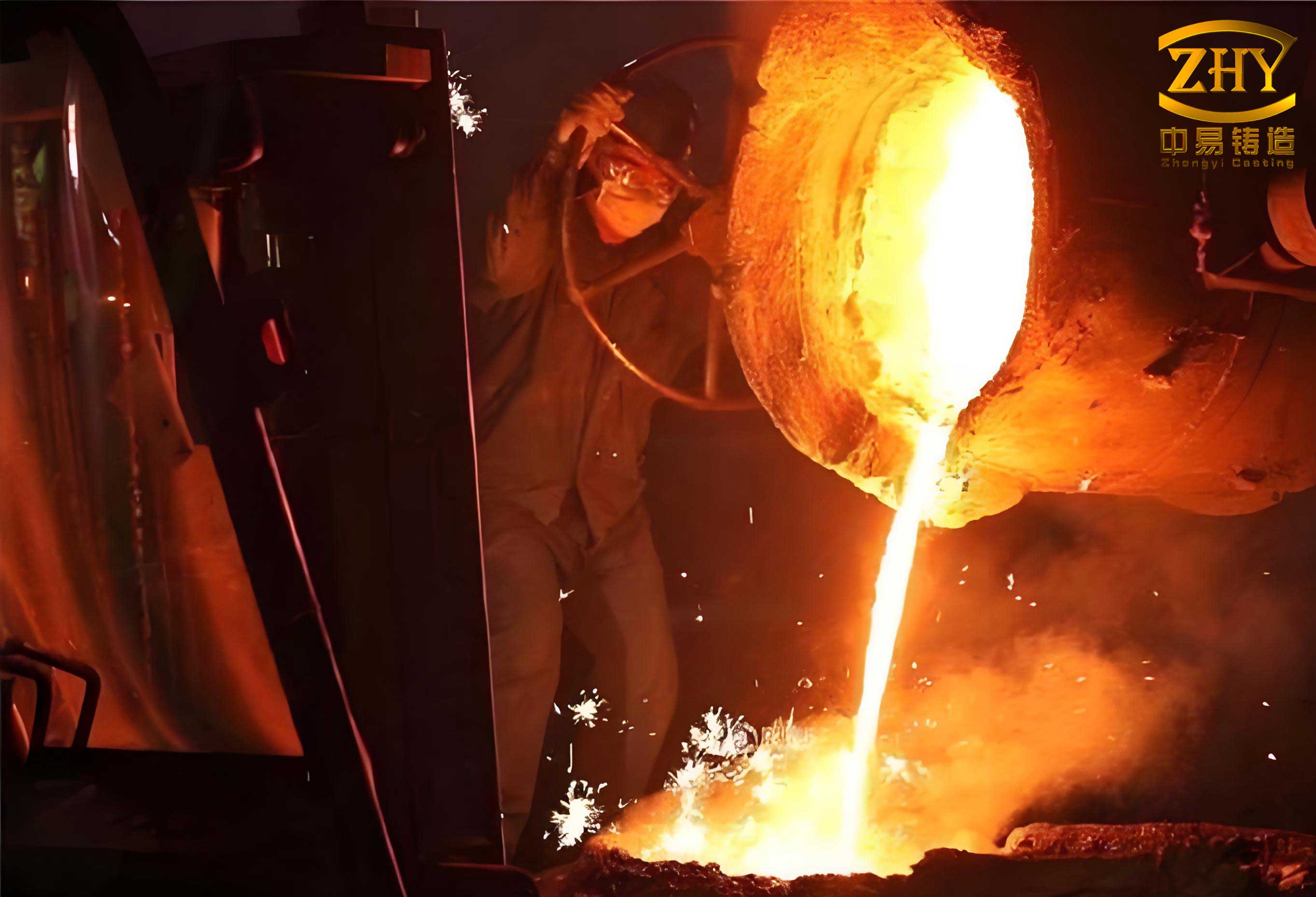
Modern sand reclamation systems now integrate centralized waste sand handling, pneumatic conveying, dust control, and remote online monitoring. The exhaust gases are treated, and the waste heat can be reused. Dust and fines generated during the process can be utilized as construction materials, thus achieving near-zero landfill discharge. For example, a US-based company uses a variable-speed low-speed feeder to introduce waste sand into a rotary calciner at temperatures between 732 °C and 899 °C, depending on the sand characteristics. After baking, the sand is cooled, scrubbed, and sieved to produce reclaimed sand with quality approaching that of virgin sand.
Combined Thermal–Mechanical Reclamation for Mixed Sand
For mixed sand, which constitutes the majority of waste in many sand casting foundry operations, a combination of thermal baking followed by mechanical grinding has proven most effective. The thermal step weakens the binder and clay coatings, and the subsequent mechanical action removes these weakened layers. This process yields reclaimed sand with lower acid demand and improved grain shape.
My Foundry’s Practice: Reclaiming Mixed Sand for Cold-Box Cores
I work in a foundry that specializes in producing automotive engine castings. Our molding line uses green clay sand, and most cores are made using the cold-box process. During shakeout, a large amount of broken core sand mixes with the clay sand, forming a mixed waste stream. Without reclamation, this waste would not only consume valuable resources but also incur high disposal costs and environmental penalties. To address this, we adopted a combined thermal–mechanical reclamation system using a 3 t/h through-flow baking furnace followed by a mechanical grinding unit similar to the GEMCO design. The overall recovery rate of reclaimed sand reaches 80%.
The key properties of the reclaimed sand compared with our virgin new sand are summarized in Table 1. The reclaimed sand exhibits a slightly higher acid demand value (ADV) of 6.1 mL versus 5.0 mL for new sand, but its loss on ignition (LOI) is significantly lower (0.12% vs. 0.3%), indicating that most organic matter has been burned off. The grain size distribution (50/100 mesh) remains unchanged, and the clay content is similarly low. Under microscopic examination, the reclaimed sand grains appear more rounded, which can improve flowability and reduce binder consumption. Moreover, the thermal expansion coefficient of reclaimed sand is lower than that of new sand, a beneficial feature for reducing casting defects such as veining and expansion scabs.
Table 1. Comparison of New Sand and Reclaimed Sand Properties
| Property | New Sand | Reclaimed Sand |
|---|---|---|
| Clay content (%) | ≤0.2 | 0.2 |
| Acid demand value (mL) | ≤5.0 | 6.1 |
| Loss on ignition (%) | ≤0.3 | 0.12 |
| Grain fineness (mesh) | 50/100 | 50/100 |
Cold-Box Core Making with Reclaimed Sand
Our standard cold-box core sand formulation uses 1.4% phenolic urethane resin (based on sand weight) and achieves an instantaneous tensile strength of 0.8–1.0 MPa and a 24-hour strength of 1.7–1.8 MPa. To evaluate the feasibility of replacing part of the new sand with reclaimed sand, we conducted experiments with four different blending ratios while keeping the resin addition constant at 1.4%. The results are presented in Table 2.
Table 2. Strength Test Results of Cold-Box Sand with Different Reclaimed Sand Ratios
| Blend (reclaimed : new) | Instantaneous strength (MPa) | 1 h strength (MPa) | 24 h strength (MPa) |
|---|---|---|---|
| All reclaimed | 0.60 | 1.40 | 1.60 |
| 1 : 1 | 0.80 | 1.60 | 1.90 |
| 2 : 1 | 0.80 | 1.60 | 1.85 |
| 3 : 1 | 0.70 | 1.60 | 1.80 |
As shown in Table 2, when 100% reclaimed sand was used, the instantaneous strength dropped to 0.60 MPa, falling below our target range. However, even with a 3:1 ratio of reclaimed sand to new sand, the instantaneous strength was 0.70 MPa, and the 24-hour strength reached 1.80 MPa, which meets our production standard. To further analyze the relationship between blend ratio and strength, we can model the strength as a weighted function of the properties of each component. For example, the acid demand value (ADV) of the blended sand can be approximated as a linear combination:
$$ ADV_{\text{mix}} = r \cdot ADV_{\text{reclaimed}} + (1 – r) \cdot ADV_{\text{new}} $$
where \( r \) is the mass fraction of reclaimed sand. Using the values from Table 1, for \( r = 0.75 \) (i.e., 3:1 blend), we get \( ADV_{\text{mix}} = 0.75 \times 6.1 + 0.25 \times 5.0 = 5.825 \) mL. This is still slightly above the new sand’s ADV, but the strength data indicate that the binder system can tolerate this increase without compromising performance. The slight strength reduction at higher reclaimed sand content may be attributed to residual fine clay particles or altered surface chemistry that slightly delays the cure reaction.
We also conducted a full-scale production trial: 20 boxes (40 pieces) of cylinder block crankshaft case cores were made using the 3:1 blend. The cores were processed through core shooting, drying, mold assembly, pouring, and shakeout without any abnormalities. The resulting castings showed no increased defects, and the core removal was satisfactory. This demonstrates that the combined thermal–mechanical reclamation method can produce reclaimed sand suitable for high-quality cold-box cores in a sand casting foundry environment.
Mathematical Model for Strength Prediction
Based on the data, a simple empirical model can be derived to predict the 24-hour strength \( S_{24} \) as a function of the reclaimed sand fraction \( r \). Assuming a linear trend in the range of \( 0 \le r \le 0.75 \), we obtain:
$$ S_{24}(r) = S_{24,\text{new}} – k \cdot r $$
where \( S_{24,\text{new}} = 1.90 \) MPa (from the 1:1 blend, which closely approximates the new sand performance), and \( k \approx 0.13 \) MPa per unit fraction. For \( r = 0.75 \), the predicted strength is \( 1.90 – 0.13 \times 0.75 = 1.80 \) MPa, matching the experimental value. This linear model provides a quick tool for foundry engineers to estimate the required new sand addition to maintain target core strength.
Economic and Environmental Benefits
Implementing sand reclamation in our sand casting foundry has yielded significant advantages. The annual consumption of new sand has been reduced by approximately 80%, translating into substantial cost savings in raw material procurement and waste disposal. Moreover, the reduction in landfilling of used sand minimizes environmental liability and helps the facility comply with increasingly stringent regulations. The investment in reclamation equipment can typically be recovered within 2–3 years, depending on the scale of operation and local disposal costs.
One common concern among foundries is the higher initial capital cost of thermal reclamation units. However, when considering the long-term savings in sand purchase, transportation, and landfill fees, the payback period is often shorter than expected. Additionally, many governments now offer subsidies or tax incentives for green manufacturing practices, further improving the economic feasibility.
Conclusion and Outlook
From my experience, the reclamation of used sand is not merely an option but a necessity for the modern sand casting foundry. While pure resin-bonded sand can be reclaimed with relatively simple thermal treatment, the greatest challenge lies in handling mixed sand containing both clay and resin binders. The combination of thermal baking and mechanical grinding has proven to be the most robust and effective method, delivering reclaimed sand that can replace up to 75% of new sand in cold-box core making without sacrificing core strength or casting quality.
Looking ahead, the widespread adoption of sand reclamation technology in sand casting foundry faces two main obstacles: the high initial investment and the need for consistent waste sand composition. As environmental regulations tighten and the cost of virgin sand continues to rise, these barriers will diminish. Advanced sensor-based sorting, optimized furnace control, and closed-loop water systems for wet reclamation (though currently less common) are areas of active development. I believe that within the next decade, nearly all large-scale sand casting foundry will incorporate some form of reclamation, turning the once problematic “waste” into a valuable resource. Our findings contribute to this ongoing transition, proving that sustainable sand casting is both technically feasible and economically viable.