
In recent years, as a foundry engineer specializing in high-precision machine tool components, I have dedicated significant effort to exploring methods for enhancing机床 accuracy through advanced casting techniques. One pivotal development has been the emergence of multi-cavity, windowless shell castings for foundational parts like machine tool beds and worktable bases. These shell castings are designed with intricate internal cavities that remain entirely sealed, without any openings for sand removal after casting. This approach aims to reduce deformation, increase rigidity, lower the center of gravity, improve stability, and provide superior vibration damping—all critical for elevating machine tool precision. However, this very design introduces formidable challenges in foundry production, particularly in venting core gases effectively. This has necessitated innovative adaptations in排气 methods, leading to the evolution of what we now term “sand-sealed casting.”
Sand-sealed casting refers to the process where core sand is permanently enclosed within the internal cavities of a casting, never to be removed. This technique has gained prominence alongside the advancement of machine tool castings, especially for complex shell castings. The structural essence of these castings lies in their labyrinthine internal geometries that are completely isolated from the exterior, posing unique dilemmas for traditional foundry practices. Over the years, through hands-on experimentation and refinement, my colleagues and I have developed and implemented robust solutions to overcome these hurdles, focusing on core venting and support placement to ensure defect-free production.
The defining characteristic of these shell castings is their absence of windows or access ports, which complicates sand core venting and support. To illustrate, consider a typical worktable base with overall dimensions of approximately 1500 mm × 800 mm × 600 mm, a wall thickness of 25 mm, a rough casting weight of around 1200 kg, and made from HT250 gray iron. Its sliding surfaces are exposed on one side, while the mounting face features a single rectangular opening for sand removal and venting; all other internal cavities are sealed. Similarly, a machine bed might measure 3000 mm × 800 mm × 700 mm, with a wall thickness of 20 mm, a weight of 2500 kg, and HT250 material, featuring completely enclosed internal cavities without any vents or sand-removal openings. These examples underscore the imperative for novel venting strategies in sand-sealed casting of shell castings.
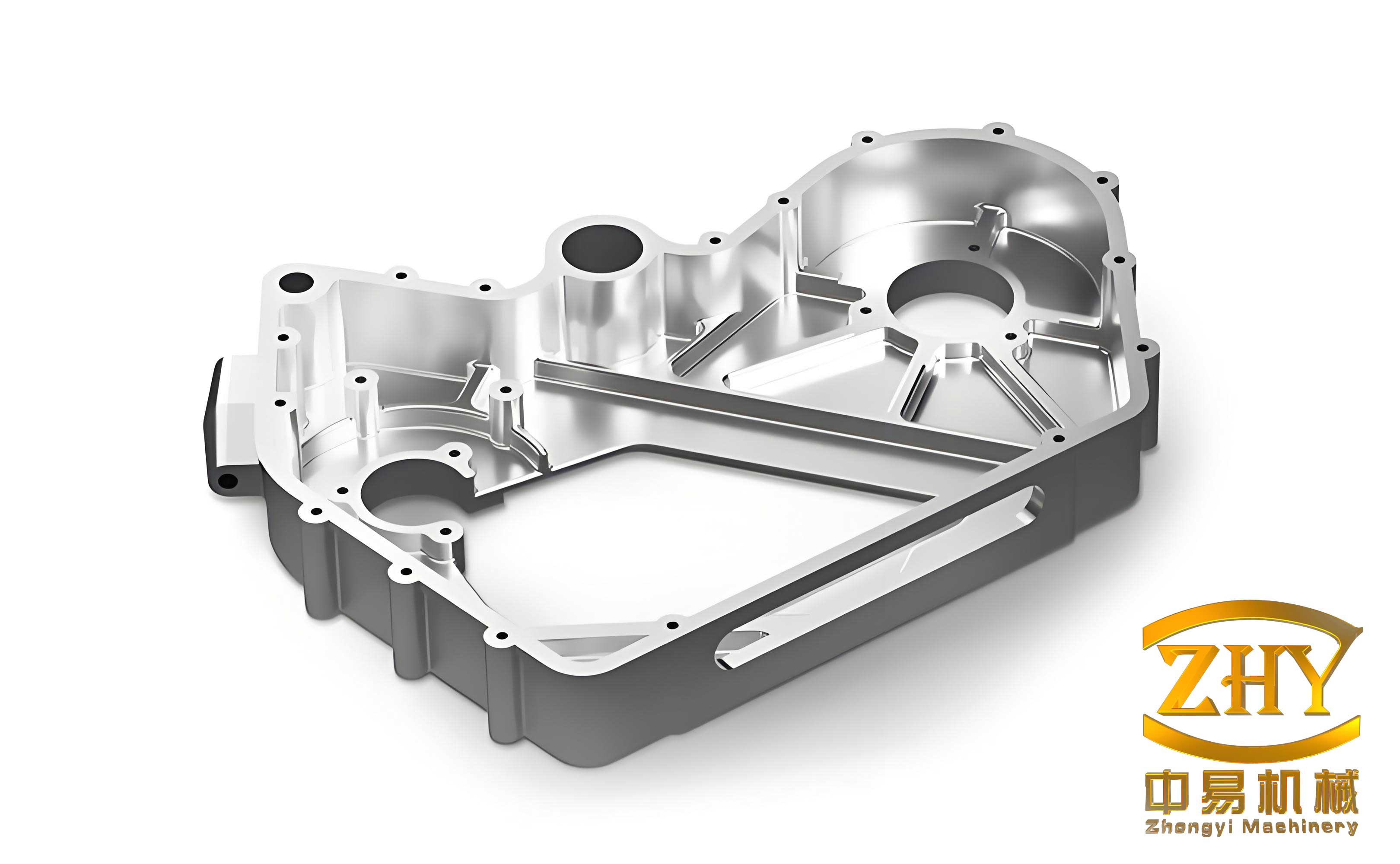
The core challenge in sand-sealed casting of shell castings is managing the gases generated by the core sand during pouring. If not properly vented, these gases can lead to defects like blowholes, gas porosity, or even dangerous eruptions. To address this, we have pioneered a combination of material selection and venting techniques. Firstly, we opt for resin-bonded sand for both molding and coring. Despite its higher gas generation, resin sand offers excellent permeability, rapid hardening, low drying temperatures, and minimal distortion, making it ideal for complex shell castings. We complement this with alcohol-based zircon flour coatings to prevent burn-on and ensure superior surface finish and dimensional accuracy.
For venting the sealed internal cavities, we employ a dual approach: nylon venting ropes and specialized venting chaplets. The nylon rope method involves coiling the rope around the core reinforcement during sand filling—when the core sand is in a fluid state—ensuring coverage of all dead zones. The rope ends are then routed into the vent holes of venting chaplets or through Φ10 mm steel tubes welded to the core reinforcement, which extend to exhaust ports on the mold surface. This creates a continuous pathway for gases to escape externally. The efficacy of this system can be modeled using gas flow equations. For instance, the volumetric gas generation rate from resin sand can be approximated as:
$$ \dot{V}_g = A_c \cdot \rho_s \cdot k_g \cdot e^{-E_a/(R T)} $$
where \(\dot{V}_g\) is the gas generation rate (m³/s), \(A_c\) is the core surface area (m²), \(\rho_s\) is the sand density (kg/m³), \(k_g\) is a kinetic constant, \(E_a\) is the activation energy (J/mol), \(R\) is the universal gas constant (8.314 J/(mol·K)), and \(T\) is the temperature (K). The venting capacity must exceed this rate to prevent pressure buildup. The pressure drop \(\Delta P\) across the venting rope can be estimated using the Hagen-Poiseuille equation for laminar flow:
$$ \Delta P = \frac{128 \mu L Q}{\pi d^4} $$
where \(\mu\) is the gas viscosity (Pa·s), \(L\) is the rope length (m), \(Q\) is the volumetric flow rate (m³/s), and \(d\) is the effective diameter of the rope pores (m). Ensuring \(\Delta P\) remains below critical thresholds is vital for efficient venting in shell castings.
Secondly, we utilize custom-designed venting chaplets that serve dual functions: supporting the core and providing gas escape routes. These chaplets differ from conventional ones by incorporating internal通气 channels. They are strategically positioned on top of the core, with corresponding vents in the mold to direct gases outward. After casting and cleaning, the chaplet vent holes are sealed with专用 plugs, welded shut, and ground flush. The placement of these chaplets requires precise定位 to avoid weakening the casting structure. The table below summarizes key design parameters for venting chaplets used in shell castings:
| Parameter | Typical Value | Unit | Remarks |
|---|---|---|---|
| Chaplet Diameter | 20–30 | mm | Depends on core load |
| Vent Hole Diameter | 5–8 | mm | Balances gas flow and strength |
| Material | Mild Steel | – | Compatible with iron castings |
| Placement Density | 1 per 0.5 m² | – | Ensures adequate venting coverage |
| Sealing Method | Welding + Grinding | – | Prevents leakage and maintains integrity |
The selection of pouring position and parting plane is crucial for sand-sealed casting of shell castings. For worktable bases, we orient the working surface downward and the mounting face upward, with the casting predominantly in the drag. For machine beds, the guideways face downward, and most of the casting resides in the drag. This orientation minimizes turbulence and promotes directional solidification, reducing shrinkage defects. The gating system is designed as a bottom-pouring arrangement with multiple ingates to ensure smooth metal flow. The area ratios of the gating system components are typically set as \( A_{sprue} : A_{runner} : A_{ingate} = 1.0 : 1.2 : 1.5 \). The浇注 time \(t\) can be calculated using:
$$ t = \frac{W}{\rho_m \cdot A_{sprue} \cdot v} $$
where \(W\) is the casting weight (kg), \(\rho_m\) is the metal density (kg/m³), \(A_{sprue}\) is the sprue area (m²), and \(v\) is the flow velocity (m/s), often derived from Bernoulli’s principle. We employ small risers, with the riser area to choke area ratio maintained between 1.2 and 1.5. Pouring temperatures are carefully controlled within 1350°C to 1380°C for gray iron shell castings to balance fluidity and gas evolution.
To further optimize the process, we have developed comprehensive tables for material properties and工艺 parameters. The table below compares different molding materials for shell castings:
| Material | Permeability (cm/s) | Gas Generation (mL/g) | Hardening Time (min) | Application in Shell Castings |
|---|---|---|---|---|
| Resin-Bonded Sand | 120–180 | 25–40 | 5–10 | Excellent for complex cores |
| Green Sand | 80–120 | 10–20 | N/A | Limited due to lower permeability |
| Sodium Silicate Sand | 100–150 | 15–30 | 10–20 | Moderate, requires CO₂ gassing |
| Shell Molding Sand | 50–100 | 5–15 | 2–5 | Good for precision, but costly |
The success of sand-sealed casting for shell castings is evidenced by practical applications. For instance, we have produced bed and worktable base castings for vertical machining centers and CNC vertical lathes, which have garnered awards and facilitated international collaborations. These shell castings, with their封砂 interiors, exhibit enhanced damping characteristics, quantified by the logarithmic decrement \(\delta\):
$$ \delta = \frac{1}{n} \ln \frac{A_0}{A_n} $$
where \(A_0\) and \(A_n\) are the amplitudes of successive vibrations. Our measurements show a 30–40% improvement in \(\delta\) compared to conventional hollow castings, directly boosting machine tool accuracy. The economic impact is substantial, with such shell castings contributing to significant export revenues.
Beyond venting, the design of the浇注 system plays a pivotal role in ensuring soundness. We model the fluid dynamics using the Reynolds number \(Re\) to ensure laminar flow:
$$ Re = \frac{\rho v D}{\mu} $$
where \(D\) is the hydraulic diameter (m). Keeping \(Re < 2000\) minimizes turbulence and gas entrapment in shell castings. Additionally, solidification simulation aids in optimizing riser placement. The Chvorinov’s rule estimates solidification time \(t_s\):
$$ t_s = k \left( \frac{V}{A} \right)^2 $$
where \(V\) is volume (m³), \(A\) is surface area (m²), and \(k\) is a mold constant (s/m²). For shell castings with封砂 cores, the effective \(A\) is reduced, requiring adjusted riser designs to prevent shrinkage.
The integration of these techniques has elevated sand-sealed casting to a reliable method for high-integrity shell castings. However, challenges persist, such as ensuring complete gas evacuation from deep cavities. We address this by combining venting ropes and chaplets in a networked system. The overall gas evacuation efficiency \(\eta\) can be expressed as:
$$ \eta = \frac{Q_{out}}{Q_{gen}} \times 100\% $$
where \(Q_{out}\) is the vented gas volume and \(Q_{gen}\) is the total generated gas volume. Through iterative design, we achieve \(\eta > 95\%\) for most shell castings. The table below outlines key process controls for sand-sealed casting:
| Control Parameter | Target Range | Measurement Method | Impact on Shell Castings |
|---|---|---|---|
| Pouring Temperature | 1350–1380°C | Optical Pyrometer | Affects fluidity and gas solubility |
| Sand Permeability | >150 cm/s | Permeability Tester | Critical for core venting |
| Venting Rope Diameter | 8–12 mm | Caliper | Determines gas flow capacity |
| Chaplet Spacing | 300–500 mm | Layout Template | Ensures uniform support and venting |
| Coating Thickness | 0.2–0.5 mm | Thickness Gauge | Prevents metal penetration |
Looking forward, the evolution of sand-sealed casting for shell castings continues with advancements in simulation and materials. Finite element analysis (FEA) helps predict thermal stresses and distortion, governed by the heat conduction equation:
$$ \frac{\partial T}{\partial t} = \alpha \nabla^2 T $$
where \(\alpha\) is thermal diffusivity (m²/s). This allows optimizing wall thicknesses and rib patterns in shell castings for maximum stiffness-to-weight ratio. Furthermore, the use of lightweight aggregate cores is under exploration to reduce overall weight while maintaining damping properties. The acoustic impedance \(Z\) of a封砂 casting, given by:
$$ Z = \sqrt{\rho E} $$
where \(\rho\) is density (kg/m³) and \(E\) is Young’s modulus (Pa), shows favorable values for vibration attenuation, making shell castings ideal for high-precision applications.
In conclusion, sand-sealed casting has proven transformative for manufacturing complex, windowless shell castings. By innovating in venting methods—through nylon ropes and venting chaplets—and refining gating designs, we have overcome the inherent challenges of gas management. This technology not only enhances the mechanical and dynamic properties of shell castings but also aligns with the pursuit of higher machine tool accuracy. As foundry practitioners, we remain committed to pushing the boundaries of sand-sealed casting, ensuring that shell castings continue to serve as robust foundations for advanced manufacturing systems. The journey from conceptual challenges to industrial success underscores the resilience and ingenuity inherent in modern foundry engineering for shell castings.