
The pervasive deterioration of asphalt pavements adjacent to traditional municipal manhole covers, manifesting as cracking, cover rocking, and localized settlement or upheaval, represents a significant safety hazard and financial burden for road maintenance authorities. Driven by deficiencies in design, construction, and maintenance, these issues necessitate frequent, disruptive, and costly repairs. In recent years, the flange-type ductile iron casting manhole cover has emerged as a prominent solution to mitigate these chronic problems. This innovative design utilizes a spring-locking mechanism and a socket connection between the cover frame and the manhole structure. Its most critical feature is a flanged top plate that significantly enlarges the bearing surface area with the road. This design principle aims to distribute approximately 80% of the live traffic load directly onto the surrounding pavement layers, thereby reducing impact stress on the cover itself and its immediate support. However, field observations indicate that even these advanced ductile iron casting systems are not immune to deterioration. Factors such as construction quality, material performance, and the relentless dynamic loading from traffic can still lead to settlement of the cover unit and distress in the surrounding asphalt, including raveling and pothole formation.
Currently, a comprehensive and standardized framework for assessing the in-service performance of manhole cover systems and their peripheral pavement is lacking. While maintenance guidelines exist for inspecting cover integrity (e.g., loss, breakage), they fall short of providing a quantitative, multi-indicator evaluation method focused on ride quality and structural deterioration directly impacting traffic safety. This gap highlights the need for a systematic approach to evaluate and predict the service life of these critical urban infrastructure components. This study, therefore, focuses on developing a robust model to assess the service state of flange-type ductile iron casting manhole covers and their surrounding pavement, integrating field measurements with analytical techniques to support intelligent maintenance planning.
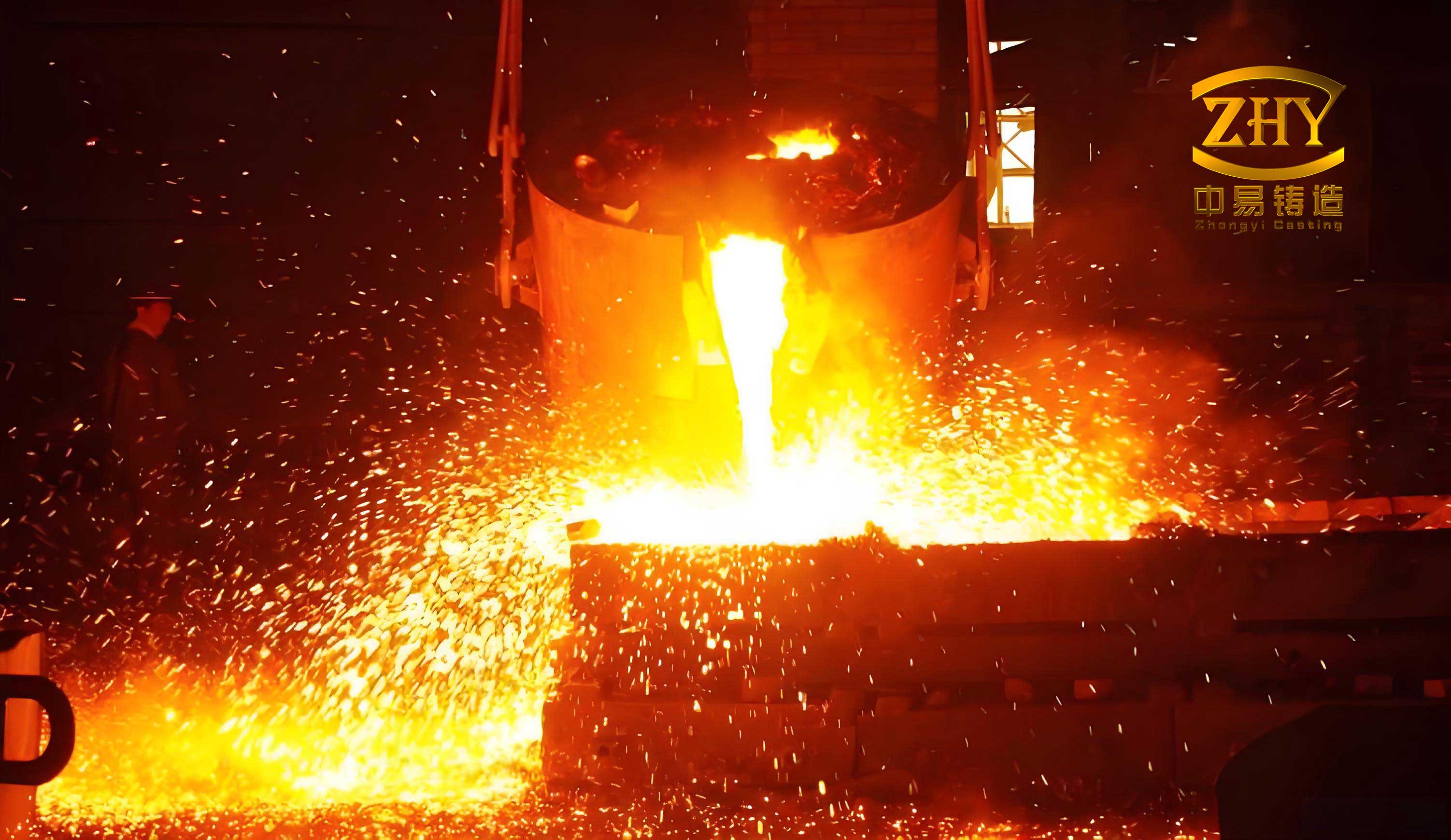
The core material enabling this advanced design is ductile iron casting. Unlike brittle gray iron, ductile iron incorporates nodular graphite within its microstructure, granting it superior strength, toughness, and impact resistance. These material properties are essential for a component enduring constant cyclic loading from vehicles. The casting process allows for the complex geometry of the flange and reinforcing ribs to be formed integrally, creating a robust, monolithic unit. The durability and performance of the entire system are fundamentally linked to the quality and properties of this ductile iron casting.
Field Investigation and Data Acquisition Methodology
A longitudinal field investigation was conducted on 18 flange-type ductile iron casting manhole covers located on an urban road. The study involved five separate observational campaigns over an eight-month period to capture the temporal evolution of performance indicators. The assessment focused on two primary aspects: the condition of the ductile iron casting cover itself and the condition of the annular asphalt pavement within a defined influence zone around it.
The condition of the ductile iron casting cover was quantified using two geometric parameters: tilt angle and settlement. The tilt angle (\(\theta\)) represents the angular deviation of the cover surface from the ideal horizontal plane, directly contributing to vehicle impact and “cover slap.” Settlement (\(S\)) is the maximum vertical displacement between the cover edge and the surrounding pavement surface. Precise measurements were obtained using a laser rangefinder mounted on a tripod. By targeting specific points on the cover rim and the adjacent road surface and recording both distance and inclination data, the three-dimensional coordinates were calculated. Assuming the cover behaves as a rigid body, the tilt angle and maximum differential settlement were derived from these coordinates.
The condition of the surrounding pavement was assessed by identifying and quantifying two primary distress types: raveling (loss of binder and aggregate) and potholes (localized disintegration with a minimum depth). A standardized annular region (inner radius 0.9m, outer radius 1.48m) around the cover was defined for analysis. High-resolution orthographic photographs were taken from a fixed height. Distress areas were manually identified and marked based on visual characteristics (color, texture). Image processing software was then used to perform pixel-count analysis within the defined annular area. The severity was expressed using two ratios:
$$ \text{Raveling Ratio } (R_r) = \frac{\text{Number of pixels classified as raveled area}}{\text{Total number of pixels in the annular pavement area}} \times 100\% $$
$$ \text{Pothole Ratio } (P_r) = \frac{\text{Number of pixels classified as pothole area}}{\text{Total number of pixels in the annular pavement area}} \times 100\% $$
Statistical analysis of the field data revealed clear temporal trends. The average tilt angle of the ductile iron casting covers increased approximately linearly at a rate of about 0.2° per month. Settlement progressed rapidly initially before slowing, averaging 0.12 mm per month. The pavement distress ratios also increased over time. The average pothole ratio showed an accelerating growth trend, increasing by about 1.4% per month. The raveling ratio increased initially but showed a slight decrease later in the observation period, attributed to the conversion of raveled areas into potholes due to continued traffic action, where material loss exceeded the generation of new raveling.
Standardization of Service State Indicators
To enable a unified evaluation model, the four primary indicators—tilt angle (\(\theta\)), settlement (\(S\)), raveling ratio (\(R_r\)), and pothole ratio (\(P_r\))—with different units and scales, must be normalized into dimensionless standard scores (\(X_i\), where \(i = 1,2,3,4\)). This process involves defining a “perfect” score (typically 100) at an ideal/new condition and a “failure” score (0) at a predefined threshold representing unacceptable serviceability or safety risk.
The following standardized scoring functions were established based on field experience, maintenance specifications, and practical limits:
- Tilt Angle (\(X_1\)): A tilt of \(15^\circ\) is considered a critical limit causing significant vehicle disturbance. $$ X_1 = \begin{cases} 100, & \theta \le 0^\circ \\ 100 – \frac{\theta}{15^\circ} \times 100, & 0^\circ < \theta < 15^\circ \\ 0, & \theta \ge 15^\circ \end{cases} $$
- Settlement (\(X_2\)): Based on local maintenance standards and surveys, \(\pm30\) mm was set as the failure threshold. The ideal tolerance is within \(\pm5\) mm. $$ X_2 = \begin{cases} 100, & |S| \le 5 \text{ mm} \\ 100 – \frac{|S| – 5}{25} \times 100, & 5 \text{ mm} < |S| < 30 \text{ mm} \\ 0, & |S| \ge 30 \text{ mm} \end{cases} $$
- Raveling Ratio (\(X_3\)): A raveling ratio of 30% was deemed the threshold for unacceptable ride quality and pavement integrity. $$ X_3 = \begin{cases} 100, & R_r = 0\% \\ 100 – \frac{R_r}{30\%} \times 100, & 0\% < R_r < 30\% \\ 0, & R_r \ge 30\% \end{cases} $$
- Pothole Ratio (\(X_4\)): A pothole ratio of 40% was set as the critical failure limit. $$ X_4 = \begin{cases} 100, & P_r = 0\% \\ 100 – \frac{P_r}{40\%} \times 100, & 0\% < P_r < 40\% \\ 0, & P_r \ge 40\% \end{cases} $$
Fuzzy Analytic Hierarchy Process (FAHP) Based Comprehensive Evaluation Model
The core of the assessment framework is a Fuzzy Analytic Hierarchy Process (FAHP) model. This method combines the structured weighting of the Analytic Hierarchy Process (AHP) with the fuzzy set theory’s ability to handle the ambiguity in classifying continuous performance indicators into discrete states.
Step 1: Determining Indicator Weights using AHP. A hierarchical structure was constructed with the goal of “Overall Service State Assessment.” The criteria layer contained “Cover Condition” and “Pavement Condition.” The indicator layer consisted of the four standardized scores. Expert judgment was solicited to compare the relative importance of these indicators in pairs, forming a judgment matrix \(\mathbf{B} = [b_{ij}]\), where \(b_{ij}\) represents the importance of indicator \(i\) relative to \(j\) on a scale of 1-9.
For a consistent matrix, the weight vector \(\mathbf{Q} = [Q_1, Q_2, Q_3, Q_4]\) can be derived from the principal eigenvector. Consistency is verified using the Consistency Ratio (\(CR\)):
$$ CR = \frac{CI}{RI}, \quad \text{where } CI = \frac{\lambda_{max} – n}{n – 1} $$
Here, \(\lambda_{max}\) is the largest eigenvalue of \(\mathbf{B}\), \(n=4\) is the matrix order, and \(RI\) is the random index. A \(CR < 0.1\) is acceptable. Aggregating judgments from multiple experts yielded the final weight vector: \(\mathbf{Q} = [0.13, 0.43, 0.13, 0.31]\). This indicates that settlement (\(X_2\)) is the most dominant factor, followed by the pothole ratio (\(X_4\)), in determining the overall service state of the ductile iron casting cover system.
| Indicator | Tilt (\(X_1\)) | Settlement (\(X_2\)) | Raveling (\(X_3\)) | Pothole (\(X_4\)) | Weight (\(Q_i\)) |
|---|---|---|---|---|---|
| Tilt (\(X_1\)) | 1 | 1/3 | 1 | 1/3 | 0.13 |
| Settlement (\(X_2\)) | 3 | 1 | 3 | 2 | 0.43 |
| Raveling (\(X_3\)) | 1 | 1/3 | 1 | 1/2 | 0.13 |
| Pothole (\(X_4\)) | 3 | 1/2 | 2 | 1 | 0.31 |
Step 2: Fuzzy Comprehensive Evaluation. Instead of crisp boundaries, fuzzy membership functions define how much a given indicator value belongs to a specific performance grade. The performance grades are defined as: \(V = \{\text{Excellent (E), Good (G), Fair (F), Poor (P)}\}\). The corresponding standardized score ranges and midpoints (\(v_j\)) are shown below.
| Grade | Standardized Score (\(X_i\)) Range | Midpoint (\(v_j\)) |
|---|---|---|
| Excellent (E) | 90 ≤ \(X_i\) ≤ 100 | 95 |
| Good (G) | 80 ≤ \(X_i\) < 90 | 85 |
| Fair (F) | 60 ≤ \(X_i\) < 80 | 70 |
| Poor (P) | 0 ≤ \(X_i\) < 60 | 30 |
For each indicator \(i\), its membership degree \(r_{ij}\) to grade \(j\) is calculated using trapezoidal and semi-trapezoidal functions. For example, if the standardized tilt score \(X_1 = 85\), its membership vector might be \(\mathbf{r}_1 = [r_{1E}, r_{1G}, r_{1F}, r_{1P}] = [0.5, 1.0, 0.5, 0]\). All four membership vectors form the fuzzy relation matrix \(\mathbf{R}\).
The comprehensive evaluation vector \(\mathbf{C}\) is obtained by synthesizing the weight vector \(\mathbf{Q}\) and the fuzzy matrix \(\mathbf{R}\):
$$ \mathbf{C} = \mathbf{Q} \circ \mathbf{R} = [c_E, c_G, c_F, c_P] $$
Where \(\circ\) denotes a fuzzy composition operator (e.g., weighted average). The final composite score \(Y\) is calculated using the weighted average of the grade midpoints:
$$ Y = \frac{\sum_{j \in \{E,G,F,P\}} (c_j)^K \cdot v_j}{\sum_{j \in \{E,G,F,P\}} (c_j)^K} $$
Where \(K\) is a coefficient (taken as 1.0). This score \(Y\), ranging theoretically from 0 to 100, quantitatively represents the overall service state of the ductile iron casting manhole cover and its surrounding pavement.
Applying this model to the 18 monitored covers over five periods generated time-series scores. The results confirmed that service performance degrades over time. Covers located in high-stress areas like intersections showed more rapid declines in their composite score \(Y\), validating the model’s sensitivity to real-world conditions.
Service Life Prediction Based on Performance Deterioration
The longitudinal data allowed for the analysis of performance degradation kinetics. A critical finding was the relationship between the current composite score \(Y\) and its rate of change \(dY/dt\). Analysis showed that as the score decreases (i.e., condition worsens), the rate of deterioration accelerates. This is logical, as initial defects like minor settlement or cracking exacerbate stress concentrations under traffic, leading to progressively faster damage accumulation in both the pavement and the ductile iron casting assembly.
This relationship was modeled using S-curve (logistic-type) functions to define upper and lower bounds for the deterioration rate, based on the observed data scatter.
$$ \text{Upper Bound (Fast Deterioration): } \frac{dY}{dt} = \frac{-3.49}{1 + e^{-0.22(Y – 72.4)}} + 3.48 $$
$$ \text{Lower Bound (Slow Deterioration): } \frac{dY}{dt} = \frac{-4.26}{1 + e^{-0.15(Y – 88.15)}} + 3.64 $$
These differential equations describe how the rate of score decline depends on the current score \(Y\). By integrating these equations, we can predict the time (\(t\)) required for the score to fall from its initial value (\(Y_0\)) to a failure threshold, set here at \(Y_f = 60\). The solutions provide time-to-failure estimates.
$$ \text{Upper Bound Integration Result: } t \approx 83.75 + 1.31 \ln\left(0.01 + 3.48 e^{-0.22Y_0 + 15.93}\right) – 454.55 \ln\left(0.01 e^{-0.22Y_0 + 15.93} + 3.48\right) $$
$$ \text{Lower Bound Integration Result: } t \approx 44.9 + 1.83 \ln\left(0.62 + 3.64 e^{-0.15Y_0 + 13.22}\right) – 10.75 \ln\left(0.62 e^{-0.15Y_0 + 13.22} + 3.64\right) $$
Applying these models to the studied ductile iron casting covers yielded a predicted service life range. The results indicated that, under the most aggressive deterioration scenario, covers could reach the failure threshold within 5 to 10 months from the time of assessment. Under the slowest deterioration scenario, the predicted life extended to between 15 and 44 months. This range provides valuable information for risk-based maintenance scheduling, allowing authorities to prioritize inspection and intervention for covers predicted to be in the fast-deterioration cohort.
Discussion and Implications for Smart Infrastructure Management
The findings underscore that while the flange-type ductile iron casting manhole cover is a superior design, its long-term performance is a system-dependent property. The quality of the ductile iron casting itself is paramount, but the construction process—particularly the compaction and integration of backfill around the flange—and the ongoing traffic loading are equally critical. The developed FAHP model offers a quantifiable, multi-parameter tool to move beyond subjective visual inspection. By consolidating measurements of tilt, settlement, raveling, and potholing into a single comprehensive score, it provides a clear, actionable metric for asset management.
The life prediction model, though based on a limited dataset, introduces a proactive element to maintenance. Instead of reacting to failures, agencies can forecast when a cover system is likely to require attention. The significant role of settlement and pothole formation, as reflected in their high weights, points to specific areas for quality control during installation and for potential design refinement of the transition zone between the rigid ductile iron casting and the flexible pavement.
Conclusion
This research established a methodology for evaluating and predicting the service life of flange-type ductile iron casting manhole covers and their surrounding pavement. Key conclusions are:
- The flange-type ductile iron casting cover system demonstrably improves performance over traditional designs but does not eliminate deterioration, which manifests as geometric misalignment (tilt/settlement) and pavement distress (raveling/potholes).
- A Fuzzy Analytic Hierarchy Process (FAHP) model, integrating the weighted indicators of tilt, settlement, raveling ratio, and pothole ratio, successfully generates a composite service state score that reflects real-world conditions and degradation.
- The deterioration rate of the system accelerates as its condition worsens. This relationship was modeled with S-curve functions, enabling the prediction of a remaining service life range (from optimistic to pessimistic scenarios).
The proposed models provide a foundation for data-driven infrastructure management. Future work should focus on automating data collection using LiDAR, 3D imaging, and embedded sensors to gather large-scale, high-frequency performance data. Integrating such data streams with the presented analytical framework through machine learning algorithms will be a crucial step toward realizing a predictive and intelligent maintenance system for urban road networks, ultimately enhancing safety, reducing life-cycle costs, and contributing to the development of smarter cities.