
The advancement of lost foam casting technology has enabled the production of complex, high-integrity components with excellent dimensional accuracy and surface finish. This study focuses on the application of numerical simulation to optimize the lost foam casting process for a critical automotive component: the aluminum alloy cylinder head. Utilizing ProCAST simulation software, we comprehensively analyze the filling and solidification stages, investigating the influence of key process parameters to establish an optimized and robust manufacturing protocol.
The lost foam casting process involves replacing a foam pattern with molten metal within an unbonded sand mold under a controlled vacuum. The decomposition of the foam pattern upon contact with the molten metal is a complex, transient phenomenon that directly impacts mold filling dynamics, heat transfer, and final casting quality. Traditional trial-and-error methods for process development are time-consuming and costly. Therefore, computer simulation has become an indispensable tool for visualizing the process, predicting potential defects, and optimizing parameters before physical prototyping.
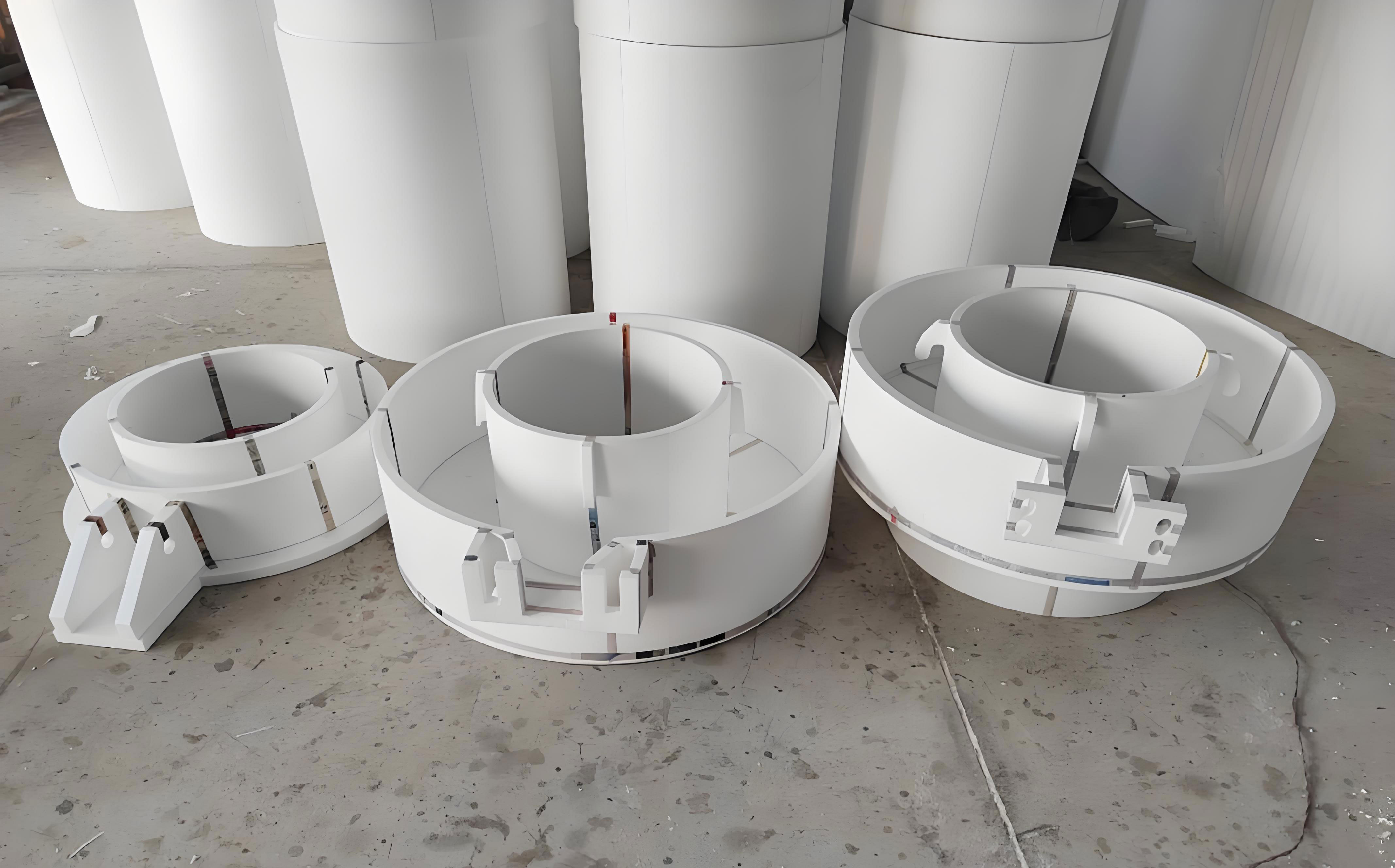
The component under investigation is a cylinder head cast from ZL104 aluminum alloy, chosen for its favorable combination of low density, high specific strength, and excellent thermal conductivity—properties essential for modern, high-performance, fuel-efficient engines. The casting is characterized by thin walls (approximately 4 mm) and intricate internal passages for coolant and gases, demanding a process capable of reproducing fine details without defects like misruns, cold shuts, porosity, or shrinkage.
1. Casting Requirements and Process Design
The cylinder head operates under severe thermal and mechanical loads, requiring high structural integrity and pressure tightness. Key technical requirements include freedom from gas porosity, shrinkage defects, cracks, and surface imperfections. The casting’s complex geometry necessitates a carefully designed gating system to ensure complete and controlled filling.
We adopted a top-gating system for this lost foam casting process. The design principle is to utilize the gating channels themselves as feeders (risers) to aid in directional solidification towards the thermal center. The system consists of a pouring cup, a downsprue, a horizontal runner, and four ingates strategically connected to the thickest sections of the cylinder head. This configuration aims to reduce thermal contact points between the gates and the casting body, minimize overheating in critical areas, and facilitate sequential filling and solidification. The filling strategy follows a “slow-fast-slow” sequence to ensure initial stability, rapid cavity filling, and final calm metal delivery.
2. Numerical Simulation Methodology
The simulation of the lost foam casting process follows a structured computational workflow: geometric modeling, meshing, and process simulation with defined boundary conditions and material properties.
2.1 Geometric Modeling and Meshing
The three-dimensional solid model of the cylinder head and its gating system was created using CAD software. For the finite element analysis in ProCAST, the model was discretized using a non-uniform tetrahedral mesh. This approach allows for finer mesh resolution in areas of interest, such as thin walls and the gating system, and coarser elements in the bulk sand, optimizing computational efficiency without sacrificing accuracy. The final mesh consisted of 345,847 elements and 67,186 nodes.
2.2 Material Properties and Process Parameters
Accurate simulation requires defining the thermophysical properties of all materials involved. The lost foam casting system is a three-phase problem involving the molten metal (ZL104 alloy), the expendable foam pattern (Expanded Polystyrene, EPS), and the unbonded sand mold. Key properties include density, specific heat, thermal conductivity, latent heat of fusion (for metal), and decomposition characteristics (for foam).
| Material | Density (kg/m³) | Specific Heat (kJ/(kg·K)) | Thermal Conductivity (W/(m·K)) | Latent Heat (kJ/kg) | Solidus Temp. (°C) | Liquidus Temp. (°C) |
|---|---|---|---|---|---|---|
| ZL104 Alloy | 2.65e3 | 0.25 | 203 | 300 | 546 | 598 |
| EPS Pattern | Variable (16-30) | 3.7 | 0.035 | 100 (Decomposition) | 603* | 623* |
| Quartz Sand | 1,500 | 1.15 | 0.5-1.5 | – | – | – |
* Foam decomposition temperature range.
The interfacial heat transfer coefficient (IHTC) between the casting and the sand mold was set to 240 W·m⁻²·K⁻¹. The primary variable process parameters for our sensitivity study were:
- Vacuum Level (Negative Pressure): Ranging from 15 kPa to 25 kPa.
- Foam Pattern Density: Ranging from 16 kg/m³ to 30 kg/m³.
- Pouring Temperature: Ranging from 700°C to 780°C.
The simulation solves the coupled equations for fluid flow, heat transfer, and foam degradation. The energy required to decompose the foam is modeled as a heat sink, slowing the advancing metal front. The governing energy equation can be expressed as:
$$
\rho c_p \frac{\partial T}{\partial t} = \nabla \cdot (k \nabla T) – \rho L \frac{\partial f_s}{\partial t} – Q_{foam}
$$
where $\rho$ is density, $c_p$ is specific heat, $T$ is temperature, $t$ is time, $k$ is thermal conductivity, $L$ is latent heat, $f_s$ is solid fraction, and $Q_{foam}$ represents the heat sink due to foam decomposition.
3. Simulation Results and Analysis of Lost Foam Casting
We systematically analyzed the simulation outputs to understand the influence of each parameter on the lost foam casting process. The primary metrics evaluated were total filling time, solidification sequence, and the prediction of shrinkage defects.
3.1 Filling Pattern and Dynamics
Under a baseline set of parameters (Pouring Temp: 750°C, Vacuum: 25 kPa, Foam Density: 20 kg/m³), the simulated filling sequence of the lost foam casting process was stable and sequential. The metal flows down the sprue, fills the horizontal runner, and then enters the mold cavity through the four ingates almost simultaneously. The metal fronts merge within the main body of the cylinder head and progress to fill the extremities. The final areas to fill are typically the thin, distant corners of the casting, which is a common characteristic in lost foam casting due to the cooling and resistance from foam decomposition.
3.2 Influence of Process Parameters on Filling Time
Filling time is a critical indicator of process stability in lost foam casting. Excessively long filling can lead to premature freezing (misruns), while turbulent filling can entrap decomposition gases.
3.2.1 Effect of Vacuum Level
Applying a vacuum to the sand mold enhances the removal of foam decomposition products, reduces back-pressure, and can improve metal fluidity. Our simulations investigated this effect across different foam densities.
| Vacuum (kPa) | Filling Time – 16 kg/m³ (s) | Filling Time – 22 kg/m³ (s) | Filling Time – 25 kg/m³ (s) |
|---|---|---|---|
| 15 | 7.2 | 8.5 | 9.1 |
| 18 | 6.5 | 7.6 | 8.2 |
| 20 | 6.1 | 7.2 | 7.8 |
| 22 | 6.3 | 7.4 | 8.0 |
| 25 | 6.8 | 7.9 | 8.5 |
The relationship is not perfectly linear. Increasing vacuum from 15 kPa to 20 kPa significantly reduces filling time. However, beyond approximately 20 kPa, the rate of improvement diminishes, and excessive vacuum can sometimes slightly increase filling time, possibly due to altered gaseous flow dynamics or cooling effects. The optimal vacuum for stable filling across all densities appears to be in the 18-20 kPa range.
An empirical relationship for filling time ($t_f$) as a function of vacuum ($P_v$) and foam density ($\rho_f$) can be approximated by:
$$
t_f \approx A \cdot \rho_f – B \cdot \ln(P_v + C) + D
$$
where A, B, C, and D are constants dependent on geometry and alloy.
3.2.2 Effect of Foam Pattern Density
The density of the EPS pattern directly impacts the thermal load on the molten metal. A denser foam requires more energy to decompose, thereby slowing the metal front.
| Foam Density (kg/m³) | Filling Time – 18 kPa (s) | Filling Time – 20 kPa (s) | Filling Time – 25 kPa (s) |
|---|---|---|---|
| 16 | 5.8 | 5.5 | 6.0 |
| 18 | 6.3 | 6.0 | 6.5 |
| 20 | 6.7 | 6.2 | 6.9 |
| 22 | 7.3 | 6.8 | 7.5 |
| 25 | 8.2 | 7.5 | 8.3 |
The data confirms a strong positive correlation between foam density and filling time. The increase is nearly linear for a given vacuum setting. While lower density foam (e.g., 16-18 kg/m³) fills faster, it may lack sufficient strength for handling and coating. A density of 20 kg/m³ represents a good compromise, offering reasonable filling times (especially at 20 kPa vacuum) and adequate pattern robustness for the lost foam casting process.
3.2.3 Effect of Pouring Temperature
Pouring temperature is a primary lever for controlling metal fluidity and feeding capability. Higher temperatures reduce viscosity and increase the superheat available to decompose the foam.
| Pouring Temperature (°C) | Filling Time (s) |
|---|---|
| 700 | 7.5 |
| 720 | 6.9 |
| 740 | 6.5 |
| 750 | 6.2 |
| 760 | 5.9 |
| 780 | 5.6 |
As expected, filling time decreases monotonically with increasing pouring temperature. The relationship can be described by an inverse function. However, excessively high temperatures promote gas dissolution, metal oxidation, and longer solidification times, which can lead to other defects like gross porosity and enlarged grain size. Therefore, an optimal range must be identified.
3.3 Solidification Analysis and Defect Prediction
The solidification sequence is largely governed by geometry and is less sensitive to the studied parameters than filling. The simulation consistently showed that solidification initiates in the thin-walled sections and corners of the cylinder head, progressing towards the thermal centers fed by the ingates. The last points to solidify are located in the thicker sections adjacent to the gates, validating the “gating-as-feeding” design principle of this lost foam casting setup.
The total solidification time ($t_s$) can be estimated using the Chvorinov’s rule, modified for the cooling effect of the foam:
$$
t_s = B \cdot \left( \frac{V}{A} \right)^n + \Delta t_{foam}
$$
where $B$ is the mold constant, $V$ is volume, $A$ is surface area, $n$ is an exponent (often ~2), and $\Delta t_{foam}$ accounts for the additional time due to the foam’s endothermic reaction.
To predict shrinkage porosity, the simulation employs criteria functions like the Niyama criterion ($G/\sqrt{\dot{T}}$, where $G$ is thermal gradient and $\dot{T}$ is cooling rate). Regions with a Niyama value below a critical threshold are prone to microporosity.
3.4 Quantitative Defect Prediction and Parameter Optimization
We used the normalized volumetric shrinkage prediction from ProCAST to quantitatively compare the effects of different lost foam casting parameters. The metric represents the predicted percentage of the casting volume susceptible to shrinkage porosity.
| Parameter Variation | Condition | Avg. Predicted Shrinkage (%) | Notes |
|---|---|---|---|
| Foam Density (at 20 kPa, 750°C) | 18 kg/m³ | 7.55 | Minimum defect at 20 kg/m³ under these conditions. |
| 20 kg/m³ | 7.10 | ||
| 22 kg/m³ | 7.48 | ||
| Pouring Temperature (at 20 kPa, 20 kg/m³) | 720°C | 7.28 | Higher temperature reduces shrinkage tendency up to a point. |
| 750°C | 7.10 | ||
| 780°C | 6.58 |
The analysis reveals that for foam density, there is an optimal value (20 kg/m³) that minimizes shrinkage under the given conditions, likely balancing decomposition gas generation and thermal load. For pouring temperature, the trend clearly shows that higher temperatures (within the studied range) improve feeding and reduce shrinkage porosity, as the metal remains fluid longer to compensate for solidification contraction.
Based on a comprehensive analysis of filling stability, filling time, and defect prediction, the optimized lost foam casting process parameters for this aluminum cylinder head are determined to be:
- Vacuum Level: 20 kPa
- Foam Pattern Density: 20 kg/m³
- Pouring Temperature: 750°C (with 750-780°C as the effective range)
This parameter set ensures a smooth, controlled fill in approximately 6.2 seconds, promotes a favorable thermal gradient for feeding, and minimizes the predicted volume of shrinkage defects, leading to a high-integrity casting.
4. Conclusion
This simulation-based study successfully demonstrates the power of numerical tools in optimizing the lost foam casting process for complex aluminum alloy components. The key conclusions are:
- The designed top-gating system with four ingates functioned effectively in simulation, providing a stable and sequential fill for the thin-walled cylinder head in the lost foam casting process. The gates also served as thermal feeders, promoting directional solidification.
- Process parameters have distinct and quantifiable impacts:
- Vacuum Level: An optimum exists (~20 kPa) for minimizing filling time; excessive vacuum offers diminishing returns.
- Foam Density: Filling time increases linearly with density. A moderate density of 20 kg/m³ offers a good balance between filling performance and pattern handling strength.
- Pouring Temperature: Higher temperatures significantly reduce filling time and shrinkage susceptibility, with 750-780°C identified as the optimal range for this alloy and geometry in lost foam casting.
- The integration of filling simulation, solidification analysis, and quantitative defect prediction (e.g., Niyama criterion) allows for a holistic optimization. The recommended parameters (20 kPa, 20 kg/m³, 750°C) were derived from a multi-objective analysis targeting fast and stable filling, controlled solidification, and minimal shrinkage defects.
This work underscores that lost foam casting, when coupled with advanced simulation techniques, is a highly capable process for manufacturing demanding components like aluminum cylinder heads. The methodology enables rapid, cost-effective process development, ensuring high quality and yield in production.