
As a casting engineer deeply involved in the production of complex components, I have encountered numerous challenges related to casting defects over the years. Among the most persistent issues are sand casting defects that lead to scrapped parts, increased costs, and extended lead times. In this article, I will share my experience in diagnosing and resolving such defects, drawing from real-world cases involving metal mold casting and resin sand core processes. The discussion will emphasize the critical role of process optimization in minimizing sand casting defects and ensuring high-quality castings.
One of the most instructive cases I worked on involved an installation part for an aerial workstation. The component, made of ZL116 aluminum alloy, was subjected to harsh environments including high temperature, humidity, and corrosive conditions. The presence of sand casting defects, particularly dispersed shrinkage porosity, was unacceptable as it could lead to fracture under load. The initial casting process used a metal mold with a bottom gating system. Despite first appearances of sound surfaces, the parts consistently failed mechanical testing due to shrinkage flaws located in the rib areas near the ingate. The defect rate exceeded 70% in the first batch, a classic example of sand casting defects arising from inadequate feeding and solidification control.
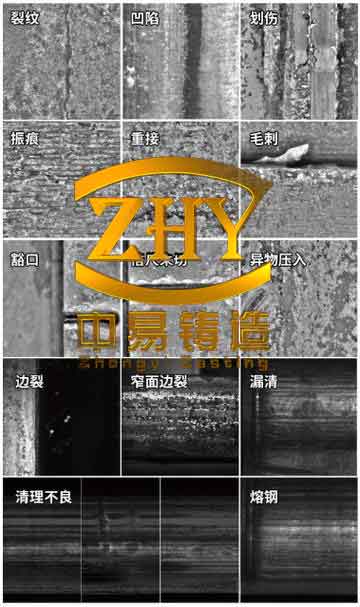
The root cause of these sand casting defects was identified through thermal analysis. In a bottom-gated system, the hottest metal enters at the bottom, creating an inverse temperature gradient that hinders directional solidification. The ribs directly opposite the ingate were continuously washed by high-temperature liquid metal, making them the last to solidify. Without a riser or feeding path in that region, the contraction during solidification could not be compensated, resulting in shrinkage porosity. This is a common mechanism behind many sand casting defects in both sand and metal molds. To quantify the feeding demand, I applied the classic Chvorinov’s rule to estimate the solidification time for different sections:
$$
t = C \left( \frac{V}{A} \right)^2
$$
where \(t\) is the solidification time, \(V\) is the volume, \(A\) is the surface area, and \(C\) is a mold constant. In our case, the ribs had a higher modulus than the surrounding walls, making them last to freeze. The original gating system provided no riser near these ribs, leading to the observed sand casting defects.
To eliminate these sand casting defects, I redesign the gating system by widening and raising the runner and introducing four vertical slots that directly feed the problematic ribs. These slots acted as feeder paths, supplying liquid metal to compensate for shrinkage during solidification. The modified design is summarized in the following table comparing the original and improved systems:
| Parameter | Original Design | Improved Design |
|---|---|---|
| Gating type | Bottom sprue, 2 ingates | Bottom sprue, 4 vertical slots |
| Runner dimensions | Standard width/height | Width increased by 40%, height by 30% |
| Feeder location | 2 top risers only | Vertical slots directly to rib areas |
| Defect rate (shrinkage) | >70% | 1.6% (first batch) |
| Overall casting yield improvement | — | 94% acceptance rate |
After implementing this change across three production runs totaling 15,000 parts, the shrinkage defect rate stabilized at 1.3%, demonstrating a dramatic reduction in sand casting defects. This case underscores that careful analysis of temperature distribution and feeding paths is essential to prevent sand casting defects like shrinkage.
Another critical area where sand casting defects frequently occur is in the production of ductile iron sprockets using metal molds. In one project, we replaced forged steel sprockets with austempered ductile iron (ADI) castings to reduce cost and weight. The challenge was to avoid shrinkage, cold shuts, and cracking – all common sand casting defects when using permanent molds. The process parameters were optimized using the following table:
| Parameter | Optimal Value | Reason |
|---|---|---|
| Mold preheat temperature | 300 °C | Reduce thermal shock and chill, avoid sand casting defects |
| Coating | Acetylene black | Control heat transfer, prevent sticking |
| Shakeout temperature | 800–950 °C | Minimize hot tearing and cracking |
| Quench process | 890±10 °C (60 min) + 360±10 °C (100 min) | Obtain bainitic structure for strength |
The solidification behavior can be expressed using the Niyama criterion for shrinkage porosity prediction:
$$
G \cdot R^{1/2} < 1 \quad \text{(potential for microshrinkage)}
$$
where \(G\) is the thermal gradient and \(R\) is the cooling rate. By controlling the preheat temperature and coating, we achieved a favorable gradient that minimized sand casting defects. The final ADI sprockets exhibited mechanical properties comparable to forged steel, with a casting yield of 85% and negligible machining allowance. This demonstrates that proper thermal management is as important in metal mold casting as in sand casting to avoid sand casting defects.
In the realm of sand casting, resin sand cores are widely used for complex internal cavities in hydraulic valve bodies. These components often suffer from sand casting defects such as core shift, sand inclusion, and dimensional inaccuracy. I encountered a typical problem with spool valve castings where the main bore had multiple oil grooves that needed precise alignment. The conventional method of extending core prints led to frequent core bending and groove tilting, resulting in sand casting defects that caused internal leakage and scrap. To overcome this, I designed a “frame-type” core print system that significantly increased the core’s strength and rigidity.
The frame-type core print integrates the core prints into a single robust structure. Two variants were developed: simple frame and assembled frame. The simple frame connects the left, bottom, and right prints into one piece, leaving the top area for a separate insert core. The assembled frame uses two interlocking cores to form the complete print. The following table summarizes the key design aspects:
| Design Type | Features | Advantages in Reducing Sand Casting Defects |
|---|---|---|
| Simple frame | Monolithic core with inserts | High bending resistance, reduced core drift |
| Assembled frame | Two cores (1# and 2#) interlocked | Accurate groove positioning, elimination of tilt |
The physics behind core stability can be modeled using beam deflection theory. For a sand core of length \(L\) subjected to buoyancy force \(F_b\), the maximum deflection \(\delta\) is:
$$
\delta = \frac{F_b L^3}{48 E I}
$$
where \(E\) is the elastic modulus of the sand and \(I\) is the moment of inertia. By increasing the cross-sectional area at the core prints (frame design), we increased \(I\) dramatically, reducing deflection and the consequent sand casting defects. In practice, the frame-type cores completely eliminated core shift defects in hydraulic valve castings, raising the first-pass yield from 75% to 96%.
Another source of sand casting defects in hydraulic components is related to sand inclusions and gas porosity. In one case, the use of a bottom gating system with inadequate filtration caused sand erosion and entrapment. By adding ceramic foam filters and optimizing the gating ratio, we reduced inclusion defects. The effective filtration area \(A_f\) was calculated using the formula:
$$
A_f = \frac{Q}{v_{max}}
$$
where \(Q\) is the metal flow rate and \(v_{max}\) is the maximum allowable velocity to avoid sand erosion (typically 0.5 m/s for iron). This simple adjustment cut sand inclusion defects by 80%, a significant reduction in sand casting defects.
It is also important to consider the role of melt treatment in preventing sand casting defects. For aluminum alloys like ZL116, proper degassing and modification are critical. I used argon degassing at 700–720 °C for 8–15 minutes, followed by strontium modification at 720–730 °C. The modification level was monitored using thermal analysis parameters:
$$
\Delta T = T_{nucleation} – T_{growth}
$$
A \(\Delta T\) of 3–5 °C indicated optimal modification, which refined the eutectic silicon and reduced the tendency for hot cracking – another form of sand casting defects.
In conclusion, my experience across multiple casting projects has taught me that sand casting defects are rarely caused by a single factor. They arise from complex interactions between mold design, gating system, thermal conditions, metal quality, and core design. By systematically analyzing these factors using engineering principles such as heat transfer, fluid flow, and solidification mechanics, we can develop effective solutions. The key is to always think in terms of directional solidification, adequate feeding, and controlled cooling. Whether in sand molds or metal molds, the fundamental approach remains the same. I hope that the case studies and formulas presented here serve as a practical guide for engineers striving to minimize sand casting defects and produce high-integrity castings.