
The relentless pressure on the foundry industry, characterized by volatile raw material costs and competitive pricing for finished components, compels a relentless focus on operational efficiency. In the realm of resin-bonded sand casting, one of the most potent levers for cost control and quality enhancement is the meticulous management of the Sand-to-Metal Ratio (SMR). This fundamental parameter, defined as the total mass of molding sand used per mold divided by the mass of the final casting, sits at the crossroads of economics, metallurgical quality, and process stability. For producers of large, heavy-section sand casting products, where resin costs constitute a significant portion of the total expense, mastering SMR reduction is not merely an option but a critical imperative for sustained competitiveness.
The core economic driver is straightforward: a lower SMR directly translates to less sand and, consequently, less expensive resin and catalyst required per ton of cast metal produced. This relationship can be powerfully expressed to quantify savings. Consider the annual production volume Q (in tons of castings), the unit cost of prepared resin sand C_s (e.g., USD/ton), and the change in SMR from an initial value R_1 to an improved value R_2. The annual cost saving S is given by:
$$ S = Q \times (R_1 – R_2) \times C_s $$
For instance, reducing the SMR from 6:1 to 5:1 for an annual output of 10,000 tons of sand casting products, with a sand cost of $300 per ton, yields a substantial saving of $3,000,000. This stark arithmetic underscores the financial significance of even marginal improvements.
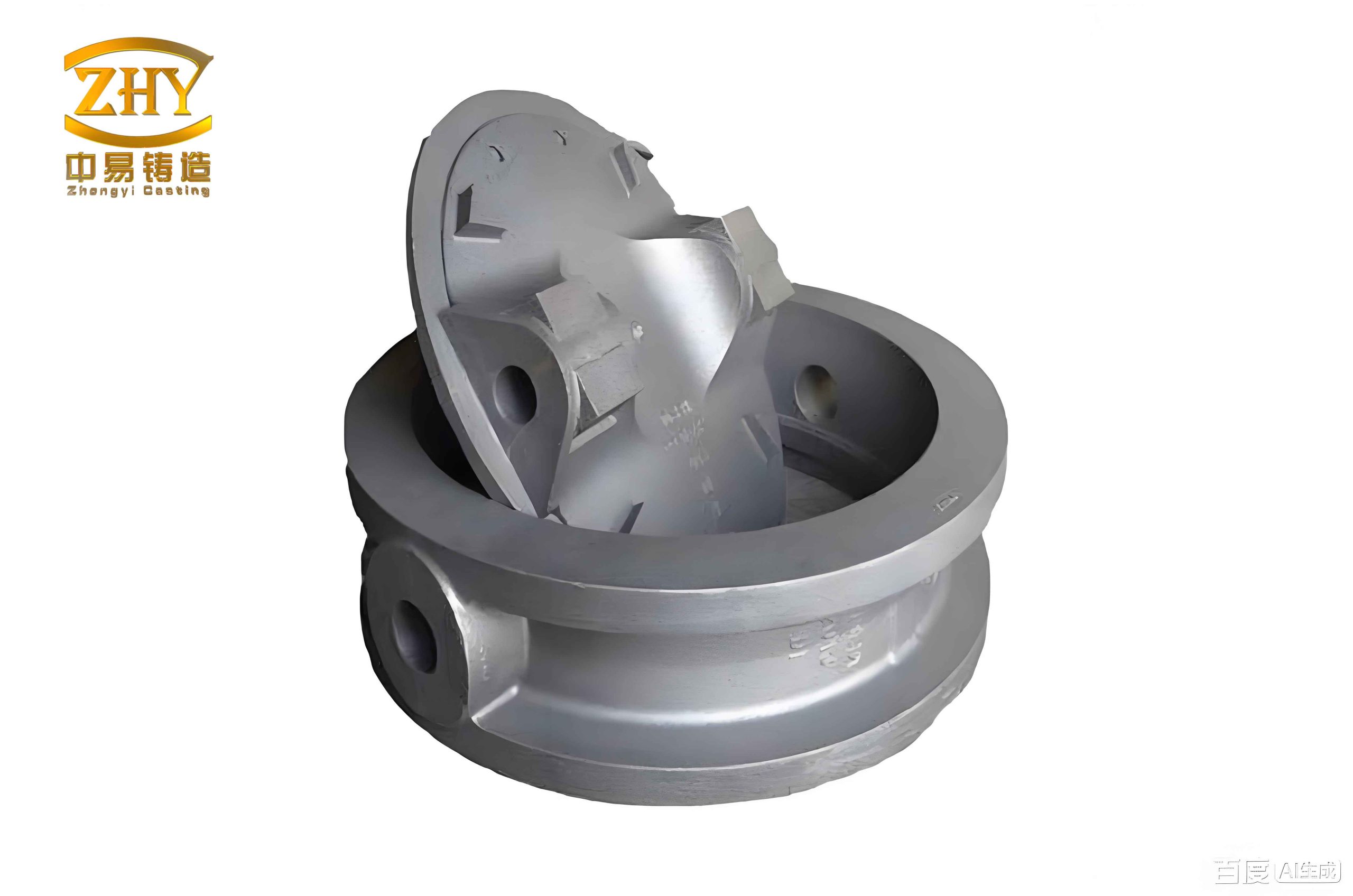
Beyond direct cost, the SMR profoundly influences the quality and behavior of the reclaimed sand system, which is the lifeblood of continuous production for sand casting products. The “Loss on Ignition” (LOI) of reclaimed sand, a measure of residual organic material from decomposed binders, is critically affected. A higher SMR often leads to a lower thermal load per unit of sand, resulting in incomplete combustion of resins during the casting pour and subsequent higher LOI in the reclaimed material. High LOI sand, when reused, generates excessive gases during the next pour, significantly increasing the risk of gas-related defects such as blows and pinholes in the sand casting products. Therefore, a deliberate reduction in SMR contributes to a cleaner sand system with lower LOI, enhancing the internal soundness and reliability of the castings.
However, the process is not without its challenges. A lower SMR means less sand mass is available to absorb and dissipate the immense heat from the molten metal. This leads to a direct increase in the average temperature of the returned and reclaimed sand. The thermal balance can be conceptualized by considering the heat input from the metal and the heat capacity of the sand. The final sand temperature T_f is influenced by the metal pouring temperature T_m, the weight of metal W_m, the specific heat of sand C_p,s, the SMR R, and the initial sand temperature T_i in a simplified form:
$$ T_f \approx T_i + \frac{k \cdot (T_m – T_i) \cdot W_m}{C_{p,s} \cdot R \cdot W_m} = T_i + \frac{k \cdot (T_m – T_i)}{C_{p,s} \cdot R} $$
Where k is a factor accounting for heat transfer efficiency. This inverse relationship clearly shows that as R (SMR) decreases, T_f increases. While beneficial for reducing energy consumption for sand heating in colder climates, elevated sand temperatures (consistently above 30-35°C) can severely compromise resin curing kinetics, leading to weak molds and poor bench life. Thus, successful SMR reduction for sand casting products must be accompanied by robust sand cooling systems to maintain the sand temperature within the optimal 20-30°C window for consistent mold quality.
| Parameter | Effect of High SMR | Effect of Low SMR | Optimal Management Goal |
|---|---|---|---|
| Resin/Catalyst Cost | Higher consumption, higher cost per ton of casting | Lower consumption, significant direct savings | Minimize within strength and safety limits |
| Reclaimed Sand LOI | Tends to be higher, increasing gas defect risk | Tends to be lower, improving casting soundness | Maintain below a critical threshold (e.g., 2.0-3.0%) |
| Reclaimed Sand Temperature | Lower, may require heating in winter | Higher, requires active cooling in most conditions | Maintain between 20°C and 30°C |
| Mold Rigidity & Safety | Generally higher, due to greater sand mass | Must be engineered via design; risk of insufficient strength | Ensure minimum required sand thickness (吃砂量) is met |
Systematic Management and Target Setting for Sand Casting Products
Effective SMR control transcends mere technical fixes; it requires an integrated management system grounded in data and accountability. The first step is to establish realistic, product-category-specific SMR targets based on historical design capability and process control. These targets provide a clear benchmark for both engineering and production teams. For example, a foundry might set the following goals for different families of sand casting products:
- Cylinders & Heavy-Wall Casings: SMR ≤ 4.0
- Valve Bodies & Irregular Casings: SMR ≤ 5.5
- Rotational Symmetry Parts: SMR ≤ 7.0
- Large Rings & Annular Structures: SMR ≤ 8.5
The second pillar is meticulous operational tracking. For every mold produced, the actual consumption of new sand, resin, catalyst, and reclaimed sand must be recorded and attributed to the specific sand casting product and work order. This enables the calculation of the actual achieved SMR for every single casting. This data is then compared against the process-designed SMR. The variance analysis becomes a powerful tool:
| Product ID | Product Type | Target SMR | Designed SMR | Actual SMR | Variance (Actual – Designed) | Primary Cause Analysis |
|---|---|---|---|---|---|---|
| CAST-101 | Large Cylinder | ≤4.0 | 3.8 | 4.2 | +0.4 | Over-filling of sand in blind pockets;工装 not fully utilized. |
| CAST-102 | Valve Body | ≤5.5 | 5.2 | 5.1 | -0.1 | Excellent use of filler blocks and工装. |
| CAST-103 | Large Ring | ≤8.5 | 8.0 | 9.5 | +1.5 | Core assembly design did not incorporate internal工装; conservative filling. |
Regular reviews of products with consistently high negative variances (actual SMR >> designed SMR) trigger focused improvement projects. These projects dissect the root causes, which typically fall into two categories: Design Shortcomings (e.g.,工装 not specified for a particular cavity) or Execution Gaps (e.g.,工装 available but not used correctly by the molding crew). Closing these gaps through standardized design rules and reinforced training is essential for continuous progress in optimizing sand usage for sand casting products.
Engineering Methodologies for SMR Reduction in Sand Casting Products
The strategic reduction of SMR hinges on intelligent engineering solutions that replace expendable resin sand with reusable, inert, or dry sand fillers, without compromising mold integrity or worker safety. All methods must adhere to non-negotiable foundational rules: maintaining minimum sand thickness (吃砂量) for metallostatic pressure resistance (e.g., ≥150mm for mold walls, ≥200mm for gating systems on large steel castings) and ensuring all auxiliary tooling is securely integrated into the mold structure to prevent displacement or collapse.
1. Dedicated Tooling Design for Product Families
The most effective approach categorizes sand casting products by geometry and develops standardized, modular tooling strategies for each family.
A. Cylinders & Valve Body Casings: These sand casting products often feature large, semi-enclosed volumes with one relatively flat side. The strategy involves constructing a single-side assembly that contours the casting. Modular tooling kits comprising ‘N-shaped’ and ‘L-shaped’ steel plates, assembled with threaded rods, are fastened to the internal walls of the molding flask. This creates a permanent, rigid boundary that drastically reduces the volume requiring resin sand. The tooling is designed for easy disassembly, cleaning, and reuse across multiple similar jobs.
B. Rings & Large Annular Structures: This family of sand casting products presents the greatest challenge and opportunity for SMR reduction. Characterized by enormous envelope dimensions but relatively low metal weight, traditional all-sand molds can yield SMR values of 15:1 or higher. The reduction strategy is two-pronged:
- Internal Cavity Fill: Large, reusable polygonal or cylindrical steel shells are placed inside the central bore or other major internal cavities of the ring.
- Peripheral Fill: Angled filler blocks or “隔角箱带” are assembled in the corners and outer periphery of the flask, between the ring’s outer wall and the flask wall.
This combination can often halve the SMR for such sand casting products.
| Product Family | Key Characteristics | Primary SMR Reduction Tooling | Tooling Key Features | Expected SMR Range |
|---|---|---|---|---|
| Cylinders / Heavy Casings | Large, semi-open volume, thick walls | Single-side contoured assembly (N & L plates) | Modular, bolted construction, flask-mounted | 3.5 – 4.5 |
| Valve Bodies / Pumps | Complex, irregular shape with multiple ports | Modular contoured assemblies & custom filler blocks | Adaptable to complex geometry, reusable components | 5.0 – 6.0 |
| Rotational Symmetry Parts | Round shapes, often complex cores | Peripheral angled filler blocks (隔角箱带) | Simple shapes, focus on external flask corners | 6.5 – 7.5 |
| Large Rings / Annuli | Very large OD, small wall thickness, low weight | Internal shells + peripheral angled blocks | Large reusable shells, systematic perimeter filling | 7.5 – 9.0 |
2. Foundry Floor Operational Techniques
Complementing engineered tooling, several hands-on techniques executed by skilled molders further drive down SMR for individual sand casting products.
A. Dry Sand Block Placement: This is the most common and flexible method. Hard, un-knocked-out sand blocks recovered from the shakeout process are strategically placed in areas of thick sand sections (e.g., deep pockets, behind large cores). They act as permanent, inert fillers. Critical rules apply: a minimum of 50mm of resin sand must be maintained between adjacent filler blocks and between blocks and the pattern/core surface to ensure proper bonding and strength.
B. Standardized Filler Modules: To bring order and predictability, foundries fabricate libraries of standardized, reinforced concrete or old-sand blocks in manageable sizes (e.g., 300mm x 300mm x 150mm). These modules are designed with embedded lifting hooks or connection points. They are systematically used to build up large filler volumes within cores or deep mold sections, always ensuring they are mechanically linked to the core grid or flask bars for stability.
C. Loose Dry Sand Filling (“流干砂子”): For extremely large, enclosed volumes with simple geometry, custom-built hollow containers or sealed sheet-metal forms are first positioned and secured. The void inside these forms is then simply filled with loose, unbonded dry sand. The container acts as the barrier, and the dry sand provides bulk support against metallostatic pressure at virtually no cost. This method is highly effective for the interior of massive cores in very large sand casting products.
The economic and qualitative impact of these combined strategies can be summarized by expanding our initial saving model to include quality benefits. Let D represent the annualized cost of defect scrap and rework attributed to gas-related problems, which is a function of LOI. Reducing SMR lowers LOI, thus reducing D. The total annual benefit B becomes:
$$ B = S + \Delta D = [Q \times (R_1 – R_2) \times C_s] + [Q \times f(LOI_1) – Q \times f(LOI_2)] $$
Where \( LOI_2 < LOI_1 \) due to the lower SMR \( R_2 \), and \( f(LOI) \) is a function modeling the cost impact of LOI. This holistic view captures the full value proposition.
Conclusion: An Integrated Technical and Cultural Approach
The journey to lower the Sand-to-Metal Ratio in the production of large sand casting products is a multifaceted endeavor that demands an integrated approach. Technically, it requires a deep understanding of the thermal and mechanical design of molds, leading to the development of smart, reusable tooling and standardized filling protocols tailored to product families. This must be coupled with vigilant process control, particularly of reclaimed sand temperature and quality, to avoid compromising the very mold integrity one seeks to preserve.
However, technology and procedure are only half the solution. A robust management system is the other critical pillar. This system hinges on clear, measurable targets for different categories of sand casting products, relentless daily tracking of actual material consumption against design, and a structured process for analyzing variances and driving corrective actions. Ultimately, success depends on fostering a culture where both engineers and floor personnel are aligned and incentivized to view every kilogram of resin sand saved as a direct contribution to the foundry’s profitability and the quality of its sand casting products. The reduction of SMR is therefore not just a technical exercise in optimization; it is a comprehensive strategy for sustainable and competitive manufacturing in the modern foundry landscape.