
In the design and construction of modern, complex vessels such as those featuring twin-screw, twin-rudder configurations, the integration of large, critical casting parts presents a significant engineering challenge. The rudder horn, a quintessential example of such a component, bears immense loads from the steering gear and must be seamlessly integrated into the ship’s hull structure. Traditional construction methodologies, where these casting parts are installed amidst a labyrinth of pre-existing small structural components, often lead to severe accessibility issues, compromised welding quality—especially for the demanding pre-heat requirements of cast steel—and consequently, diminished overall build precision and efficiency. This article details a first-person perspective on a comprehensive structural design optimization initiative that transitions from a piecemeal assembly to an integrated, “one-piece”吊装 (lift-out) strategy for sections containing the rudder horn casting parts.
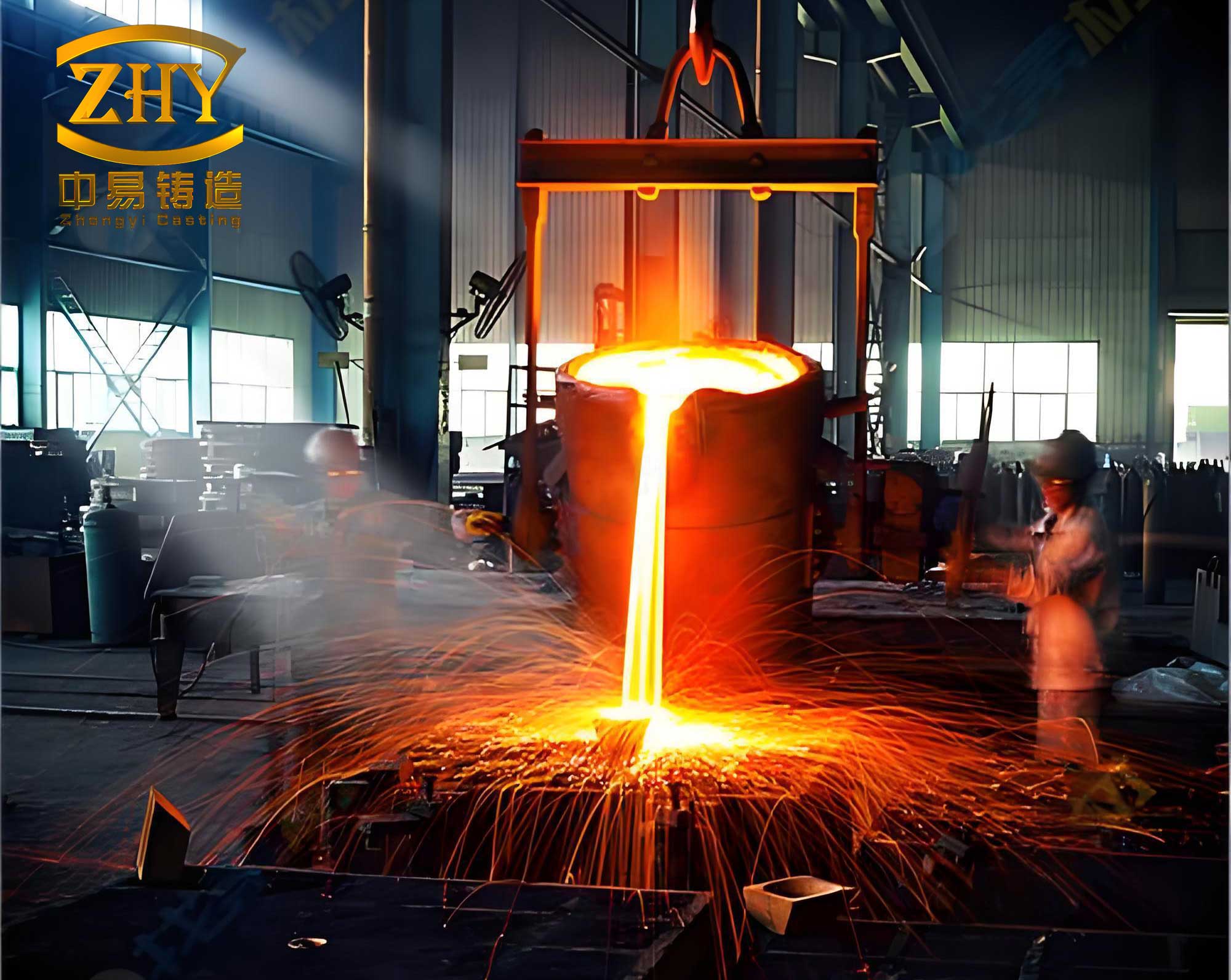
The impetus for this optimization stemmed directly from the practical difficulties encountered on the shop floor. The aft section of a twin-rudder vessel is notoriously congested. Attempting to weld a rudder horn casting part into position after the surrounding deck plates, brackets, and stiffeners were already in place created confined spaces where proper pre-heating was nearly impossible, and welding, particularly overhead welding, was extremely difficult and prone to defects. This not only threatened the integrity of the joint but also led to extensive rework, schedule delays, and challenges in maintaining the critical alignment of the rudder stock axis.
Technical Welding Requirements for Rudder Horn Casting Parts
The welding of ship-grade steel casting parts is governed by stringent technical specifications, primarily due to their complex metallurgy and tendency to form hard, crack-sensitive heat-affected zones (HAZ). The core requirement is mandatory pre-heating and inter-pass temperature control. The specific parameters are not arbitrary but are derived from the chemical composition of the casting parts, most critically the carbon equivalent (Ceq).
The carbon equivalent can be estimated using various formulas, with the International Institute of Welding (IIW) formula being widely adopted:
$$ Ceq = C + \frac{Mn}{6} + \frac{(Cr + Mo + V)}{5} + \frac{(Ni + Cu)}{15} $$
Where the element symbols represent their weight percentage in the casting. The required pre-heat temperature (Tp) correlates directly with the Ceq value and the thickness of the casting parts. For medium-carbon steel casting parts commonly used in rudder horns, a generalized guideline can be summarized:
| Casting Carbon Content / Ceq Range | Recommended Pre-heat & Inter-pass Temperature | Critical Considerations |
|---|---|---|
| C ≤ 0.44% / Low Ceq | 120°C – 200°C | Pre-heat minimizes risk of hydrogen-induced cold cracking. |
| C > 0.44% / Medium-High Ceq | ≥ 200°C | Essential to prevent martensite formation and reduce residual stresses. Soak time is critical. |
| High Thickness (>50mm) | Increase within range based on Ceq | Thermal gradient management becomes paramount. |
Furthermore, the welding consumables must be meticulously controlled. Electrodes must be properly baked according to manufacturer specifications to remove moisture (a source of hydrogen) and subsequently stored in heated holding ovens at temperatures typically between 80°C to 120°C until immediate use. The use of unbaked or inadequately stored electrodes is strictly prohibited for welding these critical casting parts. The weld procedure specification (WPS) for such joints invariably calls for full penetration welds, which subsequently require non-destructive testing (NDT) via ultrasonic testing (UT) to stringent quality levels.
The Philosophy of Integrated Design and Construction
The traditional construction sequence was the root cause of the problem. It followed a logical but inefficient path: build the shell block on the berth, install numerous small structural pieces, then attempt to integrate the large, temperature-sensitive casting parts into this finished “cage.” The optimized philosophy flips this sequence on its head. The core idea is to treat the rudder horn casting parts and all primary structural members directly connected to it as a single, monolithic sub-assembly unit. This unit is fabricated and welded under controlled, optimal conditions in a dedicated workshop area, before being integrated into the main hull block.
This paradigm shift offers profound advantages:
- Accessibility: The sub-assembly is built in the “flat” or “down-hand” position. All welds connecting the casting parts to adjacent plates and stiffeners are made in the most favorable welding positions, eliminating overhead welding.
- Pre-heat Efficacy: Applying localized pre-heat to a complex joint buried inside a completed structure is inefficient and often ineffective. On a standalone sub-assembly, the entire joint area can be uniformly and efficiently heated using flexible ceramic pad heaters or enclosures, guaranteeing compliance with the WPS.
- Quality Control: NDT (UT, MPI) can be performed immediately after welding and stress relief (if required) in an uncluttered environment, ensuring any required repairs are done simply before integration.
- Build Precision: The geometry of the sub-assembly—most importantly, the alignment of the rudder horn bore and mating faces—can be machined, set, and verified on a stable, rigid fabrication platens or a dedicated jig with far higher accuracy than is possible in a large, flexible hull block.
- Schedule Compression: By moving this complex, critical-path work package off the critical erection path and into a parallel workshop flow, overall ship construction time is reduced.
The Integrated Lifting-Out Construction Methodology
The implementation of this philosophy requires a meticulously planned construction methodology. The process for the aft block containing the rudder horn casting parts is executed in the following stages:
Stage 1: Shell Block Construction on Berth. The primary hull block, including the outer shell plating, longitudinal and transverse bulkheads, and decks, is constructed in the conventional upside-down (“back-up”) position. Crucially, the areas where the integrated casting parts assembly will later connect are left open. No small brackets, stiffener ends, or collar plates are installed in these zones. This creates a large, clear “window” for the later insertion of the pre-fabricated unit.
Stage 2: Fabrication of the Integrated Casting Assembly. Concurrently, in a steel workshop, the integrated unit is fabricated. This unit, designated as a major component (e.g., <GDB>), comprises:
- The rudder horn casting parts themselves.
- The contiguous deck plate section.
- All primary vertical and horizontal stiffeners (often of substantial scantling) that radiate from the casting parts.
- Connection brackets and any internal diaphragms.
All welding between the casting parts and the adjoining steel plates within this unit is completed at this stage. Full penetration welds are made using pre-heat in the down-hand position. The assembly is then stress-relieved if specified, and all NDT is completed and certified.
Stage 3: Block Turnover and Preparation. The main hull block is turned to its upright position and set on supporting blocks. The mating edges around the prepared opening are carefully measured and marked to ensure a fit-up with the integrated unit. Strong-backs and alignment aids are welded around the opening to facilitate the upcoming lift-in.
Stage 4: Integrated Unit Lift-In and Final Integration. The pre-fabricated <GDB> assembly, now a single, heavy-lift item, is transported to the block and carefully lowered into the prepared opening. Its positioning is critical and is controlled using a combination of laser trackers/theodolites and physical templates to ensure:
- Verticality and centerline alignment of the rudder horn bore.
- Correct elevation of the deck plate.
- Proper gap for welding at all connecting perimeters.
Once positioned and temporarily secured, the final closure welds are made. These are typically the butt welds connecting the unit’s deck plate to the surrounding block deck plate, and the seam welds connecting the unit’s side plates to the block’s shell or internal structure. While these welds may still require controlled heating, they are primarily on flat, accessible surfaces, simplifying the process immensely.
Detailed Design Optimization for Integration
Enabling this methodology required significant upfront design optimization. The changes permeated the structural drawings and 3D model.
1. Component Re-definition and Nesting. The most fundamental change was redefining the “part” in the Bill of Material (BOM). Instead of the rudder horn being a single item for erection, it became the nucleus of a larger assembly. All structural members whose primary connection was to the casting parts were logically grouped into this new assembly. The rule of thumb was: “If welding to the casting requires pre-heat, include it in the integrated unit.” This was a deliberate decision to consolidate thermal cycles.
2. Weld Preparation (Edge Preparation) Optimization. Traditional designs often placed the weld bevel for a full-penetration connection between a deck and a vertical casting parts flange on the top (deck) side. This would necessitate overhead welding or back-gouging from underneath after the block turnover. The optimization involved flipping the bevel. The bevel was instead placed on the underside of the deck plate or on the edge of the casting parts itself, ensuring that when the integrated unit was assembled in the workshop in the flat position, all critical welds were in the down-hand (1G/1F) position. The mathematical consideration for bevel angle (θ) and root gap (g) follows standard weld strength geometry, but the driving factor was accessibility. The target was to satisfy the throat thickness requirement (a) for the required load, where for a single-V bevel:
$$ a = (t – g) \cdot \sin(\theta/2) $$
and ensuring θ and g were chosen for optimal down-hand welding and ultrasonic testing.
3. Plate Seam and Stiffener Run Re-design. Plate seams (butt weld lines) were strategically re-routed. Instead of having a plate seam run close to and parallel with the casting parts, creating a narrow strip that was difficult to weld, the seam was moved away. The goal was to encapsulate the entire connection zone within a single, larger plate that was part of the integrated unit. This eliminated in-situ welds adjacent to the casting parts. Similarly, stiffener runs were extended or terminated such that their connections to the casting parts were made within the unit, not as a later add-on in the block.
4. Dimensional Management and Accuracy Control. To achieve a “no-trim” or “minimal-trim” lift-in, the fabrication accuracy of both the main block and the integrated unit had to be elevated. This was managed through:
- Predictive Shrinkage Allowances: Applying calculated allowances (ΔL) based on weld volume and heat input for long seams in the integrated unit.
$$ \Delta L = k \cdot \frac{V_w \cdot Q}{A \cdot \rho \cdot c_p} $$
Where \(V_w\) is weld volume, \(Q\) is heat input per unit volume, \(A\) is cross-sectional area, and \(k\) is an empirical coefficient based on material and restraint. - Master Jig Fabrication: Building the integrated unit on a digitally leveled, rigid jig that mirrors the theoretical hull form at that location, ensuring its final shape matches the design intent before any welding distortion occurs.
| Aspect | Traditional Piecemeal Method | Optimized Integrated Lift-Out Method |
|---|---|---|
| Workspace for Casting Welds | Confined, within near-complete structure. | Open, optimal down-hand position in workshop. |
| Pre-heat Application | Difficult, inefficient, often inadequate for deep sections of casting parts. | Uniform, controlled, and fully compliant with WPS for all casting parts connections. |
| Welding Position | Mix of down-hand, vertical, and overhead (poor quality risk). | Predominantly down-hand (high quality, high deposition rate). |
| NDT Access & Timing | Limited access; repairs difficult. | Full access; repairs easy prior to integration. |
| Geometric Accuracy Control | Relies on in-situ adjustment; subject to cumulative block tolerance. | Established on stable jig; accuracy locked in before integration. |
| Construction Critical Path | Casting parts erection and welding is on the critical path. | Parallel off-critical-path fabrication; only final closure welds are on critical path. |
| Overall Build Risk | High (quality, rework, schedule). | Significantly Reduced. |
Lifting, Alignment, and Final Verification
The success of the entire operation hinges on the precision of the final integration. The lifting and positioning of the multi-tonne integrated unit containing the casting parts is a carefully choreographed operation. It requires:
1. Rigging and Lifting Analysis: A dedicated lifting plan is created, calculating the center of gravity (CoG) of the irregularly shaped unit and selecting appropriate lifting points to minimize deformation during the hoist. The analysis ensures sling angles (α) keep loads within safe working limits for each sling (Fsling):
$$ F_{sling} = \frac{W}{n \cdot \cos(\alpha)} $$
where \(W\) is the unit weight and \(n\) is the number of slings.
2. Metrology-Driven Alignment: Laser tracking systems are used to guide the unit into its final position. Targets are attached to both the unit and the receiving block. Real-time 3D coordinate feedback allows crane operators and surveyors to position the unit within a tight tolerance envelope (typically ±2mm on critical bore alignment and ±3mm on plate edges). This replaces the traditional method of using plumb bobs and physical measurements, which are slower and less accurate for such a heavy component.
3. Welding Sequence and Distortion Control for Closure Welds: Even the final closure welds are sequenced using a pre-defined pattern to minimize distortion of the now-aligned unit. A balanced, staggered welding sequence is employed, often starting from the most rigid points and working outwards. Interpass temperature for these carbon steel closure welds is still monitored, though the requirement may be less stringent than for the casting parts welds themselves.
4. Final Verification: After completion of all welding and NDT of the closure welds, a final comprehensive survey is conducted. This includes verifying the final alignment of the rudder horn bore using optical tooling, checking deck camber and levelness across the integrated joint, and ensuring all dimensional tolerances for subsequent machinery installation (e.g., steering gear seating) are met.
Conclusion and Broader Implications
The structural design optimization for ship sections integrating rudder horn casting parts, shifting from an in-situ piecemeal approach to a pre-fabricated integrated lift-out methodology, has proven to be a transformative improvement. It directly addresses the core challenges of quality, safety, precision, and efficiency associated with welding large, high-specification casting parts into complex hull structures.
The key enablers of this success are the upfront design changes: redefining assembly boundaries, optimizing weld preparations for workshop fabrication, and re-routing structural seams. This creates a manufacturable, testable, high-integrity sub-assembly. The method effectively “opens up” confined spaces, consolidates scattered components, and allows critical work to be performed under ideal conditions. The result is a guaranteed enhancement in weld quality for the casting parts connections, a significant reduction in labor hours spent in difficult positions, a compression of the shipbuilding schedule through parallelization, and a marked improvement in achievable construction accuracy.
This philosophy is not limited to rudder horn casting parts. It is directly applicable to other large, critical cast or forged steel integrations in shipbuilding, such as stem frames, sternframes, shaft brackets, and large foundation seats for main engines or thrusters. It represents a move towards a more modular, “manufacturing-style” approach in shipbuilding, where complexity is managed and quality is built in at the sub-assembly stage, leading to more predictable, efficient, and higher-quality final vessel construction. The integration of advanced metrology and digital twin technology for alignment further enhances the robustness of this methodology, paving the way for its adoption as a best practice for integrating critical casting parts in future ship designs.