
In the field of modern manufacturing, nodular cast iron, also known as ductile iron, has emerged as a critical material due to its exceptional combination of mechanical properties, cost-effectiveness, and versatility. The unique spherical graphite morphology in nodular cast iron significantly reduces the stress concentration and notch effects compared to flake graphite in gray iron, leading to superior tensile strength, elongation, and impact resistance. This makes nodular cast iron ideal for demanding applications such as engine components, hydraulic parts, and large structural castings. Among various grades, QT400-15 nodular cast iron stands out for its high strength and excellent ductility, with a tensile strength exceeding 400 MPa and an elongation over 15%, making it particularly suitable for engine cylinder liners where both durability and machinability are paramount. However, producing thick-section nodular cast iron castings, like cylinder liners with walls up to 90 mm, poses significant challenges, including graphitization issues, segregation of elements, and degradation of graphite spheroidization during prolonged solidification. In this study, we delve into the comprehensive investigation of the microstructure and casting process for QT400-15 nodular cast iron, focusing on chemical composition design, spheroidization and inoculation treatments, and the resulting mechanical properties. Our aim is to develop a robust manufacturing protocol that ensures consistent quality and performance in large, thick-walled nodular cast iron castings.
The foundation of producing high-quality nodular cast iron lies in precise chemical composition control. The elements present in nodular cast iron can be categorized into basic elements, interfering elements, and spheroidizing elements, each playing a pivotal role in determining the final microstructure and properties. For QT400-15 nodular cast iron, we meticulously designed the composition to balance graphitization, spheroidization, and mechanical performance. Below, we summarize the key elements and their effects in a tabular format to provide a clear overview.
| Element | Typical Range (wt%) | Function and Influence |
|---|---|---|
| Carbon (C) | 3.8–4.1 | Promotes graphitization and fluidity; high carbon equivalent near eutectic point reduces shrinkage and white iron tendency, but excessive carbon can cause graphite floating in thick sections. |
| Silicon (Si) | 2.2–2.6 | Strong graphitizer that increases ferrite content; solid solution strengthening effect; above 4.5%, it leads to brittle behavior and irregular graphite. |
| Manganese (Mn) | <0.3 (preferably <0.2) | Enhances strength but promotes pearlite formation and segregation at grain boundaries; low levels are crucial for high ductility in nodular cast iron. |
| Phosphorus (P) | <0.05 | Harmful element that forms phosphide eutectics at grain boundaries, embrittling the matrix; must be minimized. |
| Sulfur (S) | 0.015–0.02 | Initially harmful but essential for graphite nucleation during spheroidization; controlled levels aid in spheroidizing agent efficiency. |
In addition to these basic elements, interfering elements can adversely affect the spheroidization process and graphite morphology in nodular cast iron. These include anti-spheroidizing elements like Bi, Ti, As, Sn, Pb, Al, and Sb, which promote flake or vermicular graphite, and carbide-forming elements such as Cr, V, Mo, Ti, and B, which lead to hard phases and segregation. To quantify their impact, we employed the anti-spheroidization factor K1, as proposed by Thielemann, which is calculated using the following formula:
$$K1 = 4.4(\%Ti) + 2.0(\%As) + 2.3(\%Sn) + 5.0(\%Sb) + 290(\%Pb) + 370(\%Bi) + 1.6(\%Al)$$
For optimal spheroidization in nodular cast iron, K1 should be maintained around 1 ± 0.0625, ensuring over 85% spherical graphite. In our composition design for QT400-15 nodular cast iron, we achieved K1 values ranging from 1.0098 to 1.0164, well within the desired range. Furthermore, to assess the tendency for pearlite and carbide formation, we used the pearlite influence factor Px, expressed as:
$$Px = 3.0(\%Mn) – 2.65(\%Si – 2.0) + 7.75(\%Cu) + 90(\%Sn) + 357(\%Pb) + 333(\%Bi) + 20.1(\%As) + 9.60(\%Cr) + 71.7(\%Sb)$$
A Px value below 2 indicates minimal pearlite formation, contributing to a fully ferritic matrix in nodular cast iron. Our calculated Px ranged from 0.94 to 1.70, confirming low pearlite propensity. The spheroidizing elements, primarily magnesium (Mg) and rare earth (RE), are introduced via spheroidizing agents. Mg is essential for graphite spheroidization in nodular cast iron, with residual Mg typically controlled at 0.03–0.065%, while RE elements like cerium and lanthanum neutralize harmful impurities and enhance nodularization. We selected a low-RE spheroidizing agent, Lamet 6124, with composition detailed in Table 2, to balance effectiveness and cost in producing nodular cast iron.
| Element | Content (wt%) |
|---|---|
| Mg | 6.11 |
| Ce | 1.46 |
| La | 0.79 |
| Si | 48.73 |
| Ca | 2.64 |
| Ba | 0.15 |
| Al | 0.39 |
| Fe | 40.36 |
| Others | Balance |
The melting and treatment processes are critical steps in manufacturing nodular cast iron. We used high-purity pig iron and low-alloy steel scraps as raw materials to minimize impurities like Mn, P, and S, which are detrimental to nodular cast iron quality. Melting was conducted in a medium-frequency induction furnace to ensure rapid heating and reduce oxidation. For spheroidization of the nodular cast iron, we adopted the widely used sandwich method (also known as the pour-over or冲入法), where the spheroidizing agent is placed in a pocket at the bottom of the ladle and covered with steel scrap. The agent addition was 1.0–1.1% of the melt weight, with a grain size of 3–20 mm to optimize dissolution and reaction. The treatment temperature was maintained at 1,500–1,520°C to facilitate Mg vaporization and absorption, crucial for effective spheroidization in nodular cast iron. After spheroidization, slag was thoroughly removed to prevent reversion reactions, and pouring was completed within 5 minutes to avoid衰退. The centrifugal casting method was employed for the cylinder liner production, with a mold rotation speed of 1,500–1,600 rpm to ensure uniform filling and density in the thick-walled nodular cast iron casting.
Inoculation is equally vital in nodular cast iron production to counteract white iron tendency, refine graphite spheres, and enhance mechanical properties. We implemented a composite inoculation strategy involving two stages: ladle inoculation and stream inoculation. For ladle inoculation, a CaBaSi-based inoculant (0.5–1.1% addition, grain size 1–3 mm) was used to provide initial nucleation sites and deoxidize the melt. This step promotes the formation of CaC2 compounds that act as substrates for graphite precipitation in nodular cast iron. Subsequently, for stream inoculation during pouring, a sulfur-oxygen inoculant (0.05–0.1% addition, grain size 0.2–0.7 mm) was applied to further increase graphite nucleus count and refine the microstructure. The composition of this inoculant is summarized in Table 3. This dual approach ensures a high graphite nodule count and spherical perfection in the final nodular cast iron.
| Element | Content (wt%) |
|---|---|
| Si | 72.1 |
| Al | 0.94 |
| Ca | 0.92 |
| S | 0.4 |
| O | 0.9 |
| Bi | 1.0 |
| Others | Balance |
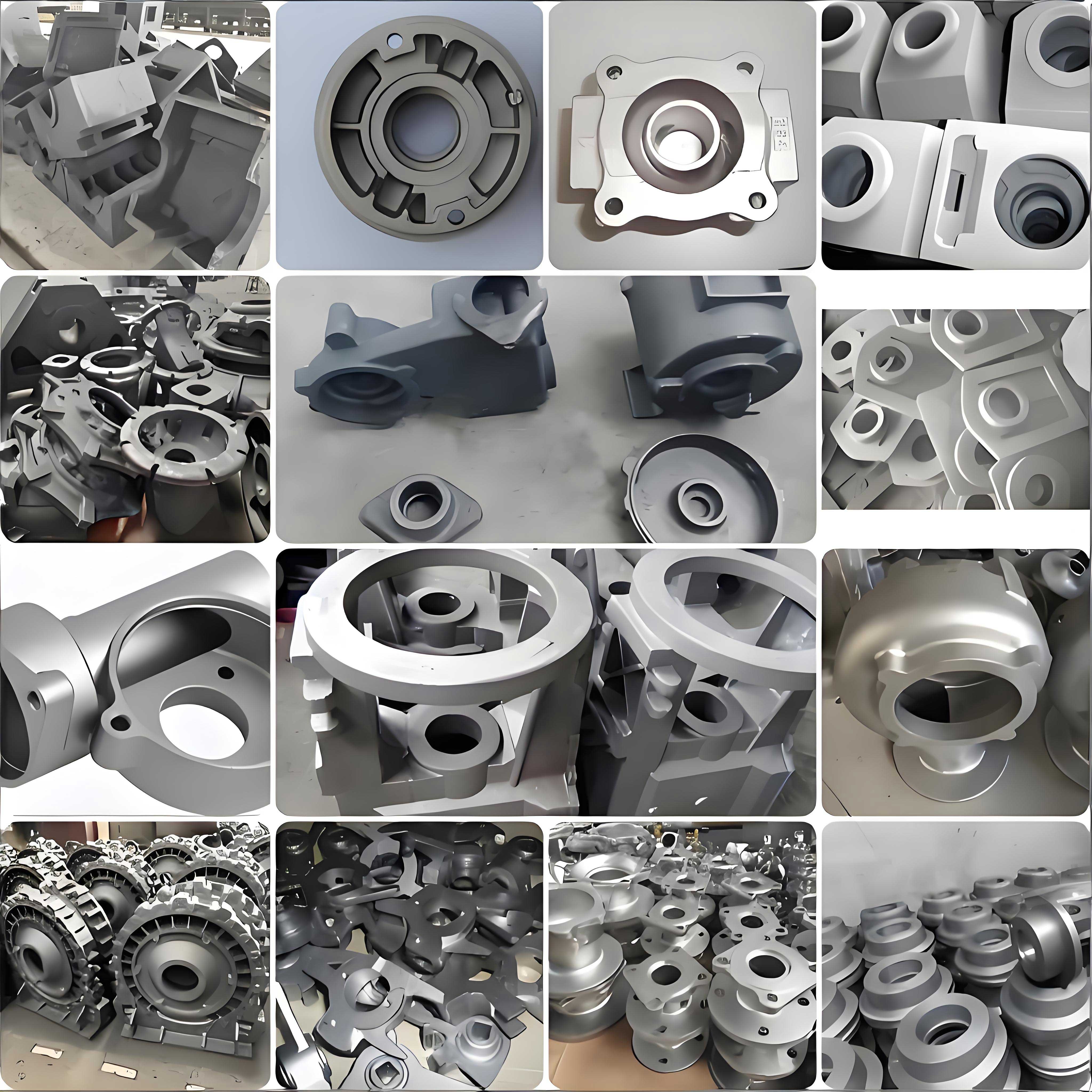
To visualize the typical casting process for nodular cast iron components like cylinder liners, we include an image below that illustrates the centrifugal casting setup and the resultant casting. This provides context for the manufacturing environment discussed in this study on nodular cast iron.
Following the casting process, we conducted extensive microstructural analysis on the QT400-15 nodular cast iron cylinder liner. Samples were extracted from three distinct regions: near the outer surface, the middle section, and near the inner surface. Metallographic examination revealed that the graphite spheroidization was excellent across all regions, with spheroidization grades of 1–2 and graphite sizes of approximately 6 according to standard classifications for nodular cast iron. The matrix consisted predominantly of ferrite (>90%), contributing to the high ductility of the nodular cast iron. However, in the middle section, corresponding to the last solidification zone in thick-walled nodular cast iron, minor irregularities were observed, including some fragmented graphite and localized pearlite areas. This is attributed to the longer solidification time in thick sections, leading to inoculation衰退 and segregation of anti-spheroidizing elements. Scanning electron microscopy (SEM) further confirmed the presence of small amounts of cementite (Fe3C) and pearlite in these regions, with pearlite lamellar spacing around 0.5 μm. The formation of these phases aligns with the calculated Px values, which indicate a low but not negligible tendency for pearlite in nodular cast iron under these conditions. Despite these localized variations, the overall microstructure of the nodular cast iron remained consistent with the requirements for QT400-15.
The mechanical properties of the nodular cast iron were evaluated through tensile tests and hardness measurements at the same sample locations. The results, compiled in Table 4, demonstrate that the nodular cast iron meets the QT400-15 specifications, with tensile strengths above 400 MPa and elongations exceeding 15%. The hardness values, ranging from 138 to 152 HB, reflect the soft ferritic matrix, which is advantageous for machinability. Notably, the middle section showed slightly lower elongation due to the presence of pearlite and irregular graphite, but it still fulfilled the minimum criteria. This underscores the effectiveness of our process control in producing high-integrity nodular cast iron even for challenging thick-section castings.
| Sampling Location | Graphite Size Grade | Spheroidization Grade | Tensile Strength (MPa) | Elongation (%) | Hardness (HB) | Ferrite Volume Fraction (%) |
|---|---|---|---|---|---|---|
| Near Outer Surface | 6 | 1–2 | 420 | 17 | 152 | >95 |
| Middle Section | 6 | 2 | 410 | 15 | 138 | >90 |
| Near Inner Surface | 6 | 2 | 430 | 15 | 147 | >90 |
The successful production of QT400-15 nodular cast iron for engine cylinder liners hinges on the interplay of multiple factors. From a chemical perspective, maintaining low levels of interfering elements and optimizing the carbon equivalent are essential for achieving spherical graphite in nodular cast iron. The spheroidization process, facilitated by Mg and RE, must be carefully managed to avoid excess residues that could promote carbides or pearlite. Inoculation plays a complementary role by enhancing nucleation and refining the graphite structure in nodular cast iron. Our use of composite inoculation with CaBaSi and sulfur-oxygen inoculants proved effective in increasing graphite nodule count and improving spheroidization quality. Furthermore, the centrifugal casting technique aided in achieving a dense and uniform microstructure in the nodular cast iron, minimizing defects like shrinkage porosity. For future improvements, short-term heat treatments could be explored to eliminate the minor pearlite areas in thick sections, thereby maximizing the ferritic content and ductility of nodular cast iron. Additionally, advanced simulation tools could be integrated to model solidification patterns and optimize process parameters for nodular cast iron production.
In conclusion, this study demonstrates a systematic approach to manufacturing high-quality QT400-15 nodular cast iron for thick-walled engine cylinder liners. Through precise chemical composition design, with anti-spheroidization factor K1 controlled near 1 and pearlite influence factor Px kept below 2, we ensured favorable conditions for graphite spheroidization in nodular cast iron. The selection of a low-RE spheroidizing agent, coupled with a composite inoculation strategy involving ladle and stream treatments, resulted in a refined microstructure with spherical graphite grades of 1–2 and sizes of 6. Mechanical testing confirmed that the nodular cast iron exhibits tensile strengths over 400 MPa and elongations above 15%, meeting the stringent requirements for engine applications. Although minor irregularities like pearlite and fragmented graphite were observed in the last solidification zones of the thick-section nodular cast iron, they were within acceptable limits and could be further mitigated through heat treatment. This research underscores the importance of integrated process control in advancing the performance and reliability of nodular cast iron components in the automotive and machinery industries.