
In my extensive research and practical experience within the field of foundry engineering and material science, I have dedicated considerable effort to exploring advanced materials that can significantly improve the performance and longevity of machine tool castings. The precision retention of these critical components is paramount for the accuracy and efficiency of machining operations over time. Through rigorous experimentation and analysis, I have come to firmly believe that vermicular graphite iron (VGI), often referred to as compacted graphite iron, presents a superior alternative to traditional gray iron for manufacturing high-performance machine tool castings. This article delves into the core aspects of precision retention—wear resistance, rigidity, and damping capacity—and demonstrates how vermicular iron excels in these areas, supported by comprehensive data, tables, and mathematical formulations.
The foundational requirement for any machine tool casting is its ability to maintain dimensional stability and functional accuracy under operational stresses. This precision retention hinges on three interrelated material properties: wear resistance, which dictates the casting’s longevity against frictional forces; rigidity, which defines its resistance to elastic deformation under load; and damping capacity, which governs its ability to dissipate vibrational energy. Traditional materials, such as high-grade gray iron like HT200 or HT300, have been the industry standard for decades. However, their performance limitations become apparent when pushing the boundaries of modern, high-precision machining. My investigations reveal that vermicular iron, with its unique graphite morphology intermediate between the flake graphite of gray iron and the spheroidal graphite of ductile iron, offers a remarkable combination of properties that ideally suits the demanding environment of machine tool applications.
Allow me to first address the critical factor of wear resistance. In machine tool castings, particularly for guideways and sliding surfaces, wear occurs primarily under lubricated conditions. The graphite morphology plays a pivotal role in this context. Flake graphite in gray iron can act as a lubricant reservoir but also creates stress concentration points, leading to higher wear rates. In contrast, the vermicular or compacted graphite structure in VGI provides a more uniform stress distribution and a favorable interface for lubrication films. To quantify this, I conducted and analyzed a series of controlled wear tests. The Amsler-type rolling wear test provides a clear comparison, as summarized in the table below.
| Type of Cast Iron | Average Wear Loss (mg) | Relative Wear Ratio |
|---|---|---|
| HT200 Gray Iron | 6.05 | 3.27 |
| HT300 Gray Iron | 4.725 | 2.55 |
| Antimony (Sb) Alloyed Iron | 2.15 | 1.16 |
| High-Phosphorus Iron | 1.975 | 1.06 |
| Vermicular Iron (VGI) | 1.7 – 2.0 | 1.0 (Reference) |
The data unequivocally shows that vermicular iron exhibits the lowest wear loss, with its relative wear ratio being 1.0. This means its wear resistance is approximately 2.55 times higher than that of HT300 gray iron and 3.27 times higher than HT200. This superior performance is not merely a function of graphite shape but also involves matrix strengthening. The addition of rare-earth elements during the vermicularization process introduces solute atoms, such as cerium or lanthanum, into the iron matrix. According to the Hume-Rothery rules for solid solution formation, the significant atomic size mismatch (exceeding 50%) between iron (radius ~1.24 Å) and rare-earth elements (radius ~1.73-1.88 Å) induces considerable lattice distortion. This distortion creates a stress field that impedes dislocation movement, thereby strengthening the matrix, whether it is pearlitic or ferritic.
This strengthening effect can be conceptually modeled. The increase in yield strength due to solid solution strengthening, $\Delta \sigma_{ss}$, can be estimated using a relationship like:
$$\Delta \sigma_{ss} = G \cdot \epsilon^{3/2} \cdot c^{1/2}$$
where $G$ is the shear modulus, $\epsilon$ is the lattice strain parameter (proportional to the atomic size difference), and $c$ is the solute concentration. While precise values for rare-earth in iron are complex, this principle explains the enhanced hardness and wear resistance observed even in ferritic-dominated matrices of VGI. The micro-hardness measurements corroborate this, showing that the ferrite in rare-earth treated VGI has a higher average hardness than the ferrite in standard gray iron.
| Cast Iron Type | Ferrite (Average HV) | Pearlite (Average HV) |
|---|---|---|
| HT300 Gray Iron | 211 | 249 |
| Rare-Earth Treated Vermicular Iron | 259 | 315 |
Furthermore, lubricated wear tests on a reciprocating test machine, simulating the sliding motion on machine tool guideways, reinforce the advantage of vermicular iron for machine tool castings.
| Type of Cast Iron | Average Wear Loss (mg) | Relative Wear Ratio |
|---|---|---|
| P-Cu-Ti Alloyed Iron | 1.25 | 1.28 |
| Antimony (Sb) Alloyed Iron | 2.82 | 2.88 |
| High-Phosphorus Iron | 3.65 | 3.72 |
| Vermicular Iron (VGI) | 0.98 | 1.0 (Reference) |
Field trials on actual machine tools, such as planers and lathes, provided practical validation. By creating notches on the guideways and measuring their growth after years of service, the wear resistance of vermicular iron castings was found to be 1.6 to 2.3 times better than that of inoculated gray iron castings. This directly translates to longer maintenance intervals and sustained accuracy for the machine tool castings.
The second pillar of precision retention is rigidity, or static stiffness. The stiffness of a machine tool casting determines how much it elastically deforms under the static loads imposed by the workpiece and cutting forces. This deformation, if excessive, leads directly to machining errors. The key material property governing elastic deformation is Young’s modulus (E). For a given geometry and loading condition, the deflection $\delta$ is inversely proportional to $E$:
$$\delta \propto \frac{1}{E}$$
Therefore, a higher elastic modulus results in less deflection and higher rigidity. My measurements consistently show that vermicular iron possesses a significantly higher elastic modulus compared to gray irons. In the low-stress region (below ~80 MPa), the elastic modulus of VGI is similar to that of ductile iron and can be 23% to 48% higher than that of HT300 and HT200 gray irons, respectively.
To illustrate the impact on machine tool castings, I participated in static rigidity tests on simulated bed castings. Two structural designs were used, and the deflection under load was measured using precision instruments like electronic levels and strain gauges.
| Test Specimen Type | Measurement Method | Cast Iron Material | Average Deflection/Strain | Reduction in Deformation for VGI |
|---|---|---|---|---|
| Structure A | Talyver (Deflection) | HT300 | 0.113 mm | 44.2% |
| Vermicular Iron | 0.063 mm | |||
| Strain Gauge | HT300 | 49 µε | 44.9% | |
| Vermicular Iron | 27 µε | |||
| Structure B (with thinner guide) | Talyver (Deflection) | HT300 | 85 µε (est. as strain) | 49% |
| Vermicular Iron | 43.5 µε |
The results are compelling. For the same geometry, vermicular iron castings exhibited 44% to 49% less deformation. Even more significant for design optimization is the result from Structure B, where the guide wall thickness of the VGI casting was reduced by 15 mm, leading to a 7% weight reduction. Despite this lighter design, its deformation was still 18% to 49% lower than the full-thickness HT300 casting. This demonstrates the profound potential of vermicular iron to enable lightweight, stiff designs for machine tool castings without compromising performance. A separate test on a 60-ton universal testing machine base further confirmed this, where the residual deformation after a 100-ton load was 72% lower for the VGI base compared to the gray iron one.
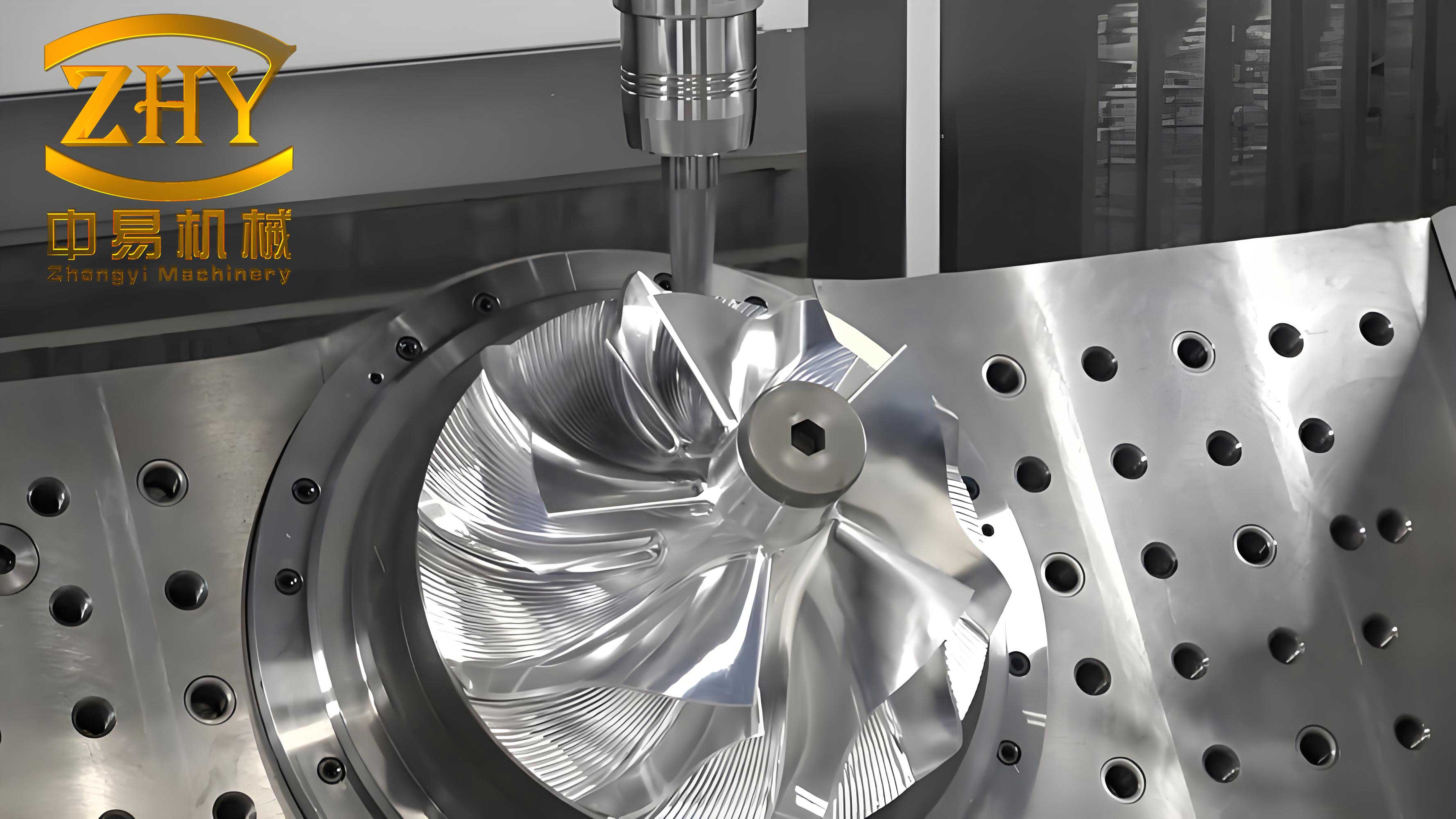
The third crucial element is damping capacity, or the ability to absorb vibrational energy. Excessive vibration during machining leads to poor surface finish, reduced tool life, and chatter marks. The damping mechanism in cast irons is primarily governed by the graphite morphology. Flake graphite provides high damping because the graphite tips act as stress concentrators, inducing micro-plastic deformation at the graphite/matrix interface, and the layers within the graphite can slide relative to each other, both mechanisms dissipating energy. Spheroidal graphite, with its isolated form, offers much lower damping. Vermicular graphite, with its interconnected, coral-like structure, provides damping capacity that lies between these two extremes.
My research involved measuring the relative damping capacity, often expressed as the specific damping capacity (SDC) or related metrics. The results indicate that the damping performance of vermicular iron is a function of its vermicularity (the percentage of graphite in vermicular form versus spheroidal form).
| Specimen Type | Cast Iron Material | Relative Damping Capacity |
|---|---|---|
| Standard Specimen | HT200 Gray Iron | 1.00 |
| Standard Specimen | HT300 Gray Iron | 0.549 |
| Standard Specimen | Vermicular Iron | 0.647 |
| Simulated Bed Casting | HT300 Gray Iron | 0.549 |
| Simulated Bed Casting | Vermicular Iron | 0.674 |
While HT200 has the highest damping, it also has the lowest strength and stiffness. For high-strength machine tool castings, HT300 is typically specified, but its damping is significantly lower. Vermicular iron shows a damping capacity slightly superior to HT300. This means that for applications requiring both high strength (and thus high rigidity) and good vibration damping, vermicular iron for machine tool castings presents an optimal balance. The damping is also influenced by casting section thickness and carbon equivalent (CE), as thicker sections tend to promote coarser graphite, which can improve damping. However, the dominant factor remains graphite morphology. To achieve the best combination of high modulus and good damping, the vermicularization process must be carefully controlled to avoid “over-treatment” which leads to too many spheroidal graphite particles.
The relationship between damping capacity ($\Psi$), vermicularity ($V_g$), and graphite particle size ($d$) can be conceptually framed. Damping often correlates with the internal friction, which can be modeled for composite materials. A simplified view considers the energy dissipated per cycle ($\Delta W$) relative to the maximum strain energy ($W$):
$$\Psi = \frac{\Delta W}{W} \approx f(V_g, d, \tau_i)$$
where $\tau_i$ represents the interfacial shear stress at the graphite/matrix boundary. Higher $V_g$ (more vermicular graphite) and larger $d$ generally increase $\Psi$, up to a point.
Beyond the three core precision-retention properties, the foundry characteristics of vermicular iron are exceptionally favorable for producing sound, high-quality machine tool castings. First, fluidity is superior. In my fluidity tests using the spiral mold method, vermicular iron melts exhibited significantly greater flow lengths compared to inoculated gray iron melts at similar pouring temperatures, as shown below.
| Cast Iron Material | Pouring Temperature (°C) | Spiral Length (mm) |
|---|---|---|
| HT200 Gray Iron | 1270 | 105 |
| HT300 Gray Iron | 1280 | 710 |
| Vermicular Iron (VGI) | 1270 | 980 |
This excellent fluidity ensures complete mold filling, reduces the risk of cold shuts and misruns, and allows for the casting of more complex and thin-walled geometries in machine tool castings. Second, vermicular iron exhibits low section sensitivity. The hardness uniformity across different section thicknesses is vital for large, variable-section castings like machine tool beds and columns.
| Step Block Thickness (mm) | Copper-alloyed Gray Iron (HB) | Vermicular Iron (HB) |
|---|---|---|
| 20 | 230 | 183 |
| 40 | 217 | 179 |
| 60 | 210 | 174 |
| 80 | 207 | 172 |
| Hardness drop (20-80mm) | 23 HB | 11 HB |
The hardness variation for VGI is less than half that of the gray iron. This translates to more consistent mechanical properties throughout the casting, minimizing weak spots and ensuring predictable performance. Third, the level of internal casting stress is moderate. Residual stresses can cause distortion during machining or in service, undermining precision. My measurements on constrained stress frames show that the internal stress in vermicular iron depends on vermicularity.
| Cast Iron Material | Vermicularity | Internal Stress Range (MPa) | Average Internal Stress (MPa) |
|---|---|---|---|
| Pearlitic Gray Iron (HT300) | N/A | 131 – 185 | ~153 |
| Ferritic Gray Iron (HT200) | N/A | 100 – 131 | ~100 |
| Vermicular Iron | > 50% | 80.5 – 130 | 111.7 |
| Vermicular Iron | < 50% | 131 – 135 | 133 |
| Vermicular Iron | < 20% (near ductile) | ~147 | 147 |
| Ductile Iron | N/A | 142 – 179 | 159.7 |
For machine tool castings where dimensional stability is critical, a vermicularity above 50% is advisable, as it yields internal stress levels comparable to or even lower than high-strength gray iron, reducing the risk of distortion.
The superior comprehensive mechanical properties of vermicular iron open the door for revolutionary design improvements in machine tool castings. Historically, attempts to thin walls and reduce weight in gray iron castings failed due to inadequate material properties. Vermicular iron changes this paradigm. Its balanced property profile allows designers to achieve the required stiffness with less material. I have documented cases where, by switching to vermicular iron and redesigning, weight reductions of 7% to over 40% were achieved for components like press frames, lathe beds, and brackets, without any loss in performance. This aligns with modern trends towards energy-efficient and material-saving manufacturing.
The full spectrum of mechanical properties underscores this capability. A comparison between typical vermicular iron (with a mixed pearlite-ferrite matrix) and high-grade gray iron (primarily pearlitic) is telling.
| Property | Vermicular Iron (Typical) | High-Grade Gray Iron (e.g., HT300) |
|---|---|---|
| Tensile Strength, $\sigma_u$ (MPa) | 350 – 450 | 200 – 400 |
| Yield Strength, $\sigma_{0.2}$ (MPa) | 250 – 350 | ≈ 0 (not well-defined) |
| Bending Strength (MPa) | 700 – 1000 | 400 – 680 |
| Compressive Strength (MPa) | 600 – 1200 | 500 – 1400 |
| Elongation, $\delta$ (%) | 1 – 4 | 0.0 – 0.5 |
| Deflection under Bend Test (mm) | 4 – 17 | 2.5 – 3.5 |
| Hardness (HBS) | 150 – 220 | 187 – 269 |
| Impact Toughness (J/cm²) | 11 – 20 | 9 – 11 |
| Young’s Modulus, $E$ (MPa) | 120,000 – 160,000 | 83,300 – 137,200 |
| Bending Fatigue Strength (MPa) | > 170 | < 140 |
The higher tensile and yield strength, combined with measurable elongation and a dramatically higher elastic modulus, provide the material assurance for designing more efficient and lighter machine tool castings. The fatigue strength is also superior, which is crucial for components subjected to cyclic loading.
Despite these clear advantages, the widespread adoption of vermicular iron for machine tool castings has faced hurdles. In my assessment, based on decades of observation, the primary barrier is not technical but rather one of awareness and specification practice. Early adoption was sometimes driven by scarcity of steel scrap for making high-grade gray iron, and when supply eased, foundries reverted to familiar practices. Today, with advanced process control and reliable vermicularizing agents, production consistency is achievable. However, design drawings for machine tool castings overwhelmingly continue to specify traditional gray iron grades. The critical step for broader utilization is for machine tool designers to become acquainted with the property data and successful case studies of vermicular iron castings. They hold the key to updating material specifications and unlocking the performance benefits.
An interesting historical technical exploration worth sharing is the attempt at duplex casting, aiming to combine a wear-resistant vermicular iron layer on the guideways with a gray iron body for damping and cost savings. The concept was to pour a small amount of vermicularized iron first, followed by untreated, higher-carbon-equivalent gray iron. In my own participation in such trials for a universal grinder bed, the results were unsatisfactory. If the time interval between pours was too short, the two melts mixed completely, diluting the vermicularizing elements below the critical threshold and resulting in a fully gray iron casting with no wear advantage. If the interval was too long, a cold shut or lack of fusion occurred, leaving only a superficial skin of vermicular iron, thinner than the machining allowance. The fundamental issue is the high fluidity and similar composition of the two melts, unlike successful duplex casts involving alloyed irons with inherently different fluidities and solidification behaviors. This experience highlights that for machine tool castings, a homogeneous vermicular iron structure is the most reliable path to achieving the desired combination of properties throughout the component.
In conclusion, my research and practical engagement firmly establish that vermicular graphite iron is a premier material candidate for high-performance machine tool castings. Its exceptional balance of wear resistance, rigidity, and damping capacity directly addresses the three pillars of long-term precision retention. The material’s excellent foundry characteristics facilitate the production of sound, complex castings with uniform properties. Most importantly, its superior mechanical properties enable innovative, lightweight designs without compromising stiffness or stability. The future expanded use of vermicular iron in machine tool castings hinges on proactive education and collaboration between material scientists, foundry engineers, and, most crucially, machine tool designers. By specifying this advanced material, they can drive a significant leap forward in the accuracy, durability, and efficiency of machining systems. The data, formulas, and case studies presented here provide a compelling technical foundation for this transition.
To further elaborate on the material science, consider the role of graphite morphology parameter ($\Gamma$) in governing the composite behavior of cast iron. We can define a simplified effective property ($P_{eff}$) for the iron, such as elastic modulus or wear rate, as a function of the matrix property ($P_m$), graphite property ($P_g$), and the morphology factor:
$$P_{eff} = P_m (1 – f_g) + \eta(\Gamma) \cdot P_g \cdot f_g$$
where $f_g$ is the graphite volume fraction, and $\eta(\Gamma)$ is a morphology efficiency factor ranging from near 0 for spheroids (due to stress concentration) to a higher value for flakes (providing more interface for damping) with vermicular graphite occupying an intermediate, often optimal position for combined properties. For wear resistance under lubrication, the real contact area and lubricant retention are also functions of $\Gamma$. The precise mathematical models are complex and area of ongoing research, but the empirical data overwhelmingly supports the superior integrated performance of vermicular iron for the demanding application of machine tool castings.
The thermal properties, such as thermal conductivity and thermal expansion coefficient, also contribute to precision retention by affecting thermal deformation during machining. Vermicular iron typically has thermal conductivity between that of gray and ductile iron, which can be advantageous for stabilizing temperature gradients. The coefficient of thermal expansion is generally similar to gray iron, ensuring compatibility in assemblies. These factors further solidify the argument for its use.
Finally, from a sustainability perspective, the ability to produce lighter yet stiffer machine tool castings with vermicular iron contributes to energy savings throughout the product lifecycle—from reduced material consumption in casting to lower transportation mass and potentially lower driving forces in the machine tool itself. This aligns the technical superiority with contemporary environmental and economic goals. Therefore, I advocate for a renewed and focused effort to integrate vermicular iron into the standard material palette for next-generation, high-precision machine tool castings.