
In modern industrial applications, nodular cast iron is widely utilized for manufacturing complex components such as camshafts, crankshafts, and valve bodies due to its low cost and excellent castability. However, these components often operate under harsh conditions including high temperature, high pressure, impact loads, friction, and corrosion, leading to frequent failures. Therefore, enhancing the surface properties of nodular cast iron, particularly hardness, wear resistance, and corrosion resistance, is crucial. Laser cladding has emerged as a promising surface modification technique, offering advantages such as rapid processing, minimal pollution, and flexibility. In this study, I employed high-speed laser cladding to deposit a Ni-based alloy coating on nodular cast iron, aiming to improve its surface performance. The microstructure, phase composition, hardness, wear resistance, and corrosion resistance of the coating were systematically investigated.
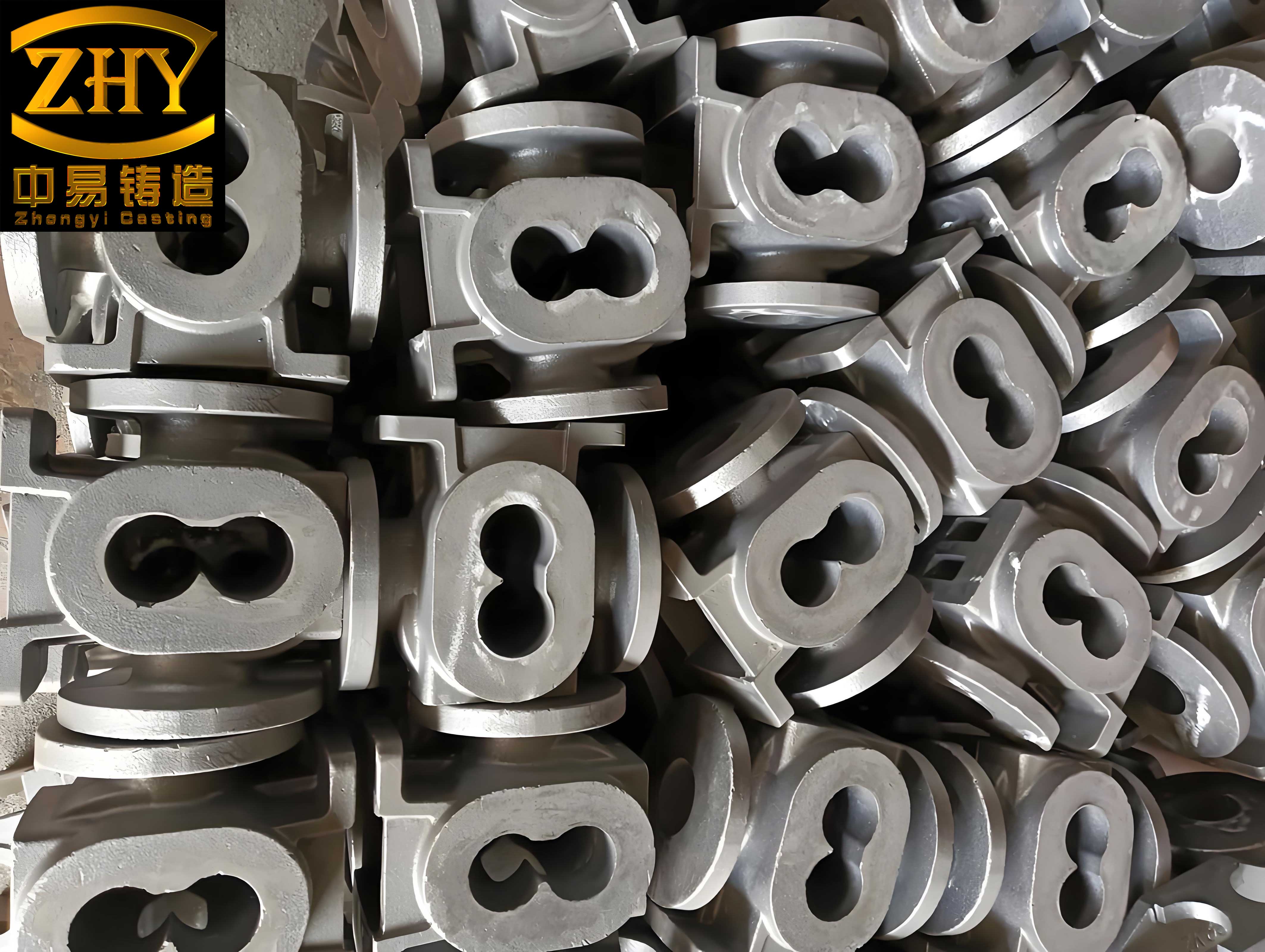
Nodular cast iron, characterized by its graphite spheroids embedded in a ferritic or pearlitic matrix, provides a balance of strength and ductility. However, its surface often lacks the necessary hardness and corrosion resistance for demanding environments. Laser cladding, especially high-speed variants, allows for precise deposition of alloy coatings with minimal dilution and high efficiency. The Ni-based alloy used here contains high Ni content, which is known to inhibit carbon diffusion from the nodular cast iron substrate, reducing the formation of brittle phases like cementite at the interface. This study explores the efficacy of this approach through detailed experimental analysis.
The substrate material was nodular cast iron with a typical composition, while the cladding powder was a spherical Ni-based alloy with an average particle size of 38 μm. The chemical compositions are summarized in Table 1. High-speed laser cladding was performed using a fiber laser system coupled with a robotic arm. The process parameters included a laser power of 2 kW, powder feed rate of 2.5 r/min, scanning speed of 0.03 m/s, and overlap rate of 66.7%. Argon was used as both shielding and carrier gas to prevent oxidation. After cladding, samples were sectioned, ground, and polished for subsequent characterization.
| Material | C | Mn | B | Cr | Si | P | S | Fe | Ni |
|---|---|---|---|---|---|---|---|---|---|
| Nodular Cast Iron | 3.72 | 0.20 | – | 0.12 | 2.67 | 0.05 | 0.02 | Bal. | 0.47 |
| Ni-Based Alloy Powder | 0.08 | – | 1.36 | 1.42 | 2.42 | – | – | 0.41 | Bal. |
The interface morphology between the Ni-based coating and nodular cast iron substrate was examined using scanning electron microscopy. The coating exhibited a uniform thickness of approximately 0.86 mm with a wavy interface, indicating good metallurgical bonding. The high-speed process resulted in a distinct bond line with limited dilution, as the rapid solidification minimized carbon diffusion from the nodular cast iron into the coating. X-ray diffraction analysis revealed that the coating primarily consisted of γ-Ni solid solution, Cr23C6 carbides, Ni2Si silicides, and Ni3B borides, as shown in the XRD pattern. In contrast, the nodular cast iron substrate comprised α-Fe and graphite phases. The formation of hard phases like carbides and borides contributes to enhanced surface properties.
The surface hardness of the coating and nodular cast iron substrate was measured using a Rockwell hardness tester. The average hardness values are presented in Table 2. The Ni-based coating demonstrated a significant increase in hardness compared to the nodular cast iron substrate. The hardness ratio can be expressed as:
$$ \text{Hardness Ratio} = \frac{H_c}{H_s} $$
where \( H_c \) is the average hardness of the coating and \( H_s \) is the average hardness of the substrate. Substituting the values:
$$ \text{Hardness Ratio} = \frac{300.5 \, \text{HB}}{190.1 \, \text{HB}} \approx 1.58 $$
This indicates that the coating hardness is approximately 1.58 times that of the nodular cast iron, representing a 58% improvement. The uniformity of hardness across the coating surface suggests a homogeneous microstructure.
| Sample | Average Hardness (HB) | Standard Deviation |
|---|---|---|
| Ni-Based Coating | 300.5 | ± 10.2 |
| Nodular Cast Iron | 190.1 | ± 8.5 |
Wear resistance was evaluated through pin-on-disk tests under specified conditions: a load of 30 N, Si3N4 counterpart, speed of 500 rpm, and duration of 60 minutes. The wear mass loss was measured using an electronic balance, and the results are summarized in Table 3. The Ni-based coating exhibited a substantial reduction in wear compared to the nodular cast iron substrate. The percentage wear reduction can be calculated as:
$$ \text{Wear Reduction} = \left(1 – \frac{W_c}{W_s}\right) \times 100\% $$
where \( W_c \) is the wear mass loss of the coating and \( W_s \) is the wear mass loss of the substrate. Using the data:
$$ \text{Wear Reduction} = \left(1 – \frac{1.75 \, \text{mg}}{5.1 \, \text{mg}}\right) \times 100\% \approx 65.7\% $$
This demonstrates that the coating reduces wear by 65.7% relative to the nodular cast iron. Wear morphology analysis revealed that the coating surface experienced abrasive wear with minor spalling pits, while the substrate showed severe adhesive wear with deep grooves and delamination. The maximum wear scar depth for the coating was 87.63 μm, compared to 171.2 μm for the substrate, further confirming the superior wear resistance imparted by the Ni-based coating on nodular cast iron.
| Sample | Wear Mass Loss (mg) | Average Wear Scar Depth (μm) | Wear Mechanism |
|---|---|---|---|
| Ni-Based Coating | 1.75 | 87.63 | Abrasive wear with minor spalling |
| Nodular Cast Iron | 5.1 | 171.2 | Adhesive wear with grooves |
Corrosion resistance was assessed via electrochemical tests in a 3.5 wt% NaCl solution using a standard three-electrode cell. The polarization curves and impedance spectra were recorded, and key parameters are listed in Table 4. The Ni-based coating showed a positive shift in corrosion potential and a lower corrosion current density compared to the nodular cast iron substrate. The difference in corrosion potential, \( \Delta E_{\text{corr}} \), is given by:
$$ \Delta E_{\text{corr}} = E_{\text{corr,c}} – E_{\text{corr,s}} $$
where \( E_{\text{corr,c}} \) is the corrosion potential of the coating and \( E_{\text{corr,s}} \) is that of the substrate. From the data:
$$ \Delta E_{\text{corr}} = (-536.5 \, \text{mV}) – (-723.6 \, \text{mV}) = 187.1 \, \text{mV} $$
This positive shift of 187.1 mV indicates improved corrosion resistance. Additionally, the corrosion current density ratio, \( \text{CCDR} \), can be defined as:
$$ \text{CCDR} = \frac{i_{\text{corr,s}} – i_{\text{corr,c}}}{i_{\text{corr,s}}} \times 100\% $$
where \( i_{\text{corr,c}} \) is the corrosion current density of the coating and \( i_{\text{corr,s}} \) is that of the substrate. Calculating:
$$ \text{CCDR} = \frac{4.467 \, \mu\text{A/cm}^2 – 3.156 \, \mu\text{A/cm}^2}{4.467 \, \mu\text{A/cm}^2} \times 100\% \approx 29.3\% $$
This denotes a 29.3% reduction in corrosion rate. Electrochemical impedance spectroscopy revealed that the coating had higher impedance values across all frequencies, with a maximum of 4301.3 Ω·cm² at low frequency, which is 5.6 times greater than that of the substrate (758.6 Ω·cm²). The Bode plots exhibited capacitive behavior, reinforcing the enhanced barrier properties of the coating on nodular cast iron.
| Sample | Corrosion Potential, \( E_{\text{corr}} \) (mV) | Corrosion Current Density, \( i_{\text{corr}} \) (μA/cm²) | Polarization Resistance, \( R_p \) (Ω·cm²) | Maximum Impedance at Low Frequency (Ω·cm²) |
|---|---|---|---|---|
| Ni-Based Coating | -536.5 | 3.156 | 1250 | 4301.3 |
| Nodular Cast Iron | -723.6 | 4.467 | 580 | 758.6 |
The improved performance of the Ni-based coating on nodular cast iron can be attributed to several factors. The high Ni content in the alloy powder limits carbon solubility, preventing the formation of brittle white iron phases at the interface. The coating’s microstructure, comprising γ-Ni solid solution and hard intermetallic compounds like Cr23C6, Ni2Si, and Ni3B, contributes to dispersion strengthening. The hardness enhancement follows the Hall-Petch relationship, where finer microstructure leads to higher strength. The wear resistance correlates with hardness, as described by the Archard wear equation:
$$ V = k \frac{H}{L} $$
where \( V \) is the wear volume, \( k \) is the wear coefficient, \( H \) is the hardness, and \( L \) is the load. For nodular cast iron, the lower hardness results in higher wear, whereas the coating’s elevated hardness reduces wear volume. The corrosion resistance is enhanced due to the noble nature of Ni, which has a higher standard electrode potential than Fe. The formation of protective phases like chromium carbides further impedes chloride ion penetration, as modeled by the Stern-Geary equation for corrosion current:
$$ i_{\text{corr}} = \frac{B}{R_p} $$
where \( B \) is a constant and \( R_p \) is the polarization resistance. The higher \( R_p \) values for the coating indicate slower corrosion kinetics.
In summary, high-speed laser cladding of a Ni-based alloy coating significantly improves the surface properties of nodular cast iron. The coating exhibits a hardness increase of 58%, wear reduction of 65.7%, and a corrosion potential shift of 187.1 mV towards nobility. These enhancements are crucial for extending the service life of nodular cast iron components in aggressive environments. Future work could explore optimization of cladding parameters, such as laser power and scanning speed, to further refine the coating microstructure and performance. Additionally, long-term durability tests under simulated operating conditions would validate the practical applicability of this surface modification technique for nodular cast iron parts.
The success of this study underscores the potential of high-speed laser cladding as a viable method for surface engineering of nodular cast iron. By leveraging the unique properties of Ni-based alloys, it is possible to overcome the limitations of nodular cast iron while preserving its bulk advantages. This approach not only enhances performance but also aligns with sustainable manufacturing practices by enabling repair and refurbishment of worn components. As industries continue to demand materials with superior surface characteristics, such advanced cladding techniques will play a pivotal role in the lifecycle management of nodular cast iron products.