
The global manufacturing sector stands at a critical juncture, compelled to reconcile industrial productivity with pressing environmental imperatives. The sand casting industry, a cornerstone for producing myriad metal components, faces particular scrutiny due to its inherent energy intensity and significant carbon footprint. As nations worldwide, including China with its ambitious “Dual Carbon” goals, commit to stringent emission reduction targets, the imperative for the foundry industry to transition towards sustainable practices has never been more urgent. This transition necessitates a fundamental reevaluation of core production processes, with the melting stage identified as the primary hotspot for both energy consumption and greenhouse gas emissions. The choice of melting technology—whether relying on traditional coke, grid electricity, or cleaner alternatives like natural gas—profoundly influences the environmental and economic profile of manufacturing sand casting products. This article presents a comprehensive, first-person analysis of this critical juncture, developing integrated models to quantify the carbon emissions and production costs associated with different melting furnaces. Our investigation provides a detailed comparative framework, leveraging quantitative data, formulas, and tables to guide decision-making towards more sustainable and cost-effective production of sand casting products.
The journey of a sand casting product, from a design concept to a finished component, encompasses several stages: pattern making, molding, core making, melting, pouring, cooling, shakeout, and finishing. Among these, the melting phase is disproportionately responsible for the sector’s environmental impact. Traditional melting equipment, such as coke-fired cupolas, while economically favorable in direct operational costs, emit substantial quantities of CO₂, particulates, and other pollutants. The shift to induction furnaces, powered by electricity, was initially seen as a cleaner alternative. However, the environmental benefit is contingent upon the carbon intensity of the local electricity grid. In regions where fossil fuels dominate power generation, this shift may merely transfer rather than reduce overall carbon emissions. Consequently, the industry’s sustainable evolution hinges on adopting genuinely low-carbon melting technologies and optimizing their integration into the production lifecycle for various sand casting products.
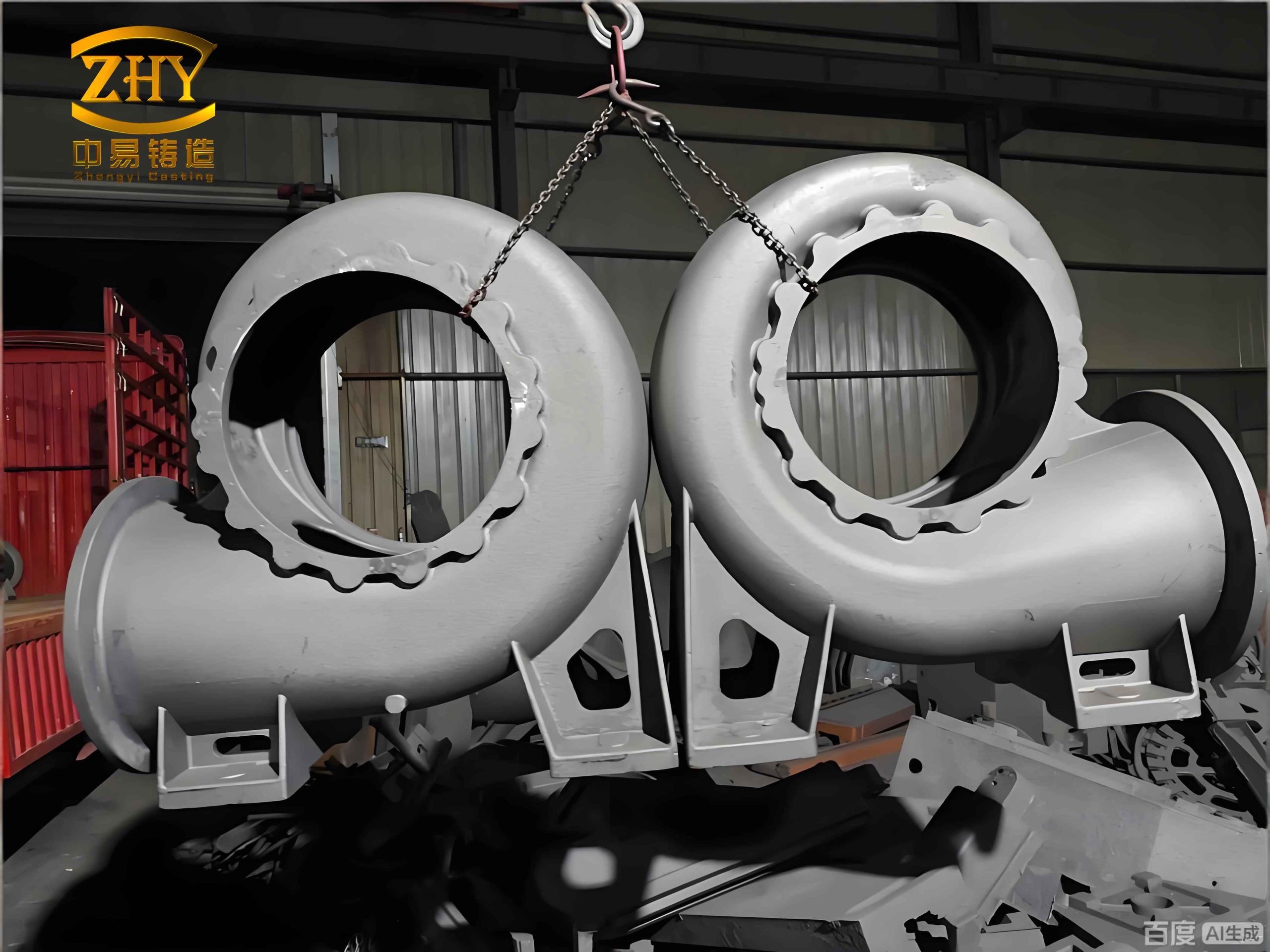
To systematically evaluate these trade-offs, we must first establish robust analytical models. The environmental impact is quantified through a comprehensive carbon emissions model that accounts for all relevant sources throughout the casting process. Similarly, a detailed cost model is required to capture not only direct energy and material expenses but also capital, labor, and overheads. The synergy—or conflict—between minimizing emissions and minimizing cost defines the practical pathway for sustainable manufacturing of sand casting products.
1. Analytical Framework and Mathematical Modeling
Our analysis is rooted in a process-parameter-based methodology that segments the total environmental and economic burden into distinct, quantifiable categories. For the melting stage, which is our primary focus, the system boundary includes the furnace operation, necessary auxiliary equipment (e.g., pollution control systems), and direct inputs like energy carriers and refractories.
1.1 The Carbon Emissions Model
The total carbon emissions (C) from the melting process are modeled as the sum of emissions from material consumption, direct energy consumption, and undesired outputs (e.g., process emissions from coke combustion). The generalized formula is:
$$C = \sum_{m=1}^{M} C_m \cdot G_m + \sum_{e=1}^{E} C_e \cdot G_e + \sum_{u=1}^{U} C_u \cdot H_u$$
Where:
- $C$: Total carbon emissions (kg CO₂-equivalent).
- $C_m$: Consumption quantity of the *m*-th material (kg).
- $G_m$: Carbon emission factor of the *m*-th material (kg CO₂/kg).
- $M$: Total number of material types.
- $C_e$: Consumption quantity of the *e*-th energy source (kWh for electricity, m³ for gas, kg for coke).
- $G_e$: Carbon emission factor of the *e*-th energy source (kg CO₂/kWh, kg CO₂/m³, etc.).
- $E$: Total number of energy types.
- $C_u$: Quantity of the *u*-th undesired output or direct process emission.
- $H_u$: Carbon emission factor of the *u*-th undesired output.
- $U$: Total number of undesired output types.
For a typical melting operation, the model simplifies. Materials (refractories) often contribute a minor, fixed amount. The dominant term is energy consumption ($C_e \cdot G_e$). For a coke cupola, the undesired process emissions from coke are already accounted for in its high emission factor $G_e$. For an electric furnace, $G_e$ represents the grid’s carbon intensity. This model allows us to calculate the “carbon cost” of melting one ton of iron for different furnace types, a critical metric for comparing the environmental performance of technologies used to produce sand casting products.
1.2 The Comprehensive Cost Model
The total production cost ($CL$) for the melting operation is more than just the fuel bill. It is an aggregation of capital and operational expenditures:
$$CL = \left[ \sum_{a=1}^{A} (F_a + S_a \cdot P) \right] + T \cdot R \cdot (1 + w) \cdot N + \sum_{c=1}^{C} E_c$$
Where:
- $CL$: Total cost of the melting operation (monetary units).
- $F_a$: Usage cost/depreciation of the *a*-th piece of equipment.
- $S_a$: Floor space occupied by the *a*-th equipment (m²).
- $P$: Rental cost per unit floor area (monetary units/m²).
- $A$: Number of equipment units.
- $T$: Total operational labor time (hours).
- $R$: Labor wage rate (monetary units/hour).
- $w$: Labor welfare rate (typically 0.14 as per regulation).
- $N$: Number of laborers required.
- $E_c$: Total cost of the *c*-th energy source consumed.
- $C$: Number of energy source types.
This model ensures that the economic comparison between furnaces is holistic. A furnace with cheap fuel but high capital cost, large footprint, or high labor requirement may not be the most economical choice for producing certain volumes of sand casting products.
2. Comparative Analysis of Melting Technologies
We evaluate four prevalent melting technologies for cast iron, the most common metal for sand casting products:
- Induction Furnace (IF): Melts charge via electromagnetic induction using electricity.
- Coke-Fired Cupola (CFC): A vertical shaft furnace that melts charge by burning metallurgical coke.
- Natural Gas-Fired Cupola (NGFC): A cupola modified to use clean-burning natural gas as the primary fuel and oxygen enrichment.
- Natural Gas Rotary Furnace (NGRF): A tilting furnace heated by natural gas burners, offering excellent melt quality and flexibility.
The fundamental data for energy consumption per ton of molten cast iron is presented in Table 1. The corresponding carbon emissions, calculated using standard emission factors, are shown in Table 2. The emission factor for grid electricity (0.749 kg CO₂/kWh) reflects a coal-dominated grid, which is relevant for many industrial regions.
| Melting Furnace Type | Coke (kg) | Electricity (kWh) | Natural Gas (m³) |
|---|---|---|---|
| Induction Furnace (IF) | 0 | 650 | 0 |
| Coke-Fired Cupola (CFC) | 145 | 1.2* | 0 |
| Natural Gas Cupola (NGFC) | 0 | 15** | 65 |
| Natural Gas Rotary (NGRF) | 0 | 10** | 80 |
* Auxiliary power for pollution control (e.g., wet scrubber).
** Auxiliary power for blowers, controls, etc.
| Melting Furnace Type | From Coke (kg CO₂) | From Electricity (kg CO₂) | From Natural Gas (kg CO₂) | Total (kg CO₂) |
|---|---|---|---|---|
| Induction Furnace (IF) | 0.00 | 486.85 | 0.00 | 486.85 |
| Coke-Fired Cupola (CFC) | 404.55 | 0.90 | 0.00 | 405.45 |
| Natural Gas Cupola (NGFC) | 0.00 | 11.24 | 130.00 | 141.24 |
| Natural Gas Rotary (NGRF) | 0.00 | 7.49 | 160.00 | 167.49 |
Emission Factors: Coke: 2.79 kg CO₂/kg; Grid Electricity: 0.749 kg CO₂/kWh; Natural Gas: 2.00 kg CO₂/m³.
The data reveals a striking conclusion: under a carbon-intensive grid, the Induction Furnace has the highest carbon footprint per ton of melt. The Coke-Fired Cupola, while slightly better, still emits over 400 kg of CO₂. The natural gas-based technologies (NGFC and NGRF) offer a dramatic reduction, lowering emissions by approximately 71% and 66% compared to the CFC and IF, respectively. This immediately positions gas-based melting as a superior option for decarbonizing the production of sand casting products.
2.1 Analysis Under Different Production Scales
Economic viability is scale-dependent. We analyze two batch scenarios: melting 80 tons and 120 tons of iron. Corresponding furnace capacities are selected (e.g., a 20 t/h CFC for larger batches). The cost model incorporates the parameters in Table 3.
| Parameter | IF | CFC | NGFC | NGRF |
|---|---|---|---|---|
| Floor Space (m²) | 30 | 70 | 50 | 60 |
| Labor Required (N) | 2 | 5 | 5 | 4 |
| Energy Price | Electricity: 0.108 $/kWh | Coke: 0.11 $/kg | Natural Gas: 0.325 $/m³ | Natural Gas: 0.325 $/m³ |
Assumptions: Floor rental: $1.5/m²; Labor wage (R): $5/hour; Welfare rate (w): 0.14.
Applying the cost model (Equation 2) yields the total melting cost for each batch. A more insightful metric is the cost per ton, which demonstrates economies of scale. As the melt volume increases from 80 to 120 tons, the cost per ton decreases for all furnaces, as the fixed costs (e.g., labor, allocated capital) are spread over more output. The results, summarized conceptually, show:
- IF: Highest cost per ton ($747 down to $615). The primary driver is expensive electricity.
- CFC: Lowest cost per ton ($253 down to $224). Cheap coke fuel dominates, despite higher labor and space needs.
- NGFC: Competitive cost per ton ($286 down to $265). Higher fuel cost than coke but offset by lower labor/space vs. CFC and no pollution control capex.
- NGRF: Moderate cost per ton ($345 down to $320). Higher gas consumption than NGFC leads to higher cost.
While the CFC appears economically optimal, its severe environmental and regulatory disadvantages (particulate matter, SO₂ emissions) make it a legacy technology. The NGFC emerges as the balanced champion, reducing the cost per ton by approximately 59% compared to the IF while simultaneously achieving the largest carbon reduction (73%). This makes it a compelling candidate for sustainable mass production of sand casting products.
2.2 Analysis for Different Sand Casting Products
The nature of the final sand casting product influences operational logistics. We consider three engine cylinder head designs (A, B, C) with different weights (50 kg, 100 kg, 200 kg). A fixed melt batch of 10,000 kg can thus yield 200, 100, or 50 castings, respectively. The pouring time, a function of casting weight and geometry, affects the total operational time (T in our cost model). The pouring time ($t_p$) for a single casting can be estimated by:
$$t_p = B \cdot (\delta \cdot G)^{P} \cdot n^{-1}$$
Where $G$ is casting weight (kg), $\delta$ is average wall thickness (mm), and $B$, $P$, $n$ are empirical coefficients (e.g., 2.0, 0.33, 0.33). For a 10mm wall thickness:
- Casting A (50 kg): $t_p \approx 16$ seconds
- Casting B (100 kg): $t_p \approx 20$ seconds
- Casting C (200 kg): $t_p \approx 25$ seconds
The total carbon emissions for producing the entire batch of each product type are simply the per-ton emissions from Table 2 multiplied by 10 (tons). Therefore, the NGFC maintains its ~73% and ~68% advantage over the IF and CFC, respectively, regardless of product type. The product-dependent analysis truly shines in the cost breakdown.
Applying the cost model with the calculated total cycle times (melting + pouring for all castings) yields the cost per individual casting. The results trend as follows:
- Cost per casting increases with casting weight, but not linearly, due to shared melting costs.
- The IF consistently renders the highest unit cost.
- The NGFC provides significant unit cost savings: approximately 59-68% lower than the IF across the product range.
This product-level analysis proves that the benefits of natural gas melting technology are robust and applicable whether producing high volumes of small, intricate sand casting products or lower volumes of large, heavy-section sand casting products.
3. Synthesis and Pathways for Green Transition
The integrated analysis unequivocally demonstrates that a direct replacement of coke or carbon-intensive electric melting with natural gas-based technologies (especially the Natural Gas Cupola) offers the most immediate and effective lever for decarbonizing the sand casting industry while maintaining or improving economic performance. The NGFC achieves this by severing the link between melting and coal, either as solid coke or as the primary fuel for grid power.
To facilitate strategic planning, a holistic view combining emissions and cost is essential. Table 4 presents a consolidated lifecycle perspective, incorporating not just operational but also potential carbon taxation and social cost of carbon.
| Furnace Type | Carbon Intensity (kg CO₂/t) | Operational Cost Index (IF=100) | Key Advantages | Key Challenges & Transition Considerations | Strategic Fit |
|---|---|---|---|---|---|
| Induction (IF) | ~487 | 100 | Excellent melt quality, flexibility, clean worksite. | Cost and carbon entirely tied to grid; high peak power demand. | Regions with very clean/green grid; high-alloy, precision sand casting products. |
| Coke Cupola (CFC) | ~405 | ~40 | Very low fuel cost, high continuous melt rate. | High criteria pollutants (SOx, PM), carbon-intensive, regulatory phase-out likely. | Legacy operations; becoming obsolete for sustainable production. |
| Natural Gas Cupola (NGFC) | ~141 | ~45 | Best balance: Low carbon, low cost, high productivity. | Requires natural gas infrastructure; slightly higher NOx control needed. | Primary recommendation for sustainable bulk production of gray and ductile iron sand casting products. |
| Natural Gas Rotary (NGRF) | ~167 | ~52 | Superior melt quality & homogeneity, charge flexibility. | Higher gas consumption per ton than NGFC. | High-quality melts, batch production, alloys for demanding sand casting products. |
The future trajectory points beyond natural gas. The ultimate goal is a circular, net-zero foundry. Promising pathways include:
- Renewable-Hybrid Systems: Coupling electric furnaces (IF, arc) with onsite solar PV or wind power, effectively creating a “green melting” setup. The cost model would then use a near-zero emission factor ($G_e$).
- Biofuels and Hydrogen: Transitioning NGFCs and NGRFs to burn green hydrogen (H₂) or renewable natural gas (RNG/biomethane). This would reduce the $G_e$ for gas to virtually zero. Research into solid biomass-derived “bio-coke” for cupolas also continues.
- Systematic Efficiency: Beyond the furnace, recovering waste heat from exhaust gases for mold drying or space heating, and optimizing charging practices to reduce melt losses, further shrinks the carbon footprint per unit of saleable sand casting product.
The economic model must evolve to account for future carbon pricing mechanisms (taxes, trading schemes). A modest carbon price would drastically worsen the economics of CFCs and IFs on dirty grids, while making NGFCs, NGRFs, and green-electric solutions even more financially attractive. The investment payback period ($PP$) for upgrading from a CFC to an NGFC can be modeled as:
$$PP = \frac{CI_{NGFC} – S_{CFC}}{(OC_{CFC} + \tau \cdot C_{CFC}) – (OC_{NGFC} + \tau \cdot C_{NGFC})}$$
Where $CI$ is capital investment, $S$ is salvage value, $OC$ is annual operating cost, $\tau$ is the carbon tax rate ($/ton CO₂), and $C$ is annual carbon emissions. As $\tau$ increases, the payback period shortens, accelerating the green transition.
4. Conclusion
This integrated analysis, grounded in first-principle models for carbon emissions and comprehensive cost, provides a clear roadmap for the sand casting industry’s sustainable transformation. The comparative assessment of four mainstream melting technologies under varying production scales and product types reveals that the pursuit of lower carbon emissions is not necessarily at odds with economic rationality. The traditional Coke-Fired Cupola, while low in direct operating cost, imposes a high environmental burden and faces regulatory obsolescence. The Induction Furnace, often perceived as the modern alternative, can be the most carbon-intensive and expensive option where electricity is derived from fossil fuels.
The analysis identifies Natural Gas-Fired Cupolas as the most strategically viable technology for a meaningful near-term decarbonization of cast iron production. They achieve an average reduction of approximately 73% in melting-stage carbon emissions and 59% in associated costs compared to induction melting under a coal-based grid. This dual benefit makes them a powerful tool for foundries aiming to enhance their competitiveness while aligning with global sustainability goals. For foundries prioritizing ultimate melt quality and flexibility, the Natural Gas Rotary Furnace presents a slightly higher-cost but still low-carbon alternative. The industry’s journey towards deep decarbonization will next involve integrating these high-efficiency gas technologies with renewable energy carriers like green hydrogen and leveraging digital tools for systemic efficiency gains. By adopting such a measured, analytical approach to technology selection, manufacturers can ensure the long-term viability and environmental stewardship of their operations, securing the future of producing essential sand casting products in a carbon-constrained world.