
In the realm of foundry engineering, the sand casting of magnesium alloys presents a unique and persistent challenge: the extreme susceptibility of molten magnesium to violent oxidation and combustion upon contact with air. This characteristic necessitates the use of specialized protective measures during conventional sand casting processes. Typically, this involves incorporating potent inhibitors or fluxes, such as sulfur hexafluoride (SF6) or salt-based mixtures, into the molding sand or as a protective gas cover. While effective, these methods carry significant drawbacks, including the emission of hazardous gases like SO2 or the potent greenhouse gas SF6, which pose serious environmental and occupational health risks. The quest for a cleaner, safer, and equally effective alternative is paramount for the sustainable advancement of magnesium sand casting services. My research and practical experience have led me to investigate and advocate for a fundamentally different approach: the use of graphite-enriched sand molds. This method circumvents the need for toxic additives, and its efficacy stems from the formation of a remarkable in-situ protective film on the casting surface, a complex structure whose secrets we have unraveled through surface science techniques like X-ray Photoelectron Spectroscopy (XPS).
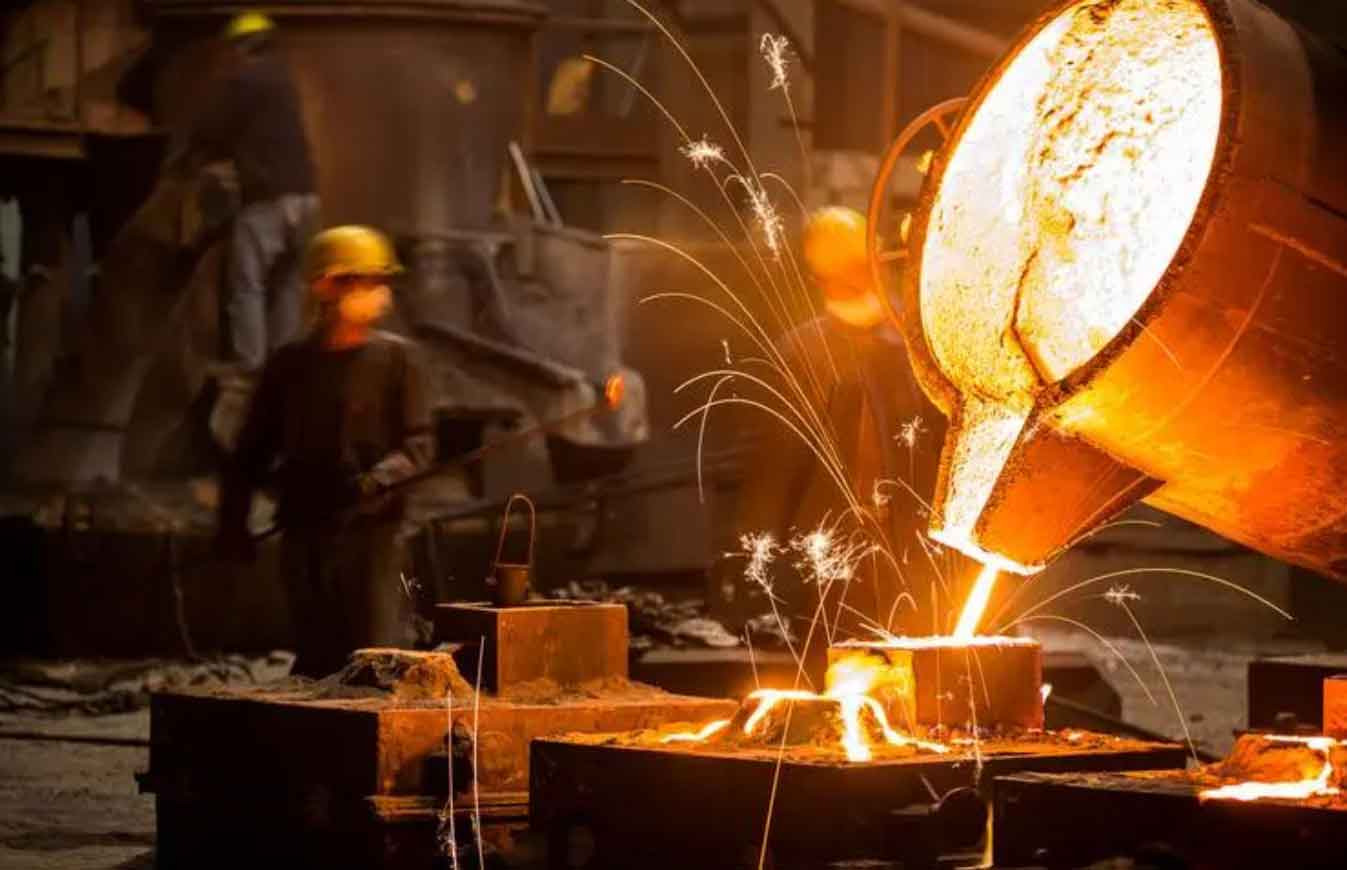
The core innovation lies not in adding a protective agent to the melt or atmosphere, but in engineering the mold medium itself. By formulating a dry sand mold with a substantial graphite content, we create a chemically active interface. During pouring, the intense heat triggers reactions between the molten magnesium and the mold environment. Crucially, any residual oxygen or moisture, or gases like CO2 generated from binder breakdown, interact with the magnesium. However, the pervasive presence of solid carbon (graphite) fundamentally alters the reaction pathway and the resulting product. Instead of forming a simple, porous, and non-protective magnesium oxide (MgO) scale, a composite and layered film develops. This film is the cornerstone of the anti-burning protection. Understanding its precise composition, graded structure, and formation mechanism is not merely academic; it provides the scientific basis for optimizing mold formulations and process parameters in industrial sand casting services, ensuring consistent quality and safety.
Our investigative methodology centers on surface analysis. Samples are meticulously extracted from the as-cast surface of a ZM5 (Mg-8.3%Al) magnesium alloy poured into a graphite-silica sand mold without any supplementary protective flux. These samples are then subjected to depth-profiling XPS analysis. XPS works by irradiating the surface with X-rays and measuring the kinetic energy of ejected photoelectrons, which is characteristic of each element and its chemical state. By sequentially sputtering the surface with an argon ion beam, we can probe the chemical composition as a function of depth, building a nanoscale map of the film’s architecture. The deconvolution of spectral peaks, particularly for Magnesium (Mg 2p) and Oxygen (O 1s), allows us to distinguish between metallic magnesium, magnesium oxide (Mg-O bonds), and magnesium hydroxide (Mg-OH bonds).
The data reveals a distinct, non-uniform layered structure. The film is not a monolithic barrier but a sophisticated gradient material. We can categorize it into three primary zones: the Surface Layer, the Intermediate (or Barrier) Layer, and the Transition Layer. The composition and role of each are critical to the overall protective function.
The Surface Layer (approximately the top few hundred nanometers) is the interface with the mold atmosphere during solidification. Its chemical signature is revealing. The O 1s spectrum here cannot be fitted with a single component. Deconvolution shows two primary states of oxygen. The first, at a lower binding energy, is characteristic of oxygen in an oxide lattice (M-O). The second, with a chemical shift of approximately +1.9 to +2.1 eV relative to the first, is definitive evidence of oxygen in a hydroxide group (M-OH). This is corroborated by the atomic ratio of oxygen to oxidized magnesium, $ \frac{[O]}{[Mg_{ox}]} $, in this region. As shown in the representative data table below, this ratio approaches 2 near the very surface, strongly indicating the predominant presence of magnesium hydroxide, $ \text{Mg(OH)}_2 $, along with some adsorbed water molecules. The formation is likely due to reaction with residual moisture: $ \text{Mg} + 2\text{H}_2\text{O} \rightarrow \text{Mg(OH)}_2 + \text{H}_2 $.
| Depth Zone | Dominant Chemical States | Approx. O/Mgox Ratio | Proposed Major Phases |
|---|---|---|---|
| Surface Layer | O in Mg-OH, Mg-O; C (adventitious, graphitic) | ~1.8 – 2.0 | Mg(OH)2, H2O(ads), MgO, C |
| Intermediate Layer | O in Mg-O; Mg2+; Significant C | ~1.0 – 1.2 | MgO, C (amorphous/graphitic) |
| Transition Layer | Mg0, Mg2+; O in Mg-O; Traces of C | < 0.5 | α-Mg (metal), MgO particles |
Beneath this hydroxide-rich surface lies the heart of the protective barrier: the Intermediate Layer. Here, the O 1s spectrum simplifies dramatically, showing primarily a single peak corresponding to lattice oxygen in an oxide. The atomic ratio $ \frac{[O]}{[Mg_{ox}]} $ stabilizes around 1. This is the unambiguous fingerprint of magnesium oxide, MgO. However, the most critical discovery from our XPS and complementary Electron Probe Microanalysis (EPMA) is the pervasive presence of carbon throughout this layer. The carbon signal is not merely superficial contamination; it persists with significant concentration deep into the oxide layer. This carbon originates from the graphite mold. The likely incorporation mechanism involves the reduction of gases like CO2 at the hot metal surface: $ \text{CO}_2(g) + 2\text{Mg}(l) \rightarrow 2\text{MgO}(s) + C(s) $. The resulting carbon is likely in an amorphous or finely dispersed graphitic form, intimately mixed with the growing MgO crystals. Therefore, this layer is more accurately described as an MgO-C composite ceramic film. The thickness of this composite intermediate layer, which can be several micrometers, effectively defines the functional thickness of the protective shield.
Between this composite barrier and the underlying magnesium alloy bulk lies the Transition Layer. This zone is characterized by a steep gradient in composition. As depth increases, the signal from metallic magnesium (Mg0) rises sharply while that from oxidized magnesium (Mg2+) falls. The oxygen content here forms a decaying “tail.” This region represents the interface where oxidation was incomplete, containing a mixture of α-Mg grains with fine, dispersed particles of MgO. The shortness and sharp decay of the oxygen tail in graphite mold castings, compared to other methods, is a key indicator of the effectiveness of the overlying composite barrier; it signifies low oxygen diffusivity and thus high compactness.
The superior protective quality of this film cannot be attributed to MgO or Mg(OH)2 alone. Pure MgO scale on magnesium is known to be poorly protective due to its high Pilling-Bedworth Ratio (PBR), which is approximately 0.81. A PBR less than 1 indicates that the oxide occupies less volume than the metal it consumed, leading to tensile stresses and a porous, cracked, non-adherent film that offers little diffusion resistance. The revolutionary aspect of the graphite sand mold process is the synergistic effect between the oxide and the incorporated carbon. The carbon infiltration alters the fundamental growth mechanics and morphology of the oxide scale. We propose a dual synergistic mechanism:
1. Structural Synergy (Densification & Stress Management): The in-situ generated carbon particles likely occupy the interstices between growing MgO grains. They act as physical fillers, reducing interconnected porosity and creating a more tortuous path for the diffusion of oxygen ions (O2-) and magnesium ions (Mg2+), which follow the parabolic rate law for scale growth:
$$ x^2 = k_p t $$
where $ x $ is the scale thickness, $ k_p $ is the parabolic rate constant, and $ t $ is time. The incorporation of carbon significantly reduces the effective $ k_p $. Furthermore, the carbon may help accommodate the volumetric mismatch (the low PBR stress) by providing compliant sites or disrupting the columnar growth of MgO grains, leading to a finer, more equiaxed grain structure that is less prone to through-thickness cracking.
2. Chemical Synergy (Altered Thermodynamics & Pathway): The local environment at the mold-metal interface is carbon-rich and oxygen-poor. This can thermodynamically favor the reduction of any oxidizing species (CO2, H2O) by magnesium, with carbon as a product, rather than the simple formation of pure oxide. The simultaneous formation of MgO and C may occur via coupled reactions, leading to a finer, more intermixed microstructure from the nucleation stage. This inherent composite nature from birth is more effective than a sequentially formed layer.
The practical implications for industrial sand casting services are profound. This knowledge transitions the process from an empirical art to a science-based technology. For providers of sand casting services, optimizing the mold composition becomes a targeted exercise. It is not merely about adding graphite, but understanding the optimal grain size, purity, and percentage of graphite in the sand mix to maximize carbon availability and reactivity without compromising the mold’s mechanical strength or causing excessive penetration. The type of sand (silica, olivine, chromite) and the binder system (clay, resin) also play a role, as they influence the gas atmosphere (H2, CO, CO2) generated during pouring.
Furthermore, process parameters must be aligned. Pouring temperature is critical; it must be high enough to ensure fluidity but optimized to minimize excessive reaction and control the kinetics of film formation. Slow, turbulent pouring can disrupt the nascent film, while a quick, smooth fill helps establish a continuous barrier. This level of control is what distinguishes high-quality, reliable sand casting services for magnesium. Post-casting, this adherent, dense oxide film also simplifies handling and reduces the need for aggressive chemical cleaning, as it is stable in air at room temperature, providing temporary corrosion protection during storage and transit.
In conclusion, the graphite sand mold casting of magnesium alloys exemplifies a brilliant in-situ materials engineering solution. The process catalyzes the formation of a multi-layered, graded surface film where a carbon-reinforced magnesium oxide composite forms the primary barrier, capped by a hydroxide layer. This structure results from synergistic chemical and structural effects fundamentally different from the scales formed in conventional processes. The carbon, originating from the mold itself, transforms a naturally non-protective oxide into an effective diffusion barrier, eliminating the need for environmentally hazardous protective agents. For engineers and providers of advanced sand casting services, mastering this technology means offering a cleaner, safer, and more sustainable production route for magnesium components. It opens doors to wider application of this lightweight metal in automotive, aerospace, and electronics industries, where performance and environmental compliance are equally paramount. The future of magnesium casting lies in such smart process design, where the mold is not just a passive container but an active participant in creating the final product’s surface integrity and performance.