
In my extensive experience developing and qualifying suppliers for high-voltage switchgear components, ensuring the gas tightness of aluminum shell castings has consistently been one of the most critical and challenging tasks. The rapid expansion of power infrastructure, driven by grid interconnections and modernization projects, has led to a corresponding growth in the number of foundries supplying these vital components. While mechanical strength is a fundamental requirement, the integrity of the pressure boundary—its ability to contain SF6 gas over decades of service—is paramount. The stakes are high: leakage not only impacts the switchgear’s performance and reliability but also has environmental consequences due to SF6’s potent greenhouse gas potential. The core questions I have repeatedly faced are: How can we guarantee the leak-tightness of every shell casting delivered? How do we reduce the incoming leak rate from suppliers effectively? And crucially, how can we achieve this without incurring prohibitive costs? Through rigorous analysis and field application, I have developed and advocate for a systematic leak testing methodology that rationally leverages the capabilities of both the foundry and the switchgear manufacturer.
The foundation of any leak testing specification is the allowable annual leakage rate. This is a relative measure, defined as the ratio of gas lost over a year to the total charge, under rated pressure. Standards vary: while older norms like GB 7674 specified 1%, the international standard IEC 62271-203 tightened this to 0.5%. Driven by environmental stewardship and life-cycle cost, leading manufacturers, including my own organization, often enforce even stricter internal standards, targeting annual leakage rates as low as 0.1%. Verifying that a large, complex aluminum shell casting meets such exacting requirements demands a thoughtful, multi-stage approach.
Before outlining the systematic method, it is essential to understand the toolkit of available leak testing techniques commonly applied to shell castings. Each has distinct principles, advantages, and limitations.
Established Leak Testing Methods for Shell Castings
1. Water Immersion (Bubble) Test: This is a classic qualitative method. The prepared shell casting is pressurized with air or an air-helium mixture to its working pressure and fully submerged in a water tank. Inspectors look for a steady stream of bubbles escaping from the surface over a period, typically 30 minutes, under good lighting. Its primary virtue is the direct visual identification of leak locations. However, its sensitivity is limited, generally in the range of $$1 \times 10^{-5}$$ to $$1 \times 10^{-4}$$ cm³/s, making it unsuitable for detecting very fine leaks or quantifying the annual leakage rate. Research has shown that sensitivity can be improved by using gases with lower molecular weight (like helium), higher test pressures (within design limits), and liquids with lower surface tension.
2. Soap Solution (Leak Detection Fluid) Test: Another qualitative method, where the pressurized shell casting is sprayed or brushed with a soapy solution or a specialized leak detection fluid. The formation of stable, growing bubbles indicates a leak. Like the water immersion test, it is excellent for locating leaks but not for quantification. Its sensitivity is highly dependent on the fluid’s properties (viscosity, surface tension) and application technique. Professional use of dedicated, long-lasting bubble-forming fluids is recommended for consistent results.
3. SF6 Accumulation (Hood) Test – Reference Method: This quantitative method, outlined in standards like GB/T 11023, most closely simulates actual service conditions. The sealed shell casting is evacuated, filled with SF6 to its nominal operating pressure, and placed inside a sealed enclosure (hood) for a dwell period, often 24 hours. An SF6-sensitive detector (like a laser spectrometer) then measures the gas concentration accumulated inside the hood. The absolute leakage rate \( F \) (in Pa·m³/s) is calculated using the formula related to the ideal gas law:
$$ F = \frac{\Delta C \cdot V_{hood} \cdot P_{atm}}{t} $$
where \( \Delta C \) is the measured SF6 concentration increase (by volume), \( V_{hood} \) is the net volume of the hood minus the casting volume, \( P_{atm} \) is the atmospheric pressure, and \( t \) is the accumulation time. The annual leakage rate \( f_{year} \) is then derived:
$$ f_{year} = \frac{F \cdot t_{year}}{P_{service} \cdot V_{casting}} \times 100\% $$
where \( t_{year} \) is the number of seconds in a year, \( P_{service} \) is the service pressure, and \( V_{casting} \) is the internal volume of the shell casting. While highly accurate, the need to handle SF6, its environmental impact, and the long test duration are drawbacks.
4. Helium Vacuum Hood (Out-In) Test: Here, the shell casting is evacuated, and a hood placed around it is filled with helium. A helium mass spectrometer leak detector (MSLD), connected to the casting’s interior, draws a vacuum and detects any helium entering from the hood through leaks. This method, borrowed from vacuum technology, is fast and sensitive. However, I strongly advise against its use for pressurized shell castings. The internal vacuum can cause the casting to contract slightly, potentially closing micro-leaks that would be open under internal pressure. This creates a false sense of security and does not accurately represent real operating conditions.
5. Helium Pressure Hood (In-Out) Test: This is a common quantitative method in high-voltage factories. The shell casting is filled with helium (or a helium-air mix) to service pressure and placed in a sealed hood. After accumulation, a portable helium sniffer or a sampling system connected to an MSLD measures the helium concentration in the hood. The leakage rate is calculated similarly to the SF6 hood method. It is fast, sensitive, and avoids SF6 use. However, converting the measured helium leakage rate to an equivalent SF6 rate requires care due to different flow regimes. For viscous flow through a leak channel, the leakage rate is inversely proportional to the gas viscosity \( \eta \). The conversion factor \( k \) is:
$$ k = \frac{\eta_{He}}{\eta_{SF_6}} $$
Given that \( \eta_{He} \approx 19.6 \mu Pa \cdot s \) and \( \eta_{SF_6} \approx 15.2 \mu Pa \cdot s \) at room temperature, \( k \approx 1.29 \). Therefore, an observed helium leak rate would correspond to a roughly 29% lower SF6 leak rate under the same conditions. This discrepancy must be accounted for in acceptance criteria.
The following table provides a consolidated comparative analysis of these five methods for evaluating shell castings:
| Method | Qualitative/Quantitative | Sensitivity | Test Duration | Capital Cost | Operational Cost | Accuracy for Service | Leak Location | Typical Use Case |
|---|---|---|---|---|---|---|---|---|
| Water Immersion | Qualitative | Low | Medium | Low | Low | Low | Visual (Gross leaks) | Foundry pre-screening |
| Soap Solution | Qualitative | Medium | Long (for full coverage) | Very Low | Low | Medium | Visual (Fine leaks) | Foundry leak location |
| SF6 Pressure Hood | Quantitative | High | Very Long (24h+) | Medium | Medium (SF6 cost) | Very High (Reference) | No | Final verification, standard reference |
| Helium Vacuum Hood | Quantitative | High | Short | High (MSLD) | High (He) | Medium (Unrepresentative) | No | Not recommended for shell castings |
| Helium Pressure Hood | Quantitative | Very High | Short/Medium | Very High (Hood + MSLD) | High (He) | High (with correction factor) | No | Manufacturer’s incoming inspection |
Analyzing this table reveals a clear synergy. The qualitative methods are indispensable for the foundry because they pinpoint the exact location of leaks on the shell castings. This information is critical for root cause analysis—whether it’s a micro-shrinkage porosity, a cold shut, or a flaw near a core print—enabling corrective actions in the molding, pouring, or gating design. The quantitative methods are necessary for proving compliance with the stringent leakage rate standards but do not provide location data. The most representative test (SF6 hood) is environmentally less ideal and slower, while the faster helium test requires significant capital investment and environmental control (stable temperature for accurate measurement).
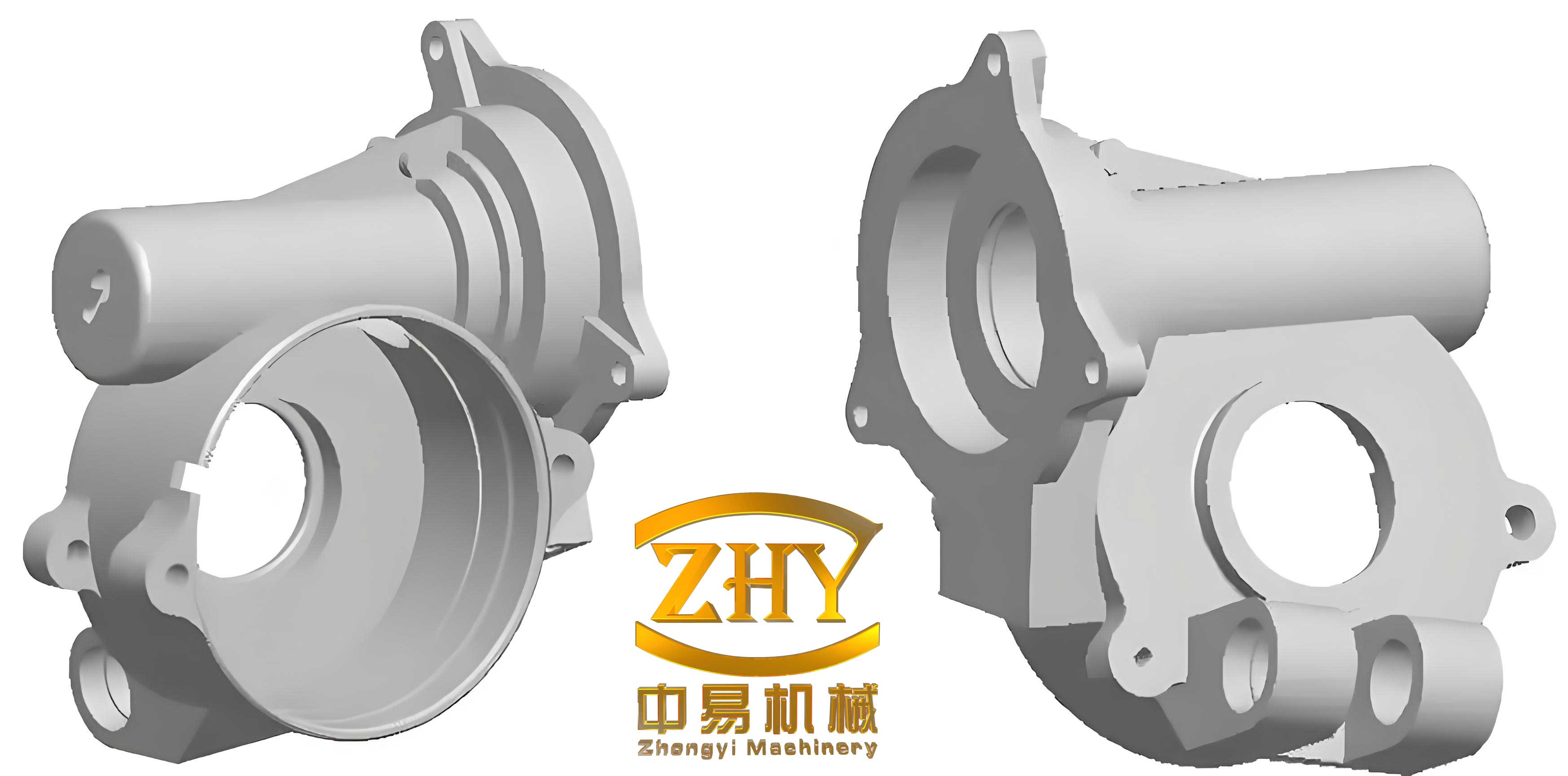
The image above underscores the complexity and scale of typical high-voltage switchgear shell castings. Their intricate geometry, with numerous integrated features and mounting points, makes them susceptible to leakage paths that are difficult to predict and find. This visual context highlights why a simple, single-stage test is often insufficient for guaranteeing the quality of such critical components. A process that leverages different techniques at different stages is essential.
The Proposed Systematic Leak Testing Methodology
Based on the analysis, I propose a systematic, two-tiered leak testing protocol that rationally distributes activities between the shell casting supplier (foundry) and the high-voltage switchgear manufacturer. This system is designed for maximum effectiveness, efficiency, and economic performance.
Stage 1: Supplier (Foundry) – 100% Testing and Process Control.
The primary responsibility for delivering leak-tight shell castings must lie with the foundry. Their process control and final inspection are the first and most important barriers.
- Pre-screening with a Qualitative Method: Every single shell casting should undergo a preliminary qualitative test. The choice between water immersion and soap solution depends on the foundry’s setup and casting size. For larger shell castings, a localized soap solution test on all critical seams, wall sections, and integrated boss areas might be more practical than full immersion. The goal is to catch any gross leaks and, more importantly, to locate leaks. Foundry process engineers must analyze these leak sites to identify patterns and implement corrective actions in the casting process.
- Quantitative Verification with SF6 Hood Testing: The foundry must perform quantitative verification on a sampling basis (e.g., first-article, periodic audit, or after process changes) and ideally on 100% of castings for critical applications. I recommend using the SF6 Pressure Hood Method at the foundry. Why?
- Credibility and Correspondence: It tests the shell casting under real-world conditions (internal pressure with SF6). The result is directly comparable to the end-user’s specification for annual SF6 leakage rate. There is no need for controversial gas conversion factors.
- Resource Appropriateness: Foundries typically have large, open spaces and are equipped to handle the logistics of hoods. The slower test time can be managed within production flow.
- Environmental Control: By performing this test at the source, major leaks are contained and corrected before the casting leaves, minimizing unnecessary SF6 handling and potential emissions later in the supply chain.
The foundry’s quality report should include both the quantitative leakage rate and a log of any leaks found and repaired during pre-screening.
Stage 2: Manufacturer (Switchgear Plant) – Incoming Quality Assurance (IQA) Verification.
Despite the foundry’s tests, verification upon receipt is crucial. Transport stresses, handling damage, or the rare escape of a defective shell casting necessitate a final check.
- Quantitative Audit with Helium Pressure Hood: The switchgear manufacturer should employ a Helium Pressure Hood Test as the primary incoming inspection tool. This serves as an independent audit of the foundry’s data.
- Speed and Efficiency: Faster test cycles allow for higher sampling rates or even 100% inspection without bottlenecking production.
- High Sensitivity: It can detect extremely fine leaks that might have been at the threshold of the SF6 method’s detection limit or that developed post-shipment.
- Objective Pass/Fail: Using a corrected acceptance threshold (applying the viscosity factor \( k \)), it provides a clear, quantitative result.
This stage acts as a final filter, ensuring that only shell castings conforming to the leakage specification enter the clean, assembly-line environment.
- Selective Use of Qualitative Methods: If a shell casting fails the helium hood test, the manufacturer can use a soap solution test to locate the leak for investigation and to provide precise feedback to the supplier, closing the quality loop.
The flow of this systematic methodology is illustrated below:
[Foundry Process] -> Foundry 100% Qualitative Pre-screen (Locates Leaks) -> Foundry Quantitative SF6 Hood Test (Verifies Leak Rate) -> Shipment -> Manufacturer Helium Pressure Hood IQA Test (Audits Leak Rate) -> Acceptance for Assembly.
Technical Deep Dive: Leak Physics and Calculation Corrections
To fully implement this system, a deeper understanding of leak physics is beneficial. Leakage through defects in shell castings can transition between different flow regimes based on pressure and defect geometry.
1. Viscous Flow: Dominant at higher pressures and/or larger leak paths (capillaries). The flow rate is proportional to the pressure difference and inversely proportional to gas viscosity, as previously described. The leak rate \( Q \) for a long capillary is given by the Hagen-Poiseuille equation:
$$ Q_{viscous} = \frac{\pi d^4}{128 \eta L} (P_{in}^2 – P_{out}^2) $$
where \( d \) is the pore diameter, \( L \) is the pore length, \( \eta \) is viscosity, and \( P \) are pressures.
2. Molecular Flow: Occurs at very low pressures or through extremely fine leaks where the mean free path of the gas molecule is larger than the pore diameter. Here, flow depends on molecular mass \( M \), not viscosity. The leak rate is proportional to \( 1/\sqrt{M} \). The conductance \( C \) for air is often used as a reference:
$$ Q_{molecular} \propto \frac{1}{\sqrt{M}} $$
$$ \frac{Q_{He}}{Q_{Air}} = \sqrt{\frac{M_{Air}}{M_{He}}} \approx \sqrt{\frac{29}{4}} \approx 2.7 $$
$$ \frac{Q_{SF6}}{Q_{Air}} = \sqrt{\frac{M_{Air}}{M_{SF6}}} \approx \sqrt{\frac{29}{146}} \approx 0.45 $$
This shows that in the molecular regime, helium flows about 6 times faster than SF6 for the same leak path. This is a key reason why helium tests are more sensitive but also why a simple conversion factor is complex—the actual flow regime in a given casting defect under test conditions must be considered.
In practice, for pressurized shell castings with internal pressures around 0.5-0.7 MPa absolute, and for the size of leaks we aim to detect (meeting 0.1% to 0.5% per year), the flow is typically in the viscous or transitional regime. Therefore, the viscosity-based correction (\( k \approx 1.29 \)) for converting He leak rate to SF6 equivalent is a reasonable and conservative first-order approximation for setting IQA limits. A more general form of the conversion factor \( K \) considering a mix of viscous and molecular flow can be modeled, but it requires characterization of the specific leak population, which is impractical for production testing.
Economic and Operational Advantages
The systematic approach delivers significant benefits:
- Leverages Core Competencies: Foundries excel at defect analysis and process correction (enabled by qualitative location). Switchgear plants excel at high-throughput, precise final verification.
- Reduces Total Cost: Catching and repairing leaks at the foundry is vastly cheaper than during switchgear assembly or, worse, in the field. The cost of rework, gas handling, and potential delays multiplies at each subsequent stage.
- Improves Overall Quality: The feedback loop from the manufacturer’s IQA to the foundry’s process engineering drives continuous improvement in the quality of the shell castings themselves, reducing the baseline leak rate over time.
- Balances Environmental and Practical Concerns: Minimizes the use of SF6 for testing (confining it largely to the foundry’s controlled quantitative test) while using the more environmentally benign helium for frequent factory audits.
In conclusion, the challenge of ensuring the gas tightness of high-voltage switchgear shell castings cannot be solved by a single, silver-bullet test method. It requires a systematic philosophy that integrates different techniques into a coherent quality chain. By mandating that foundries employ both leak-locating qualitative tests and representative quantitative SF6 hood tests, we empower them to control their process and deliver proven components. By complementing this with a fast, sensitive helium hood test at the incoming inspection point, we verify integrity and protect our assembly line. This collaborative, two-stage system is not merely a testing procedure; it is a framework for building a reliable, cost-effective, and quality-driven supply chain for one of the most critical components in modern power infrastructure. The implementation of this methodology has consistently yielded higher qualification rates for shell castings, reduced internal costs related to leak remediation, and provided a solid technical foundation for supplier partnerships.