
In the context of the ongoing revolution in science, technology, and industry, the rapid advancement of intelligent manufacturing has imposed higher requirements on the cultivation of engineering talents. Traditional casting engineering training, which heavily relies on manual molding and conventional foundry practices, is no longer sufficient to meet the demands of modern intelligent production. To address this gap, we have introduced 3d printing sand casting technology into the casting engineering training curriculum at our engineering practice innovation center. By upgrading the teaching platform, integrating 3d printing sand casting with traditional hand molding, and reconstructing the course from the aspects of teaching equipment, content, methods, and evaluation, we have developed a forward-looking casting training system that reflects both the characteristics of the times and the development trends of the casting industry. The reform has achieved remarkable results, significantly enhancing students’ engineering practice abilities and innovation capabilities.
1. Introduction
The manufacturing industry is undergoing a profound transformation driven by the new round of technological revolution and industrial upgrading. Intelligent manufacturing has become the core technical path to promote the transformation and upgrading of the manufacturing industry and to accelerate the construction of a strong manufacturing country. China, as an important player in the global casting industry, is at a critical stage of transitioning from a large casting country to a powerful casting country. In this process, the casting industry is showing a profound trend toward digitalization, intelligence, and green development. Advanced technologies such as robots, sensors, and digital manufacturing are increasingly being applied in modern casting production lines. For example, automatic core inspection systems using cameras and computer vision are now used to detect defects in sand cores. Domestic enterprises have independently developed 3d printing sand casting technologies, forming a transformation path of “casting 3D printing, robots, and green intelligent factories.”
Under such circumstances, higher education must strengthen students’ engineering practice and innovation abilities. The traditional engineering training course system has been unable to fully adapt to the development needs of new manufacturing modes. The “Engineering Training” course is a key platform for cultivating students’ comprehensive engineering practice ability and innovation ability, as well as an important means for universities to cultivate outstanding engineering talents. Under the background of emerging engineering education, it is necessary to introduce digital design, process simulation, and advanced manufacturing content into the engineering training course to enhance the cutting-edge nature and adaptability of the teaching system.
In response to the shortcomings of traditional casting engineering training in terms of technology integration and teaching system, we have introduced 3d printing sand casting technology into the casting engineering training teaching. By upgrading practical teaching facilities, updating practical teaching content, improving practical teaching methods, and perfecting evaluation mechanisms, we have established a brand-new casting engineering training curriculum system, exploring a teaching mode that adapts to the digital and intelligent background.
2. Overview of 3D Printing Sand Casting Technology
Traditional sand casting, as a fundamental technology in the casting industry, has the advantages of wide applicability, good material compatibility, controllable cost, and process flexibility. It can produce castings of different weights and complex shapes, is compatible with various metal alloys, requires low equipment investment, and allows for sand recycling. It meets the needs of single-piece trial production and small-to-medium batch production. Currently, more than 60% of metal castings are produced by sand casting processes. However, traditional sand casting also has significant shortcomings: it relies heavily on manual operations, resulting in low production efficiency; the dimensional accuracy and surface quality of sand castings are often inferior to those of investment castings; the production cycle is long and labor-intensive; and the environmental impact is relatively large due to dust, waste sand, and exhaust gas emissions.
To solve these problems, researchers are actively exploring new technologies and methods, and 3d printing sand casting is one of the promising directions. 3d printing sand casting mainly includes binder jetting three-dimensional printing, patternless casting manufacturing, and selective laser sintering. The 3DP and PCM technologies are based on powder discrete stacking and micro-droplet inkjet principles. The process involves sieving casting sand, adding hardener, and mixing the sand. The treated sand is spread on a sand bed, and the binder is jetted from the print head onto the surface of the sand bed to form a solidified bonding area. The sand bed drops one layer, the sand spreader re-spreads sand, and the print head jets binder at the specified position again, layer by layer, to form a three-dimensional sand mold or core. SLS technology uses a high-power laser to selectively scan and sinter coated sand layer by layer, achieving the layer-by-layer formation of sand molds. Compared with traditional sand casting, 3d printing sand casting offers significant advantages in design freedom, short production cycle, high dimensional accuracy, good internal quality, high material utilization, and low labor cost.
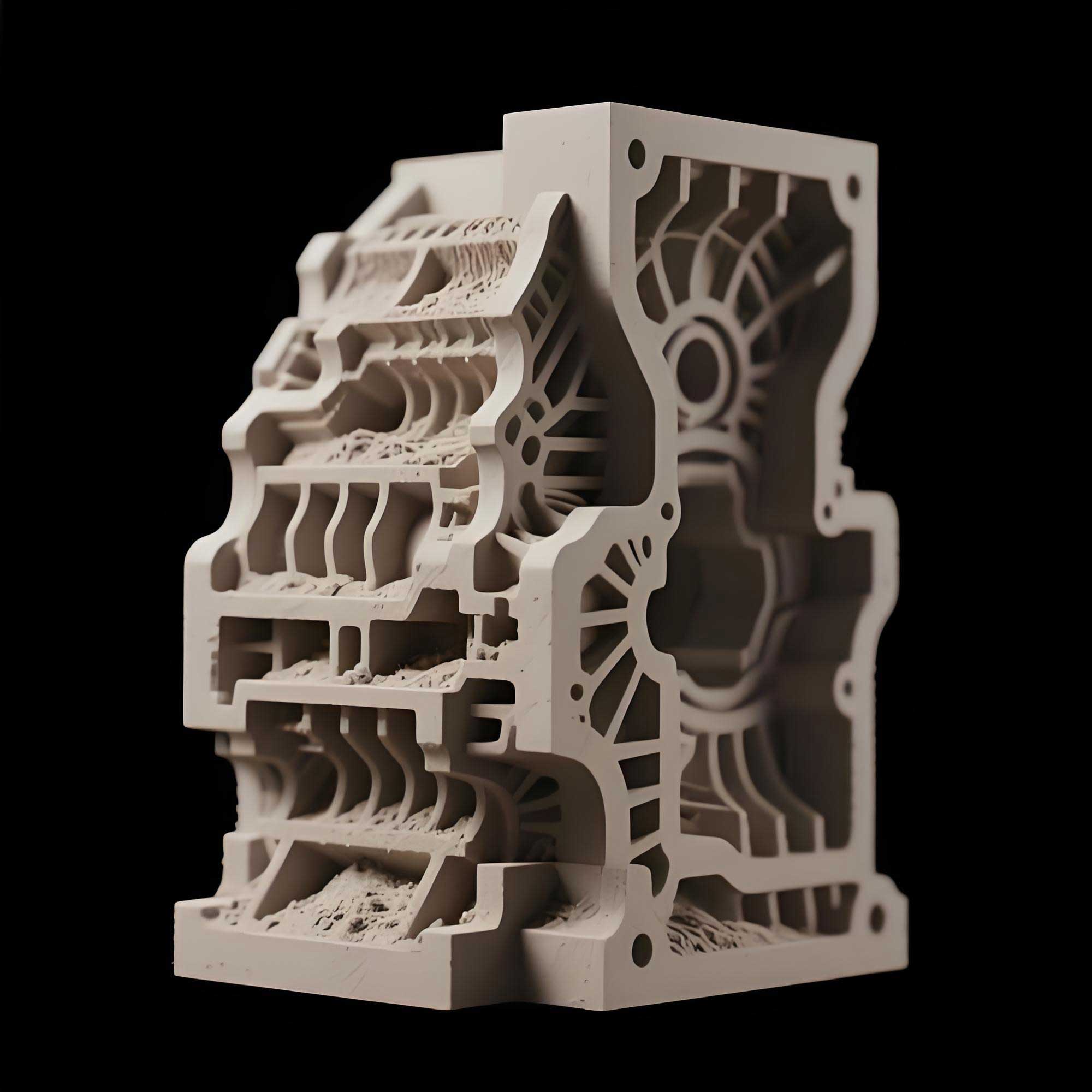
Figure 1 illustrates the process comparison between traditional sand casting and 3d printing sand casting. In the traditional process, the steps of pattern making, core making, and molding can be directly replaced by precise and rapid forming of sand molds via 3D printing, thereby eliminating the pattern-making stage and significantly shortening the casting cycle. With the help of 3D printing, the mold does not need to consider traditional parting and draft angle requirements, and complex internal cavity structures can be printed in one piece. At the design source, the mold manufacturing based on 3d printing sand casting introduces a brand-new design concept, breaking the traditional design limitations caused by process conditions. The sand mold generated by 3D printing can eliminate the cumbersome steps of traditional flask assembly and core setting, greatly simplifying the process flow. Compared with traditional sand casting, which heavily relies on process personnel experience, 3d printing sand casting lowers the operational threshold and makes production more standardized, convenient, and efficient. The effective integration of 3D printing technology and sand casting process has changed the traditional casting process route.
| Aspect | Traditional sand casting | 3d printing sand casting |
|---|---|---|
| Pattern making | Required (wood, metal or plastic patterns) | Not required (direct digital model) |
| Production cycle | Long (weeks to months) | Short (hours to days) |
| Dimensional accuracy | Moderate (CT 9-11) | High (CT 7-9) |
| Surface roughness | Ra 12.5-50 μm | Ra 6.3-25 μm |
| Labor dependency | High (skilled workers needed) | Low (automated printing) |
| Complex geometry capability | Limited by pattern design and molding | Almost unlimited (no need for draft) |
| Material utilization | Moderate (pattern material waste) | High (uncured sand reused) |
| Environmental impact | Dust, noise, waste sand | Reduced waste, cleaner process |
The core advantages of 3d printing sand casting can be expressed in quantitative terms. For example, the production cycle reduction ratio \(R_t\) can be defined as:
$$R_t = \frac{T_{\text{traditional}} – T_{\text{3dp}}}{T_{\text{traditional}}} \times 100\%$$
where \(T_{\text{traditional}}\) is the time required for traditional sand casting to produce a mold, and \(T_{\text{3dp}}\) is the time required for 3d printing sand casting. In many cases, the cycle reduction can be more than 70%.
Similarly, the material utilization improvement can be expressed as:
$$U = \frac{m_{\text{used}}}{m_{\text{total}}} \times 100\%$$
where \(m_{\text{used}}\) is the mass of sand that is actually consolidated into the mold, and \(m_{\text{total}}\) is the total mass of sand consumed in the process. In 3d printing sand casting, the unused sand can be recycled, leading to a utilization rate above 90%.
3. Current Situation of Traditional Casting Engineering Training
At present, the casting engineering training in most universities is still based on the traditional sand casting knowledge system. Students manually make sand molds by hand molding and then pour liquid metal to complete castings. Traditional hand molding has its own advantages: it has profound historical heritage and strong technical foundation. As the most basic casting process, it has a long history. Students learn hand molding to deeply understand the development history and technical essence of the casting process. It also has advantages in integrating ideological and political elements into teaching, such as cultivating students’ craftsmanship spirit, labor spirit, and model worker spirit. Moreover, hand molding is flexible and suitable for diverse practice products, allowing students to participate in the whole process from mold making to metal product formation. In addition, the cost is low and materials are easily available, making it easy to build a teaching environment.
However, in the current engineering training teaching system, the traditional hand molding casting practice is insufficiently integrated with the cutting-edge technologies in the casting field. Students seldom have the opportunity to learn digital modeling, simulation technology, and 3d printing sand casting in the course. The teaching content cannot reflect the development trend of intelligent casting and is difficult to meet the requirements of cultivating outstanding engineers. For traditional hand molding, without intensive and efficient energy management, the energy consumption per product is often high. In contrast, 3d printing sand casting has significant advantages in green manufacturing and economy. Most of the sand in 3d printing sand casting is not consolidated during the process, so the loose sand can be reused, saving raw sand and hardener. The consolidated sand molds and cores can also be regenerated after casting. After casting, the metal parts are separated from the sand mold, and the sand is processed by magnetic separation, crushing, high-temperature roasting, and screening to obtain clean recycled sand. Therefore, it is necessary to introduce advanced casting technology into the casting practice teaching, comprehensively optimize teaching quality, and cultivate outstanding engineers who can adapt to future development.
4. Teaching Reform Based on 3D Printing Sand Casting
4.1 Teaching Environment and Equipment Upgrade
To improve teaching quality, our engineering practice innovation center has carried out a comprehensive upgrade of the original casting environment and equipment. We have built a new CAD design classroom, equipped with three 3d printing sand casting printers, a sand sieving system, a sand mixing system, and three medium-frequency induction furnaces. The intelligent casting workshop is divided into multiple functional areas: a design classroom for three-dimensional modeling and simulation, a printer area for 3d printing sand casting operations, a hand molding area for traditional practice, and a melting/pouring area for safe metal casting.
The upgraded environment provides students with access to both traditional tools and modern digital manufacturing equipment. Students can first design their sand molds using CAD software in the design classroom, then proceed to the printer area to realize their designs through 3d printing sand casting, and finally complete the pouring and post-processing in the dedicated safe zones. This spatial arrangement simulates the workflow of a modern intelligent foundry, allowing students to experience the entire digital casting chain.
4.2 Teaching Content Update
Based on the introduction of 3d printing sand casting and the current development of intelligent casting, the teaching objectives have been expanded from simply understanding casting processes and methods to the following:
- Understand the working principle of 3d printing sand casting printers and the current status of intelligent casting.
- Master the skills of using 3d printing sand casting to manufacture sand molds and sand cores.
- Master the design of cores, gating system, and three-dimensional modeling methods for simple sand casting castings.
- Understand casting production safety technology and environmental protection knowledge, and be able to conduct simple economic benefit analysis.
Before the reform, the casting training process consisted of six parts: teacher explanation of casting process principles and key points, teacher demonstration of sand casting process with tools introduction, students’ manual hand molding practice using given patterns to make sand molds, pouring under teacher guidance, post-processing of products, and watching videos of other special casting processes. After the reform, the new teaching process is shown in the following table.
| Stage | Before reform | After reform |
|---|---|---|
| 1 | Lecture on casting principles | Lecture on casting principles + introduction to 3d printing sand casting |
| 2 | Teacher demonstration of hand molding | CAD design of sand mold (core) by students |
| 3 | Student hand molding using pattern | Casting process CAE simulation |
| 4 | Pouring | 3d printing sand casting machine operation |
| 5 | Post-processing | Mold assembly and pouring |
| 6 | Video of special processes | Post-processing and video of special processes |
The reformed teaching process emphasizes the deep integration of computer-aided design, simulation, and advanced manufacturing. It not only retains the essence of traditional casting but also introduces modern digital tools that are essential for 3d printing sand casting.
4.2.1 Principle Explanation
In the principle explanation stage, teachers explain the principles, processes, and historical development of casting, and then introduce the principle of 3d printing sand casting. This includes a detailed introduction to the development, characteristics, and applications of 3d printing sand casting, as well as the specific equipment used in the practice sessions. Students are exposed to the structure of the 3D printer, the role of binder, the layering process, and the post-processing steps such as depowdering and curing.
4.2.2 CAD Design of Sand Mold
Teachers guide students to adapt to the design philosophy of 3d printing sand casting parts. Students use CAD software to directly design the sand mold based on the characteristics of 3d printing sand casting, including adding gating systems and risers. For example, a bent pipe product is used as a teaching case. The sand mold and core are designed in a CAD environment, and the generated CAD data are then imported into the 3d printing sand casting printer. Figure 5 in the original paper shows the CAD design process, but here we describe the steps: 1) create a 3D solid model of the casting; 2) generate a parting surface; 3) design the sand mold and core; 4) add sprue, runner, ingate, and riser; 5) export STL files for printing.
4.2.3 Casting Process CAE Simulation
Taking the bent pipe casting as an example, the material is ZAlSi12 cast aluminum alloy. Considering the low pouring temperature and rapid cooling characteristics of aluminum alloy, as well as the limited time for completion of the pouring process, no core venting structure was originally set in the course. After completing the modeling of the bent pipe and the sand mold, the CAE simulation is carried out using a self-developed casting simulation software. The three-dimensional geometric models of the casting, sand mold, and core are imported into the simulation software, followed by pre-processing steps including mesh generation, material selection, initial condition settings, and boundary condition settings. Then the simulation calculation is performed. Based on the simulation results, the positions where shrinkage porosity and shrinkage cavities are likely to occur are analyzed. According to the defect distribution predicted by the simulation, the feeding system and exhaust channels are optimized by adding risers at both ends of the bent pipe. The risers provide both feeding and venting functions, effectively suppressing shrinkage defects. The optimized simulation results show that the defects are effectively eliminated.
The CAE simulation process can be mathematically represented by the governing equations for heat transfer and fluid flow during mold filling and solidification. For simplicity, the temperature field is governed by the Fourier equation:
$$\rho c_p \frac{\partial T}{\partial t} = \nabla \cdot (k \nabla T) + Q$$
where \(\rho\) is the density, \(c_p\) is the specific heat capacity, \(T\) is the temperature, \(t\) is the time, \(k\) is the thermal conductivity, and \(Q\) is the latent heat source term. This equation is solved with appropriate boundary conditions to predict the solidification behavior and identify potential defects. In teaching, we emphasize the physical meaning of each term and how the simulation helps optimize the gating and riser design for 3d printing sand casting.
4.2.4 3D Printing Sand Mold Machine Operation
In this stage, students operate the actual 3d printing sand casting equipment. The procedure is as follows:
- Sieve the original sand to obtain uniformly sized fine sand particles.
- Add hardener to the sieved sand and mix it thoroughly using a sand mixer to prepare the pre-mixed sand.
- Load the pre-mixed sand into the hopper of the 3d printing sand casting machine.
- Use the slicing software provided with the printer to slice the CAD model into layers.
- Start the printing process. During printing, a spreader evenly spreads a 0.2–0.3 mm thick layer of pre-mixed sand on the worktable. The print head jets the binder at specified positions based on the slice data, where the binder reacts with the hardener to consolidate the sand grains. The platform then descends one layer, and the process is repeated until the entire sand mold or core is completed. Unbound sand remains loose and is later cleaned away.
- After printing, allow the sand mold sufficient time to cure, then remove it from the printer and clean the surface to obtain the final sand mold or core for assembly.
This hands-on operation is essential for students to understand the working principle and advantages of 3d printing sand casting. Through this practice, students gain direct experience with layer-by-layer forming and understand the importance of process parameters such as layer thickness, binder saturation, and curing time.
4.2.5 Mold Assembly and Pouring
After the sand mold and core are printed and cleaned, students proceed with mold assembly. They place the core into the mold cavity, align the mold halves, and ensure proper clamping. Under the guidance and supervision of the teacher, the metal liquid (aluminum alloy) is melted in the medium-frequency induction furnace and poured into the mold. After the casting has cooled and solidified, the mold is broken to retrieve the rough casting. This step connects the digital design and manufacturing process to the actual metallurgical operation, giving students a complete view of 3d printing sand casting.
4.2.6 Post-Processing
Students remove the gating system and risers from the casting, grind off burrs, and perform surface finishing. The final casting is then evaluated by the teacher. In the case of the bent pipe, the final aluminum casting demonstrates the feasibility and quality of the whole process. Through this project-based approach, students not only learn the technical details but also develop problem-solving skills and teamwork abilities.
4.3 Teaching Method Improvement
Traditional casting training mainly relies on lecturing and demonstration, with students passively imitating the teacher’s actions. The introduction of 3d printing sand casting enables a project-based learning approach. The entire teaching process is organized around the goal of manufacturing a bent pipe casting. Students work in teams to complete the sand mold design, casting simulation, 3D printing operation, hand molding practice, pouring, and post-processing. This project-driven method increases students’ initiative and engagement. The whole process simulates the real casting production chain from design to final product, enhancing students’ ability to solve practical problems and fostering innovation capability.
During the 3d printing sand casting working time, teachers can also demonstrate traditional hand molding operations to students, and students perform manual molding practice to understand the traditional sand casting process. This combination allows students to compare the two approaches. They observe how 3d printing sand casting eliminates the need for patterns, reduces labor intensity, and improves accuracy, while still appreciating the artistic and skill-based nature of traditional hand molding. The teaching method has shifted from teacher-centered to student-centered, in line with modern educational concepts.
4.4 Teaching Evaluation Improvement
In the traditional casting training, students’ performance was evaluated mainly by the quantity and quality of the final products, which is a single “result-oriented evaluation.” After the introduction of 3d printing sand casting, the entire teaching process is project-based, so the evaluation can cover every stage, including sand mold design, CAE simulation, sand mold printing, pouring, and post-processing. This diversified and process-oriented evaluation provides a more accurate and comprehensive measure of students’ practical performance. Combining “process evaluation” and “result evaluation” yields a fairer assessment.
The reformed evaluation system consists of four parts: the student’s practice process and final product quality each account for 40%, housekeeping and organization account for 10%, and class discipline accounts for 10%. The specific evaluation criteria are shown in the table below.
| Evaluation aspect | Weight | Assessment items |
|---|---|---|
| Practice process | 40% | CAD design correctness; 3D printer operation accuracy; mold cleaning quality; hand molding rationality; reasonable division of labor during pouring; completion status of each step |
| Final product quality | 40% | Surface quality, dimensional accuracy, absence of defects, completeness of casting, successful pouring |
| Organization and housekeeping | 10% | Workstation cleanliness, tool storage, sand waste disposal, adherence to safety rules |
| Class discipline | 10% | Punctuality, attendance, cooperation, and active participation |
To quantitatively assess the overall performance, a weighted score formula can be used:
$$S = 0.4 \times P + 0.4 \times Q + 0.1 \times O + 0.1 \times D$$
where \(S\) is the total score, \(P\) is the process score, \(Q\) is the product quality score, \(O\) is the organization score, and \(D\) is the discipline score. Each sub-score is normalized to a scale of 0–100. This comprehensive evaluation method encourages students to pay attention to both the process and the result, and to develop good working habits and teamwork skills.
4.5 Reform Effects
Since the introduction of 3d printing sand casting into the casting engineering training course from 2020 to 2025, the course has benefited more than 20,000 students. The students come from various engineering disciplines, including mechanical engineering, materials science, energy, naval architecture, and biological science. The reform has significantly improved the teaching quality and students’ practical ability. Taking the winning records in the “College Student Mechanical Engineering Innovation and Creativity Competition: Casting Process Design Competition” as an example, between 2015 and 2019, our students won 6 first prizes nationally. In the period from 2020 to 2024, they won 11 first prizes nationally. Notably, in 2022, two national first prizes were won by student teams who had participated in the reformed casting engineering training course. These teams used 3d printing sand casting technology repeatedly during the competition preparation. They printed sand molds and cores, continuously adjusted their process plans, and conducted actual pouring experiments to determine the optimal process design. The experience gained from the reformed course, especially the exposure to 3d printing sand casting, was crucial for these students to achieve excellent results. After the reform, the number of first prizes in this competition almost doubled, reflecting the effectiveness of the reform.
In addition, many universities and institutions visited our intelligent casting workshop. The reform achievements have been highly recognized by peers. Several other universities have referenced and adopted our experience in building their own casting training courses for the new era. The reformed casting workshop has also served as a popular venue for science popularization, receiving hundreds of visits from schools, enterprises, and the public, which shows the positive impact of 3d printing sand casting technology dissemination.
Student feedback in classroom evaluations has been very positive. Through the combination of 3d printing sand casting and traditional hand molding, students not only deeply understand the basic principles and challenges of traditional sand casting but also gain insight into the current development trends of the casting industry. The students’ interest in casting engineering training has significantly increased. They experience the whole process from sand mold CAD design to casting production, truly integrating theory with practice. The use of 3d printing sand casting allows rapid and accurate manufacturing of sand molds and cores with complex shapes, breaking the limitations of traditional manual molding or wooden pattern making. This greatly shortens the casting process design and optimization cycle, providing students with greater autonomy and creative space. Students can flexibly apply their CAD skills to design personalized products and directly transform their designs into physical objects, thus consolidating theoretical knowledge and enhancing their ability to carry out practical projects.
4.5.1 Quantitative Improvement from the Reform
The effectiveness of the teaching reform can be quantified through several performance indicators. For instance, the average completion time of a casting project in traditional teaching was about 8 hours over multiple sessions. With 3d printing sand casting, the same project can be completed in about 4 hours of laboratory time, while the design and simulation work is done outside the lab. This represents a time saving of approximately 50%. The success rate of producing a sound casting increased from around 70% in traditional hand molding to over 90% using 3d printing sand casting, because the sand molds have more consistent properties and the simulation helps avoid common defects.
Moreover, the average innovation score in student evaluations, which reflects the ability to propose creative designs and solutions, increased by about 35% after the reform. This is partly because 3d printing sand casting enables students to realize complex geometries that are impossible with traditional patterns. The open-ended design task encourages students to think creatively and apply engineering knowledge to solve real problems. Table 4 summarizes the student feedback before and after the reform.
| Survey item (scale 1-5) | Before reform | After reform |
|---|---|---|
| Understanding of casting principles | 3.2 | 4.5 |
| Practical hands-on ability | 3.5 | 4.6 |
| Interest and engagement | 3.0 | 4.7 |
| Exposure to advanced manufacturing technology | 1.8 | 4.8 |
| Innovation capability | 2.6 | 4.3 |
| Overall satisfaction | 3.1 | 4.6 |
The above results demonstrate that the integration of 3d printing sand casting into the casting engineering training curriculum has brought substantial benefits to students. The reform not only enhances the technical skills of students but also broadens their horizons, aligning with the requirements of intelligent manufacturing for engineering talents.
5. Conclusion
In this paper, we have explored the teaching reform of casting engineering training based on 3d printing sand casting. By introducing 3d printing sand casting into the traditional engineering training system, we successfully incorporated advanced manufacturing processes into the curriculum and deeply reformed the casting training. The reformed course, while teaching students the fundamental principles of casting, also enables them to learn 3d printing sand casting, exercise structural design thinking, and develop problem-solving abilities, gradually establishing engineering, quality, and system viewpoints.
It is important to note that 3d printing sand casting gives traditional casting processes digital and intelligent characteristics. Nevertheless, the essence of this technology is still based on the principles of casting processes. Therefore, students must first firmly grasp the fundamental casting theory before they can deeply understand and apply 3d printing sand casting. Integrating 3d printing sand casting into the casting training course is not about creating entirely new teaching content; it is about preserving and inheriting the core concepts of traditional sand casting while prospectively introducing advanced technology to reform the casting engineering training. This approach deepens the cultivation of students’ practical innovation ability and engineering capability.
The reform has achieved remarkable results. The number of first prizes in national casting competition nearly doubled, student satisfaction and learning outcomes improved significantly, and many other universities have adopted our experience. However, we recognize that continuous improvement is needed as technology evolves. Future work may include developing more advanced digital twin platforms, introducing more complex casting cases, and expanding the use of artificial intelligence in process design and defect prediction in 3d printing sand casting. We also plan to strengthen industry-university cooperation to provide students with more opportunities for real-world casting projects. These developments will further enhance the teaching quality and better prepare students for careers in the intelligent manufacturing era.
In summary, the teaching reform based on 3d printing sand casting has transformed the traditional casting training from a manual, skill-based practice into a comprehensive, project-oriented, and digitally integrated learning experience. The reform has not only improved students’ engineering practice and innovation capabilities but also set a new paradigm for engineering training courses in the context of intelligent manufacturing. We believe that the successful experience can be widely promoted in other engineering training centers, contributing to the cultivation of high-quality talents for the manufacturing industry.