
As a seasoned professional in the foundry industry, I have witnessed significant transformations in sand casting manufacturing over the years. The recent expansion initiatives by leading sand casting manufacturers highlight a strategic shift towards diversifying production capabilities to meet evolving client demands. This article delves into the technical nuances, economic implications, and future trends shaping the landscape of sand casting manufacturing, with a focus on innovative processes like horizontal molding. Through detailed analysis, tables, and formulas, I aim to provide a comprehensive overview that underscores the critical role of sand casting manufacturers in global industrial supply chains.
The integration of horizontal molding lines into traditional vertical molding operations represents a pivotal development for sand casting manufacturers. Vertical molding has long been the cornerstone of high-volume production, but its limitations in handling small-batch, complex components have driven the adoption of horizontal systems. This transition directly addresses client concerns regarding high tooling costs and flexibility. For sand casting manufacturers, this means enhanced agility in responding to market needs, particularly in sectors requiring intricate designs and rapid prototyping. The following table summarizes the key differences between vertical and horizontal molding techniques, which are essential for sand casting manufacturers to optimize their workflows.
| Aspect | Vertical Molding | Horizontal Molding |
|---|---|---|
| Production Speed | Typically 100-150 molds per hour | Up to 200 molds per hour |
| Tooling Changeover Time | 30-45 seconds | 18 seconds or less |
| Suitability for Complex Cores | Limited due to mold orientation | High, with automated core setting |
| Typical Application | High-volume, simple geometries | Small-batch, intricate parts like housings and turbines |
| Space Utilization | Requires significant vertical space | Efficient use of floor space |
The economic rationale for sand casting manufacturers to invest in horizontal molding can be modeled using cost-benefit analysis. Let \( C_v \) represent the total cost of vertical molding for a production run, and \( C_h \) for horizontal molding. These costs include tooling, labor, and material expenses. The break-even point occurs when the savings from reduced tooling costs in horizontal molding offset the initial investment. For sand casting manufacturers, the formula can be expressed as:
$$ \Delta C = C_v – C_h = (T_v \cdot N_v + L_v + M_v) – (T_h \cdot N_h + L_h + M_h) $$
where \( T \) is tooling cost per unit, \( N \) is the number of units, \( L \) is labor cost, and \( M \) is material cost. Subscripts \( v \) and \( h \) denote vertical and horizontal processes, respectively. Sand casting manufacturers can use this to determine when horizontal molding becomes profitable, especially for low-volume orders. Given that tooling costs \( T_h \) are often lower due to faster changeovers, sand casting manufacturers achieve cost efficiencies over time.
Technological advancements in horizontal molding systems have redefined performance standards for sand casting manufacturers. Key features include high-speed production at 200 molds per hour, rapid pattern plate changes within 18 seconds, and enhanced mold strength and dimensional accuracy. These attributes are crucial for sand casting manufacturers aiming to produce components for demanding applications such as automotive, agriculture, and industrial markets. The automation of core setting and laser-guided pouring further reduces human error, increasing consistency. For sand casting manufacturers, the integration of 3D sand printing technology, like the ExOne S-Max Pro, allows for complex core assemblies to be produced as single units, streamlining prototyping and reducing lead times. This synergy between traditional casting and additive manufacturing positions sand casting manufacturers at the forefront of innovation.
To quantify the impact of automation, sand casting manufacturers can analyze productivity gains using performance metrics. Let \( P \) denote production output in molds per hour, \( E \) denote equipment efficiency, and \( D \) denote downtime. The overall equipment effectiveness (OEE) for a horizontal molding line can be calculated as:
$$ OEE = A \times P \times Q $$
where \( A \) is availability ratio \( \left(1 – \frac{D}{T}\right) \), \( P \) is performance rate \( \left(\frac{\text{Actual Output}}{\text{Theoretical Maximum}}\right) \), and \( Q \) is quality rate \( \left(1 – \frac{\text{Defective Units}}{\text{Total Units}}\right) \). For sand casting manufacturers, achieving an OEE above 85% indicates optimal utilization of horizontal molding systems. The table below illustrates typical OEE components for sand casting manufacturers adopting new horizontal lines.
| Component | Vertical Molding Baseline | Horizontal Molding Target |
|---|---|---|
| Availability (%) | 75 | 90 |
| Performance (%) | 80 | 95 |
| Quality (%) | 85 | 98 |
| Overall OEE (%) | 51 | 84.7 |
This improvement directly enhances the competitiveness of sand casting manufacturers in global markets. By leveraging horizontal molding, sand casting manufacturers can offer value-added services, such as rapid prototyping for complex parts like housings, covers, turbocharger bearing shells, scrolls, and pulleys. These components often require intricate core designs, which are more feasible with horizontal systems. As sand casting manufacturers expand their portfolios, they cater to diverse industries, including construction, agriculture, oil and gas, and rail. The ability to quickly switch pattern plates for dual-sided tooling enables sand casting manufacturers to meet tight deadlines, a critical advantage in just-in-time manufacturing environments.
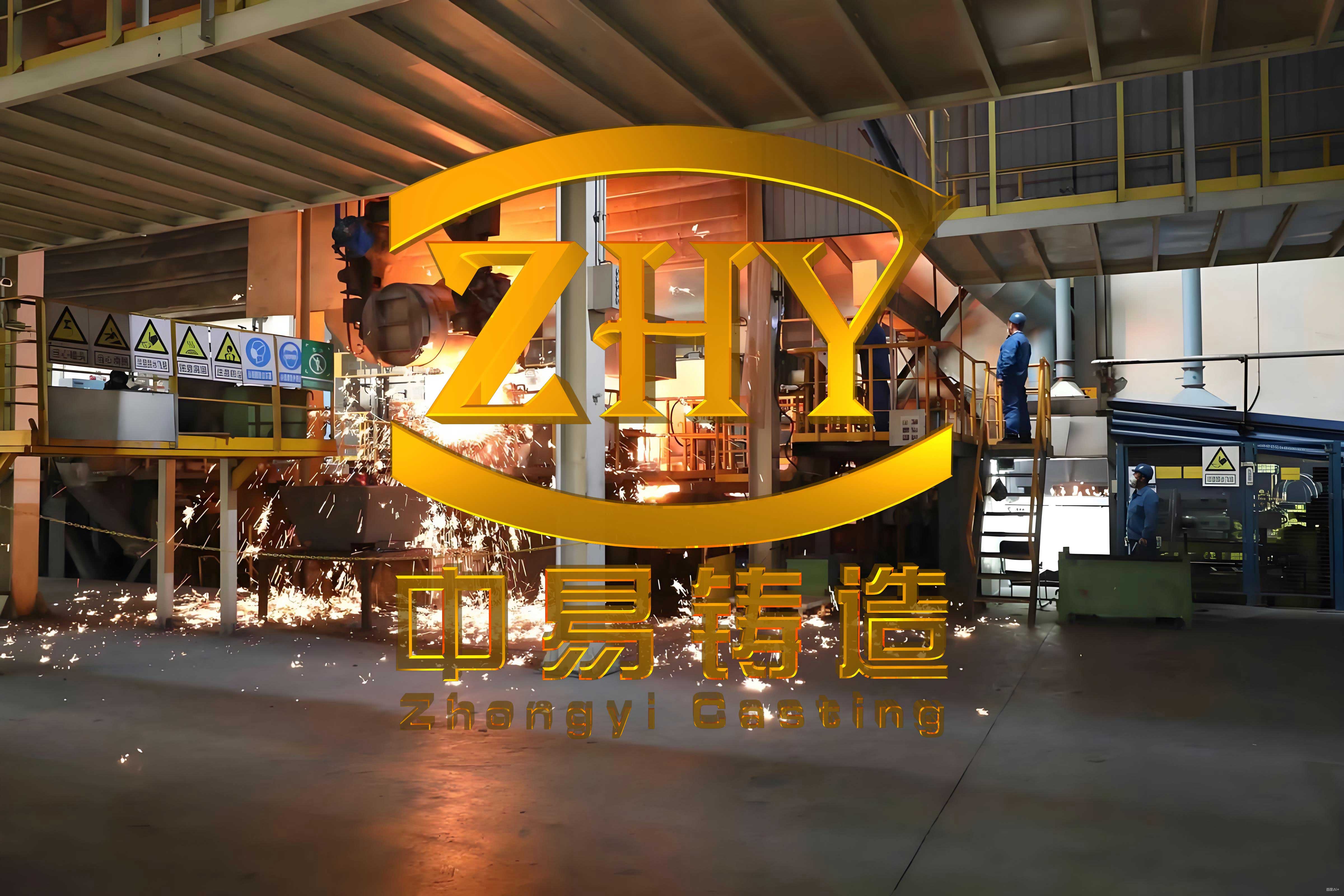
The environmental and sustainability aspects are increasingly vital for sand casting manufacturers. Horizontal molding lines often incorporate energy-efficient mechanisms and reduced waste generation compared to traditional methods. For instance, automated sand reclamation systems minimize material consumption, aligning with green manufacturing principles. Sand casting manufacturers can model the environmental impact using carbon footprint calculations. Let \( F \) represent the total carbon emissions per ton of castings produced. This can be broken down as:
$$ F = E_m + E_p + E_t $$
where \( E_m \) is emissions from melting, \( E_p \) from processing, and \( E_t \) from transportation. By optimizing horizontal molding processes, sand casting manufacturers reduce \( E_p \) through shorter cycle times and lower energy use. Additionally, the shift towards electric and hybrid vehicle components drives sand casting manufacturers to adopt cleaner technologies. For example, producing parts for hybrid systems reduces gasoline consumption and CO₂ emissions, benefiting the environment. Sand casting manufacturers are thus pivotal in supporting the transition to eco-friendly mobility solutions.
Market trends indicate a growing demand for sand casting manufacturers to supply components for modern electric and hybrid vehicles. This includes complex aluminum and iron castings that require high precision and durability. Sand casting manufacturers are responding by forming strategic partnerships and joint ventures to leverage global expertise. While specific company names are omitted, it is evident that collaborations between international firms enhance technological exchange. For sand casting manufacturers, this means access to advanced materials and processes, such as lightweight alloys and automated finishing. The table below outlines key application areas for sand casting manufacturers in the automotive sector.
| Component Type | Material | Key Requirements | Role of Sand Casting Manufacturers |
|---|---|---|---|
| Engine Blocks | Gray Iron, Ductile Iron | High strength, heat resistance | Produce durable castings using horizontal molding |
| Transmission Housings | Aluminum Alloys | Lightweight, dimensional accuracy | Leverage 3D sand printing for complex cores |
| Brake Calipers | Ductile Iron | Precision, fatigue resistance | Utilize automated pouring for consistency |
| Battery Enclosures | Aluminum | Thermal management, lightweight | Adopt hybrid molding techniques |
The financial performance of sand casting manufacturers is closely tied to technological investments. Return on investment (ROI) for horizontal molding lines can be assessed using discounted cash flow models. Let \( I_0 \) be the initial investment, \( CF_t \) the net cash flow in year \( t \), and \( r \) the discount rate. The net present value (NPV) is:
$$ NPV = \sum_{t=1}^{n} \frac{CF_t}{(1+r)^t} – I_0 $$
For sand casting manufacturers, positive NPV indicates profitable expansion. Typically, horizontal molding systems yield higher \( CF_t \) due to increased production flexibility and lower per-unit costs. Sand casting manufacturers must also consider intangible benefits, such as enhanced client relationships and market positioning. By diversifying into horizontal molding, sand casting manufacturers mitigate risks associated with demand volatility, ensuring long-term sustainability.
Quality control is paramount for sand casting manufacturers, especially when producing parts for critical applications. Statistical process control (SPC) methods are employed to monitor dimensions and material properties. The process capability index \( C_pk \) is used to assess how well a process meets specifications. For a critical dimension with upper and lower limits \( USL \) and \( LSL \), and process mean \( \mu \) and standard deviation \( \sigma \), \( C_pk \) is defined as:
$$ C_pk = \min \left( \frac{USL – \mu}{3\sigma}, \frac{\mu – LSL}{3\sigma} \right) $$
Sand casting manufacturers targeting \( C_pk \geq 1.33 \) ensure high-quality output. Horizontal molding lines, with their superior dimensional accuracy, help sand casting manufacturers achieve this consistently. Automated inspection systems further reduce defects, reinforcing the reputation of sand casting manufacturers as reliable suppliers.
Looking ahead, the future of sand casting manufacturing will be shaped by digitalization and Industry 4.0. Sand casting manufacturers are integrating Internet of Things (IoT) sensors into molding equipment to enable real-time monitoring and predictive maintenance. Data analytics can optimize parameters like sand moisture content and pouring temperature, reducing scrap rates. For sand casting manufacturers, this digital transformation translates into higher efficiency and competitiveness. The adoption of artificial intelligence for pattern design and simulation also accelerates product development cycles, allowing sand casting manufacturers to respond swiftly to client needs.
In conclusion, the expansion into horizontal molding represents a strategic evolution for sand casting manufacturers. By embracing advanced technologies, sand casting manufacturers enhance their production capabilities, reduce costs, and support sustainable manufacturing practices. The continuous innovation in sand casting manufacturing ensures that these foundational industrial players remain indispensable in global supply chains. As demand grows for complex, high-performance components, sand casting manufacturers will continue to lead through adaptability and technical excellence, solidifying their role as key enablers of modern industry.