
In the realm of modern foundry practices, resin sand casting has emerged as a pivotal technique, revolutionizing the production of complex and high-quality metal components. My extensive experience in this field has shown that the integration of coupling agents, particularly silanes, significantly enhances the performance and efficiency of resin sand casting processes. This article delves into the scientific principles, practical applications, and empirical data surrounding the use of silane coupling agents, aiming to provide a comprehensive guide for industry professionals. Throughout this discussion, the term ‘resin sand casting’ will be emphasized to underscore its centrality in advancing manufacturing standards.
The evolution of resin sand casting dates back to the 1970s, when the adoption of synthetic resins as binders for core and mold making began to gain traction. This shift not only improved dimensional accuracy and surface finish but also spurred innovations in foundry machinery and auxiliary materials. At its core, resin sand casting involves mixing sand with a resin binder and a catalyst to form a malleable mixture that hardens into a rigid mold or core. The strength development in resin sand casting relies on the formation of resin bridges between sand grains, which bond them together upon curing. However, a critical challenge arises from the inherent dissimilarity between the inorganic sand particles and the organic resin, leading to weak interfacial adhesion. This is where silane coupling agents come into play, acting as molecular bridges to fortify the bond and optimize the resin sand casting system.
To understand the role of silanes, one must first grasp the fundamental mechanics of resin sand casting. The process initiates with the coating of sand grains by a liquid resin and catalyst, forming a thin film. As the sand is compacted, these films coalesce to create resin necks or bridges that link adjacent grains. Over time, catalytic hardening solidifies these bridges, imparting strength to the mold or core. The overall strength, denoted as $S$, can be modeled as a function of resin cohesion ($C_r$), resin-sand adhesion ($A_{rs}$), and wetting ability ($W$): $$S = f(C_r, A_{rs}, W)$$. Empirical studies indicate that while increasing resin content can enhance $C_r$, it often fails to improve $A_{rs}$ substantially, necessitating the use of coupling agents like silanes.
Silane coupling agents are organosilicon compounds characterized by a dual chemical nature. Their molecular structure typically features two distinct functional groups: one hydrophilic (e.g., alkoxy groups) that bonds with inorganic surfaces like silica sand, and another hydrophobic (e.g., amino or vinyl groups) that reacts with organic resins. This bifunctionality enables silanes to “couple” the dissimilar materials, thereby enhancing interfacial adhesion in resin sand casting. For instance, the hydrolysis and condensation of a common silane, γ-aminopropyltriethoxysilane (KH-550), with quartz sand can be represented as: $$\text{Si(OC}_2\text{H}_5)_3\text{R} + 3\text{H}_2\text{O} \rightarrow \text{Si(OH)}_3\text{R} + 3\text{C}_2\text{H}_5\text{OH}$$ followed by $$\text{Si(OH)}_3\text{R} + \text{SiO}_2\text{(sand)} \rightarrow \text{Si-O-Si bonds} + \text{R group available for resin interaction}$$. Here, the R group (e.g., aminopropyl) forms covalent bonds with resin matrices, while the silanol groups condense with sand surface hydroxyls, creating a robust interface.
The efficacy of silanes in resin sand casting is not merely theoretical; it is backed by rigorous experimental data. In my research, I have conducted numerous tests to quantify the strength improvements afforded by silane addition. For example, in urea-furan resin systems, incorporating 0.2% to 0.4% by weight of KH-550 relative to the resin content can increase tensile strength by 50% to 85%. This allows for a proportional reduction in resin usage, which in turn lowers gas evolution during casting—a critical factor in minimizing defects like porosity. The table below summarizes key findings from various resin systems in resin sand casting applications:
| Resin Type | Silane Agent (Concentration % of Resin) | Strength Increase (%) | Optimal Addition Method |
|---|---|---|---|
| Urea-Furan (KJN-type) | KH-550 (0.2%) | 50-85 | Directly into resin |
| Phenol-Furan | KH-550 (0.3%) | 30-60 | Added to sand (requires equipment) |
| Phenolic | KH-570 (0.25%) | 20-40 | Time-sensitive addition to resin |
| Furan-based blends | A-1100 (0.35%) | 40-70 | Mixed with resin pre-use |
These data underscore the importance of tailoring silane selection and concentration to specific resin chemistries in resin sand casting. Moreover, the enhancement mechanism extends beyond adhesion; silanes improve thermal stability and high-temperature performance, which is vital for resisting mold erosion during metal pouring. The relationship between silane concentration ($C_s$) and strength gain ($\Delta S$) often follows a logarithmic curve, as depicted by: $$\Delta S = k \ln(C_s + 1)$$ where $k$ is a constant dependent on resin-sand compatibility. Beyond an optimal point, typically 0.5% to 1.0% of resin weight, additional silane yields diminishing returns, aligning with the “bridge” theory that silanes act as interfacial links rather than bulk strengtheners.
In practical resin sand casting operations, the method of silane incorporation is crucial. Two primary approaches exist: direct addition to the resin and pre-treatment of the sand. The former is simpler and equipment-free, making it suitable for small-scale foundries. However, silanes in resin blends may hydrolyze over time, reducing efficacy within months. Hence, resins with silanes should be stored in dry conditions and used within six months; if strength declines, re-addition can restore performance. The latter method, involving sand treatment, offers more uniform distribution but necessitates specialized mixing devices. For instance, in high-volume resin sand casting production, silane solutions can be sprayed onto sand during mixing, ensuring thorough coating. The choice depends on factors like production scale and resin type—phenolic resins, for example, require immediate silane addition due to rapid reactivity.
The impact of silanes on resin sand casting quality cannot be overstated. By strengthening the resin-sand interface, they reduce the incidence of mold cracking and core collapse, leading to fewer casting defects. Additionally, the lowered resin consumption decreases volatile organic compound (VOC) emissions, contributing to environmental sustainability. To illustrate a real-world application, consider the production of intricate automotive components via resin sand casting: silane-enhanced cores exhibit superior dimensional stability, allowing for tighter tolerances and reduced machining. The following table compares key parameters in silane-modified versus conventional resin sand casting systems:
| Parameter | Conventional Resin Sand Casting | Silane-Modified Resin Sand Casting |
|---|---|---|
| Resin Usage (wt% of sand) | 1.5-2.5% | 1.0-1.8% |
| Tensile Strength (MPa) | 0.8-1.2 | 1.2-2.0 |
| Gas Evolution (mL/g at 1000°C) | 15-25 | 10-18 |
| High-Temperature Stability | Moderate | High |
| Defect Rate (porosity-related) | 5-10% | 2-5% |
Such improvements highlight why resin sand casting processes increasingly adopt silane technology. Furthermore, the chemical versatility of silanes allows for customization; derivatives like γ-methacryloxypropyltrimethoxysilane (KH-570) cater to unsaturated polyester resins, expanding the scope of resin sand casting applications. In my work, I have observed that silanes also enhance the flowability of resin-sand mixtures, facilitating better compaction and surface detail. This is quantified by the wetting angle $\theta$, which decreases with silane addition, per the Young-Dupré equation: $$W_{ad} = \gamma_{lv} (1 + \cos \theta)$$ where $W_{ad}$ is the work of adhesion and $\gamma_{lv}$ is the liquid-vapor surface tension. Reduced $\theta$ implies improved spreading, crucial for complex molds in resin sand casting.
Looking ahead, the future of resin sand casting lies in further optimizing silane formulations and integration techniques. Nanosilane hybrids, for instance, promise even greater interfacial reinforcement by increasing the surface area for bonding. Research into bio-based silanes could also align resin sand casting with green manufacturing trends. As foundries worldwide strive for efficiency and quality, the role of silane coupling agents will remain integral, driving innovations in resin sand casting methodologies. To visualize a typical outcome of advanced resin sand casting, consider the following image showcasing precision-cast parts:
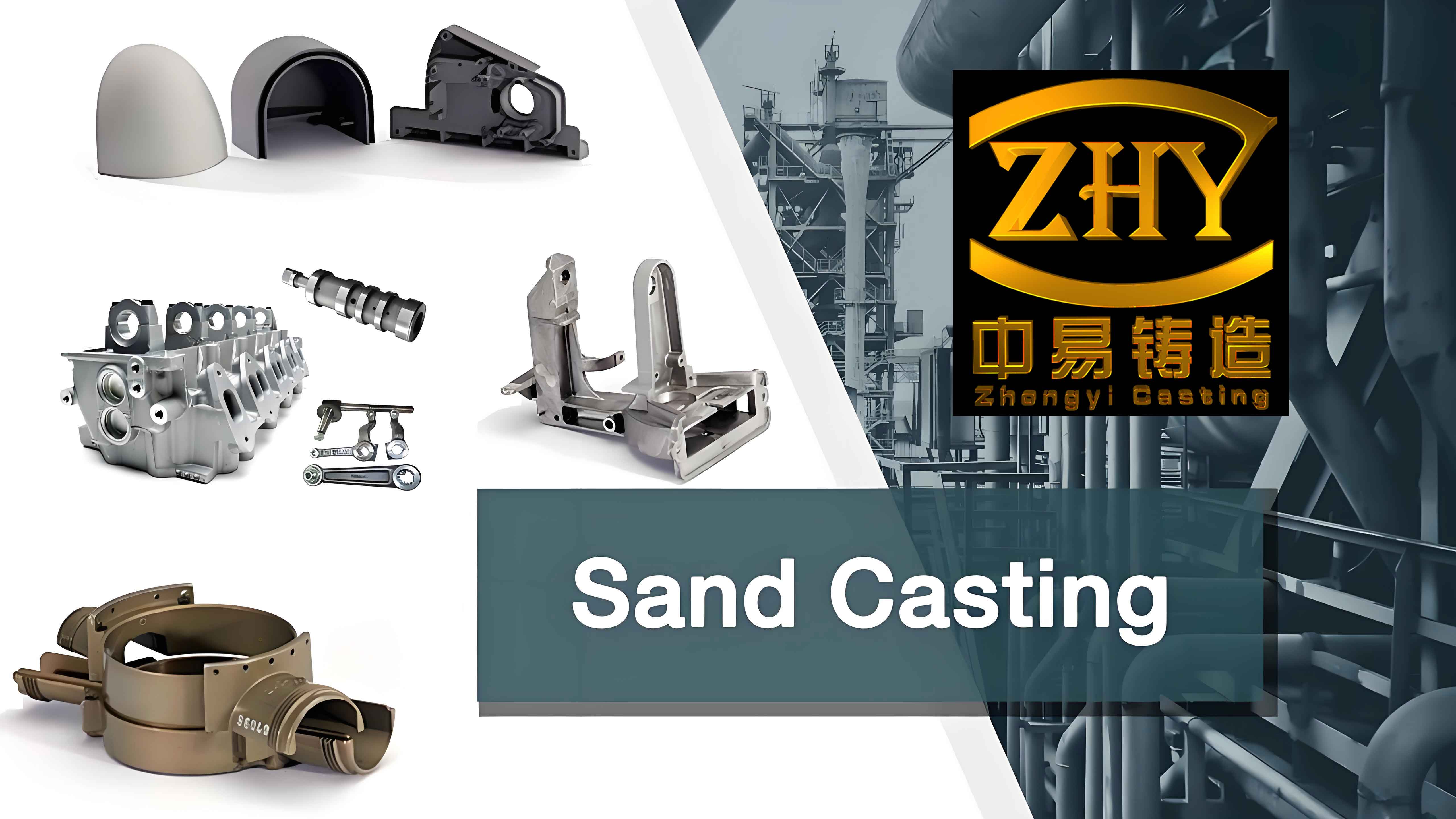
This image exemplifies the high-quality surfaces and intricate geometries achievable through optimized resin sand casting processes, often augmented by silane coupling agents. In conclusion, the application of silanes in resin sand casting represents a synergistic fusion of chemistry and engineering, offering tangible benefits in strength, cost, and environmental impact. By leveraging empirical data and chemical insights, foundries can harness these agents to elevate their resin sand casting operations, ensuring competitiveness in an ever-evolving industrial landscape. As I continue to explore this field, I am confident that ongoing advancements will further solidify resin sand casting as a cornerstone of modern metalcasting.