
The pursuit of high-quality castings via the lost foam casting process demands rigorous control over every manufacturing stage, from raw material procurement and pattern molding to shakeout and final cleaning. Any lapse in this controlled environment can precipitate a variety of casting defects. This article synthesizes and analyzes the characteristics of common defects encountered in the lost foam casting process. Through this analysis, I will detail a series of targeted preventive measures and solutions, aiming to provide a practical framework for enhancing the quality of lost foam castings. My focus will be on three predominant defect categories: carbon defects, cold shuts, and slag inclusions, each explored from the perspective of root cause analysis and remedial action.
Fundamentals and Challenges of the Lost Foam Casting Process
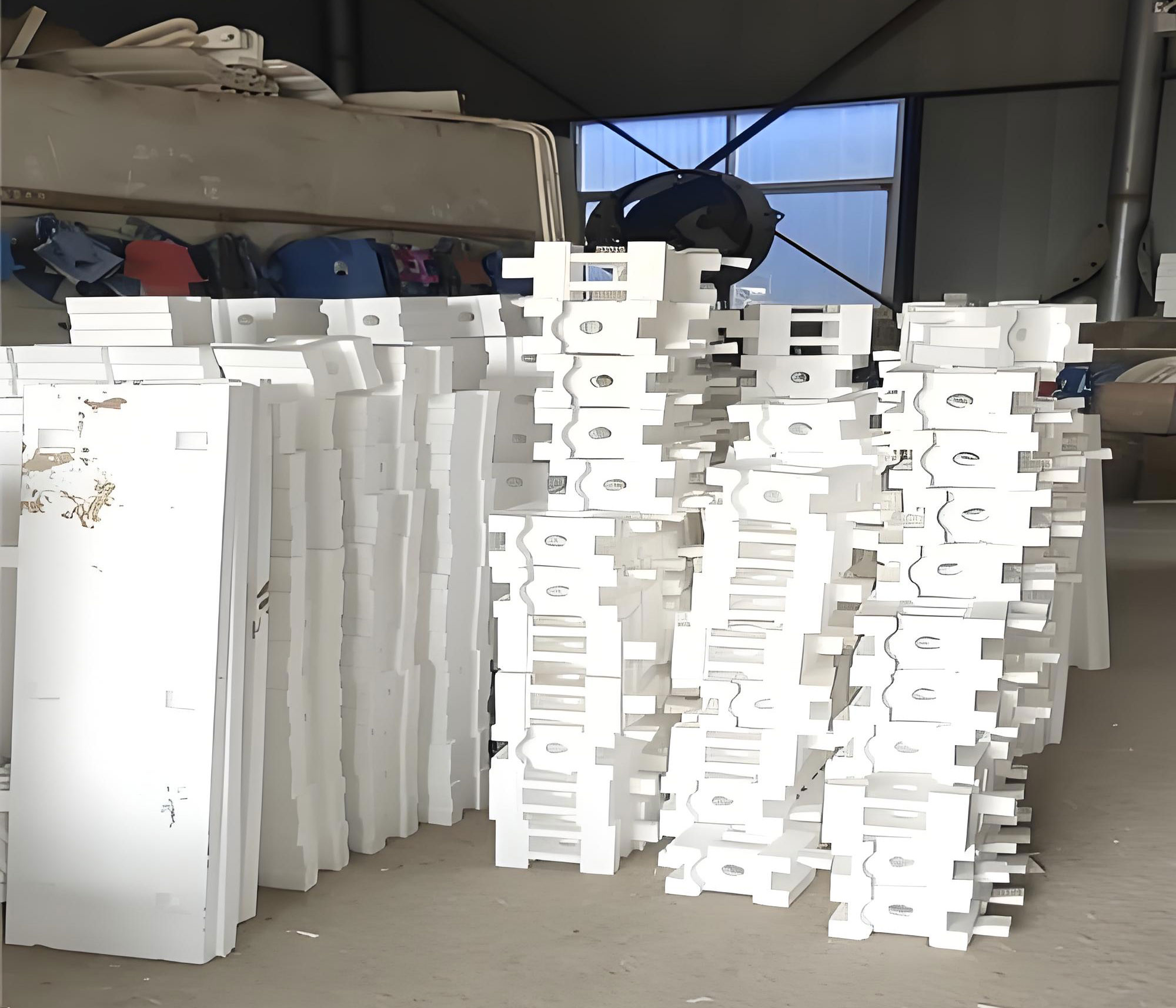
The lost foam casting process, a precise and innovative method, involves creating a foam pattern (often expanded polystyrene or EPS), coating it with a refractory slurry, embedding it in unbonded sand within a flask, and then pouring molten metal. The metal vaporizes the foam, occupying the cavity to form the casting. The success of this lost foam casting process hinges on the precise synchronization of several parameters: foam degradation and gas evacuation, metal fluidity and thermal management, and the stability of the sand mold. Disruptions in this delicate balance are the primary sources of the defects discussed herein. A critical element is the application of vacuum to the sand flask, which consolidates the sand, supports the mold, and, most importantly, rapidly evacuates the gaseous products of foam decomposition away from the advancing metal front. Inadequate vacuum is a recurrent theme in defect formation.
Carbon Defects: Causes and Mitigation Strategies
Carbon defects are a prevalent issue in the lost foam casting process. They manifest as lustrous carbon films, carbonaceous inclusions, or sooty patches within the casting matrix. These defects originate from the incomplete combustion and pyrolysis of the foam pattern. Instead of being fully gasified and evacuated, intermediate carbon-rich decomposition products infiltrate the metal or become trapped at the metal-mold interface. The root causes are multifaceted but often traceable to insufficient evacuation force or conditions that promote excessive carbon generation.
Primary Cause: Insufficient Vacuum Pressure
In my experience, inadequate vacuum is the single most frequent culprit for carbon defects. The vacuum system must provide a pressure differential strong enough to swiftly pull decomposition gases through the coating and sand, preventing their back-diffusion into the liquid metal. The following table enumerates common operational failures leading to low vacuum and their corresponding solutions.
| Failure Mode | Description & Impact | Corrective Action |
|---|---|---|
| Conservative System Design | Initial vacuum set-point is too low to prevent sand penetration, inadvertently allowing carbon defect formation. | Re-evaluate and increase the operational vacuum level based on casting geometry and metal type. |
| Flask Leakage | Audible leaks or seal failures allow air ingress, reducing effective vacuum on the sand. | Identify and repair leaks in the flask seals, walls, or vacuum port connections. |
| System Blockage | Foam residues or sand clogging filters, pipes, or valves restricts flow, dropping vacuum. | Implement regular maintenance; clean or replace filters; inspect lines for obstructions. |
| Clogged Filter Mesh | The fine mesh on the flask walls becomes blinded with sand, severely impeding gas flow. | Replace with a new or properly cleaned filter screen. |
| Undersized Vacuum Lines | Piping diameter is too small to handle the volumetric gas flow during pour, causing a pressure drop. | Redesign and install vacuum mains with larger cross-sectional area: $A = \pi r^2$, where $r$ must be sufficient for required flow $Q$. |
| Low Water Level in Pump | In water-ring vacuum pumps, low water level compromises sealing and pumping efficiency. | Monitor and maintain the water level at the specified mark. |
| Faulty Auto-Connect Coupling | Misalignment or wear in the automatic vacuum coupling between flask and system causes leakage. | Inspect, realign, and seal the coupling mechanism. |
Secondary and Material-Related Causes
Beyond vacuum issues, material choices profoundly influence carbon defect propensity. The permeability of the refractory coating is paramount. A coating with low gas permeability acts as a barrier, trapping pyrolysis gases. The relationship between gas flow $J$, coating permeability $k$, and pressure gradient $\Delta P$ across coating thickness $L$ can be approximated (for laminar flow) by Darcy’s law:
$$ J = -\frac{k}{\mu} \frac{\Delta P}{L} $$
where $\mu$ is the gas viscosity. A low $k$ value drastically reduces $J$, promoting gas entrapment. The solution is to reformulate the coating to increase permeability without compromising erosion resistance.
Furthermore, the foam pattern itself is a source of carbon. Using very fine foam beads to achieve a smooth surface finish increases the pattern’s density. Higher density foam contains more polymer mass per unit volume, generating a larger volume of pyrolysis products (both gaseous and liquid) that must be managed during the lost foam casting process. Controlling the pre-expansion and molding to achieve an optimal, lower density is crucial. Finally, for ferrous castings, a high carbon equivalent in the melt can exacerbate the problem by reducing the metal’s ability to dissolve or react with incoming carbon. Adjusting the charge makeup to lower the carbon content can be an effective countermeasure.
Cold Shut Defects: Origin and Remedies
A cold shut is a discontinuity in the casting where two streams of metal meet but fail to fuse completely. The fracture surface often reveals oxides or non-metallic films. In the context of the lost foam casting process, this defect arises primarily from the loss of thermal energy in the molten metal before complete mold filling. When the metal temperature falls below its fluidity threshold, viscosity increases dramatically, flow slows, and merging fronts cannot remelt the oxide skin that forms. The causes are typically linked to low superheat, poor gating design, or improper pouring practice.
Insufficient Pouring Temperature
Pouring metal at a temperature too close to its liquidus is a direct invitation for cold shuts. The thermal energy required to degrade the foam, heat the coating and sand, and maintain fluidity over the flow path is immense. A low initial temperature provides an inadequate thermal budget. The solution is strict control: maintaining the pouring temperature $T_p$ well above the liquidus temperature $T_l$, ensuring a sufficient superheat $\Delta T_{sh}$:
$$ \Delta T_{sh} = T_p – T_l $$
The required $\Delta T_{sh}$ is higher for the lost foam casting process compared to conventional casting due to the endothermic foam decomposition reaction.
Gating System Design Flaws
The gating system must deliver metal to all sections of the cavity quickly and coherently. A poor design, such as placing ingates where flow paths become excessively long or thin, allows metal to cool excessively before the mold is filled. The velocity and thermal decay of the metal front can be modeled. The temperature loss $\Delta T$ over a flow length $L$ is a function of initial temperature, heat transfer coefficient $h$, and time $t$:
$$ \Delta T \approx \frac{h A (T_{metal} – T_{mold})}{\rho V c_p} t $$
where $A$ is surface area, $\rho$ is density, $V$ is volume, and $c_p$ is specific heat. Long flow paths increase time $t$, leading to greater $\Delta T$. Corrective actions involve redesigning the gating to shorten flow lengths, using multiple ingates, or adding flow aids like risers to maintain thermal gradients.
Improper Pouring Techniques
Operator practice plays a critical role. Three poor practices are particularly detrimental:
- Slow Pouring Rate: A slow, timid pour allows the first metal in to cool significantly, creating a semi-solid skin that impedes fusion with subsequent metal. The remedy is to pour rapidly and consistently to maintain a turbulent, hot metal front.
- Foam Reaction (“Back-Pressure” or “Kickback”): If the foam degrades too violently or gases cannot escape fast enough, pressure can build and momentarily repel the incoming metal, causing hesitation or splashing. This interruption leads to temperature drop and potential cold shuts. Solutions align with preventing carbon defects: increase coating permeability, ensure complete pattern dryness, and optimize foam density.
- Interrupted Pour (“Stopped Flow”): Any pause during pouring creates separate, cooling metal batches that may not fuse. The practice must be to pour the entire mold in one continuous motion.
Slag Inclusions: Classification and Elimination
Slag inclusions, non-metallic materials entrapped within the casting, are another common challenge. In the lost foam casting process, the sources are diverse and require different interception strategies. They can be broadly classified into metallurgical slags, process slags, and coating fragments.
| Slag Type | Source | Appearance in Casting | Preventive & Corrective Measures |
|---|---|---|---|
| Furnace Slag | Oxides, refractory lining erosion, or slag from charge materials. | Irregular cavities; black (oxides) or white/glassy (refractory) coloration. | Use effective fluxing/degassing agents; properly slag off furnace; maintain lining. |
| Ladle Slag | Refractory wash from the ladle or slag carried over from furnace. | Dark, often layered inclusions near surfaces. | Employ teapot spout ladles; use slag dams or coherencer; skim ladle thoroughly before pour. |
| Cover Flux Slag | Expanded perlite or other exothermic covering compounds. | Light, porous, spherical inclusions. | Use minimal, effective cover flux; prevent it from being drawn into the pouring stream; use a slag stopper (e.g., glass cloth). |
| Coating Slag (“Coat Spall”) | Detachment of the refractory coating due to erosion, thermal shock, or mold collapse. | Irregular, refractory-colored inclusions often associated with surface imperfections. |
|
A multi-stage filtration and slag-trapping approach is highly recommended for the lost foam casting process. This can involve using a ceramic foam filter or a fiberglass filter mesh in the gating system, designing runner extensions that act as slag traps (dross pockets), and meticulous metal handling from furnace to mold. The goal is to create physical barriers that capture slag before the metal enters the main cavity. The effectiveness of a slag trap can be conceptualized by considering the buoyant force on an inclusion driving it upwards against the metal flow velocity. By creating a quiescent zone in the gating system, inclusions have time to float out.
Integrated Process Control for Defect Minimization
Success in the lost foam casting process is not about addressing defects in isolation but implementing an integrated control strategy. From my analysis, the following parameters form the cornerstone of quality production:
- Vacuum Management: Treat the vacuum system as critical infrastructure. Monitor real-time pressure in the flask, not just at the pump. Establish and validate minimum required vacuum curves for different castings.
- Material Optimization: Use foam with the lowest acceptable density for the required surface finish. Develop and control a coating recipe with high hot-strength and optimal, consistent permeability.
- Thermal Management: Calculate and control the superheat requirement, factoring in foam mass and casting modulus. Design gating for fast, directional solidification where possible.
- Slag Prevention Protocol: Institute standardized procedures for furnace slag removal, ladle skimming, and the use of filtration in every pour in the lost foam casting process.
- Process Documentation: Log every parameter for each casting (foam lot, coating batch, vacuum profile, pour temp, etc.). This data is invaluable for root cause analysis when defects do occur.
In conclusion, the defects in the lost foam casting process—carbon defects, cold shuts, and slag inclusions—are predictable and controllable. They stem from identifiable imbalances in the core physics of the process: gas evacuation, heat transfer, and fluid flow. By systematically addressing vacuum integrity, material properties, thermal budgets, and molten metal cleanliness, foundries can significantly reduce scrap rates and consistently produce high-integrity castings. The lost foam casting process, when mastered through such disciplined analysis and control, offers unparalleled flexibility and quality for complex castings.