
In my years of industrial practice and technical study, the transition from cupola to medium-frequency induction (MFI) furnace for melting gray cast iron has been a defining evolution. While offering unparalleled control over chemistry and temperature, this shift necessitates a fundamental rethinking of metallurgical principles. The inherent characteristics of induction-melted iron—lower endogenous nucleation sites, reduced sulfur levels, and a tendency for undercooling—demand a meticulous, science-based approach to achieve the consistent microstructure and mechanical properties required for high-integrity castings. This discourse aims to synthesize a detailed framework encompassing raw material strategy, process control, and quality assurance specifically tailored for producing superior gray cast iron in the coreless induction furnace.
The foundational principle is that the quality of gray cast iron is irrevocably determined in the melting department. Every subsequent step—molding, pouring, cooling—can only preserve or degrade, but not fundamentally improve, the metallurgical potential locked within the liquid metal. Therefore, the process begins long before the furnace is charged, with the strategic selection and management of raw materials.
Raw Material Philosophy and Charge Design
The first and most critical decision point is the charge makeup. Unlike cupola melting, which inherently provides a certain level of inoculation and graphitization potential from coke, the induction furnace is a “clean slate.” We must construct the desired metallurgy intentionally from the base materials. The primary charge components are steel scrap, foundry returns (gates, risers, scrap castings), and a carbon source, often supplemented with proprietary pre-conditioned iron units.
| Charge Material | Typical Composition (Approx.) | Primary Function/Role | Key Considerations for MFI Melting |
|---|---|---|---|
| Low-Alloy Steel Scrap | C: 0.05-0.25%, Si: 0.05%, Mn: 0.30-0.80%, S/P: <0.05% | Provides the iron matrix; determines base levels of minor elements; low intrinsic carbon. | Must be clean, non-rusty, and free from contaminants (Sn, Pb, Cr, Al). Consistency is paramount. High surface area leads to more oxidation. |
| Foundry Returns (Gray Iron) | Matches target casting grade (e.g., C: 3.2-3.6%, Si: 1.8-2.4%) | Recycles metal; provides a known, favorable nucleation base; improves carbon pickup efficiency. | Must be segregated by grade. Contamination with other alloys (ductile iron, steel) is disastrous. Ratio must be controlled to manage trace elements (Ti, Cu, etc.). |
| High-Purity Graphitized Petroleum Coke / Synthetic Graphite | C: >98.5%, S: <0.05%, Ash: <1.0% | The primary carbon additive. Raises final carbon content of the melt. | Purity is critical to avoid introducing harmful elements. Particle size and addition method drastically affect recovery rate (ηC). |
| Ferroalloys (FeSi, FeMn) | FeSi75 (74-80% Si), FeMn80 (75-82% Mn) | Alloying additions to adjust final Si and Mn content. | Added late in the melt to minimize oxidation loss. Pre-heating is recommended. Mn is added as FeMn, not as a separate element. |
The charge ratio is a balancing act. A common starting point is 40-60% steel scrap, 30-50% gray iron returns, and 10-20% dedicated carbon additive. The exact proportions are calculated backwards from the target final chemistry and the known yield or recovery rates for each element. The efficiency of carbon pickup, ηC, is a central process variable defined as:
$$ \eta_C = \frac{C_{final} – C_{charge}}{C_{added}} \times 100\% $$
where \( C_{final} \) is the measured carbon in the tapped iron, \( C_{charge} \) is the weighted average carbon in the solid charge materials, and \( C_{added} \) is the mass of carbon introduced via the carbon additive. This recovery rate typically ranges from 80% to 95% and is influenced by furnace atmosphere, slag cover, particle size, and addition practice.
Precise Control of Chemical Composition
Beyond the basic elements, the combined effect is often expressed through the Carbon Equivalent (CE), a powerful predictor of microstructure and castability. For gray cast iron, it is calculated as:
$$ CE = \%C + \frac{1}{3}(\%Si + \%P) $$
While CE indicates the graphitization tendency, the individual elements play distinct roles:
- Carbon (C): The primary graphitizing element. Higher carbon increases fluidity, reduces shrinkage tendency, and promotes the formation of larger, more numerous graphite flakes. In MFI melts, carbon is often targeted at the upper end of the specification (e.g., 3.4-3.7% for Class 30 iron) to compensate for the lower nucleation potential.
- Silicon (Si): A strong graphitizer and ferrite promoter. It increases CE without the volume expansion associated with carbon. Silicon content is crucial for controlling the matrix structure (pearlite vs. ferrite) and the sensitivity to casting section size. A useful relationship for estimating the pearlite/ferrite balance considers the “silicon factor”: Higher Si for a given CE favors ferrite.
- Manganese (Mn): A pearlite stabilizer and a desulfurizer. It combines with sulfur to form MnS inclusions, which can act as nucleation sites. The required Mn level is often set by the sulfur content: \( \%Mn_{target} \approx 1.7 \times \%S + 0.3\% \). This ensures all sulfur is neutralized, preventing the formation of iron sulfides (FeS) which are embrittling.
- Sulfur (S): In MFI melts, sulfur is typically very low (<0.03%), which is a double-edged sword. While low sulfur minimizes shrinkage and gas defects, it also reduces the number of potent sulfide-based nucleation sites. This is a key reason why effective inoculation is non-negotiable in induction-melted gray cast iron.
- Phosphorus (P): Generally considered an impurity, it forms a hard, brittle iron phosphide (steadite) network at grain boundaries. For most engineering grades, P is kept below 0.05-0.07%. It can be tolerated slightly higher for thin-section or decorative castings where fluidity is paramount.
The Melting Process: A Step-by-Step Protocol
The sequence of operations in the furnace is not arbitrary; it is designed to maximize recovery, ensure homogeneity, and achieve the correct superheat.
- Charge Layering: The furnace is first loaded with a base of heavy steel scrap or foundry returns. The carbon additive is then sandwiched between layers of metallic charge. This practice protects the carbon from direct exposure to the arc (in early melting) and radiative heat, improving dissolution and recovery.
- Melting and Superheating: Power is applied to melt the charge. Once the charge is fully molten, the temperature is raised to a superheating temperature. This is a critical parameter. For standard grades, a superheat of 150-200°C above the liquidus temperature is typical. The liquidus temperature (\( T_{liq} \)) can be approximated by:
$$ T_{liq} (°C) \approx 1135 + 5.25 \times \%Si – 34 \times \%P – 4 \times \%Mn $$
A common superheat target is 1500-1550°C. This superheating period (5-15 minutes) is essential for:- Dissolving any remaining carbonaceous materials.
- Homogenizing the bath temperature and chemistry.
- Allowing non-metallic inclusions to float out.
- Degassing (particularly hydrogen and nitrogen).
- Slag Management and Chemistry Adjustment: A basic slag cover (e.g., lime-based) is often maintained to protect the metal from oxidation and absorb suspended inclusions. After superheating and a brief holding period, a sample is taken for rapid thermal analysis (CE, C, Si) and/or spark spectrometry. Based on the results, final trim additions of FeSi, FeMn, or even small amounts of carbon are made. These must be given adequate time to dissolve and homogenize.
- Temperature Ramping Down and Holding: Following final adjustments, the furnace power is reduced or switched to a holding mode to bring the metal to the precise tap temperature. The tap temperature accounts for heat loss during transfer, inoculation, and pouring: \( T_{tap} = T_{pour} + \Delta T_{losses} \). For many medium-section castings, a tap temperature of 1420-1480°C is suitable. Crucially, the metal should be held at or just above this tap temperature for a minimum time (e.g., 5 minutes) to allow for thermal and chemical equilibrium, a step that significantly improves reproducibility.
The Art and Science of Inoculation
Inoculation is the single most important metallurgical treatment for induction-melted gray cast iron. Its purpose is to introduce a high population of heterogeneous nucleation sites to promote the formation of fine, uniformly distributed Type A graphite flakes throughout the casting, irrespective of cooling rate. This suppresses chill (carbides), minimizes undercooling, and ensures consistent strength.
The effectiveness of an inoculant is measured by its ability to increase the number of eutectic cells. The classic inoculant is 75% Ferro-Silicon containing small amounts of potent nuclei-forming elements like Calcium (Ca), Aluminum (Al), Barium (Ba), Strontium (Sr), or Zirconium (Zr).
| Inoculant Type | Typical Composition | Key Characteristics & Application |
|---|---|---|
| FeSi75 (Standard) | 74-79% Si, 0.5-1.5% Ca, 0.8-1.6% Al | General purpose. Good potency but suffers from fade (rapid loss of effect over time). Best for late stream inoculation. |
| FeSi75 with Ba/Sr | Si ~75%, Ba 0.8-2.5% or Sr 0.6-1.2% | Enhanced fade resistance. Barium types are excellent for heavy sections; Strontium types are superb for preventing chill in thin sections and are less likely to create pinhole defects. |
| Specialty Blends | Combinations of Si with Zr, Mn, rare earths (Ce, La) | Used for specific challenges: Zr for increased nucleation density, RE for counteracting trace element effects (e.g., from contaminated scrap). |
The inoculation process must be rapid and well-mixed. The preferred method is late stream inoculation, where the inoculant (in granular form, 0.2-2.0 mm) is added to the metal stream as it flows from the furnace into the transfer ladle or from the transfer ladle into the pouring ladle. The turbulence ensures excellent dispersion. The addition rate typically ranges from 0.1% to 0.4% of the total metal weight (1-4 kg per tonne). The exact amount is determined by the severity of undercooling, which is assessed from the cooling curve of a thermal analysis sample. A useful guideline is that the required inoculant addition, \( W_{ inoc} \), increases with lower base sulfur and higher superheat:
$$ W_{inoc} \propto \frac{1}{[S]} \times e^{k(T_{superheat} – T_{ref})} $$
where \( k \) is a constant and \( T_{ref} \) a reference temperature. This illustrates the delicate interplay between melting parameters and final treatment.
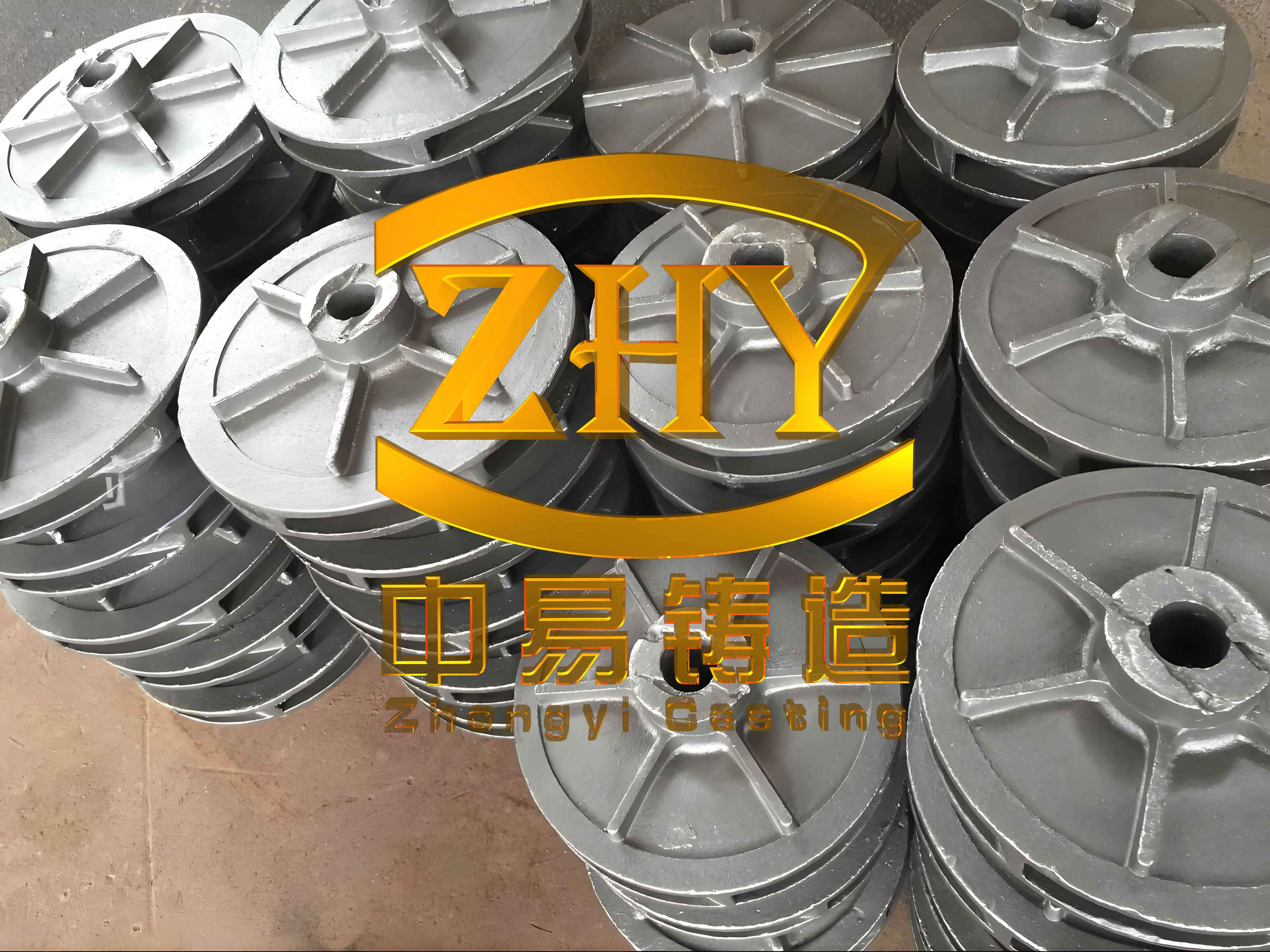
The image above exemplifies the end goal of this rigorous process: a high-quality gray iron casting with a defect-free surface and a sound internal structure, ready for demanding applications. Achieving this consistently hinges on the meticulous control of every variable discussed.
Quality Control: From Process Parameters to Defect Analysis
Robust process control is built on in-process checks and post-casting verification. Key monitoring points include:
- Charge Weighing: Accurate digital scales for all charge components.
- Temperature Profiling: Continuous furnace temperature logging and periodic manual pyrometer checks.
- Thermal Analysis: Real-time measurement of cooling curves from small samples to determine CE, C%, Si%, and predict graphite formation and undercooling. This is the primary tool for deciding inoculant dosage.
- Chemical Analysis: Regular full-spectrum optical emission spectrometry to verify all elements are within specified ranges, including trace elements.
When defects occur, a systematic analysis rooted in the specifics of induction melting is required. Common issues and their likely process-related causes in MFI gray cast iron include:
- Excessive Chill or Carbides: Insufficient or faded inoculation; too low a CE; excessive superheat cleansing away nuclei; presence of carbide-stabilizing elements (Cr, V).
- Poor Graphite Structure (Dendritic/Undercooled Graphite): Severe inoculation deficiency; very low sulfur; high superheat.
- Shrinkage Porosity: Often related to incorrect CE (too low), excessive superheat leading to high gas content, or inadequate feeding due to poor gating design exacerbated by the fluidity characteristics of the melt.
- Low Strength or High Variation: Inconsistent charge materials leading to fluctuating trace elements; poor inoculation practice; excessive ferritizing elements (Si) without corresponding carbon adjustment.
By correlating defect morphology with process logs (charge makeup, superheat temperature, inoculation amount/time), the root cause can often be isolated to a specific deviation in the melting protocol.
Conclusion and Forward Perspective
Mastering the melting of gray cast iron in a medium-frequency induction furnace is an exercise in applied physical metallurgy and disciplined process engineering. It moves away from the “black art” often associated with cupola practice and into the realm of controlled, repeatable science. The core tenets remain unchanging: start with clean, consistent raw materials; understand and actively manage the carbon equivalent and its components; employ sufficient superheat for purification and homogeneity; and, above all, counteract the inherent undercooling tendency of the clean melt with a robust, well-engineered inoculation practice. The resulting high-purity, consistently nucleated gray cast iron melt is the ultimate prerequisite for producing castings that meet ever-increasing demands for performance, reliability, and cost-effectiveness. The future lies in further integrating real-time process monitoring with predictive algorithms, closing the loop from thermal analysis data to automatic furnace and inoculation controls, pushing the consistency and quality of induction-melted gray cast iron to new heights.