
The pursuit of advanced wear-resistant materials for demanding industrial applications, such as mineral processing, slurry pumping, and dredging, is a constant driver of metallurgical research. Among these materials, high-chromium white cast iron stands as a cornerstone due to its exceptional combination of high hardness and good abrasive wear resistance. This performance is fundamentally derived from its unique microstructure, which consists of hard chromium-rich carbides embedded within a metallic matrix. The size, morphology, volume fraction, and distribution of these carbides, alongside the properties of the matrix, are the primary determinants of the alloy’s overall mechanical and tribological behavior. My investigation focuses specifically on a Cr27-type high-chromium white cast iron, exploring a potent yet relatively less-studied alloying element: boron. The central aim is to systematically dissect how controlled boron additions modulate the carbide and matrix characteristics, and consequently, dictate the hardness, impact toughness, and—most critically—the erosion-corrosion wear performance of this vital class of white cast iron.
The foundational alloy system for this study was based on a composition of Fe-2.5C-27Cr-0.8Si-1Mn, with deliberate additions of 6% V and 0.5% Y. Vanadium is a powerful carbide-forming element, known to refine the solidification structure and promote the formation of extremely hard MC-type carbides, thereby enhancing wear resistance. Yttrium, a rare earth element, acts as a potent modifier. It is known to purify the melt, reduce the surface tension, and most importantly, alter the solidification kinetics. This leads to a refinement of the primary austenite dendrites and a significant modification in carbide morphology, often transforming continuous network carbides into more isolated, globular, or blocky forms, which is beneficial for toughness. Manganese, kept below 1.5%, primarily functions to suppress the formation of pearlite, ensuring the matrix remains predominantly austenitic/martensitic upon cooling.
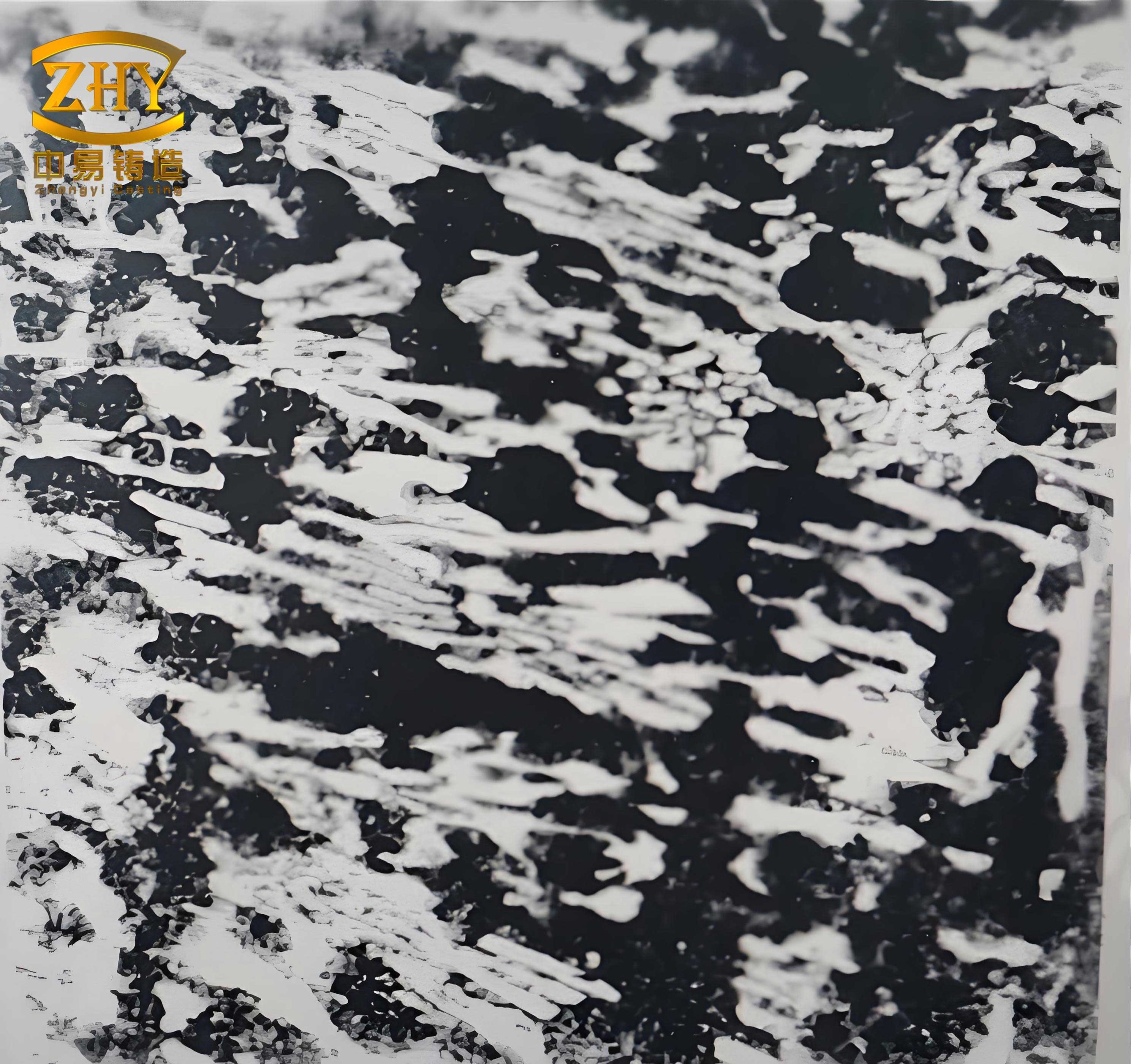
Into this baseline composition, boron was introduced as the key variable. Boron is an intriguing alloying element for white cast iron due to its strong affinity for carbon and its ability to form very hard and thermally stable borides (e.g., M2B, M3B, M23(C,B)6). The hypothesis was that boron could further enhance hardness and wear resistance. However, its effect on the solidification sequence, carbide morphology, and the crucial balance between hardness and toughness was not fully predictable. Therefore, a series of alloys with systematically increasing boron content were produced to map its influence.
Experimental Methodology: From Melting to Characterization
The experimental journey began with the careful selection and preparation of raw materials, including pure iron, boron-ferroalloy, carbon raiser, yttrium-iron, ferrochromium (75% Cr), ferrosilicon, ferrovanadium, and ferromanganese. Melting was conducted in a medium-frequency induction furnace under controlled conditions. To ensure proper dissolution and homogenization, the boron-ferroalloy was added to the molten metal at 1520°C. The melt was then superheated to 1600°C before being poured into sand molds to produce standard “Y-block” castings. This casting geometry is ideal for producing sound castings with a consistent cooling rate, which is essential for reproducible microstructures in white cast iron.
From these cast blocks, test specimens were extracted via wire-electrical discharge machining (EDM). Two primary types of specimens were prepared: (1) Charpy V-notch impact specimens (10 mm x 10 mm x 55 mm) for evaluating fracture resistance, and (2) rectangular plates (20 mm x 10 mm x 2.5 mm) for erosion wear testing. The chemical compositions of the five studied alloys are detailed in Table 1, with boron content as the defining variable.
| Alloy Designation | C | Cr | Si | Mn | V | Y | B | Fe |
|---|---|---|---|---|---|---|---|---|
| A1 | 2.5 | 27 | 0.8 | 1.0 | 6.0 | 0.5 | 0.0 | Bal. |
| A2 | 2.5 | 27 | 0.8 | 1.0 | 6.0 | 0.5 | 0.5 | Bal. |
| A3 | 2.5 | 27 | 0.8 | 1.0 | 6.0 | 0.5 | 1.0 | Bal. |
| A4 | 2.5 | 27 | 0.8 | 1.0 | 6.0 | 0.5 | 1.5 | Bal. |
| A5 | 2.5 | 27 | 0.8 | 1.0 | 6.0 | 0.5 | 2.0 | Bal. |
Mechanical and tribological characterization followed a rigorous protocol. Bulk hardness was measured on a Leeb rebound hardness tester, with eight readings averaged per specimen to ensure statistical significance. Impact toughness was evaluated using a semi-automatic pendulum impact tester at room temperature, with the average value from three specimens reported for each alloy. The most critical test for this class of material involved simulating a severe service environment: slurry erosion. A custom-built slurry erosion tester was employed, where specimens were subjected to a high-velocity stream of slurry composed of 25 wt.% silica (SiO2) sand in water. The test parameters were deliberately aggressive: a slurry velocity of 8 m/s, an impingement angle of 45°, a slurry temperature of 60°C, and a total test duration of 6 hours. The wear resistance was quantified by the mass loss of the specimen, measured with a precision balance before and after testing, following careful cleaning and drying procedures.
The link between performance and structure was established through meticulous microstructural analysis. Metallographic samples were sectioned from the broken impact specimens, then ground, polished, and etched with a 2% nital solution. The resulting microstructures were examined using both scanning electron microscopy (SEM) and optical microscopy. This allowed for a detailed qualitative and semi-quantitative assessment of the carbide morphology (e.g., shape, size, continuity) and the nature of the metallic matrix (e.g., presence of martensite, retained austenite).
The Boron-Induced Transformation: A Tale of Two Properties
The as-cast mechanical properties revealed a complex, non-monotonic relationship with boron content, highlighting the delicate interplay between strengthening and embrittlement mechanisms in white cast iron. Figure 1 and the summarized data in Table 2 clearly illustrate these trends.
The hardness exhibited a pronounced and steady increase with boron addition. The boron-free alloy (A1) showed a Leeb hardness of approximately 500 HL. This value climbed consistently, reaching a peak for alloy A5 (2.0% B). This hardening effect can be attributed to two synergistic mechanisms:
- Solid Solution Strengthening: A fraction of the dissolved boron atoms occupies interstitial sites within the iron-based matrix lattice (austenite/martensite). This creates significant lattice strain fields, which act as potent obstacles to dislocation motion, thereby increasing the yield strength and hardness of the matrix. The strengthening increment from interstitial solutes often follows a relationship of the form:
$$ \Delta \sigma_{ss} \propto G \epsilon^{3/2} c^{1/2} $$
where \( \Delta \sigma_{ss} \) is the increase in yield strength, \( G \) is the shear modulus, \( \epsilon \) is the misfit strain parameter, and \( c \) is the solute concentration. Boron’s small atomic radius generates a high \( \epsilon \), making it an effective strengthener even at low concentrations. - Formation of Hard Secondary Phases: Boron, with its high chemical affinity for chromium, iron, and carbon, promotes the formation of extremely hard borocarbides. The dominant types in this system are expected to be M23(C,B)6 and M2B-type borides. The hardness of these phases often exceeds that of the common M7C3 carbides (approx. 1200-1800 HV), contributing significantly to the overall macrohardness of the white cast iron. The volume fraction of these hard phases increases with boron content.
| Alloy | B Content (wt.%) | Avg. Hardness (HL) | Avg. Impact Energy (J) | Erosion Mass Loss (g) |
|---|---|---|---|---|
| A1 | 0.0 | 500 | 4.8 | 0.145 |
| A2 | 0.5 | 532 | 6.2 | 0.118 |
| A3 | 1.0 | 545 | 5.1 | 0.130 |
| A4 | 1.5 | 540 | 4.5 | 0.138 |
| A5 | 2.0 | 558 | 4.0 | 0.142 |
In stark contrast, the impact toughness told a different story. It displayed a distinct maximum at 0.5% boron (Alloy A2) before decreasing with further boron additions. The initial improvement from A1 to A2 is significant. This can be linked to boron’s role in modifying the solidification process and carbide morphology at lower levels. A small amount of boron seems to synergize with the yttrium modifier, further refining the eutectic carbide network and promoting a more isolated, less continuous distribution. This reduces the effective stress concentration sites and crack propagation paths through the white cast iron, thereby improving fracture resistance. However, beyond this optimal point, the negative effects dominate. Excessive boron promotes the formation of coarse, primary carbides/borides and increases microsegregation, particularly at grain boundaries. These coarse phases act as severe stress raisers and easy paths for crack initiation and propagation. The relationship between fracture toughness (\( K_{Ic} \)) and microstructural features like carbide size (\( d \)) can be conceptually described by models considering critical flaw size:
$$ \sigma_f \propto \frac{K_{Ic}}{\sqrt{\pi a}} $$
where \( \sigma_f \) is the fracture stress and \( a \) is the flaw size, often proportional to the largest carbide or defect dimension. Coarsening of carbides increases \( a \), drastically reducing the stress required for fracture under impact loading.
Decoding the Microstructure: The Visual Evidence of Boron’s Role
The microstructural evolution, observed through SEM and optical microscopy, provided the definitive explanation for the property trends. The boron-free alloy (A1) exhibited a typical near-eutectic or slightly hypoeutectic structure. The matrix consisted of a mixture of martensite and retained austenite (appearing dark after etching). Embedded within this matrix were finely distributed, interconnected eutectic carbides of the M7C3 type, along with blocky vanadium-rich MC carbides. The overall carbide network, while hard, was relatively continuous.
The addition of 0.5% boron (Alloy A2) triggered a remarkable refinement and morphological change. The continuous carbide network was effectively broken. The carbides appeared more globular, isolated, and uniformly dispersed. Furthermore, the onset of different carbide/boride types, potentially M23(C,B)6, was observed. This refined and discontinuous microstructure is the hallmark of excellent toughness in white cast iron, as it deflects cracks and requires more energy for fracture propagation. The matrix also appeared more homogeneous.
As the boron content increased to 1.0%, 1.5%, and 2.0% (Alloys A3, A4, A5), the microstructure underwent a dramatic transition from a refined eutectic to a coarse over-eutectic structure. The solidification sequence shifted due to the powerful effect of boron on the phase diagram, pushing the composition into the primary carbide formation region. Consequently, large, blocky, and often hexagonal or rod-like primary (M,Cr)7C3 and/or borocarbides formed first during solidification. These primary phases were strikingly coarse, exceeding 50-100 µm in length in some cases. They were surrounded by a finer eutectic mixture of secondary carbides and the matrix. This coarsening phenomenon is attributed to boron’s surface-active nature, which reduces the solid-liquid interfacial energy during solidification. A lower interfacial energy (\(\gamma_{SL}\)) decreases the driving force for nucleation and increases the critical radius for a stable nucleus (\(r^*\)), as per classical nucleation theory:
$$ r^* = \frac{2 \gamma_{SL}}{\Delta G_v} $$
where \( \Delta G_v \) is the volumetric free energy change. This promotes the growth of fewer, larger particles rather than the nucleation of many fine ones. These coarse primary carbides are intrinsically brittle and create severe mechanical incompatibility with the surrounding matrix, acting as pre-existing cracks within the white cast iron structure.
| Alloy (B wt.%) | Solidification Type | Primary Carbide Morphology | Eutectic Carbide Morphology | Matrix Description | Overall Microstructural Quality |
|---|---|---|---|---|---|
| A1 (0.0%) | Near-Eutectic | None / Minor | Continuous Network, Fine Lamellar/Chinese-script | Martensite + Retained Austenite | Hard, continuous network limits toughness. |
| A2 (0.5%) | Refined Eutectic | None | Discontinuous, Globular, Isolated Particles | Martensite + Retained Austenite | Optimal: Fine, isolated hard phases in a tough matrix. |
| A3 (1.0%) | Over-Eutectic | Coarse Rods/Blocks Appearing | Interdendritic Eutectic | Martensite + Retained Austenite | Degrading: Coarse primaries act as stress concentrators. |
| A4 (1.5%) | Over-Eutectic | Very Coarse, Large Blocks/Hexagons | Interdendritic Eutectic | Martensite + Retained Austenite | Poor: Severe carbide coarsening and matrix partitioning. |
| A5 (2.0%) | Over-Eutectic | Extremely Coarse, Degenerated Morphologies | Interdendritic Eutectic | Martensite + Retained Austenite | Very Poor: Extreme brittleness due to massive carbides. |
The Erosion Wear Paradox: Hardness is Not the Only King
The slurry erosion test results presented a fascinating and critical insight. Despite the steady increase in bulk hardness from A1 to A5, the wear resistance did not follow suit. Instead, the erosion mass loss showed a clear minimum at 0.5% boron (Alloy A2) and worsened with higher boron contents, almost returning to the level of the boron-free alloy for A5. This decisively demonstrates that for erosion-dominated wear in white cast iron, macrohardness alone is an insufficient predictor of performance. The governing factor shifts to the microstructure’s ability to resist material removal under repeated impingement of hard, sharp particles.
The mechanism of material removal in high-chromium white cast iron under silica slurry erosion is a complex interplay of micro-cutting, fatigue, and brittle fracture. The hard silica particles (approx. 1100 HV) are harder than the metallic matrix (300-700 HV) but softer than or comparable to the chromium carbides and borides (1200-1800+ HV). Therefore, upon impingement at a 45° angle, which combines normal (impact) and tangential (cutting) force components, the following sequence occurs:
- Matrix Micro-cutting/Ploughing: The softer matrix is preferentially cut or ploughed by the sharp edges of the silica particles, forming grooves and craters.
- Carbide Exposure and Support: As the matrix is worn away, the hard carbides become exposed. They now bear the direct impact of subsequent particles. The surrounding matrix plays a crucial “supporting” role, anchoring these hard phases.
- Carbide Fracture and Pull-out: With repeated impacts, two failure modes can occur for the carbides:
- Micro-fracture: If the carbide is large and blocky (as in high-B alloys), it can undergo brittle fracture due to the cyclic impact stresses, breaking into smaller fragments that are easily removed.
- Undermining and Pull-out: If the interface between the carbide and the matrix is weak, or if the supporting matrix is excessively eroded from around a deep-lying carbide, the entire particle can be loosened and pulled out of the surface.
This mechanism explains the observed performance. Alloy A2, with its fine, well-dispersed, and globular carbides, presents an ideal microstructure. The fine carbides are less prone to catastrophic fracture. The strong, tough matrix provides excellent support, and the small inter-carbide spacing means that any micro-cutting of the matrix is quickly halted by an encountered carbide particle. This is the so-called “shadowing effect” or “shielding effect,” where hard phases protect the matrix lying in their immediate lee shadow from direct abrasive contact. The “protected path length” \( S \) for a cutting abrasive particle between two hard phases is small, limiting the depth and volume of matrix removal.
In contrast, the white cast iron alloys with high boron (A3-A5) contain coarse primary carbides. While these are extremely hard, their large size makes them susceptible to cracking. More detrimentally, the large inter-carbide spacing (\( S \) becomes large) allows for extensive and deep micro-cutting of the unsupported matrix between them. Once the matrix is deeply gouged, even a large carbide loses its mechanical support and can be easily dislodged. Furthermore, the sharp corners and large surface area of these coarse carbides create high stress concentrations at the carbide-matrix interface during impact, promoting debonding. Thus, the erosion resistance deteriorates despite higher bulk hardness.
The erosion rate \( E \) can be conceptually linked to microstructure through a simplified model considering both matrix wear and carbide stability:
$$ E \propto \frac{\rho_{abrasive} \cdot V^2 \cdot f(\alpha)}{H_{matrix}} \cdot \overline{S} + N_{carbide} \cdot P_{frac} \cdot V_{carbide} $$
Here, the first term represents matrix removal, where \( \overline{S} \) is the average unprotected matrix path length (inversely related to carbide fineness and volume fraction), and \( H_{matrix} \) is the matrix hardness (increased by boron). The second term represents loss due to carbide fracture/pull-out, where \( N_{carbide} \) is the number of carbides, \( P_{frac} \) is the probability of fracture (increasing with carbide size), and \( V_{carbide} \) is the average volume of a carbide particle. For high-boron white cast iron, the increase in \( H_{matrix} \) is outweighed by the large increase in \( \overline{S} \) and \( P_{frac} \cdot V_{carbide} \), leading to a net increase in erosion rate \( E \).
Synthesis and Conclusion: The Optimal Balance in White Cast Iron
This systematic investigation into the role of boron in a Cr27-type high-chromium white cast iron, alloyed with vanadium and yttrium, leads to several definitive and broadly applicable conclusions for the design of advanced wear-resistant materials.
Firstly, boron is a potent alloying element that significantly alters the solidification behavior and final microstructure of high-chromium white cast iron. Its effects are highly concentration-dependent. At low levels (around 0.5 wt.%), it acts synergistically with other modifiers (like Y) to refine the eutectic structure, break up the continuous carbide network, and promote a homogeneous dispersion of fine, globular hard phases within a toughened matrix. This refinement is the key to unlocking superior impact toughness in this otherwise brittle family of white cast iron.
Secondly, while boron invariably increases the macrohardness of the alloy through solid solution strengthening and the formation of hard borocarbides, this does not translate linearly into improved wear performance in all scenarios. For slurry erosion wear, where material removal involves cyclic impact and micro-cutting, the morphology and distribution of the hard phases are more critical than the bulk hardness. A fine, well-dispersed carbide/boride structure provides optimal protection by limiting matrix removal and resisting fracture and pull-out. Coarse, blocky primary phases, induced by high boron contents, severely degrade erosion resistance despite higher hardness, as they promote matrix undermining and are themselves prone to brittle fracture.
Therefore, the central finding of this work is the identification of a clear optimum. For the specific Fe-2.5C-27Cr-0.8Si-1Mn-6V-0.5Y white cast iron system, a boron addition of 0.5 wt.% achieves the best compromise, or rather synergy, of properties. This composition delivers:
1. High hardness (532 HL), significantly improved over the boron-free alloy.
2. Excellent impact toughness, the highest among all tested alloys.
3. Superior slurry erosion wear resistance, with the lowest measured mass loss.
This optimized white cast iron exemplifies the principle that supreme wear performance is not achieved by maximizing hardness alone, but by engineering a microstructure where very hard phases are finely and uniformly distributed within a sufficiently tough and supportive matrix. This study underscores the importance of a holistic alloy design approach for white cast iron, where the interplay of multiple alloying elements—C, Cr, V, Y, and in this case, B—must be carefully balanced to tailor the microstructure for specific mechanical and tribological demands. The insights gained are directly applicable to the development of next-generation liners, pump impellers, and other components subjected to severe abrasive and erosive environments, extending the service life and reliability of critical industrial equipment.