
The dominance of sand castings in global metal component manufacturing is undisputed, driven by their unparalleled flexibility, cost-effectiveness for complex geometries, and suitability for a vast range of alloys and production scales. However, this very pervasiveness magnifies its environmental footprint. The core of the sand casting process—the mold and core assembly—relies on bonding vast quantities of silica sand with various binders. It is precisely at this junction that significant environmental challenges arise: the emission of volatile compounds during metal pouring and cooling, and the generation of millions of tons of used foundry sand destined for landfill. As a producer and researcher deeply engaged in this field, I have witnessed a paradigm shift from prioritizing solely casting quality and speed to an integrated approach that equally weighs ecological responsibility. This article explores the environmental characteristics of prevalent sand casting binder systems and delineates the critical pathways for their sustainable evolution.
The environmental profile of a sand casting process is predominantly defined by its binder system. Each system presents a unique balance between performance, cost, and environmental impact, primarily assessed through volatile organic compound (VOC) and hazardous air pollutant (HAP) emissions during casting, and the subsequent recyclability of the used sand. The following table synthesizes a comparative analysis of major binder systems based on empirical studies and industrial data.
| Binder System | Typical Composition | Key Environmental Concerns (Casting) | Old Sand Recyclability |
|---|---|---|---|
| Clay-Bonded (Green Sand) | Sand, Clay (3-5%), Carbonaceous Additives (3-6%), Water | High particulate matter (PM), VOCs/HAPs (e.g., Benzene, PAHs) from coal dust additives. | Excellent. Simple reconditioning (mulling with water/clay) allows for high-rate, closed-loop reuse. |
| Furan No-Bake Resin | Sand, Furan Resin (~1-1.5%), Acid Catalyst (e.g., p-TSA) | Very high VOC/HAP emissions (Formaldehyde, Phenol, Furfuryl alcohol). Acidic fumes. | Difficult. Thermal reclamation is required to burn off resin, often leaving acidic, high-LOI sand. |
| Phenolic Urethane No-Bake (Cold Box) | Sand, Phenolic Resin (~1%), Polyisocyanate (~1%), Amine Catalyst | Significant VOC/HAP emissions (Phenol, Isocyanates, Amines). Complex organic breakdown products. | Difficult. Requires thermal or aggressive chemical/thermal processes to remove binder films. |
| Alkaline Phenolic No-Bake | Sand, Alkaline Phenolic Resin (~2-3%), Ester Hardener | Lower VOC than acid-catalyzed resins, but still emits Phenol and other aromatics. | Moderate to Difficult. Often requires combined mechanical and thermal treatment. |
| Sodium Silicate (CO2 Process) | Sand, Sodium Silicate (~3-5%), CO2 Gas | Negligible toxic organic emissions. Primary gas is CO2 from the process itself. | Very Difficult. Hard, glassy binder film leads to poor breakdown and high residual alkali. |
| Sodium Silicate (Ester-Cured) | Sand, Sodium Silicate (~2.5-3.5%), Organic Ester | Very low toxic emissions. Minor organics from ester decomposition. | Challenging but improved. Newer modified silicates and processes enhance reclaimability. |
This dichotomy is stark: high-performance organic binders often come with a high emission and reclamation cost, while more environmentally benign inorganic binders historically suffered from technical limitations in sand reclamation and shakeout. Let’s delve deeper into the emission characteristics. During the pouring of molten metal into sand castings, the intense thermal load pyrolyzes the organic components of the binder. The complexity and quantity of emissions can be modeled as a function of binder mass, pyrolysis temperature, and atmosphere:
$$E_{voc} = \int_{T_0}^{T_{max}} m_b \cdot \sum_{i} (f_i(T) \cdot \alpha_i) dT$$
Where $E_{voc}$ is the total VOC emission potential, $m_b$ is the binder mass, $f_i(T)$ is the temperature-dependent yield function for volatile species $i$, and $\alpha_i$ is its specific generation coefficient from the binder composition. For organic binders like phenolics and furans, $f_i(T)$ for compounds like phenol, formaldehyde, and benzene is significant in the 400-800°C range, leading to the high emissions documented. In contrast, for inorganic sodium silicate binders, the volatile species are primarily water vapor and CO$_2$, with $f_i(T)$ for toxic organics being negligible.
The path toward sustainable sand castings is fundamentally linked to innovating the binder systems and their lifecycle management. The evolution is progressing along three intertwined axes: 1) The development and adoption of “greener” binder chemistries, 2) The advancement of cost-effective, zero-discharge sand reclamation technologies, and 3) The holistic minimization and treatment of process emissions.
1. The Rise of Next-Generation Inorganic Binders
The most direct route to reducing harmful emissions in sand castings is to eliminate the organic precursors. This has spurred a major resurgence in inorganic binder technology, moving beyond traditional limitations. Sodium silicate binders, in particular, have undergone transformative development. New generations of modified silicates feature engineered polymerization control and improved breakdown mechanisms. These binders offer distinct advantages for producing sand castings: near-zero VOC/HAP emissions during pouring, non-flammability, and improved working environments.
The core challenge of poor shakeout and reclamation is being addressed through chemistry and process innovation. For instance, the introduction of specific organic esters as hardeners alters the silicate gel structure, creating a more brittle bond that fractures more easily upon cooling. Furthermore, the application of microwave drying technology for silicate-bonded molds is a breakthrough. Microwaves selectively heat the water within the binder gel, rapidly building strength with significantly lower binder additions (often below 2.5%). This directly translates to improved collapsibility, as described by the relationship between binder content and residual strength $R_s$:
$$R_s \propto (C_b)^k \cdot \exp(\beta / T)$$
Here, $C_b$ is the binder concentration, $T$ is the temperature, and $k$ and $\beta$ are constants related to the binder type. Lowering $C_b$ through processes like microwave hardening exponentially reduces $R_s$ at casting temperatures, solving the historical shakeout problem for many steel and iron sand castings. Research into other inorganic systems, such as geopolymer-based or phosphate-based binders derived from industrial by-products, also holds promise for creating ultra-low-emission sand castings with viable reclamation pathways.
2. Advancing the Circular Economy: Old Sand Reclamation
Disposing of used foundry sand from sand castings is economically and environmentally unsustainable. Effective reclamation is not merely a technical procedure but a necessity for the industry’s license to operate. The choice of reclamation method is dictated by the binder system. A summary of primary technologies is presented below:
| Reclamation Method | Principle | Best Suited For | Key Challenges & Energy Metrics |
|---|---|---|---|
| Mechanical/Dry Reclamation | Attrition and abrasion to remove binder films. | Clay-bonded sand, lightly bonded organics. | Limited effectiveness on hard films; generates fine particulates (dust). |
| Thermal Reclamation | Heating (650-850°C) to combust organic binders. | All organic resin-bonded sands (Furan, Phenolic). | High energy intensity. Efficiency $\eta_{thermal}$ depends on heat recovery: $\eta_{thermal} = Q_{recovered}/Q_{input}$. |
| Wet Reclamation | Slurrying and scrubbing in water to dissolve/dislodge binder. | Sodium silicate-bonded sand, clay systems. | Produces large volumes of alkaline or contaminated process water requiring treatment. |
| Combined (Hybrid) Methods | Sequential application of two or more methods (e.g., Mechanical + Thermal). | Complex mixed waste streams, high-performance demands. | Optimizing sequence and parameters for cost and quality. |
The future lies in developing “zero-discharge” reclamation loops, especially for inorganic binders. For wet reclamation of silicate sands, the goal is closed-loop water treatment where alkali is neutralized and precipitated, and clean water is recycled. For thermal reclamation, the focus is on maximizing heat recuperation from hot sand and exhaust gases to dramatically lower net energy consumption, making the reclamation of resin-bonded sand from sand castings more economical. The most significant innovation addresses the reality of modern foundries: mixed waste streams. Hybrid reclamation systems, such as a “wet-thermal” combination, can process blended clay and resin sands. The thermal line handles resin sand, and its exhaust heat is used to dry the sand from the parallel wet processing line for clay/silicate sand, creating a synergistic, low-net-energy system for high-quality reclaimed sand.
3. Emission Control and the Systemic View
While binder development aims for source reduction, effective emission control during the production of sand castings remains critical, especially for existing operations using organic binders. This involves capturing fumes at key stations (molding, pouring, cooling, shakeout) and employing treatment technologies like thermal or catalytic oxidizers to convert VOCs and HAPs into CO$_2$ and water vapor. The design of such systems must account for the variable and high-temperature nature of the emissions from sand castings.
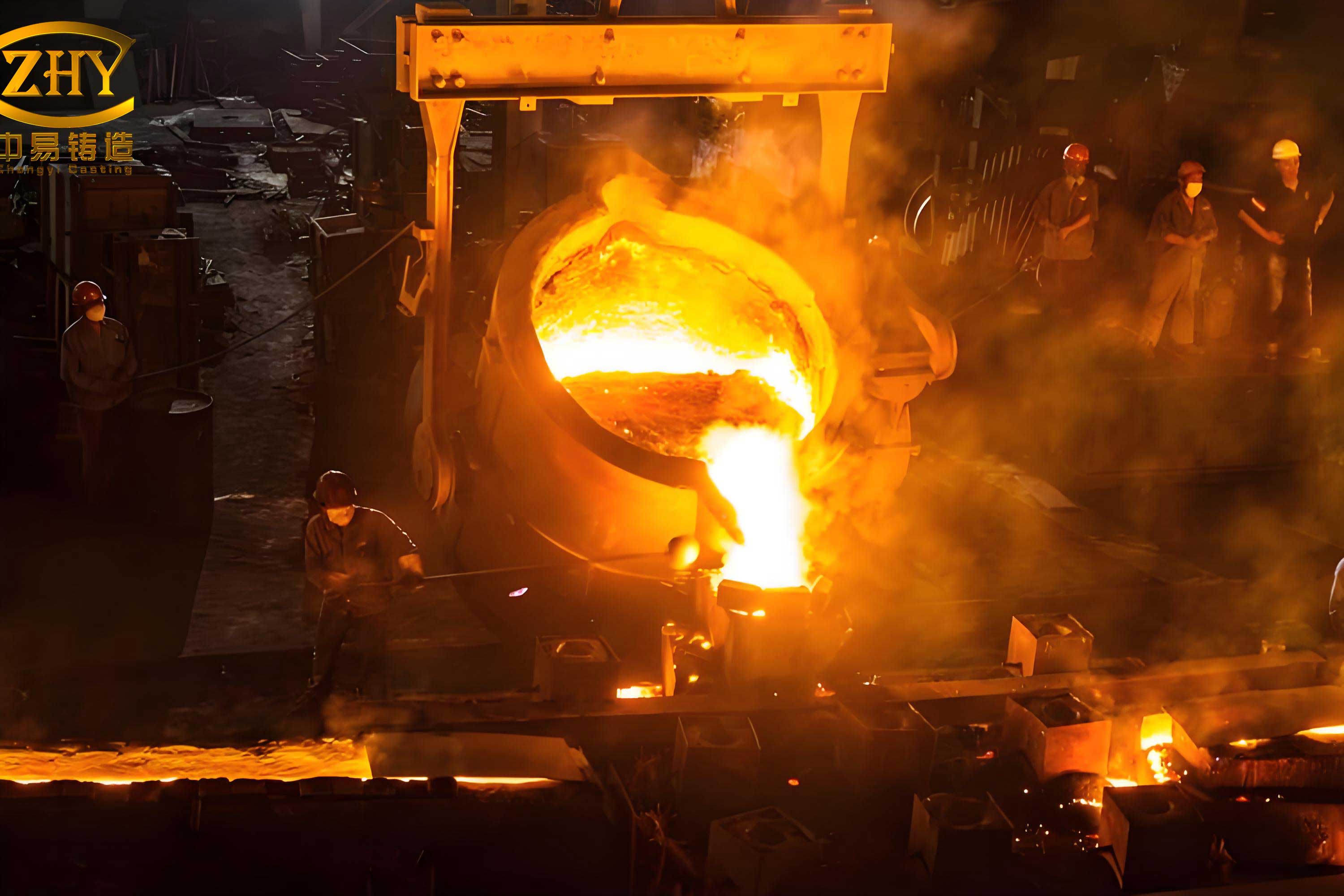
Ultimately, the future of sustainable sand castings requires a systemic, life-cycle assessment (LCA) driven approach. This means selecting binder systems not only for their immediate casting performance but for their total environmental cost—from raw material sourcing and energy use in reclamation to final sand fate. The ideal binder for future sand castings will be one derived from renewable or abundant resources, that generates minimal atmospheric pollutants during casting, and allows its bonded sand to be fully and easily regenerated into a material indistinguishable from new sand, thus closing the loop completely.
In conclusion, the trajectory for sand castings is clearly set toward deep environmental integration. The evolution of casting binders is pivoting from purely organic chemistry to advanced inorganic and hybrid systems designed for the circular economy. Concurrently, reclamation technology is advancing from a waste management step to a core, value-adding process integral to foundry operation. The synergy of these advancements—cleaner binders, smarter reclamation, and effective emission management—will ensure that sand castings remain the backbone of metal casting, not just through economic and technical merit, but through demonstrated environmental stewardship. The production of sand castings must and will evolve to meet the dual imperatives of industrial necessity and ecological responsibility.