
As a seasoned professional in the foundry industry, I have witnessed firsthand the critical role that machine tool casting plays in the manufacturing sector. Machine tools are the backbone of industrial production, and the quality of their cast components directly impacts precision, durability, and overall performance. In this article, I will delve into the historical development, current challenges, and future directions of machine tool casting, emphasizing the need for continuous improvement in quality standards. The term ‘machine tool casting’ will be frequently highlighted to underscore its importance throughout this discussion.
The journey of machine tool casting in my country began in the early days of industrialization. Initially, the demand was for simple castings used in small milling machines, planers, grinders, and lathes. The quality requirements were minimal, with materials barely reaching what we now classify as mid-grade铸铁, and dimensional accuracy was not a priority. National standards were lacking, and production relied heavily on imported technologies and basic cupola melting furnaces. The workforce was largely untrained, and the focus was on functionality rather than precision. This period laid a fragile foundation for the industry.
From the 1970s to the 1990s, significant strides were made. The production of medium- and low-end machine tools expanded, and some large-scale machines were introduced. This era saw the establishment of national standards for machine tool casting, specifying requirements for mechanical properties, chemical composition, metallurgical structure, and dimensional accuracy. Key castings like beds, columns, crossrails, and slides demanded higher hardness, often above 200 HB, and underwent non-destructive testing such as ultrasonic inspection. To meet these demands, foundries began adopting advanced processes, including resin sand molding, electric furnace melting, and the use of inoculants and alloying techniques. The introduction of ductile iron for some applications marked a technological leap. However, despite these advancements, the overall casting technology lagged behind international peers, as production remained largely planned-economy-driven without global integration.
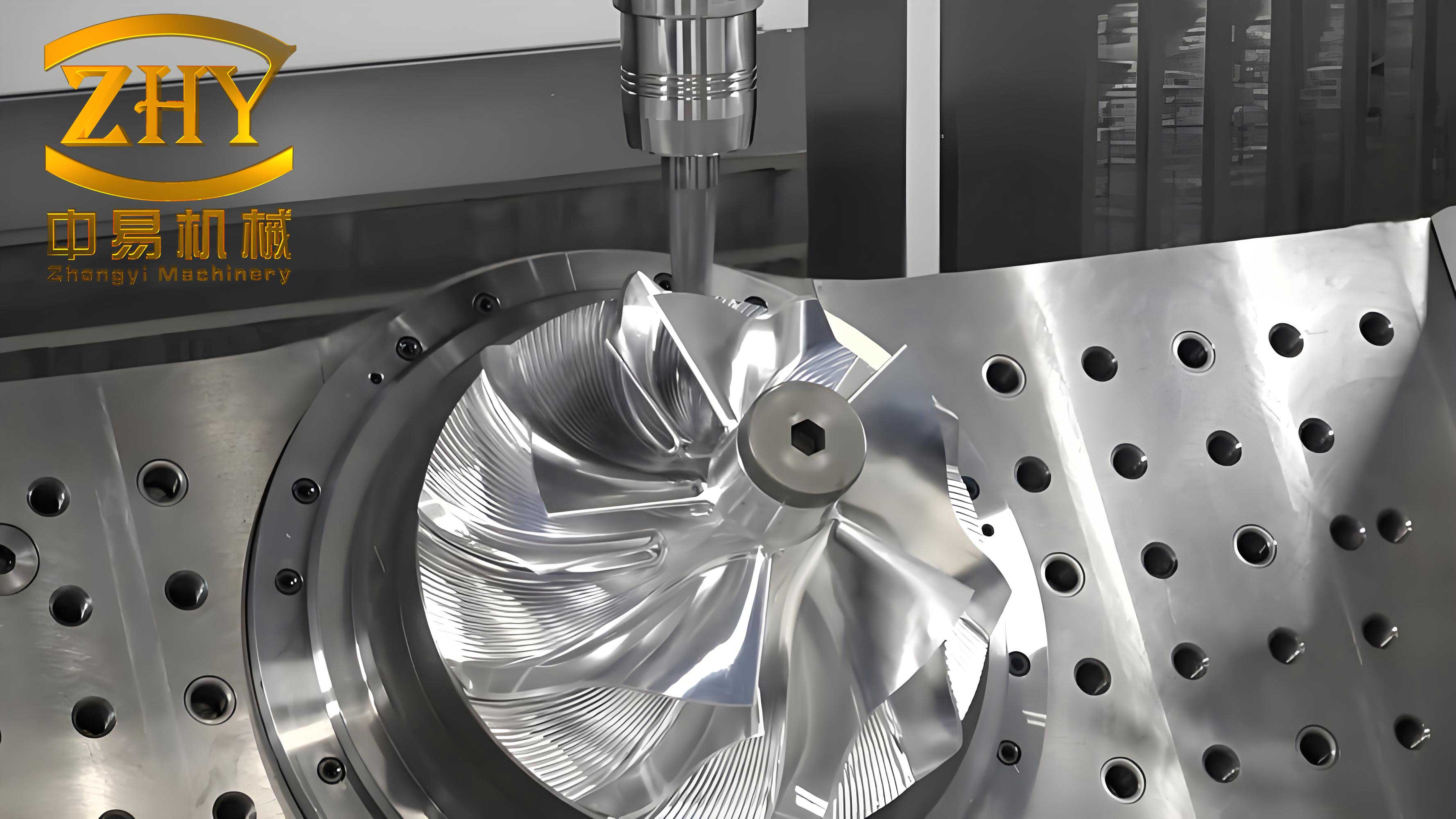
In recent decades, the machine tool industry has experienced rapid growth, breaking foreign monopolies on high-precision equipment. Annual production has soared, making the country a global leader in quantity. Yet, the qualitative gap persists, driving a national focus on developing large,精密, high-speed CNC systems and functional components. This push has created unprecedented opportunities for the casting sector, as cast parts constitute 70–80% of many machine tools, influencing overall machine quality, lifespan, and accuracy retention. The evolution of machine tool casting has thus become intertwined with advancements in materials,工艺, and technology.
To illustrate the historical progression of machine tool casting requirements, I summarize key phases in the table below:
| Time Period | Key Characteristics of Machine Tool Casting | Material Standards | Technological Focus |
|---|---|---|---|
| Early Industrialization (1950s-1960s) | Simple geometries, low precision, no formal standards | Basic gray iron equivalent to HT150-HT200 | Cupola melting, clay sand molding, manual processes |
| Development Phase (1970s-1990s) | Improved accuracy, introduction of national standards | HT250-HT300, initial use of ductile iron | Resin sand adoption, electric furnaces, inoculation techniques |
| Modern Era (2000s-Present) | High precision, complex designs, integration with CNC systems | High-strength gray iron (e.g., HT350), ductile iron, alloyed grades | Advanced simulation software (CAD/CAE), automated molding, quality control systems |
The current trends in machine tool manufacturing impose even stricter demands on machine tool casting. Market dynamics show increased demand,优化 product structures with a shift toward medium- and high-end CNC machines, and technological upgrades for high-precision applications. CNC machining centers,复合 machines, and multi-axis systems like five-axis龙门 mills are becoming mainstream, requiring castings with exceptional性能. For instance, the trend emphasizes high stiffness, low stress, and excellent machinability, which translates to high strength, low wall-thickness sensitivity, and stable控制. The quality requirements for machine tool casting now extend beyond traditional metrics to include stringent外观 and internal quality standards.
Specifically, dimensional accuracy must be maintained长期 stable, with tolerances tighter than ever. Surface and internal defects are allowed only at minimal levels, necessitating high-precision tooling, superior工艺 design, and rigorous inspection. For machine tool casting used in guideways, high-frequency surface hardening is common, making基体组织, graphite morphology, and surface flatness critical指标. Failure to meet these can compromise涂装 and assembly. The following table outlines the key quality parameters for modern machine tool casting:
| Quality Aspect | Specific Requirements for Machine Tool Casting | Typical Values or Standards |
|---|---|---|
| Dimensional Accuracy | Long-term stability, tight tolerances for beds, columns, etc. | ISO 8062 CT6-CT8, better than historical levels by 1-2 grades |
| Surface Quality | Low roughness, minimal defects for non-machined surfaces | Ra ≤ 12.5 μm, visual inspection per ASTM A802 |
| Mechanical Properties | High hardness, uniform distribution, good machinability | Hardness 200-250 HB, tensile strength ≥ 350 MPa for HT350 |
| Metallurgical Structure | Controlled graphite形态, pearlite content, minimal carbides | Type A graphite, pearlite >90%, carbide <1% |
| Defect Tolerance | Very low允许 levels for porosity, shrinkage, inclusions | Ultrasonic testing per ASTM E114, level B or better |
Despite progress, significant gaps remain between domestic and international machine tool casting. In外观 quality, dimensional accuracy and surface roughness lag by 1-2 grades compared to发达国家. For内在 quality, issues persist in切削性能, hardness uniformity, machining deformation, and microstructure control. The graphite distribution and eutectic cell count often fall short. Overall, the foundation in production工艺 and equipment is weaker. For example, while发达 countries use铸造焦 for cupola melting widely, adoption here is low; molten iron tapping temperatures abroad average 1500°C, but domestically, 1400°C is common, with only large firms achieving higher. In molding and core-making, advanced high-pressure, high-speed automated lines and resin sand are standard overseas, whereas many local foundries rely on manual or simple mechanical methods. Technological gaps also lead to higher energy and material consumption, with castings often 10-15% heavier and lower yield rates.
To quantify some of these性能 gaps, we can use formulas related to machine tool casting quality. For instance, the hardness uniformity can be expressed as the standard deviation of hardness measurements across a casting: $$ \sigma_H = \sqrt{\frac{1}{N-1} \sum_{i=1}^{N} (H_i – \bar{H})^2} $$ where \(H_i\) is the hardness at point i, \(\bar{H}\) is the mean hardness, and N is the number of measurements. For high-quality machine tool casting, \(\sigma_H\) should be minimized, ideally below 10 HB. Another key metric is the tensile strength correlation with composition for gray iron, often approximated by: $$ \text{Tensile Strength (MPa)} \approx k \cdot (\%C + \%Si/4) – \delta $$ where k and δ are constants dependent on processing, highlighting the need for precise化学控制.
The path to enhancing machine tool casting quality involves multifaceted measures. First, establishing high-level enterprise quality standards that exceed national norms and align with international benchmarks like ISO 4990 is crucial. Without this, even 100% compliance with低 standards won’t ensure global competitiveness. Second, implementing and rigorously maintaining quality management systems such as ISO 9001 is essential for systematic improvement. Third, developing new standards tailored to high-end CNC machine tool casting, covering dimensions, guideway flatness, surface roughness, hardness, microstructure, graphite形态, and pearlite content. Fourth, investing in human capital through training and education to build a skilled workforce; collaboration between factories and institutions can be effective. Fifth, addressing environmental and labor protection to create sustainable “green casting” environments, which indirectly boosts quality by improving worker morale and operational consistency.
In practical terms, improving machine tool casting requires attention to工艺 parameters. For example, controlling cooling rates to achieve desired microstructure can be modeled using heat transfer equations: $$ \frac{\partial T}{\partial t} = \alpha \nabla^2 T $$ where T is temperature, t is time, and α is thermal diffusivity. Optimizing this for thick sections like beds ensures minimal shrinkage and proper hardening. Additionally, the use of advanced simulation software for工艺 design reduces defects and enhances yield. The table below summarizes key improvement strategies for machine tool casting:
| Improvement Area | Specific Actions for Machine Tool Casting | Expected Outcomes |
|---|---|---|
| Standardization | Adopt ISO/EN standards, develop internal specs for high-precision castings | Enhanced consistency, global market access |
| Process Optimization | Implement CAD/CAE simulation, control melting parameters (e.g., tapping temp >1450°C) | Reduced defects, improved mechanical properties |
| Material Advancement | Use high-quality charge materials, specialized inoculants, alloying elements | Better graphite structure, higher strength grades |
| Quality Control | Deploy NDT (ultrasonic, X-ray), statistical process control (SPC) | Lower defect rates, stable performance |
| Training & Innovation | Regular技能 programs, R&D in new casting techniques (e.g., lost foam, V-process) | Increased expertise, technological breakthroughs |
Looking ahead, the future of machine tool casting is poised for transformation driven by digitalization and sustainability. The integration of Industry 4.0 technologies, such as IoT sensors for real-time monitoring of casting processes, will enable predictive quality control. For instance, data analytics can optimize pouring parameters to minimize turbulence and gas entrapment, critical for defect-free machine tool casting. Moreover, the shift toward lightweight designs without compromising stiffness will require innovative materials like compacted graphite iron (CGI) or aluminum composites for certain components. The formula for specific stiffness, a key metric, is: $$ \text{Specific Stiffness} = \frac{E}{\rho} $$ where E is Young’s modulus and ρ is density; enhancing this through material selection can improve machine tool performance.
In conclusion, the evolution of machine tool casting mirrors the broader industrial advancement, from rudimentary beginnings to sophisticated, precision-driven applications. The emphasis on high-quality machine tool casting is more critical than ever as CNC machines become the norm. Closing the gaps with international standards demands concerted efforts in standardization, process innovation, quality assurance, and human resource development. By embracing these measures, the foundry industry can not only meet the escalating demands of machine tool manufacturers but also contribute to national competitiveness in advanced manufacturing. The journey toward excellence in machine tool casting is continuous, requiring adaptability, investment, and a relentless focus on quality—a pursuit that I, as an industry insider, believe is fundamental to our industrial future.