
Dimensional inspection of castings is a fundamental and critical process in manufacturing, serving as the primary means to ensure that a component’s final shape and size conform to its design specifications. Inherent variations are unavoidable during the production cycle of any product; a casting is deemed acceptable provided its actual dimensional deviations do not exceed the prescribed design tolerances. Throughout my career in foundry operations and quality assurance, I have witnessed and participated in the significant technological evolution of inspection methodologies. This progression, driven by demands for higher precision, efficiency, and the ability to handle complex geometries, has moved from purely manual techniques to sophisticated computer-aided systems. The journey, however, is not one of complete obsolescence but rather of strategic coexistence. In this detailed exploration, I will discuss the three predominant inspection paradigms—manual layout inspection, three-dimensional (3D) layout inspection, and 3D digital inspection—delving into their operational principles, inherent advantages, and practical limitations. A particular focus will be placed on the application and implications for machine tool castings, a category of components where precision is paramount for the final assembly’s functionality.
The foundational method, manual layout inspection, represents the most traditional approach. It relies on a suite of basic metrological tools: a surface plate (or marking-off table), height gauges, scribers, angle plates, V-blocks, and adjustable jack stands. The process is both an art and a science. It begins with ensuring the surface plate itself is within a flatness tolerance, typically not exceeding 0.5 mm. The casting, often a large and heavy machine tool casting like a bed or column, is then carefully positioned on the plate. It is supported on three jack stands placed on predetermined datum points or stable features. Using a dial indicator mounted on a height gauge or a precision level, the operator “strikes” or aligns the casting, adjusting the jacks until key reference surfaces are level and square relative to the surface plate. Once aligned, the inspector, interpreting the 2D engineering drawings, uses scribers and height gauges to mark datums, center lines, and key feature boundaries directly onto the casting surface. Measurements are taken by physically transferring distances between these scribed lines using calipers, micrometers, or gauge blocks.
The advantages of this method are rooted in its simplicity and accessibility. The capital investment is relatively low, and the equipment is robust, requiring minimal specialized maintenance. For certain high-volume, relatively simple castings, multiple parts can be staged and inspected on a large surface plate simultaneously, offering decent throughput. However, the disadvantages are substantial and become acutely apparent with complex components. The process is physically demanding, often requiring multiple crane-assisted flips of the heavy casting to access all faces—a process that is not only time-consuming but also introduces risks of damage and alignment error. The work environment is typically located in the cleaning or finishing shop, exposing precision tools to dust and debris. Most significantly, the method is entirely dependent on the skill and experience of the inspector. A competent layout inspector must possess exceptional spatial reasoning and blueprint reading skills, often requiring three to five years of training to become proficient. The inspection of contoured or complex curved surfaces is severely limited, often resorting to crude template comparisons rather than quantitative measurement. The repeatability and objectivity of the inspection can vary significantly between inspectors.
The transition to three-dimensional layout inspection marked a significant step forward in addressing some of these ergonomic and precision limitations. A 3D layout machine, such as a cantilever-type or bridge-type coordinate marking machine, is essentially a mechanized and more rigid version of the manual setup. It consists of a massive, precision-ground base (replacing the surface plate), onto which a movable arm or gantry system is mounted. This arm carries a scribing or touch probe that can be precisely positioned in three Cartesian axes (X, Y, and Z). The casting is still supported on adjustable jacks on the machine’s table, but once set up, the machine’s probe can access a vast majority of features without needing to flip the part. The inspector controls the probe’s movement, often via handwheels or a joystick, to touch off on datum features and then scribe lines or record coordinates based on the drawing.
The benefits over manual inspection are clear. The working environment is cleaner, usually in a dedicated inspection area. The reduction in part handling—often requiring only one setup—dramatically lowers labor intensity and improves inspection cycle time. The inherent mechanical precision of the machine reduces human error in physical measurement transfer, leading to higher and more consistent accuracy. Crucially, it is far more capable of inspecting curved features; the probe can follow a contoured path defined by the inspector’s interpretation of cross-sectional drawings. Despite these advances, 3D layout inspection retains a core dependency on the human operator. The inspector must still meticulously align the part and, most importantly, correctly interpret the complex 3D geometry from 2D drawings to guide the probe. Locating a specific point on a complex doubly-curved surface (e.g., a point on a turbine blade) requires mentally calculating or graphically determining its X, Y, and Z coordinates from multiple drawing views—a slow and error-prone process. Furthermore, the capital cost, maintenance requirements, and need for skilled operators remain high. The mathematical foundation for locating a point in space from drawing views can be generalized. If a point P is defined by its coordinates (x, y, z) in the part’s datum coordinate system, and the inspector must derive these from a front view (showing x, z) and a top view (showing x, y), the process is straightforward. However, for points on arbitrary planes or curves, the required coordinate transformations become implicit in the inspector’s mental model, not an explicit calculation. The system’s potential uncertainty can be modeled as a composite of machine geometric error, probe repeatability, and operator interpretation error:
$$ U_{3D Layout} = \sqrt{E_{machine}^2 + E_{probe}^2 + E_{operator}^2} $$
where $E_{operator}$ is often the dominant and least quantifiable term.
The advent of 3D digital inspection, leveraging computer-aided metrology, represents the current frontier. This paradigm shift moves from “drawing-based” to “model-based” inspection. The core principle involves digitally capturing the as-built geometry of the physical casting and comparing it directly to its nominal 3D Computer-Aided Design (CAD) model. Common hardware includes portable articulated arm coordinate measuring machines (CMMs) with touch probes or laser line scanners, laser trackers, and stationary or handheld structured-light 3D scanners. The workflow is fundamentally different. The part is placed in a stable position, but there is no need for precise alignment to the machine’s axes. The operator uses the device to collect a dense cloud of points (point cloud) from the casting’s surface. Software then performs an algorithm-based best-fit alignment between the captured point cloud and the CAD model. Once aligned, the software automatically calculates and color-codes deviations across the entire surface, generating detailed reports and cross-sectional analyses.
The advantages are transformative for complex parts like turbine housings or intricate machine tool castings with complex cavities and organic shapes. Portability allows for inspection near the production site. The learning curve for basic operation is shorter, as the need for advanced blueprint reading is reduced—the software handles the geometric interpretation. Inspection speed for complex contours and free-form surfaces is unparalleled; collecting millions of points in minutes provides a complete topographic map of the part. For very large castings, techniques like laser tracker “leapfrogging” allow seamless measurement across vast areas. The results are highly objective, visual, and easily shared. However, this method introduces new challenges. The initial capital expenditure and ongoing software/licensing maintenance costs are the highest among all methods. The inspection’s validity is now critically dependent on the accuracy and correctness of the digital CAD model; a modeling error can lead to systematic, undetected inspection failures. The sophisticated electronics and optics of these systems are sensitive to environmental factors: temperature gradients, vibration, dust, and ambient light can all impact performance and accuracy. The point cloud alignment process, while powerful, requires understanding to avoid misinterpretation. The best-fit algorithm minimizes the overall deviation, which might mask a localized but critical form error if not reviewed critically. The mathematical core is the Iterative Closest Point (ICP) or similar algorithm, which minimizes the error function $E$:
$$ E(R, T) = \sum_{i=1}^{N} || (R \cdot p_i + T) – q_i ||^2 $$
where $p_i$ are points from the scanned cloud, $q_i$ are the corresponding closest points on the CAD model, $R$ is the rotation matrix, and $T$ is the translation vector. The software solves for $R$ and $T$ to minimize $E$.
| Feature / Method | Manual Layout Inspection | 3D Layout Inspection | 3D Digital Inspection (e.g., Scanning) |
|---|---|---|---|
| Core Principle | Physical transfer of dimensions from 2D drawing using basic tools. | Mechanized probing/scribing based on 2D drawing interpretation. | Digital capture & best-fit comparison to 3D CAD model. |
| Primary Equipment | Surface plate, height gauge, scribers, jacks. | Fixed coordinate marking machine with probe/scriber. | Portable CMM arm, laser scanner, photogrammetry system. |
| Skill Requirement | Very High (Advanced blueprint reading, years of experience). | Very High (Advanced blueprint reading, machine operation). | Medium-High (CAD software operation, understanding of scanning principles). |
| Measurement Speed | Slow (Multiple flips, manual measurement). | Moderate (Reduced flipping, mechanized movement). | Fast (Rapid data capture, automated analysis). |
| Accuracy & Repeatability | Low-Moderate (High operator dependence). | Moderate-High (Limited by machine and operator). | High (Governed by system specification and environment). |
| Complex Contour Handling | Very Poor (Template-based only). | Good (Probe can follow paths). | Excellent (Full surface mapping). |
| Capital & Operational Cost | Low | High | Very High |
| Environment Flexibility | Low (Fixed, often harsh location). | Low (Fixed, controlled location). | High (Portable, requires stable environment). |
| Output & Documentation | Scribed lines on part, handwritten notes. | Scribed lines on part, digital coordinate list. | Full 3D color deviation map, automated digital reports. |
| Ideal Application Context | High-volume, prismatic parts; rough first-article checks; small foundries. | Medium-batch, complex parts requiring physical marking for machining. | Low/medium batch, highly complex geometries (blades, impellers); detailed first-article analysis. |
The selection of the optimal inspection method is not a one-size-fits-all decision but a strategic choice based on part geometry, volume, quality requirements, and available resources. This is perfectly illustrated in the context of machine tool castings. These components, such as beds, columns, saddles, and heads, form the structural backbone of precision machinery. Their geometry is often characterized by a mix of large, prismatic reference surfaces (like guideways and mounting pads) and complex internal ribbing and cored passages.
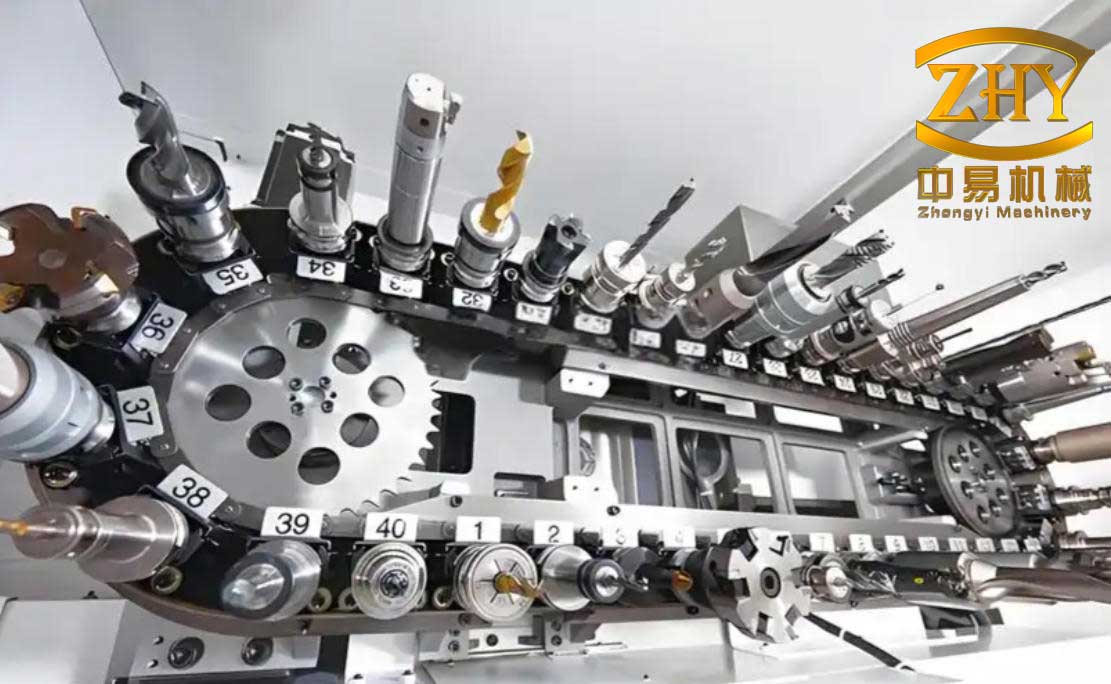
For the inspection of standard, prismatic machine tool castings, manual or 3D layout methods often remain highly effective and efficient. The critical features—the linear guideways, bolt hole patterns, datum faces, and bearing seat pockets—are ideal for inspection via physical probing and scribing. The ability to physically scribe centerlines and machining boundaries directly onto the casting is a tangible benefit for the downstream machine shop. A 3D layout machine excels here, allowing rapid and precise checks of these features without part flipping. The high initial cost can be justified for a dedicated production line.
Conversely, for machine tool castings with significant curved elements or for conducting a comprehensive First Article Inspection (FAI) where every surface must be verified, 3D digital scanning is superior. It can quickly validate the complex internal web geometry, wall thickness consistency (via cross-section analysis), and the overall form of any contoured sections. The comprehensive deviation report provides invaluable data not just for accept/reject decisions, but for diagnosing patterns in the molding or casting process that need correction. In practice, a hybrid approach is frequently the most powerful. A 3D scanner might be used for the initial comprehensive FAI and for periodic audits of critical castings. For routine in-process inspection of key machined features on every casting in a batch, a faster, dedicated 3D layout or even a simple manual check fixture might be deployed on the shop floor. The guiding principle is to match the method’s capabilities to the specific information need: Is the goal a full geometric validation, or a quick check of three critical bore locations? The answer dictates the tool.
In conclusion, the evolution of casting dimensional inspection from manual artistry to digital science has provided foundries with a powerful toolkit. Each method—manual layout, 3D layout, and 3D digital inspection—occupies a vital niche defined by its unique balance of cost, speed, flexibility, and precision. For manufacturers, particularly those producing precision machine tool castings, the path to optimal quality control does not lie in discarding older methods for the newest technology, but in developing a deep understanding of each technique’s merits and flaws. The most effective inspection strategy is often a synergistic combination, leveraging the tactile, drawing-based verification for routine prismatic feature control while employing powerful digital metrology for complex geometry validation and process improvement. This pragmatic, integrated approach ensures that dimensional integrity is maintained efficiently and reliably throughout the journey from molten metal to a precision-engineered component.