
As I delve into the modern landscape of metal casting, it becomes evident that the industry is undergoing a transformative shift driven by technological innovation. In this analysis, I explore how smart foundries are reshaping educational and industrial practices, with a particular focus on sand casting manufacturers. The integration of advanced systems, such as real-time monitoring and automated processes, is not only enhancing efficiency but also preparing the next generation of engineers for the challenges ahead. Throughout this discussion, I will emphasize the role of sand casting manufacturers in adopting these technologies, using tables and formulas to summarize key concepts.
The concept of a smart foundry revolves around the use of digital tools to optimize every stage of the casting process. For instance, in educational settings, partnerships between institutions and industry leaders have led to the development of hands-on laboratories where students can engage with cutting-edge equipment. These initiatives mirror the real-world environments where sand casting manufacturers operate, bridging the gap between academia and industry. One notable example is a collaborative project at a renowned university, which features a comprehensive sand processing system, melting and pouring zones, and automated molding machines. Such facilities leverage tools like energy performance validation schemes to provide full visibility into molding processes, enabling operators to address issues in real time and reduce downtime. This aligns with the goals of sand casting manufacturers who strive for minimal maintenance costs and high productivity.
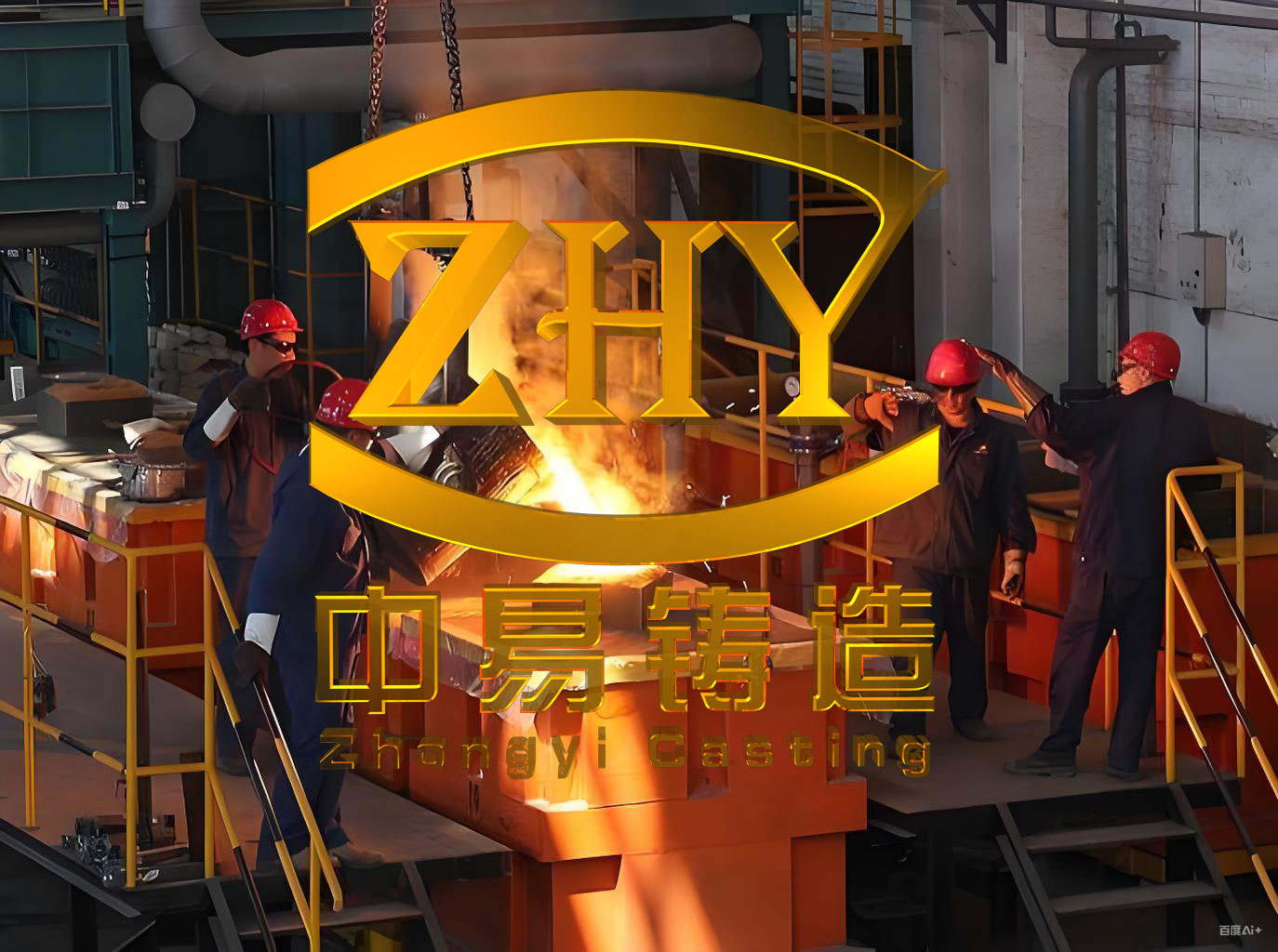
From my perspective, the adoption of smart foundry platforms is crucial for sand casting manufacturers to stay competitive. These platforms incorporate sensors and data analytics to monitor parameters like temperature, pressure, and sand quality. For example, consider the following table that compares traditional and smart foundry approaches in sand casting manufacturing:
| Aspect | Traditional Foundry | Smart Foundry |
|---|---|---|
| Process Visibility | Limited; reliant on manual inspections | High; real-time data via ePVS tools |
| Downtime | Frequent due to unforeseen issues | Reduced through predictive analytics |
| Energy Efficiency | Variable, often suboptimal | Optimized using validation schemes |
| Skill Requirements | Heavy reliance on experienced operators | Enhanced with digital training modules |
| Cost Implications | Higher maintenance and waste costs | Lower operational expenses over time |
This table underscores how sand casting manufacturers can benefit from transitioning to intelligent systems. Moreover, the mathematical modeling of casting processes further illustrates these advantages. For instance, the heat transfer during solidification in sand casting can be described using Fourier’s law, which is fundamental for optimizing cooling rates. The equation is given by:
$$ q = -k \nabla T $$
where \( q \) is the heat flux, \( k \) is the thermal conductivity of the sand mold, and \( \nabla T \) is the temperature gradient. By integrating such formulas into simulation software, sand casting manufacturers can predict defects like shrinkage or porosity, thereby improving product quality. Another critical formula involves the fluid dynamics of molten metal flow, often approximated by the Navier-Stokes equations for incompressible flow:
$$ \rho \left( \frac{\partial \mathbf{v}}{\partial t} + \mathbf{v} \cdot \nabla \mathbf{v} \right) = -\nabla p + \mu \nabla^2 \mathbf{v} + \mathbf{f} $$
Here, \( \rho \) is density, \( \mathbf{v} \) is velocity, \( p \) is pressure, \( \mu \) is dynamic viscosity, and \( \mathbf{f} \) represents body forces. These equations help in designing gating systems that minimize turbulence, a common concern for sand casting manufacturers aiming to reduce scrap rates.
In my view, the educational aspect of smart foundries cannot be overstated. Universities are increasingly incorporating metal casting operations into their engineering curricula, allowing students to mimic real-world practices. This includes areas like machining, injection molding, and product assembly, with sand casting serving as a core component. Through data collection and analysis projects, students gain insights that directly apply to the operations of sand casting manufacturers. For example, a typical curriculum might involve calculating the cost-effectiveness of different sand mixtures, which can be summarized using the following formula for total cost \( C \):
$$ C = C_m + C_l + C_e + C_w $$
where \( C_m \) is material cost, \( C_l \) is labor cost, \( C_e \) is energy cost, and \( C_w \) is waste disposal cost. By optimizing these variables, sand casting manufacturers can achieve significant savings, as shown in the table below comparing cost distributions for conventional vs. smart foundries:
| Cost Category | Conventional Foundry (%) | Smart Foundry (%) |
|---|---|---|
| Material | 40 | 35 |
| Labor | 30 | 20 |
| Energy | 20 | 15 |
| Waste | 10 | 5 |
| Maintenance | 15 | 8 |
These savings are pivotal for sand casting manufacturers operating in competitive global markets. Furthermore, the rise of alternative energy sources, such as synthetic fuels for internal combustion engines, presents new opportunities for the casting industry. As I analyze the broader context, it is clear that sand casting manufacturers play a vital role in supplying components for both electric and traditional vehicles. The debate around electrification versus synthetic fuels highlights the need for pragmatic solutions, where sand casting manufacturers must adapt to diverse material requirements. For instance, the production of engine blocks or transmission housings may involve different alloys depending on the fuel type, necessitating flexible manufacturing processes.
To elaborate, let’s consider the mechanical properties of cast materials used by sand casting manufacturers. The yield strength \( \sigma_y \) of a cast aluminum alloy, for example, can be modeled using the Hall-Petch relationship for grain size refinement:
$$ \sigma_y = \sigma_0 + \frac{k}{\sqrt{d}} $$
where \( \sigma_0 \) is the friction stress, \( k \) is a constant, and \( d \) is the average grain diameter. This formula is essential for sand casting manufacturers aiming to enhance component durability, especially for applications in heavy-duty commercial vehicles where synthetic fuels might be employed. The table below summarizes common alloys used by sand casting manufacturers and their properties relative to fuel types:
| Alloy Type | Typical Use | Compatibility with Synthetic Fuels | Yield Strength (MPa) |
|---|---|---|---|
| Gray Iron | Engine Blocks | High | 250-400 |
| Aluminum A356 | Wheels, Housings | Moderate | 150-200 |
| Ductile Iron | Crankshafts | High | 400-600 |
| Steel 4140 | Gears | Low (requires coatings) | 600-800 |
As I reflect on these technical details, it becomes apparent that sand casting manufacturers must continuously innovate to meet evolving standards. The implementation of CO₂ regulations for vehicles, for instance, drives the demand for lighter and more efficient cast components. Smart foundries enable this by offering precise control over casting parameters, which can be quantified using statistical process control (SPC) formulas. One key metric is the process capability index \( C_p \), defined as:
$$ C_p = \frac{USL – LSL}{6\sigma} $$
where \( USL \) and \( LSL \) are the upper and lower specification limits, and \( \sigma \) is the standard deviation of the process. For sand casting manufacturers, maintaining a high \( C_p \) ensures consistent quality in mass production, reducing rework and enhancing sustainability.
Moreover, the collaborative nature of smart foundry projects extends beyond academia. Industry partnerships allow sand casting manufacturers to share best practices and co-develop technologies. In my observation, this synergy is critical for addressing global challenges like climate neutrality. For example, the use of renewable fuels in combustion engines may require cast parts with higher thermal resistance, prompting sand casting manufacturers to experiment with novel sand mixtures or binders. The following table outlines advanced sand casting techniques adopted by leading manufacturers:
| Technique | Description | Benefits for Sand Casting Manufacturers |
|---|---|---|
| 3D Sand Printing | Additive manufacturing of sand molds | Reduced lead times, complex geometries |
| Green Sand Automation | Automated molding and compaction | Higher productivity, consistent density |
| Simulation-Driven Design | CAD/CAE integration for mold optimization | Minimized defects, improved yield |
| IoT-Enabled Monitoring | Real-time sensor networks in foundries | Predictive maintenance, energy savings |
These advancements underscore how sand casting manufacturers are leveraging digitalization to stay ahead. From a first-person perspective, I believe that the integration of smart foundry principles into everyday operations is no longer optional but essential. The data generated from ePVS tools, for instance, can be analyzed using machine learning algorithms to predict equipment failures, further reducing downtime. Consider a predictive model based on linear regression for maintenance intervals \( T \):
$$ T = \beta_0 + \beta_1 X_1 + \beta_2 X_2 + \epsilon $$
where \( X_1 \) might represent operating hours, \( X_2 \) sand moisture content, and \( \epsilon \) the error term. By implementing such models, sand casting manufacturers can transition from reactive to proactive maintenance, saving costs and resources.
In the context of global expansion, sand casting manufacturers are also exploring sustainable practices. The shift toward renewable energy sources in foundries, such as electric arc furnaces powered by solar or wind, aligns with broader environmental goals. This is particularly relevant given the discussions on synthetic fuels and their role in decarbonizing transportation. As I see it, sand casting manufacturers contribute to this ecosystem by producing components that enable cleaner combustion, whether through improved aerodynamics or heat management. The life-cycle assessment (LCA) of cast products can be expressed with a simplified formula:
$$ LCA = E_m + E_p + E_t + E_e $$
where \( E_m \) is embodied energy in materials, \( E_p \) is production energy, \( E_t \) is transportation energy, and \( E_e \) is end-of-life energy. By minimizing these terms through smart foundry techniques, sand casting manufacturers reduce their carbon footprint, appealing to eco-conscious markets.
Looking ahead, the convergence of education, industry, and policy will shape the future of sand casting manufacturing. I anticipate that more universities will establish smart foundries as hubs for innovation, fostering collaboration between students and sand casting manufacturers. These partnerships will likely focus on refining processes like sand reclamation, where the efficiency \( \eta \) can be calculated as:
$$ \eta = \frac{m_r}{m_i} \times 100\% $$
with \( m_r \) being the mass of reclaimed sand and \( m_i \) the initial mass. Higher reclamation rates benefit sand casting manufacturers by cutting material costs and reducing waste sent to landfills.
To further illustrate the economic impact, let’s examine a cost-benefit analysis for adopting smart foundry technologies. The net present value (NPV) of such an investment over \( n \) years is given by:
$$ NPV = \sum_{t=1}^{n} \frac{R_t – C_t}{(1 + r)^t} – I_0 $$
where \( R_t \) are revenues, \( C_t \) are costs, \( r \) is the discount rate, and \( I_0 \) is the initial investment. For sand casting manufacturers, positive NPV projects justify the upfront costs of automation and digital tools. The table below provides a hypothetical scenario for a mid-sized sand casting manufacturer:
| Year | Revenue Increase (%) | Cost Savings (%) | Net Cash Flow ($) |
|---|---|---|---|
| 1 | 5 | 10 | 50,000 |
| 2 | 10 | 15 | 100,000 |
| 3 | 15 | 20 | 150,000 |
| 4 | 20 | 25 | 200,000 |
| 5 | 25 | 30 | 250,000 |
This demonstrates the long-term advantages for sand casting manufacturers who embrace innovation. Additionally, the skill development in smart foundries ensures a pipeline of talent familiar with the latest technologies, which is crucial for sustaining growth. In my experience, hands-on training in areas like data analytics or mechatronics empowers graduates to contribute immediately to the operations of sand casting manufacturers.
Another critical aspect is the standardization of processes across the supply chain. Sand casting manufacturers often collaborate with automotive or aerospace sectors, where quality certifications are mandatory. Statistical formulas like the Six Sigma defect rate per million opportunities (DPMO) are used to monitor performance:
$$ DPMO = \frac{\text{Number of defects} \times 1,000,000}{\text{Number of units} \times \text{Opportunities per unit}} $$
By targeting low DPMO values, sand casting manufacturers can meet stringent industry requirements, enhancing their reputation and market share. This is especially important in the context of global competition, where manufacturers in regions like Asia are advancing rapidly.
In conclusion, the evolution toward smart foundries represents a paradigm shift for sand casting manufacturers. Through the integration of real-time monitoring, advanced simulations, and collaborative education, the industry is poised to achieve greater efficiency and sustainability. As I have outlined using tables and formulas, the technical and economic benefits are substantial. The ongoing dialogue around alternative fuels and climate goals further underscores the relevance of sand casting manufacturers in shaping a greener future. By continuing to invest in smart technologies and fostering partnerships, they will not only thrive but also drive innovation across manufacturing sectors. This journey, marked by continuous learning and adaptation, highlights the resilience and ingenuity of sand casting manufacturers worldwide.
To encapsulate, the key takeaways for sand casting manufacturers include leveraging digital tools for process optimization, engaging with educational institutions for talent development, and aligning production with environmental standards. The formulas and tables presented here serve as a foundation for decision-making, whether in cost analysis or quality control. As the industry moves forward, I am confident that sand casting manufacturers will remain at the forefront of manufacturing excellence, embracing change and turning challenges into opportunities. The smart foundry model, with its emphasis on visibility and efficiency, is indeed the way forward for sand casting manufacturers seeking to excel in an increasingly complex global market.