
As a practitioner deeply embedded in the foundry sector, I have witnessed firsthand the transformative pressure exerted by the rapid ascent of computer numerical control (CNC) machine tools. The mechanical equipment manufacturing industry is the foundational and strategic bedrock for national economic development, with CNC machine tools representing its core. The revitalization of equipment manufacturing unequivocally starts with the advancement of the machine tool industry. This sector’s proficiency directly influences national economic development and defense security. National policies, such as the medium to long-term science and technology development plans, explicitly encourage the development of advanced manufacturing equipment, with high-end CNC machine tools at the forefront. This presents a tremendous opportunity, but simultaneously, it imposes significantly elevated requirements on us, the foundries supplying the critical cast components. The journey of adapting our machine tool casting processes to meet these new paradigms is both a challenge and an imperative for survival and growth.
The global landscape for CNC machine tools is one of intense innovation and competition. From my perspective, while China’s machine tool industry has made substantial strides over the past decades—expanding its product range and production scale—a palpable gap remains in product quality, reliability, and particularly in high-precision, advanced models. Our development has often followed an introduction-digestion pattern, lacking deep foundational research. Consequently, high-tech products and key functional components frequently rely on imported technology or joint ventures. This reality underscores a critical dependency: the quality of domestically produced high-end CNC machines is intrinsically linked to the quality of their foundational castings. The market demand is shifting towards sophisticated centers like five-axis machining centers, high-speed vertical centers, and large-scale CNC grinders. Each of these machines places unique and stringent demands on their structural components, primarily produced through machine tool casting. Therefore, the path to revitalizing the CNC industry is inextricably tied to our ability to produce superior castings that enable these advanced designs.
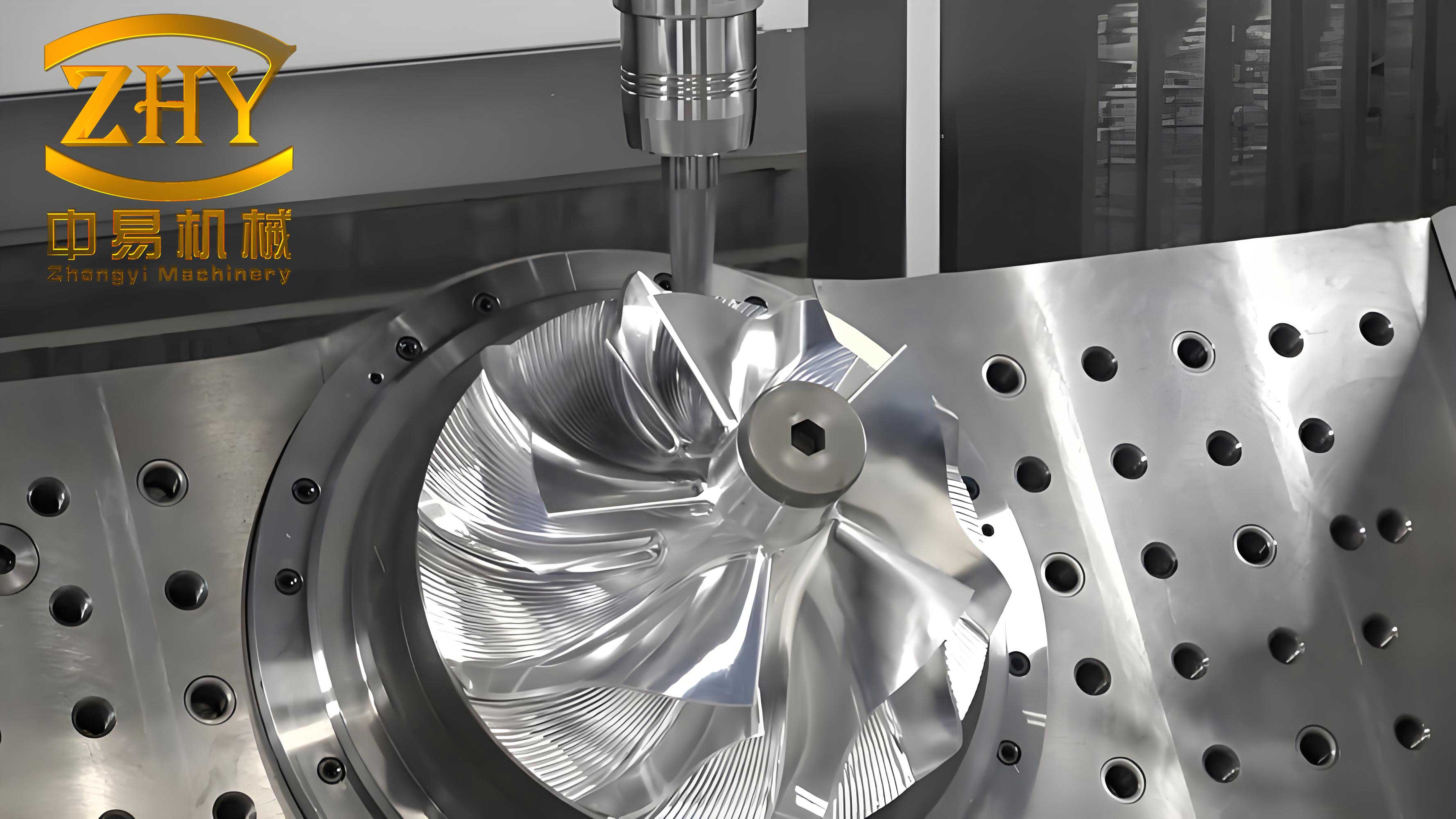
Within our foundries, we have undergone significant modernization. The widespread adoption of furan resin sand molding has largely replaced more polluting green sand methods. The duplex melting process, combining cupola and electric furnace operations, is now commonplace for ensuring superior metallurgical quality of iron. Instrumentation like direct reading spectrometers and thermal analysis units are essential tools for process control. Many of us utilize computer simulation software for solidification analysis, enhancing our design capabilities and responsiveness. Certifications like ISO 9001, 14001, and 18000 are pursued to align with international standards. Despite these advances, the specific demands from the CNC sector reveal areas where our machine tool casting practices must evolve further.
The first and most direct requirement is dimensional accuracy. CNC machines perform high-precision machining and often integrate automated clamping, leaving minimal room for error in the casting blank. While furan resin sand offers good dimensional stability, we have learned that the model quality is a frequently overlooked bottleneck. For low-volume machine tool casting production, wooden patterns are typical, but handcrafted ones often have excessive draft angles and poor surface finish, compromising mold cavity accuracy. The solution lies in minimizing overall draft, employing CNC-machined wooden patterns or metal patterns mounted on rigid pattern plates. The relationship between pattern accuracy and final casting tolerance can be conceptualized through process capability indices. We aim for a process where the dimensional deviation $\Delta D$ is minimized:
$$\Delta D = f(P_q, S_s, M_a)$$
where $P_q$ is pattern quality, $S_s$ is sand system stability, and $M_a$ is molding accuracy. A summary of key factors influencing dimensional accuracy in machine tool casting is presented below.
| Factor | Common Issue | Optimal Control Measure | Target Metric |
|---|---|---|---|
| Pattern Design | Excessive draft, manual errors | CAD/CAM-designed patterns; minimal standardized draft | Draft angle ≤ 0.5° – 1° |
| Molding Media | Sand expansion/ deformation | High-stability furan resin sand with controlled reclaim | Linear expansion < 1.2% |
| Process Control | Inconsistent molding practice | Automated molding lines; strict process parameters | CTQ dimensions Cpk ≥ 1.33 |
| Measurement | Manual inspection errors | Regular use of CMMs (Coordinate Measuring Machines) | Full GD&T verification |
Secondly, the service life and stability of a CNC machine are profoundly affected by residual stresses in the casting and the hardness of sliding guideways. Residual stress, if not properly managed, leads to distortion during machining or in service, undermining precision. We address this through both casting process design and post-casting treatments. In the process, we aim for a low-stress iron by optimizing the silicon-to-carbon ratio (Si/C) and ensuring slow, controlled cooling in the mold. The fundamental thermal stress generated during cooling can be approximated by:
$$\sigma_{res} \approx E \cdot \alpha \cdot (\bar{T}_s – T_e)$$
where $E$ is Young’s modulus, $\alpha$ is the coefficient of thermal expansion, $\bar{T}_s$ is the average temperature of the section during stress development, and $T_e$ is the ambient temperature. Post-casting, we employ stress relief annealing (thermal aging), vibration stress relief, or natural aging. Our experience shows that a well-designed thermal aging cycle is most effective, but it must be tailored to the casting’s geometry and grade. For critical components, a double aging process—before and after rough machining—is sometimes necessary. A comparative analysis of these methods is crucial.
| Method | Typical Process Parameters | Estimated Stress Reduction | Advantages | Disadvantages |
|---|---|---|---|---|
| Thermal Aging | Heat to 500-550°C, hold 2-4 hrs, slow cool (~30°C/hr) | 70-90% | Most effective; also improves machinability | High energy cost; long cycle time; risk of distortion if not controlled |
| Vibration Aging | Resonant vibration for 20-40 mins at determined frequency | 30-60% | Fast; low energy; performed at room temperature | Less predictable uniformity; less effective on very large, complex shapes |
| Natural Aging | Outdoor storage for 6-12 months | 20-40% | No energy cost; simple | Extremely long time; occupies space; weather-dependent |
| Combined (Vib+Thermal) | Vibration after shakeout + thermal after rough machining | >85% | Balances efficiency and effectiveness | Requires two operations |
For guideway hardness, we focus on metallurgy and chilling. The hardness $H$ (e.g., Brinell) is a function of composition and cooling rate:
$$H = f(CE, Cr, Cu, Sn, \frac{dT}{dt})$$
where $CE$ is carbon equivalent (CE = %C + 0.33(%Si) + 0.33(%P) – 0.027(%Mn) for gray iron). We adjust carbon, silicon, and manganese levels and add micro-alloys like chromium or tin to promote pearlite. Chilled inserts are used in mold faces to increase local cooling rates, ensuring a hard, wear-resistant surface. It is vital to monitor thermal aging temperatures precisely, as overheating can soften the casting. Furthermore, for bed castings requiring subsequent surface induction hardening, a high and consistent pearlite content (ideally >95%) is non-negotiable, otherwise, the淬火 response is poor.
Thirdly, the aesthetic and functional surface quality of castings is now paramount. CNC machines are not just tools; they are high-value capital equipment where appearance signifies quality. Beyond the absence of defects like sand inclusions or gas holes, we must achieve a superior surface finish. The key factors are mold coating and pattern finish. We have shifted from brushing to flow coating of refractory paints, which provides a more uniform, smoother layer. The resulting surface roughness $R_a$ of the as-cast part is critical. Post-casting processes like shot blasting, grinding, and initial machining (roughing) are integral to the final quality. A holistic view of surface quality control in machine tool casting involves multiple stages.
Fourthly, the drive for machine tool lightweighting without compromising strength pushes us towards higher-grade cast iron. Internationally, grades like HT150 and HT200 are becoming obsolete for major components, with HT300 and above being the norm. This shift presents significant foundry challenges, as higher strength grades are more prone to shrinkage and gas defects due to their lower carbon equivalents and different solidification characteristics. The foundation for producing these grades reliably is a robust melting and treatment practice. Duplex melting (cupola + induction furnace) allows for precise temperature and composition control. We rely on real-time spectroscopy and thermal analysis to monitor key parameters like carbon saturation (SC) and inoculation effectiveness. The relationship between tensile strength $TS$ (in MPa) and composition for gray iron can be approximated by empirical formulas such as:
$$TS \approx 1000 – 800 \cdot CE \quad \text{(for standard conditions)}$$
But achieving high strength consistently requires tight control over inoculation and cooling. The following table outlines the evolution of material requirements and associated process controls.
| Typical Historical Grade | Modern Target Grade | Key Metallurgical Shift | Casting Process Adjustments | Common Defect Risks |
|---|---|---|---|---|
| HT200 (G2500) | HT300 (G3000) and above | Lower CE, higher pearlite, finer graphite | Intensive inoculation; controlled low pouring temp; efficient feeding systems | Shrinkage porosity, carbides, chilling |
| Ferritic-Pearlitic Matrix | Predominantly Pearlitic Matrix | Alloying (Cr, Cu, Sn); faster cooling | Use of chills; modulation of mold cooling | Hard spots, internal stress |
| Moderate Strength | High Strength with Good Damping | Optimized graphite morphology (Type A, size 4-6) | Advanced inoculants (e.g., Sr, Ba, RE); post-inoculation | Under-inoculation (chill), over-inoculation (fade) |
Fifthly, the trend towards larger CNC machine tools for aerospace, energy, and mold-making sectors creates a booming market for massive castings. Producing these large-section machine tool castings—bed frames, columns, crossrails weighing tens of tons—requires specialized capabilities. Beyond sufficient melting capacity and heavy-duty cranes, we must master deep pit molding techniques, address the challenges of slow cooling in heavy sections to avoid abnormal graphite formations, and implement effective heavy rare-earth (RE) inoculation to refine graphite throughout the thick cross-sections. The solidification time $t_s$ for a sand casting of modulus $M$ (volume/surface area) is given by Chvorinov’s rule:
$$t_s = k \cdot M^n$$
where $k$ is a mold constant. For large $M$, $t_s$ is very long, requiring careful control of mold properties and alloy treatment to ensure consistent microstructure from surface to core.
Looking forward, the trajectory is clear. The symbiosis between CNC machine tool performance and machine tool casting quality will only deepen. As machine builders pursue higher speeds, accuracies, and complex functionalities, the demands on cast components will become more integrated—calling for cast-in features, optimized topology, and near-net-shape geometries that reduce machining waste. For us in the foundry industry, continuous innovation is not optional. We must deepen our research into simulation-led design, advanced metallurgy (including compacted graphite iron for certain applications), automated and robotic finishing processes, and the integration of IoT sensors for real-time process monitoring. Every aspect of the machine tool casting value chain, from pattern making to final inspection, must be scrutinized for improvement. The goal is to elevate our machine tool casting capabilities from being mere suppliers of blanks to becoming essential partners in the advanced manufacturing ecosystem, providing engineered components that form the robust, precise, and reliable backbone of the world’s next generation of CNC equipment. This journey requires investment, knowledge, and an unwavering commitment to quality—a challenge we embrace as the foundation for future growth and relevance in the evolving landscape of global manufacturing.
In conclusion, the evolution of CNC technology acts as a powerful catalyst, driving fundamental improvements in our foundry practices. The requirements for precision, structural integrity, surface perfection, material performance, and the ability to produce massive components are reshaping the machine tool casting discipline. By systematically addressing these challenges through technological upgrades, process rigor, and a culture of continuous improvement, we can not only meet the higher demands but also contribute actively to the advancement of the entire equipment manufacturing sector. The future of precision manufacturing is being built, quite literally, upon the quality of every machine tool casting we produce. Our focus must remain on leveraging science, engineering, and data to transform molten metal into the high-integrity foundations upon which modern industry depends.