
As an industry professional deeply involved in manufacturing and engineering, I have witnessed a transformative shift in the production of critical components for aerospace and automotive sectors. The recent developments in aerospace casting and electric drive module manufacturing highlight a broader trend toward innovation, efficiency, and sustainability. In this analysis, I will delve into the technological advancements, economic implications, and future prospects of these fields, emphasizing the pivotal role of aerospace casting in modern industrial applications. Throughout this discussion, I will incorporate tables and formulas to summarize key concepts and data, ensuring a comprehensive understanding of these complex topics.
The aerospace industry has always been at the forefront of adopting cutting-edge manufacturing techniques, and aerospace casting is no exception. Aerospace casting involves the production of metal parts through processes like sand casting, investment casting, and die casting, primarily using materials such as magnesium and aluminum. These materials are favored for their lightweight properties and high strength-to-weight ratios, which are essential for aircraft performance and fuel efficiency. In recent years, companies have leveraged advanced technologies to enhance aerospace casting processes, leading to significant improvements in quality and cost-effectiveness. For instance, the integration of 3D sand printing, robotics, and digital radiography has revolutionized how complex castings are manufactured for military and commercial platforms. This evolution in aerospace casting not only meets stringent industry standards but also drives competitiveness in a global market.
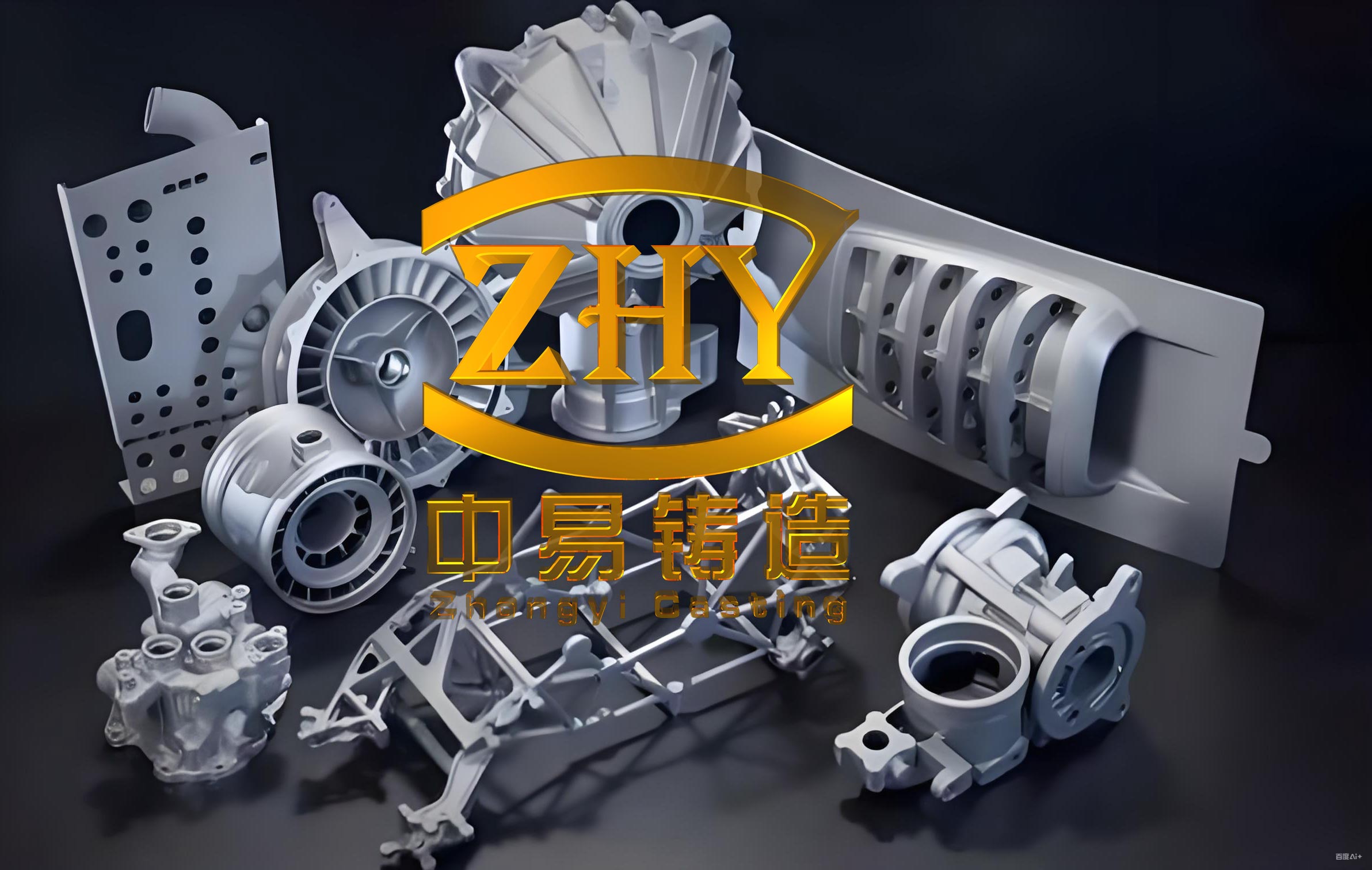
To better understand the materials used in aerospace casting, let’s examine their properties through a comparative table. The choice between magnesium and aluminum often depends on specific application requirements, such as weight savings, corrosion resistance, and mechanical strength. Below is a table summarizing key attributes of these materials in the context of aerospace casting:
| Material | Density (g/cm³) | Tensile Strength (MPa) | Thermal Conductivity (W/m·K) | Common Applications in Aerospace Casting |
|---|---|---|---|---|
| Magnesium | 1.74 | 200-300 | 156 | Engine components, structural parts |
| Aluminum | 2.70 | 100-400 | 237 | Airframe parts, landing gear components |
This table illustrates why aerospace casting often relies on these metals: magnesium offers superior weight reduction, while aluminum provides better thermal management. In my experience, optimizing these materials through advanced casting techniques is crucial for achieving performance goals. The aerospace casting process involves multiple stages, each governed by physical principles that can be modeled mathematically. For example, the heat transfer during solidification can be described using Fourier’s law of thermal conduction:
$$ q = -k \nabla T $$
where \( q \) is the heat flux, \( k \) is the thermal conductivity, and \( \nabla T \) is the temperature gradient. This equation is fundamental in predicting casting defects like shrinkage or porosity, which are critical concerns in aerospace casting. By applying such formulas, engineers can simulate and refine processes to ensure high-quality outputs. Moreover, the adoption of additive manufacturing, such as 3D sand printing, has introduced new variables into these models. The efficiency of aerospace casting can be quantified through a cost-performance ratio, often expressed as:
$$ C_{eff} = \frac{P}{C} $$
where \( C_{eff} \) is the cost-effectiveness, \( P \) represents performance metrics (e.g., strength, durability), and \( C \) denotes the total production cost. Innovations in aerospace casting aim to maximize \( C_{eff} \), making it a key driver for industry partnerships and long-term agreements.
Beyond traditional aerospace applications, the principles of casting are extending into emerging sectors like electric vehicle (EV) manufacturing. The production of electric drive modules (EDMs) shares similarities with aerospace casting, particularly in the use of lightweight materials and precision engineering. EDMs integrate motors, power electronics, and transmissions into a single module, enhancing efficiency and range for EVs. This integration relies on advanced manufacturing techniques that echo those used in aerospace casting, such as automated pouring and finishing. In my analysis, the synergy between these fields is accelerating technological progress. For instance, the optimization of EDM components often involves casting processes for housings and structural parts, where lessons from aerospace casting can be applied to improve quality and reduce costs.
To illustrate the technological advancements in both aerospace casting and EDM production, consider the following table comparing key manufacturing technologies:
| Technology | Application in Aerospace Casting | Application in EDM Manufacturing | Benefits |
|---|---|---|---|
| 3D Sand Printing | Rapid prototyping of complex geometries | Customized component designs | Reduced lead time, enhanced flexibility |
| Robotic Automation | Precision handling and finishing | Assembly and testing of modules | Improved consistency, lower labor costs |
| Digital Radiography | Non-destructive testing for defects | Quality assurance of sealed units | Higher reliability, safety compliance |
This table underscores how cross-industry adoption of technologies is fostering innovation. In aerospace casting, these tools enable the production of intricate parts for aircraft like the F-35 Lightning II or commercial platforms such as the 787 Dreamliner. Similarly, in EDM manufacturing, they support the creation of efficient powertrains for EVs targeting ranges up to 500 miles. The mathematical modeling of these processes further enhances their efficacy. For example, the fluid dynamics of molten metal in casting can be described by the Navier-Stokes equations:
$$ \rho \left( \frac{\partial \mathbf{v}}{\partial t} + \mathbf{v} \cdot \nabla \mathbf{v} \right) = -\nabla p + \mu \nabla^2 \mathbf{v} + \mathbf{f} $$
where \( \rho \) is density, \( \mathbf{v} \) is velocity, \( p \) is pressure, \( \mu \) is viscosity, and \( \mathbf{f} \) represents body forces. Solving these equations computationally allows for the prediction of flow patterns and defect formation in aerospace casting. Likewise, in EDM production, thermal management models use similar principles to optimize heat dissipation from electronic components, ensuring longevity and performance.
The economic impact of these advancements cannot be overstated. Investments in manufacturing infrastructure, such as the allocation of funds for plant upgrades, reflect a strategic commitment to leveraging aerospace casting expertise for broader applications. For instance, the expansion of production facilities for castings supports not only aerospace projects but also automotive electrification efforts. This diversification mitigates risks and capitalizes on shared technological platforms. In my view, the cost competitiveness of aerospace casting is bolstered by economies of scale and process innovations. A simplified cost model for aerospace casting can be expressed as:
$$ C_{total} = C_{material} + C_{energy} + C_{labor} + C_{technology} $$
where each component can be optimized through advancements like 3D printing, which reduces \( C_{material} \) by minimizing waste, or automation, which lowers \( C_{labor} \). By continuously refining these factors, companies can maintain a competitive edge in global markets.
Looking ahead, the future of aerospace casting is intertwined with sustainability and digitalization. The push for decarbonization in transportation, including aerospace and automotive sectors, demands lighter and more efficient components, which aerospace casting is uniquely positioned to provide. Additionally, the integration of Internet of Things (IoT) sensors and artificial intelligence (AI) into casting processes enables real-time monitoring and predictive maintenance, further enhancing quality. For example, AI algorithms can analyze data from digital radiography to detect micro-defects early, reducing scrap rates in aerospace casting. The mathematical framework for such predictive analytics often involves machine learning models, such as:
$$ y = f(\mathbf{x}; \theta) + \epsilon $$
where \( y \) is the output (e.g., defect probability), \( \mathbf{x} \) is a vector of input features (e.g., temperature, pressure), \( \theta \) represents model parameters, and \( \epsilon \) is error. Training these models on historical data from aerospace casting operations can lead to significant improvements in yield and reliability.
To summarize the key performance indicators (KPIs) in aerospace casting and related manufacturing, the following table provides a holistic view:
| KPI Category | Metric | Typical Value in Aerospace Casting | Impact on Overall Efficiency |
|---|---|---|---|
| Quality | Defect Rate (%) | < 0.5 | High reliability, reduced rework |
| Cost | Production Cost per Unit ($) | Varies by complexity | Competitiveness in bidding |
| Time | Lead Time (days) | 30-60 | Market responsiveness |
| Sustainability | Energy Consumption (kWh/kg) | 10-20 | Environmental compliance |
This table highlights how aerospace casting operations are measured and optimized. In my professional experience, continuous improvement in these KPIs is essential for meeting the demands of partners and regulators. The interplay between aerospace casting and other manufacturing domains, such as EDM production, creates a virtuous cycle of innovation. For instance, advancements in lightweight casting for aerospace applications can be adapted to reduce the weight of EV components, thereby extending range—a critical factor in the automotive industry’s electrification goals.
In conclusion, the evolution of aerospace casting represents a cornerstone of modern manufacturing, driving progress in both traditional aerospace and emerging sectors like electric vehicles. Through technological integration, mathematical modeling, and strategic investments, the industry is poised to achieve new heights of efficiency and performance. The repeated emphasis on aerospace casting throughout this discussion underscores its enduring relevance and transformative potential. As we move forward, I believe that fostering collaboration across industries and embracing digital tools will be key to unlocking further advancements in aerospace casting and beyond, ensuring a sustainable and innovative future for manufacturing worldwide.