
As a seasoned observer and participant in the foundry industry, I have witnessed firsthand the transformative shifts that sand casting manufacturers are undergoing. In recent years, the drive toward greater efficiency, sustainability, and technological integration has become paramount. This article delves into the core advancements that are reshaping the landscape for sand casting manufacturers, emphasizing how innovations in equipment and materials are propelling the sector forward. Through detailed analyses, including tables and mathematical models, I aim to provide a comprehensive overview that underscores the critical role of sand casting manufacturers in modern manufacturing.
The foundation of metal casting lies in sand casting, a process that sand casting manufacturers have refined over decades. Today, the imperative to enhance productivity while addressing environmental concerns is at the forefront. For sand casting manufacturers, adopting state-of-the-art machinery is no longer optional but a necessity to remain competitive. The installation of advanced flaskless moulding machines, for instance, represents a leap in operational efficiency. These machines enable sand casting manufacturers to achieve higher mold production rates, reduce labor dependency, and maintain stringent quality standards—a trifecta that defines success in today’s market.
To quantify the impact of such technological upgrades, consider the efficiency gains from modern flaskless moulding systems. Let me introduce a formula that sand casting manufacturers can use to evaluate productivity improvements. The overall equipment effectiveness (OEE) in sand casting can be expressed as:
$$ \text{OEE} = \text{Availability} \times \text{Performance} \times \text{Quality} $$
where Availability is the ratio of operating time to planned production time, Performance is the ratio of actual output to theoretical maximum output, and Quality is the ratio of good molds to total molds produced. For sand casting manufacturers, enhancing any of these factors directly boosts profitability. With new machines, availability often increases due to reduced downtime, while performance soars with higher cycle speeds. As sand casting manufacturers integrate these systems, they can recalibrate their operations using such metrics to drive continuous improvement.
In the context of mold production, the capacity of a flaskless moulding machine is crucial. A typical comparison between traditional and modern systems reveals stark differences. Below is a table summarizing key parameters that sand casting manufacturers should consider when upgrading equipment:
| Parameter | Traditional Moulding Machine | Modern Flaskless Moulding Machine (e.g., FBO-3B type) | Impact on Sand Casting Manufacturers |
|---|---|---|---|
| Mold Production Rate (per hour) | 60-80 molds | Up to 120 molds (without core setting) | Increases throughput by 50-100%, allowing sand casting manufacturers to meet higher demand. |
| Mold Dimensions (inches) | Limited flexibility, often fixed sizes | 20 × 26 inches, adaptable for molds from 8 to 10 inches | Enables sand casting manufacturers to handle diverse product ranges with precision. |
| Labor Dependency | High, requiring multiple operators | Reduced, with automated controls | Addresses workforce shortages, a common challenge for sand casting manufacturers. |
| Energy Consumption per Mold | Higher due to inefficiencies | Optimized, leading to lower operational costs | Enhances sustainability and cost-effectiveness for sand casting manufacturers. |
This table illustrates why sand casting manufacturers are rapidly adopting such technologies. The data highlights not just incremental gains but transformative shifts that redefine production capabilities. For sand casting manufacturers, investing in these machines translates to a stronger market position, as they can deliver superior castings with faster turnaround times.
Beyond equipment, material innovations play a pivotal role for sand casting manufacturers. The development of eco-friendly lubricants and binders is revolutionizing the casting process. Take, for example, biodegradable lubricants that minimize environmental impact. Sand casting manufacturers are increasingly prioritizing green solutions to align with global sustainability goals. The biodegradability of such lubricants can be modeled using a decay formula:
$$ B(t) = B_0 \cdot e^{-kt} $$
where \( B(t) \) is the biodegradability at time \( t \), \( B_0 \) is the initial biodegradable fraction, and \( k \) is the decay constant. For a lubricant with over 60% biodegradability, as seen in recent advancements, sand casting manufacturers can significantly reduce their ecological footprint. This is especially relevant as regulations tighten and customers demand greener practices from sand casting manufacturers.
The synergy between advanced machinery and sustainable materials creates a virtuous cycle for sand casting manufacturers. To explore this further, let’s examine the cost-benefit analysis of upgrading both equipment and consumables. Consider the total cost of ownership (TCO) for sand casting manufacturers, which includes capital expenditure, operational costs, and environmental compliance fees. A simplified TCO model can be expressed as:
$$ \text{TCO} = C_c + \sum_{t=1}^{n} \left( \frac{O_t + E_t}{(1+r)^t} \right) $$
where \( C_c \) is the initial capital cost, \( O_t \) is operational cost in year \( t \), \( E_t \) is environmental cost (e.g., waste disposal), \( r \) is the discount rate, and \( n \) is the equipment lifespan. For sand casting manufacturers, reducing \( O_t \) through efficient machines and lowering \( E_t \) via biodegradable lubricants makes the TCO more favorable. This mathematical approach empowers sand casting manufacturers to make informed investment decisions.
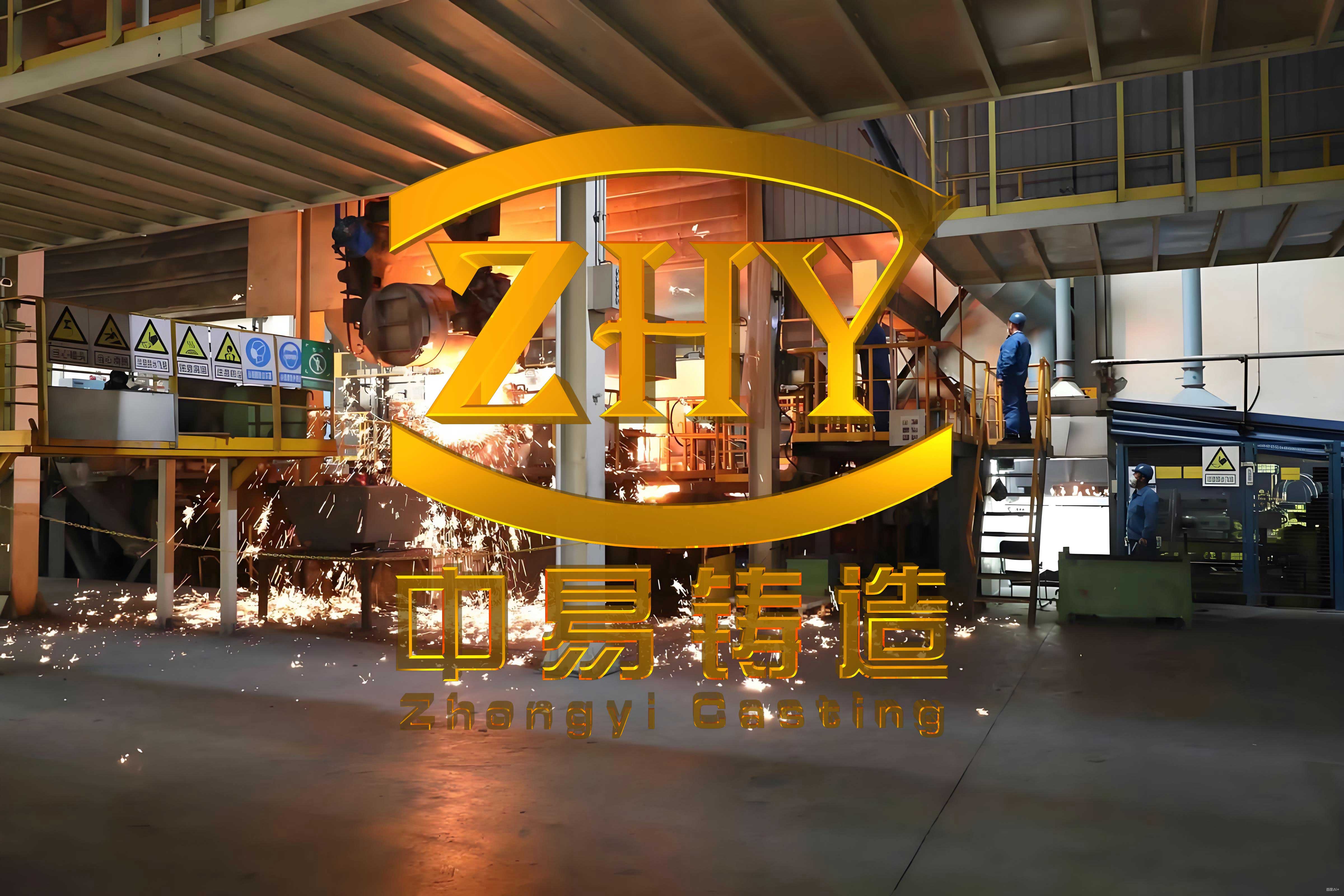
The visual representation above underscores the scale and precision modern sand casting manufacturers achieve. Such facilities embody the integration of technology and expertise, driving the industry forward. For sand casting manufacturers, maintaining this level of excellence requires continuous innovation, as depicted in the image.
Another critical aspect for sand casting manufacturers is the optimization of mold quality and consistency. The statistical process control (SPC) methods are essential here. The capability index \( C_p \) is often used by sand casting manufacturers to assess process performance:
$$ C_p = \frac{\text{USL} – \text{LSL}}{6\sigma} $$
where USL and LSL are the upper and lower specification limits for mold dimensions, and \( \sigma \) is the process standard deviation. A higher \( C_p \) indicates better process capability, which sand casting manufacturers strive for through precise machinery. With modern flaskless moulding machines, \( \sigma \) tends to decrease due to reduced variability, thereby improving \( C_p \). This mathematical framework helps sand casting manufacturers ensure that every mold meets stringent tolerances, enhancing customer satisfaction.
The global landscape for sand casting manufacturers is also shaped by regional trends and standardization. For instance, lubricant formulations that are consistent across Europe, Middle East, Africa, and Asia-Pacific regions enable sand casting manufacturers to streamline their supply chains. This harmonization reduces complexity and costs, as sand casting manufacturers can deploy the same high-performance materials worldwide. To illustrate the benefits, consider a table comparing regional adoption rates of advanced technologies among sand casting manufacturers:
| Region | Percentage of Sand Casting Manufacturers Using Flaskless Moulding | Average Efficiency Gain (%) | Key Driver |
|---|---|---|---|
| North America | 65% | 40 | Labor shortages and demand for high-volume production |
| Europe | 70% | 45 | Environmental regulations and automation trends |
| Asia-Pacific | 55% | 35 | Cost reduction and growing automotive sector |
| Global Average | 63% | 40 | Competitive pressure and technological accessibility |
This data reveals that sand casting manufacturers worldwide are embracing change, albeit at varying paces. The efficiency gains are substantial, reinforcing why sand casting manufacturers must stay abreast of innovations. As a proactive player, I advocate for sand casting manufacturers to leverage such regional insights to benchmark their progress.
In terms of environmental impact, sand casting manufacturers are also focusing on waste reduction. The sand reclamation process is a key area where mathematical modeling aids optimization. The rate of sand reuse can be described by:
$$ R = 1 – \frac{W}{S} $$
where \( R \) is the reclamation rate, \( W \) is waste sand generated, and \( S \) is total sand used. For sand casting manufacturers, increasing \( R \) through better recycling techniques lowers material costs and environmental burden. Coupled with biodegradable lubricants, this approach positions sand casting manufacturers as leaders in sustainable manufacturing. The holistic view is vital: sand casting manufacturers that integrate eco-friendly practices not only comply with regulations but also attract environmentally conscious clients.
Looking ahead, the role of automation and data analytics cannot be overstated for sand casting manufacturers. The implementation of Internet of Things (IoT) sensors in foundries allows real-time monitoring of machine performance and mold quality. This data-driven approach enables predictive maintenance, minimizing downtime for sand casting manufacturers. A predictive model might use regression analysis:
$$ y = \beta_0 + \beta_1 x_1 + \beta_2 x_2 + \epsilon $$
where \( y \) represents machine failure probability, \( x_1 \) and \( x_2 \) are variables like operating hours and temperature, and \( \beta \) are coefficients. By analyzing such patterns, sand casting manufacturers can preempt issues, ensuring uninterrupted production. This technological leap is reshaping how sand casting manufacturers operate, moving from reactive to proactive management.
The economic implications for sand casting manufacturers are profound. To assess profitability, consider the return on investment (ROI) from upgrading to advanced systems. The ROI formula is:
$$ \text{ROI} = \frac{\text{Net Benefits} – \text{Cost}}{\text{Cost}} \times 100\% $$
For sand casting manufacturers, net benefits include increased production, lower labor costs, and reduced waste. Assuming a cost of $500,000 for a new flaskless moulding machine and annual savings of $150,000, the ROI over five years would be significant. Such calculations empower sand casting manufacturers to justify capital expenditures and secure funding for innovation.
Furthermore, the competitive dynamics among sand casting manufacturers are evolving. Those who adopt cutting-edge technologies gain a market edge, as they can offer faster delivery and higher quality. This creates a ripple effect: as leading sand casting manufacturers set new standards, others must follow to survive. The industry is witnessing consolidation, with technologically adept sand casting manufacturers expanding their market share. In this context, continuous learning and adaptation are non-negotiable for sand casting manufacturers aiming for long-term success.
In conclusion, the journey for sand casting manufacturers is one of relentless progress. From flaskless moulding machines that boost efficiency to biodegradable lubricants that safeguard the environment, the tools are available. By embracing mathematical models and data-driven strategies, sand casting manufacturers can optimize every facet of their operations. The future belongs to those sand casting manufacturers who innovate, integrate, and inspire. As I reflect on these advancements, it is clear that sand casting manufacturers are not just keeping pace with change—they are driving it, forging a path toward a more efficient and sustainable manufacturing era.