
In the realm of manufacturing, sand casting products hold a pivotal position due to their cost-effectiveness, simplicity, and versatility in producing complex geometries. Among the materials commonly used, hypoeutectic Al-Si alloys are extensively employed in sand casting products for applications such as automotive engine blocks, aerospace components, and structural parts, owing to their excellent castability, lightweight nature, and balanced mechanical properties. As a researcher focused on optimizing these alloys for enhanced performance, I have delved into the effects of alloying elements, particularly antimony (Sb), on the microstructure of Al-Si alloys under gravity sand casting conditions. This article presents a comprehensive investigation into how Sb modifies the primary α-Al grains and eutectic Si, with insights drawn from experimental analyses and theoretical frameworks. Throughout this discussion, the relevance to sand casting products will be emphasized, as understanding these microstructural changes is crucial for improving the durability and efficiency of sand casting products in industrial applications.
The microstructure of hypoeutectic Al-Si alloys, typically consisting of primary α-Al dendrites or equiaxed grains and a eutectic mixture of α-Al and Si, directly influences mechanical properties such as strength, ductility, and fatigue resistance. In sand casting products, where cooling rates are relatively slow compared to other processes like die casting, the formation of coarse microstructural features can lead to reduced performance. Therefore, modification treatments, such as the addition of Sb, are often applied to refine the eutectic Si and control grain growth. However, the exact mechanisms by Sb remains debated in literature, with some studies suggesting nucleation promotion, others pointing to adsorption effects, and yet others proposing alterations in solid solubility. In this work, I aim to clarify these mechanisms through a detailed examination of solidification behavior, grain characteristics, and eutectic Si morphology, all within the context of gravity sand casting—a method widely used for producing large and intricate sand casting products. By integrating temperature-time curves, microscopic techniques, and analytical tools, I seek to provide a holistic view that can guide the development of superior Al-Si alloys for sand casting products.
To begin, let me outline the experimental approach adopted in this study. The alloys were prepared using high-purity materials, including pure Al, Al-12Si master alloy, and Al-4Sb master alloy, melted in a furnace and stirred to ensure homogeneity. Magnesium was added at 710–720°C, followed by refining and pouring into sand molds to simulate gravity sand casting conditions. The actual chemical compositions of the alloys were verified, as summarized in Table 1. This table highlights the key elements, with a focus on Si, Mg, Ti, and Sb additions, which are critical for tailoring properties in sand casting products. The slow cooling inherent to sand casting products allows for distinct microstructural evolution, making it an ideal platform for studying Sb effects.
| Element | Alloy A (Without Sb) | Alloy B (With 0.09% Sb) |
|---|---|---|
| Si | 6.80 | 6.90 |
| Mg | 0.48 | 0.50 |
| Ti | 0.12 | 0.14 |
| Fe | <0.05 | <0.05 |
| B | <0.05 | <0.05 |
| Sb | 0 | 0.09 |
| Al | Balance | Balance |
Solidification behavior was monitored using temperature-time curves acquired with a data logger and K-type thermocouples. The nucleation temperatures for primary α-Al grains ($T_{\text{Al}}^N$) and eutectic Si ($T_{\text{Si}}^N$) were extracted from these curves, providing insights into undercooling effects. For microstructural analysis, samples were prepared through anodizing for polarized light microscopy (PLM) to observe primary α-Al grains, and standard metallographic methods followed by NaOH etching for scanning electron microscopy (SEM) to examine eutectic Si. Additionally, electron backscatter diffraction (EBSD) was employed to investigate nucleation cores of eutectic Si, and transmission electron microscopy (TEM) with energy-dispersive spectroscopy (EDS) was used to analyze twins and chemical composition. These techniques are essential for characterizing sand casting products, as they reveal fine details that impact performance.
The results from temperature-time curves, as shown in Figure 1, indicate significant shifts due to Sb addition. For Alloy A without Sb, the primary α-Al grains nucleated at approximately 619.5°C, while the eutectic reaction began at 578.1°C. In contrast, Alloy B with 0.09% Sb exhibited lower nucleation temperatures: $T_{\text{Al}}^N$ decreased to 611.8°C, and $T_{\text{Si}}^N$ dropped to 572.6°C. This reduction suggests increased undercooling, which can be expressed mathematically as:
$$ \Delta T = T_{\text{theoretical}} – T_{\text{actual}} $$
where $\Delta T$ is the undercooling required for nucleation. For primary α-Al grains, the lower $T_{\text{Al}}^N$ implies a larger $\Delta T$, making nucleation more difficult. This aligns with classical nucleation theory, where the nucleation rate ($I$) is given by:
$$ I = I_0 \exp\left(-\frac{\Delta G^*}{kT}\right) $$
Here, $\Delta G^*$ is the critical Gibbs free energy barrier for nucleation, $k$ is Boltzmann’s constant, and $T$ is temperature. A decrease in $T_{\text{actual}}$ increases $\Delta G^*$, thereby reducing $I$ and leading to coarser grains. This phenomenon is particularly relevant in sand casting products, where slow cooling can exacerbate grain growth if nucleation is hindered.
To quantify the grain size changes, PLM images were analyzed using random line-intercept methods. The average grain size for Alloy A was 319 μm, whereas Alloy B showed an increase to 353 μm. This coarsening effect, summarized in Table 2, underscores the role of Sb in altering nucleation dynamics. In sand casting products, such grain size variations can influence mechanical properties; for instance, larger grains may reduce strength but improve ductility, depending on the application.
| Parameter | Alloy A (Without Sb) | Alloy B (With 0.09% Sb) |
|---|---|---|
| Average Primary α-Al Grain Size (μm) | 319 | 353 |
| Eutectic Si Average Length (μm) | 19.7 | 13.3 |
| Eutectic Si Average Width (μm) | 8.1 | 5.4 |
| Nucleation Temperature for α-Al (°C) | 619.5 | 611.8 |
| Nucleation Temperature for Eutectic Si (°C) | 578.1 | 572.6 |
Moving to eutectic Si modification, SEM images revealed a pronounced refinement upon Sb addition. In Alloy A, the eutectic Si exhibited a plate-like morphology with an average length of 19.7 μm and width of 8.1 μm. In Alloy B, these dimensions decreased to 13.3 μm and 5.4 μm, respectively, indicating that Sb effectively modifies the eutectic Si into shorter and narrower structures. This refinement is crucial for enhancing the mechanical properties of sand casting products, as finer eutectic Si reduces stress concentrations and improves fracture resistance. The mechanism behind this modification can be explained through thermodynamic and kinetic considerations. According to the Al-Si binary phase diagram, the solid solubility of Si in α-Al ($C_{\text{Si}}$) decreases with temperature. The chemical potential ($\mu_{\text{Si}}$) driving Si atoms out of α-Al during solidification is given by:
$$ \mu_{\text{Si}} = \mu_{\text{Si}}^0 + RT \ln(a_{\text{Si}}) $$
where $\mu_{\text{Si}}^0$ is the standard chemical potential, $R$ is the gas constant, $T$ is temperature, and $a_{\text{Si}}$ is the activity of Si. With Sb addition, $T_{\text{Si}}^N$ decreases, leading to a lower $C_{\text{Si}}$ at the eutectic front. Since the actual Si content in the alloy remains similar, the difference between content and solubility increases, raising $\mu_{\text{Si}}$ and accelerating the rejection of Si atoms from α-Al. This faster rejection enhances the growth rate of eutectic Si ($V_{\text{Si}}$), which can be modeled as:
$$ V_{\text{Si}} = k \cdot \Delta C \cdot D $$
where $k$ is a kinetic constant, $\Delta C$ is the supersaturation of Si, and $D$ is the diffusion coefficient. The increased $V_{\text{Si}}$ promotes rapid but constrained growth, resulting in shorter and narrower Si particles. This mechanism is consistent with observations in sand casting products, where slow cooling allows for such kinetic adjustments.
To delve deeper into the modification mechanism, I employed EBSD and TEM analyses. EBSD maps of eutectic Si regions, as shown in Figure 2, display color variations corresponding to different crystallographic orientations. In both alloys, the number of distinct colors—indicative of nucleation cores—remained similar, suggesting that Sb does not significantly alter the nucleation site density. This finding contradicts some literature proposing that Sb introduces new nucleation cores like AlSb or Mg3Sb2. Instead, in gravity sand casting conditions, Sb appears to act through other means. TEM examinations further revealed no detectable twins in the eutectic Si of Alloy B, and EDS spectra confirmed the absence of Sb within the Si particles. The twin density ($N_t$) can be related to modification effectiveness, but here, the lack of twins implies that Sb does not induce twinning. The atomic diameter ratio criterion for twin induction is given by:
$$ r = \frac{d_{\text{modifier}}}{d_{\text{Si}}} $$
where $d$ denotes atomic diameter. For Sb, $r \approx 1.32$, which is below the threshold of 1.65 required for twin promotion. Thus, Sb’s modification action is not mediated through nucleation cores or twins, aligning with the proposed solubility-based mechanism.
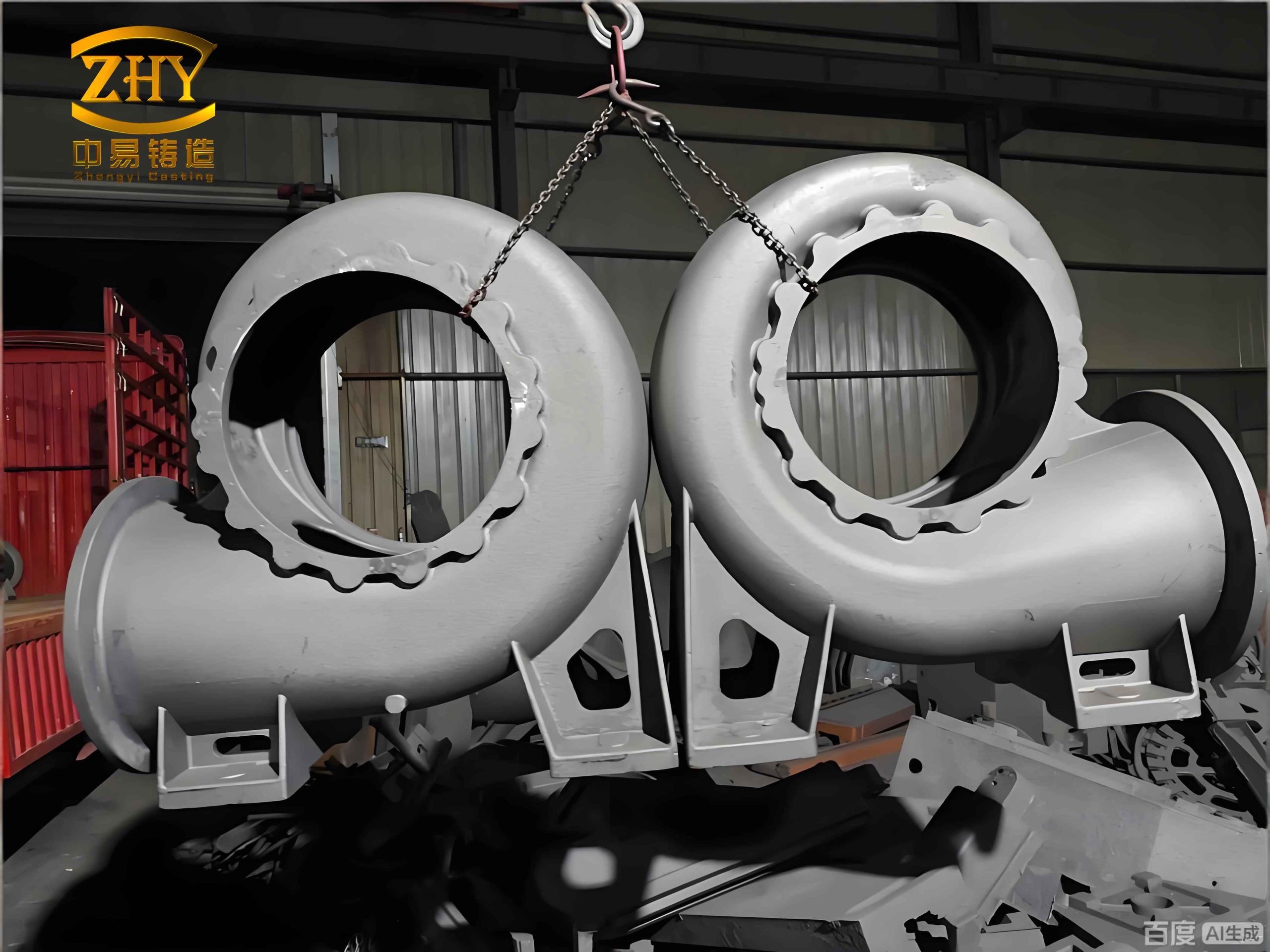
The implications of these findings for sand casting products are substantial. In industrial settings, where reproducibility and performance are key, understanding how Sb affects microstructure under slow cooling conditions can guide alloy design. For instance, in sand casting products like engine blocks or piston heads, refined eutectic Si and controlled grain size can enhance fatigue life and thermal stability. However, the coarsening of primary α-Al grains due to Sb may necessitate complementary grain refiners, such as TiB2-based additives, to optimize the overall microstructure. The interplay between modification and grain refinement is critical for achieving balanced properties in sand casting products. To illustrate, consider the Hall-Petch relationship for yield strength ($\sigma_y$):
$$ \sigma_y = \sigma_0 + \frac{k_y}{\sqrt{d}} $$
where $\sigma_0$ is the friction stress, $k_y$ is a constant, and $d$ is the grain diameter. Coarser grains (larger $d$) reduce $\sigma_y$, but this can be offset by eutectic Si refinement, which strengthens the eutectic regions. Moreover, the aspect ratio of eutectic Si ($AR = \text{length}/\text{width}$) influences ductility; lower AR values, as seen in Alloy B, promote better strain accommodation. For sand casting products subjected to dynamic loads, such as in automotive or aerospace applications, these microstructural tweaks can lead to significant performance gains.
Expanding on the kinetic aspects, the solidification path in sand casting products involves complex diffusion processes. The flux of Si atoms ($J_{\text{Si}}$) from α-Al to the eutectic front can be described by Fick’s first law:
$$ J_{\text{Si}} = -D \frac{\partial C}{\partial x} $$
where $\partial C/\partial x$ is the concentration gradient. With Sb lowering $T_{\text{Si}}^N$, the gradient steepens due to reduced solubility, increasing $J_{\text{Si}}$ and accelerating eutectic growth. This aligns with the observed refinement. Additionally, the growth velocity of eutectic Si ($V_{\text{Si}}$) relates to the undercooling ($\Delta T_e$) at the eutectic front:
$$ V_{\text{Si}} = \mu \cdot \Delta T_e^n $$
where $\mu$ is a mobility constant and $n$ is an exponent. The decreased $T_{\text{Si}}^N$ raises $\Delta T_e$, thereby boosting $V_{\text{Si}}$ and leading to finer structures. This kinetic framework is essential for modeling microstructure evolution in sand casting products, where cooling rates vary across sections.
To further contextualize this study, it is worth comparing Sb with other modifiers like strontium (Sr) or sodium (Na). While Sr and Na are known to alter eutectic Si through impurity-induced twinning or adsorption, Sb’s mechanism via solubility changes offers a distinct advantage in sand casting products due to its lower volatility and longer-lasting effects. However, Sb can also lead to over-modification if added in excess, forming compounds like AlSb that may degrade properties. Therefore, optimal Sb levels must be determined based on alloy composition and cooling conditions. For typical sand casting products, a range of 0.05–0.15% Sb is often recommended, as evidenced by the 0.09% used here. Table 3 summarizes a comparison of common modifiers, highlighting their mechanisms and suitability for sand casting products.
| Modifier | Typical Addition (wt.%) | Mechanism | Effect on Eutectic Si | Suitability for Sand Casting Products |
|---|---|---|---|---|
| Antimony (Sb) | 0.05–0.15 | Reduces nucleation temperature, decreases Si solubility in α-Al, increases chemical potential | Shortens and narrows Si plates | High (stable, long-lasting) |
| Strontium (Sr) | 0.01–0.03 | Adsorption on Si surfaces, promotes twinning | Refines to fibrous morphology | Moderate (may fade over time) |
| Sodium (Na) | 0.01–0.02 | Impurity-induced twinning, alters growth kinetics | Refines to fine plates | Low (volatile, hard to control) |
| Yttrium (Y) | 0.1–0.3 | Forms nucleation cores, affects twins | Refines and spheroidizes | Emerging (costly but effective) |
In practice, the integration of Sb into Al-Si alloys for sand casting products requires careful process control. Factors such as melt temperature, holding time, and mold design can influence microstructural outcomes. For example, higher pouring temperatures may reduce undercooling, counteracting Sb’s effects, while proper degassing is essential to prevent porosity that could undermine the benefits of Si modification. Additionally, post-casting heat treatments, such as T6 solutionizing and aging, can further enhance properties by homogenizing the microstructure and precipitating strengthening phases. The interplay between as-cast microstructure and heat treatment is vital for maximizing the performance of sand casting products in demanding environments.
From a broader perspective, the findings of this study contribute to the ongoing advancement of lightweight materials for sustainable manufacturing. Sand casting products, being energy-efficient and recyclable, align with green engineering principles, and improving their microstructural control through elements like Sb can reduce material waste and extend service life. Future research could explore synergistic effects of Sb with other alloying elements, such as copper for strength or nickel for thermal stability, to develop next-generation Al-Si alloys tailored for specific sand casting products. Computational modeling, using phase-field or cellular automaton simulations, could also predict microstructure evolution under varying sand casting conditions, enabling virtual optimization before physical trials.
In conclusion, this investigation elucidates the multifaceted role of antimony in hypoeutectic Al-Si alloys under gravity sand casting conditions. By lowering the nucleation temperatures of both primary α-Al grains and eutectic Si, Sb increases undercooling, making α-Al nucleation more difficult and leading to coarser grains, while simultaneously refining eutectic Si through enhanced growth kinetics driven by reduced solid solubility and increased chemical potential. The mechanism does not involve changes in nucleation cores or twinning, but rather thermodynamic and kinetic adjustments. These insights are invaluable for optimizing sand casting products, where microstructural control is key to achieving desired mechanical properties. As the demand for high-performance sand casting products grows in sectors like automotive and aerospace, such fundamental understanding will pave the way for innovative alloy designs and processing routes.
To encapsulate the core relationships, consider the following equations that summarize the effects:
For primary α-Al grain size ($d_{\text{Al}}$) in relation to undercooling ($\Delta T_{\text{Al}}$):
$$ d_{\text{Al}} \propto \frac{1}{\sqrt{I}} \quad \text{with} \quad I \propto \exp\left(-\frac{\Delta G^*}{kT}\right) $$
where $\Delta G^*$ increases as $T_{\text{Al}}^N$ decreases due to Sb.
For eutectic Si dimensions (length $L_{\text{Si}}$ and width $W_{\text{Si}}$) in relation to chemical potential ($\mu_{\text{Si}}$):
$$ L_{\text{Si}}, W_{\text{Si}} \propto \frac{1}{V_{\text{Si}}} \quad \text{and} \quad V_{\text{Si}} \propto \Delta C \propto \mu_{\text{Si}} $$
with $\mu_{\text{Si}}$ rising as $T_{\text{Si}}^N$ drops.
These principles, when applied to sand casting products, enable precise microstructure engineering. As I reflect on this work, it is clear that antimony, though a traditional modifier, offers nuanced benefits that warrant continued exploration in the context of modern sand casting technologies. By embracing such detailed studies, we can unlock the full potential of Al-Si alloys, ensuring that sand casting products remain competitive and reliable in an ever-evolving industrial landscape.