
The development of advanced magnesium alloys for structural applications, particularly those capable of operating at elevated temperatures, remains a significant focus in materials engineering. While die-casting dominates the production of many components, the unique advantages of sand casting cannot be overlooked. This process allows for the creation of complex, near-net-shape components and, critically, enables subsequent heat treatment for significant property enhancement through mechanisms like solid solution and precipitation strengthening. My investigation centers on a base alloy system, Mg-5Zn-3Al-0.2Mn, processed via sand casting, and systematically explores the effects of calcium (Ca) additions on its microstructure and mechanical performance, with a special emphasis on high-temperature strength.
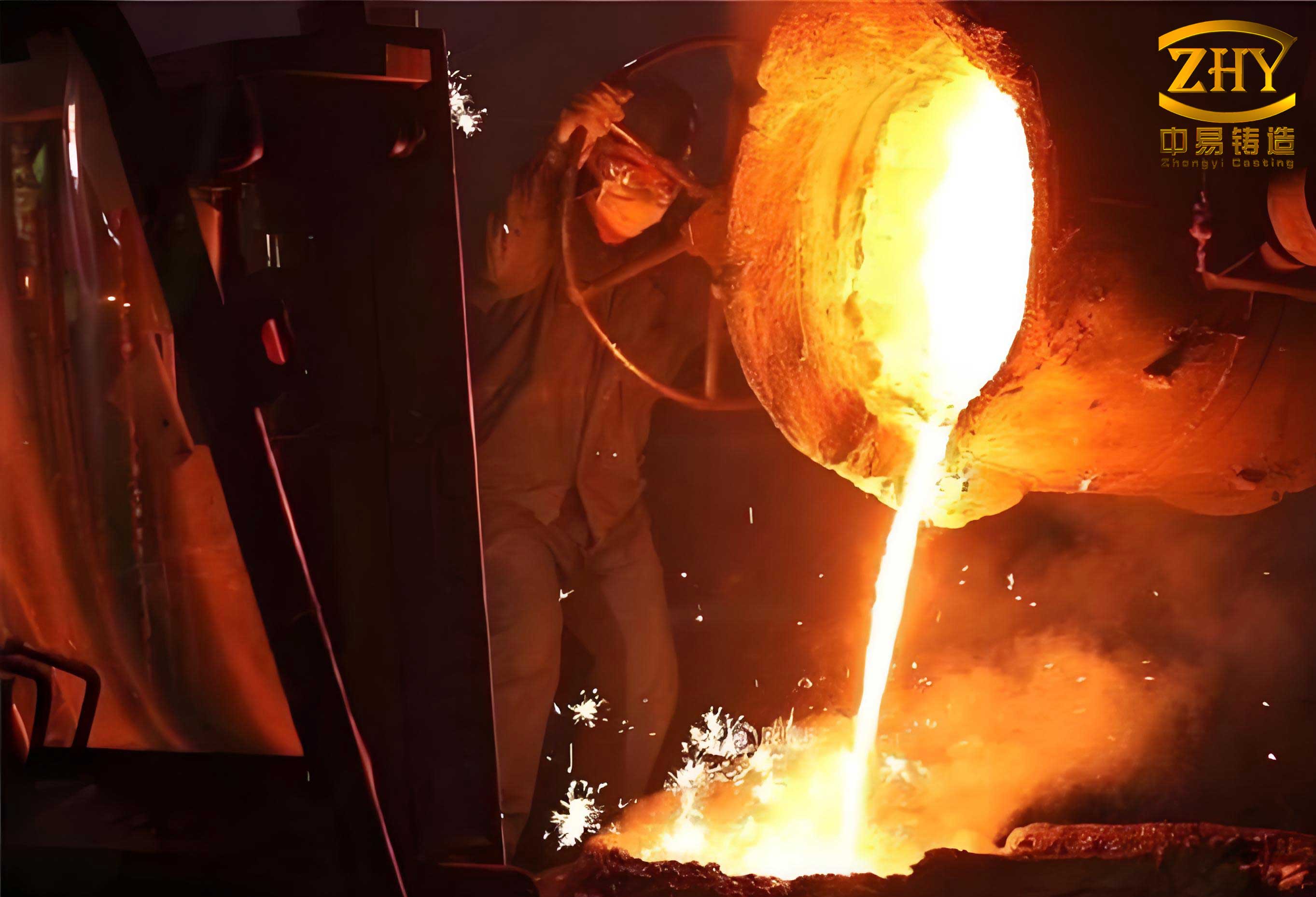
The experimental alloys were prepared by melting high-purity Mg, Zn, and Al under a protective flux. For the Ca-modified alloys, pure Ca was introduced into the melt using a bell jar. The molten alloy was then poured into preheated sand casting molds to produce standard tensile test bars and metallographic samples. The nominal and analyzed compositions of the alloys studied are summarized in Table 1.
| Alloy Designation | Ca | Zn | Al | Mn | Mg |
|---|---|---|---|---|---|
| Base (0Ca) | – | 5.32 | 3.27 | 0.18 | Bal. |
| 0.43Ca | 0.43 | 5.20 | 3.23 | 0.24 | Bal. |
| 0.95Ca | 0.95 | 5.03 | 3.18 | 0.21 | Bal. |
| 1.80Ca | 1.80 | 5.21 | 3.20 | 0.23 | Bal. |
The as-cast microstructures revealed a fundamental transformation with Ca addition. The Base (0Ca) alloy exhibited a typical microstructure consisting of α-Mg dendrites and a semi-continuous network of a second phase at the grain boundaries. X-ray diffraction (XRD) analysis identified this phase as the τ-phase, Mg32(Al, Zn)49. Upon adding 0.43 wt.% Ca, the τ-phase was completely suppressed. Instead, a new intermetallic compound, rich in Mg, Zn, Al, and Ca, formed. With further increases in Ca content to 0.95 wt.% and 1.80 wt.%, a third phase, identified as Al2Ca, appeared alongside the Mg-Zn-Al-Ca compound. Differential scanning calorimetry (DSC) confirmed the increased thermal stability of these new phases, with their solidus temperatures rising progressively with Ca content.
A notable and consistent effect of Ca addition was significant grain refinement of the α-Mg matrix in the sand-cast condition. The average grain size decreased steadily, as quantified in Table 2. This phenomenon can be explained by the growth restriction theory. Elements with a high tendency to segregate at the solid-liquid interface during solidification create constitutional undercooling, which restricts grain growth and promotes further nucleation. The potency of an element is quantified by its Growth Restriction Factor (GRF):
$$GRF = \sum m_i (k_i – 1) c_{0,i}$$
where $$m_i$$ is the slope of the liquidus line, $$k_i$$ is the partition coefficient, and $$c_{0,i}$$ is the initial concentration of solute i in the binary Mg-i system. Calcium has a relatively high m(k-1) value compared to other common alloying elements like Sr or rare earths, making it an effective grain refiner in magnesium sand casting alloys. The refinement directly contributes to the Hall-Petch strengthening mechanism, where yield strength is inversely proportional to the square root of the grain size (d):
$$\sigma_y = \sigma_0 + k_y d^{-1/2}$$
where $$\sigma_0$$ is the friction stress and $$k_y$$ is the strengthening coefficient.
| Alloy Designation | Average Grain Size (µm) |
|---|---|
| Base (0Ca) | 161 |
| 0.43Ca | 153 |
| 0.95Ca | 123 |
| 1.80Ca | 106 |
To exploit the solid solution strengthening potential of the Zn and Al, a series of solution heat treatments were conducted. For the Base alloy, solution treatment at 343°C for 17 hours resulted in the complete dissolution of the τ-phase into the α-Mg matrix, followed by water quenching. Attempting a higher temperature (350°C) led to localized melting at grain boundary triple points, indicative of overheating, which catastrophically degraded properties. For the Ca-containing alloys, a solution treatment temperature of 350°C for 17 hours was selected based on their higher solidus temperatures. After this treatment, the Mg-Zn-Al-Ca phase in the 0.43Ca alloy was largely dissolved. In the higher-Ca alloys (0.95Ca and 1.80Ca), the finer particles of the Mg-Zn-Al-Ca phase dissolved, while the coarser remnants and the thermodynamically stable Al2Ca phase remained undissolved, effectively pinning the grain boundaries.
The room-temperature mechanical properties of the alloys in both the as-cast and solution-treated (T4) conditions are presented in Table 3. In the as-cast state, the addition of Ca led to a decrease in both ultimate tensile strength (UTS) and elongation, despite the concurrent grain refinement. This suggests that the strengthening benefit from grain refinement was outweighed by the embrittling effect of the increasing volume fraction of hard, brittle intermetallic compounds (Mg-Zn-Al-Ca and Al2Ca), which act as stress concentrators and facilitate crack initiation and propagation in the sand-cast microstructure.
| Alloy & Condition | UTS, σb (MPa) | 0.2% Proof Stress, σ0.2 (MPa) | Elongation, δ (%) |
|---|---|---|---|
| Base, As-Cast | 166 | 89 | 5.8 |
| 0.43Ca, As-Cast | 145 | 81 | 3.7 |
| 0.95Ca, As-Cast | 112 | 77 | 2.7 |
| 1.80Ca, As-Cast | 103 | 80 | 2.1 |
| Base, T4 (343°C) | 245 | 90 | 12.1 |
| 0.43Ca, T4 (350°C) | 169 | 93 | 4.2 |
| 0.95Ca, T4 (350°C) | 128 | 97 | 3.1 |
| 1.80Ca, T4 (350°C) | 120 | 106 | 2.0 |
Solution treatment dramatically improved the properties of the Base alloy, yielding an excellent combination of high strength (245 MPa) and ductility (12.1%). This is attributed to the complete dissolution of the brittle τ-phase and the resultant solid solution strengthening of the α-Mg matrix. The strengthening increment from solutes can be described by the general formula:
$$\Delta \sigma_{ss} = k c^{n}$$
where c is the solute concentration and k and n are constants. For the Ca-modified alloys, the T4 treatment provided a modest recovery in US and ductility compared to their as-cast state, but the properties remained inferior to the treated Base alloy. This is because a significant fraction of the strengthening phases remained undissolved, continuing to limit ductility, while the dissolved Ca, Zn, and Al contributed to solid solution strengthening, as reflected in the gradual increase in proof stress with Ca content.
The most significant benefit of Ca addition was revealed during high-temperature tensile testing at 250°C, conducted on the solution-treated (T4) specimens. The results are summarized in Table 4. A clear and steady trend is observed: both the UTS and the 0.2% proof stress at 250°C increase monotonically with increasing Ca content, while ductility decreases.
| Alloy Designation | UTS at 250°C, σb250 (MPa) | 0.2% PS at 250°C, σ0.2250 (MPa) | Elongation at 250°C, δ (%) |
|---|---|---|---|
| Base (0Ca) | 68 | 46 | 33 |
| 0.43Ca | 81 | 63 | 14 |
| 0.95Ca | 85 | 65 | 7.5 |
| 1.80Ca | 90 | 71 | 5.0 |
This enhancement in high-temperature strength is multifactorial. Firstly, Ca addition suppresses the formation of the low-melting-point τ-phase (Mg32(Al, Zn)49), which would rapidly soften and lose its grain-boundary pinning ability at elevated temperatures. It is replaced by thermally stable compounds: the Mg-Zn-Al-Ca phase and, at higher Ca levels, Al2Ca. These phases, with their higher melting points and stability, effectively pin grain boundaries and inhibit grain boundary sliding (GBS), a primary deformation mechanism at high temperatures. The resistance to GBS can be related to the Zener pinning pressure:
$$P_z = \frac{3 \gamma f}{2 r}$$
where $$\gamma$$ is the grain boundary energy, $$f$$ is the volume fraction of particles, and $$r$$ is their mean radius. Secondly, the solid solution strengthening from Ca atoms dissolved in the Mg matrix persists at high temperatures. These solute atoms impede the climb and glide of dislocations, processes that control the secondary creep rate. The activation energy for dislocation climb, Qc, is increased in the presence of solute atoms, slowing down creep deformation according to an Arrhenius-type relationship for strain rate $$\dot{\epsilon}$$:
$$\dot{\epsilon} = A \sigma^n \exp\left(-\frac{Q_c}{RT}\right)$$
where A is a constant, σ is the stress, n is the stress exponent, R is the gas constant, and T is the absolute temperature. The excellent high-temperature performance of these Ca-modified, sand-cast alloys underscores the critical importance of microstructural design for thermal stability.
In conclusion, this study demonstrates the profound impact of calcium on the microstructure-property relationships in sand-cast Mg-5Zn-3Al-0.2Mn alloys. Calcium acts as a powerful grain refiner and, more importantly, as a microstructural modifier that replaces the thermally unstable τ-phase with more stable intermetallic compounds. While this leads to a trade-off in room-temperature ductility and strength in the as-cast and T4 conditions, it confers a remarkable and progressive improvement in high-temperature strength. The optimal Base alloy, after proper solution treatment, offers an outstanding balance of room-temperature strength and ductility, making it suitable for applications where high ambient performance is key. However, for components produced via sand casting that must retain load-bearing capacity at temperatures around 250°C, the Ca-modified variants, particularly those with higher Ca contents, are clearly superior. The design principle involves sacrificing some room-temperature properties to achieve the necessary microstructural stability for elevated temperature service, a crucial consideration for advancing magnesium alloy applications in automotive and aerospace sectors.