
As a practitioner deeply involved in the field of advanced manufacturing, I have witnessed firsthand the transformative impact of mechatronics on industrial processes. In particular, the realm of precision investment casting has undergone a significant evolution, moving away from traditional, labor-intensive methods toward highly automated, intelligent systems. This shift is not merely a trend but a necessity driven by the demands for higher quality, efficiency, and sustainability in production. In this comprehensive discussion, I will delve into how mechatronics—the synergistic integration of mechanical engineering, electronics, and computer science—plays a pivotal role in controlling the pouring process within precision investment casting. By exploring historical contexts, design principles, inherent challenges, and cutting-edge applications, I aim to underscore the criticality of this integration for the future of casting technology.
The art and science of casting have been fundamental to human civilization, enabling the creation of complex metal components. However, traditional casting methods, reliant heavily on manual operation and empirical knowledge, often fall short in meeting the stringent requirements of modern industries such as aerospace, automotive, and medical devices. Precision investment casting, known for its ability to produce intricate, near-net-shape parts with excellent surface finish and dimensional accuracy, stands at the forefront of this evolution. Yet, its potential is fully realized only when coupled with advanced control systems. Mechatronics emerges as the enabling force, providing the framework for precise monitoring, adjustment, and optimization of every stage in the casting process, especially the pouring phase which directly influences defect formation and mechanical properties. Throughout this article, I will emphasize the keyword ‘precision investment casting’ to highlight its centrality in this technological convergence.
The Evolution of Casting Processes and the Imperative for Precision
To appreciate the role of mechatronics, one must first understand the trajectory of casting technology. Historically, casting involved three core stages: metal preparation, mold preparation, and casting treatment. While effective for simpler components, these processes faced limitations in consistency, waste reduction, and adaptability to complex geometries. The development of precision investment casting marked a leap forward, utilizing expendable patterns (often wax or polymer) to create ceramic molds capable of capturing fine details. However, even this advanced method was constrained by manual interventions during critical phases like pouring.
The contemporary landscape of precision investment casting is shaped by several driving forces. Firstly, there is a push for material innovation—developing alloys with enhanced strength, lightness, and corrosion resistance. Secondly, process optimization aims to minimize defects such as porosity, inclusions, and shrinkage. Thirdly, environmental and economic pressures demand energy-efficient and lean manufacturing practices. These factors collectively underscore the need for a paradigm shift toward automated, data-driven control systems. Mechatronics answers this call by embedding sensors, actuators, and computational intelligence into casting equipment, transforming it from passive tools into active participants in quality assurance.
To illustrate the progression, consider the following table summarizing key contrasts between traditional and mechatronics-enhanced precision investment casting:
| Aspect | Traditional Precision Investment Casting | Mechatronics-Enhanced Precision Investment Casting |
|---|---|---|
| Process Control | Manual adjustment based on operator experience; intermittent monitoring. | Continuous, closed-loop control via PLCs and sensors; real-time feedback. |
| Pouring Accuracy | Subject to human variability; prone to turbulence and oxidation. | Programmable pouring profiles; controlled velocity and pressure to ensure laminar flow. |
| Defect Reduction | Reactive; defects identified post-casting, leading to high scrap rates. | Proactive; in-process monitoring of parameters like temperature and pressure to prevent defects. |
| Energy Efficiency | Often inefficient due to over-melting or prolonged holding times. | Optimized thermal management via automated furnace control; significant energy savings. |
| Scalability & Flexibility | Limited by skilled labor availability; difficult to reconfigure for new parts. | High scalability through robotic automation; flexible manufacturing cells adaptable to design changes. |
This transition is not merely incremental; it represents a fundamental reengineering of the precision investment casting workflow, placing data and automation at its core.
Foundational Principles of Gating System Design in Precision Investment Casting
At the heart of any successful precision investment casting operation lies the gating system—the network of channels that guides molten metal into the mold cavity. Its design is a complex optimization problem, balancing fluid dynamics, thermal management, and solidification behavior. The principles governing this design are universal, but their implementation is vastly enhanced through mechatronics. Let me outline these core principles:
- Promote Laminar Flow: The molten metal must fill the mold smoothly, without turbulence that can entrap gases or erode mold walls. This requires precise control over pouring velocity and pressure. Mathematically, the Reynolds number (Re) should be kept below a critical threshold to ensure laminar flow:
$$Re = \frac{\rho v D}{\mu}$$
where $\rho$ is density, $v$ is velocity, $D$ is hydraulic diameter, and $\mu$ is dynamic viscosity. Mechatronic systems can dynamically adjust actuator outputs to maintain Re within optimal bounds throughout the pour. - Facilitate Efficient Venting: Air and gases must be evacuated from the mold cavity to prevent gas porosity. This is often achieved through vacuum assistance or strategically placed vents. A mechatronic approach integrates vacuum pumps and pressure sensors to create and monitor controlled pressure differentials.
- Control Solidification Sequence:
The gating system must promote directional solidification, often from the casting extremities toward the feeder, to minimize shrinkage defects. This involves thermal management, where the heat transfer dynamics can be modeled using Fourier’s law and controlled via cooling systems:
$$q = -k \nabla T$$
where $q$ is heat flux, $k$ is thermal conductivity, and $\nabla T$ is temperature gradient. Embedded thermocouples and PID controllers allow for real-time adjustment of cooling rates. - Filter Inclusions:
Ceramic or mesh filters are placed within the gating system to trap non-metallic inclusions. Mechatronics aids in the precise positioning and condition monitoring of these filters.
The design process itself involves iterative steps: selecting gating type (e.g., top, bottom, or side gating), determining ingate locations and numbers, calculating pour time, and sizing channel cross-sectional areas. Traditionally, this relied on empirical ratios and trial-and-error. Today, mechatronics integrates simulation software (like computational fluid dynamics) with physical systems, enabling virtual prototyping and automatic adjustment of machine parameters to match the simulated ideal. For instance, the required pour time $t_p$ to fill a mold cavity of volume $V_c$ with a volumetric flow rate $Q$ is given by:
$$t_p = \frac{V_c}{Q}$$
A mechatronic pouring unit can precisely regulate $Q$ via servo-valves to achieve $t_p$ as calculated, compensating for real-time variations in metal level or viscosity.
Inherent Limitations of Traditional Casting and the Human Factor
Despite established principles, traditional precision investment casting is fraught with challenges stemming from its reliance on manual operation. As someone who has observed production floors, I can attest to the variability introduced by human judgment. Pouring temperature, speed, and tilt angle are often gauged by eye, leading to inconsistencies between batches. Moreover, the high temperatures involved (often exceeding 700°C for aluminum alloys or 1500°C for steels) pose significant safety risks, contributing to workforce attrition and a scarcity of skilled technicians.
From a quality perspective, manual control is ill-equipped to handle the dynamic nature of casting. For example, the formation of oxide layers on the molten metal surface, if disturbed during pouring, can lead to inclusion defects. Similarly, uncontrolled cooling can induce residual stresses and distortion. These issues are amplified in precision investment casting, where tolerances are tight and component integrity is paramount. The economic impact is substantial: high scrap rates, increased rework costs, and potential liability from part failure. Thus, the industry’s move toward automation is not merely for efficiency but for survival in a competitive landscape where quality is non-negotiable.
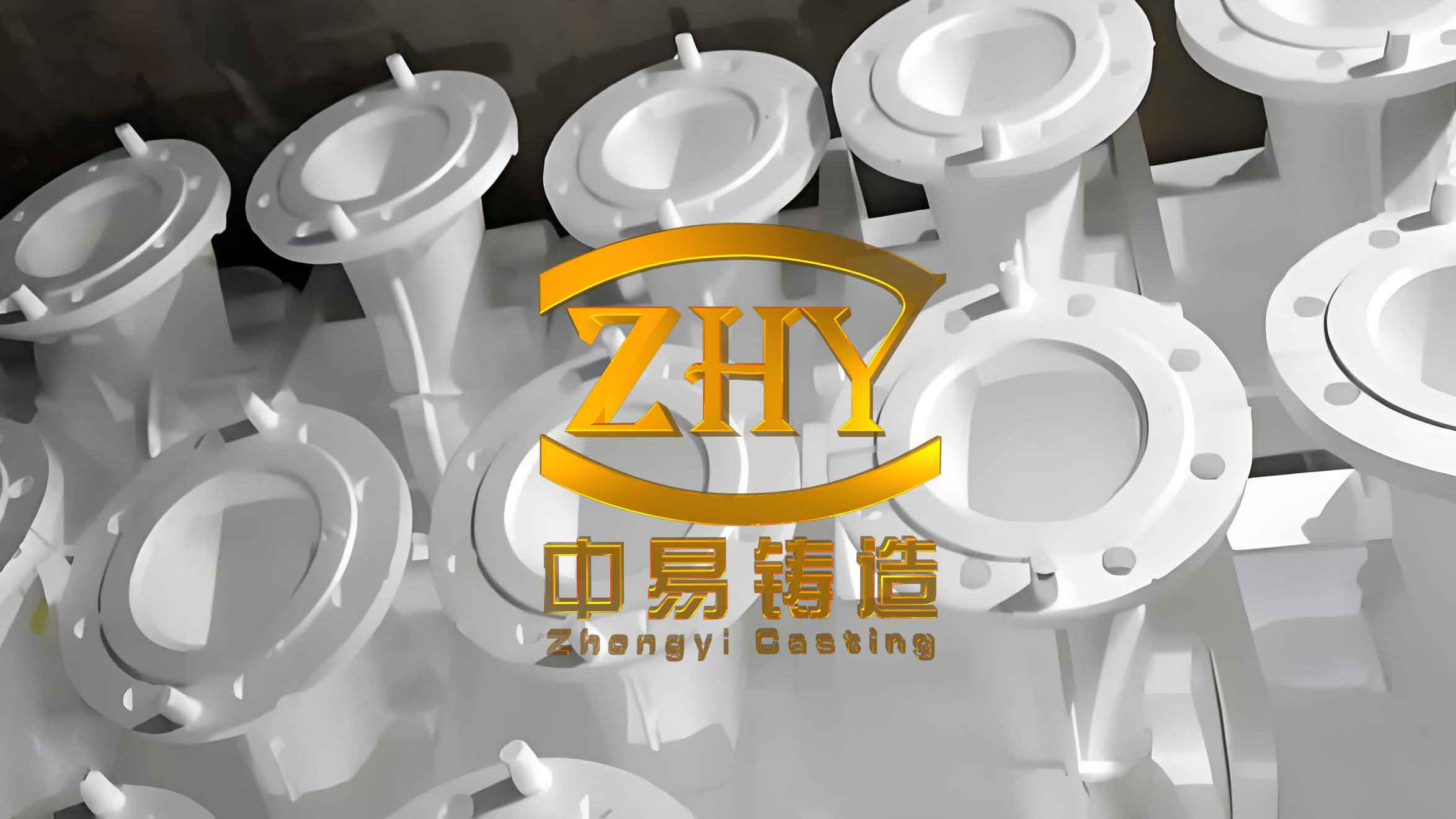
The image above illustrates a modern casting technique, highlighting the complexity of mold assemblies used in processes like lost foam casting, which shares similarities with precision investment casting in requiring meticulous control. Integrating such processes with mechatronic systems ensures repeatability and precision unattainable manually.
Mechatronics: The Confluence of Disciplines for Intelligent Control
Mechatronics, in my view, is the holistic integration of mechanics, electronics, control theory, and computer science within product design and manufacturing processes. It transcends mere automation by embedding decision-making capabilities into machines. In the context of precision investment casting, mechatronic systems typically comprise several key components:
- Sensors: For measuring temperature (thermocouples, IR sensors), pressure (piezoelectric transducers), displacement (LVDTs), and flow (electromagnetic flow meters).
- Actuators: Including servo-motors for precise ladle tilting, proportional valves for gas or hydraulic control, and linear actuators for gate manipulation.
- Controllers: Programmable Logic Controllers (PLCs) or industrial PCs that execute control algorithms, often incorporating PID (Proportional-Integral-Derivative) control or more advanced model-predictive control.
- Human-Machine Interface (HMI): Touchscreen panels allowing operators to monitor processes and input parameters, albeit with reduced manual intervention.
The advantages are multifold. Firstly, reliability and safety are enhanced through built-in diagnostics, automatic shutdown protocols, and protective interlocks. Secondly, performance is improved via precise, repeatable execution of pouring sequences. Thirdly, adaptability is increased as control programs can be quickly modified for different part geometries or alloy types—a crucial feature for foundries engaged in high-mix, low-volume production common in precision investment casting.
At the core of many control strategies are mathematical models that describe the process dynamics. For instance, the temperature of molten metal in a holding furnace can be regulated using a heat balance equation:
$$\frac{dT}{dt} = \frac{1}{mc} \left( P_{in} – hA(T – T_{amb}) \right)$$
where $T$ is metal temperature, $m$ is mass, $c$ is specific heat, $P_{in}$ is input power, $h$ is heat transfer coefficient, $A$ is surface area, and $T_{amb}$ is ambient temperature. A mechatronic controller adjusts $P_{in}$ via thyristor drives to maintain $T$ at a setpoint, compensating for disturbances. Similarly, pour dynamics can be modeled using Bernoulli’s principle with corrections for viscous losses:
$$P_1 + \frac{1}{2}\rho v_1^2 + \rho g h_1 = P_2 + \frac{1}{2}\rho v_2^2 + \rho g h_2 + \Delta P_{loss}$$
where subscripts denote different points in the gating system, and $\Delta P_{loss}$ represents head losses. By controlling the pressure differential ($P_1 – P_2$) via a regulated gas pressure system, the desired metal velocity $v_2$ at the ingate can be achieved consistently.
Mechatronics in Action: Transforming Precision Investment Casting Processes
The theoretical benefits of mechatronics materialize in concrete applications that redefine the capabilities of precision investment casting. I will explore two illustrative examples: low-pressure vacuum-assisted casting and the production of aluminum-iron composite brake discs. Both cases demonstrate how integrated control systems address long-standing challenges.
Case Study 1: Low-Pressure Vacuum-Assisted Precision Investment Casting
Traditional low-pressure casting uses a pressurized furnace to push molten metal up a riser tube into a mold. While effective, it can struggle with entrapped gases leading to porosity. The integration of vacuum technology creates a hybrid process—low-pressure vacuum-assisted casting—that significantly improves metal integrity. A mechatronic system orchestrates this complex sequence seamlessly.
The setup, as I have implemented in advanced foundries, involves a sealed mold chamber connected to a vacuum reservoir, a pressurized furnace, and a network of solenoid valves and sensors controlled by a PLC. The process cycle consists of three phases:
- Filling Phase:
The PLC opens the valve to the compressed air supply, pressurizing the furnace. Simultaneously, it opens the valve to the vacuum reservoir, rapidly evacuating the mold chamber. The pressure differential ($\Delta P = P_{furnace} – P_{mold}$) drives metal up the riser. The flow is governed by:
$$Q = C_d A \sqrt{\frac{2 \Delta P}{\rho}}$$
where $C_d$ is discharge coefficient and $A$ is cross-sectional area. The PLC modulates $\Delta P$ in real-time to maintain a preset $Q$, ensuring laminar fill. - Pressure Maintenance Phase:
Once the mold is filled, the vacuum valve closes, and the system enters a pressure-holding stage to feed solidification shrinkage. The PLC monitors cavity pressure via sensors and adjusts furnace pressure accordingly using a PID loop:
$$u(t) = K_p e(t) + K_i \int_0^t e(\tau) d\tau + K_d \frac{de(t)}{dt}$$
where $u(t)$ is the control signal (e.g., valve position), $e(t)$ is the error between desired and actual pressure, and $K_p$, $K_i$, $K_d$ are tuning constants. - Pressure Release Phase:
After solidification, the furnace pressure is vented, and the mold chamber is equalized to atmospheric pressure, allowing residual metal in the riser to fall back. The PLC sequences these actions precisely to prevent metal droplet formation or mold damage.
The benefits for precision investment casting are profound: reduced gas porosity, improved metallurgical quality, and higher yield. This process is particularly suited for complex, thin-walled components where traditional gating might introduce turbulence.
Case Study 2: Aluminum-Iron Composite Brake Disc Manufacturing
Another frontier where mechatronics elevates precision investment casting is in the creation of multi-material components. Consider brake discs for automotive applications: a cast iron friction ring for wear resistance bonded to an aluminum alloy hub for weight reduction and heat dissipation. The manufacturing process demands precise thermal and mechanical control during the casting of aluminum around a pre-heated iron insert.
The mechatronic-aided workflow involves several stages:
- Iron Ring Preparation: A gray iron ring is cast and machined to precise dimensions. Robotic arms, guided by vision systems, handle deburring and cleaning to ensure optimal bonding surfaces.
- Preheating: The iron ring is placed in an induction heater. A mechatronic system controls the heating profile, ramping temperature to over 400°C at a controlled rate to avoid thermal shock, monitored by IR thermometers.
- Mold Assembly and Casting: The preheated ring is robotically transferred to a precision investment casting mold. Aluminum alloy is then poured under controlled conditions. The key here is managing the differential thermal expansion between iron (coefficient ~11×10⁻⁶/°C) and aluminum (~23×10⁻⁶/°C). The bonding strength relies on the compressive stress induced upon cooling, which can be approximated by:
$$\sigma_c = E_{Al} \alpha_{Al} \Delta T – E_{Fe} \alpha_{Fe} \Delta T$$
where $E$ is Young’s modulus, $\alpha$ is coefficient of thermal expansion, and $\Delta T$ is temperature change from bonding to room temperature. The mechatronic system ensures the aluminum pouring temperature and cooling rate are optimized to maximize $\sigma_c$ without causing cracking. - Quality Assurance: Post-casting, components undergo automated non-destructive testing. For instance, X-ray inspection systems, integrated into the production line, verify bond integrity. Image processing algorithms analyze the X-ray images to detect voids or disbonds, with results fed back to the central controller for process adjustment.
The outcome is a component that leverages the best properties of both materials: weight savings up to 25% compared to full-iron discs, improved thermal management, and enhanced vehicle performance. This exemplifies how mechatronics enables innovative applications of precision investment casting that were previously impractical.
Mathematical Modeling and Control Strategies for Enhanced Precision
To fully harness mechatronics in precision investment casting, one must embrace mathematical modeling of the underlying physical phenomena. Let me expand on several key areas where models inform control:
1. Solidification Modeling and Thermal Control
The solidification time $t_s$ for a casting can be estimated using Chvorinov’s rule:
$$t_s = B \left( \frac{V}{A} \right)^n$$
where $V$ is volume, $A$ is surface area, $B$ is a mold constant, and $n$ is an exponent (typically ~2). For precision investment casting with complex geometries, finite element analysis (FEA) software predicts temperature fields $T(x,y,z,t)$. Mechatronic systems can use these predictions to actuate cooling jets or heaters at specific locations and times, implementing a spatial-temporal control strategy to ensure directional solidification. The heat equation in three dimensions:
$$\rho c_p \frac{\partial T}{\partial t} = \nabla \cdot (k \nabla T) + \dot{q}$$
where $\dot{q}$ is internal heat generation (e.g., from latent heat of fusion), is solved in real-time by reduced-order models embedded in the controller to adjust boundary conditions.
2. Fluid Flow Optimization
During pouring, minimizing velocity variation is critical. The continuity and Navier-Stokes equations govern flow:
$$\nabla \cdot \vec{v} = 0$$
$$\rho \left( \frac{\partial \vec{v}}{\partial t} + \vec{v} \cdot \nabla \vec{v} \right) = -\nabla p + \mu \nabla^2 \vec{v} + \rho \vec{g}$$
Real-time solution is computationally intensive, but mechatronic systems often employ pre-computed flow maps or simplified models (like 1D flow networks) to adjust actuator inputs. For example, the pressure at the base of a riser $P_{base}$ needed to achieve a certain fill height $h$ is:
$$P_{base} = P_{atm} + \rho g h + \Delta P_{friction}$$
A pressure transducer provides feedback, and a controller adjusts the furnace gas pressure to track a time-varying $P_{base}$ profile.
3. Alloy Composition and Inoculation Control
In precision investment casting, alloy composition must be tightly controlled. Spectrometers analyze molten metal samples, and the results are fed to a controller that calculates required additions of alloying elements. The mass balance for an element $i$ is:
$$m_{i, target} = m_{melt} \cdot C_{i, target} = m_{melt} \cdot C_{i, current} + m_{additive} \cdot C_{i, additive}$$
Solving for $m_{additive}$, the system automatically dispenses precise amounts via robotic feeders. This level of control ensures consistent material properties critical for high-integrity castings.
The integration of these models into a cohesive mechatronic framework is represented in the following table, outlining the sensor-controller-actuator loops for key parameters in precision investment casting:
| Controlled Parameter | Typical Sensor | Control Algorithm | Actuator |
|---|---|---|---|
| Molten Metal Temperature | Type K thermocouple | PID with feedforward from heating model | Thyristor power regulator for furnace |
| Pouring Pressure | Piezoelectric pressure sensor | Model-predictive control (MPC) | Proportional solenoid valve on gas line |
| Mold Fill Velocity | Laser Doppler velocimeter | PID with velocity profiling | Servo-motor on tilting ladle |
| Vacuum Level | Pirani gauge | On/Off or PID control | Solenoid valve to vacuum pump |
| Cooling Rate | Array of thermocouples in mold | Multi-variable control based on FEA data | Pulse-width modulated cooling fans |
Future Trajectories: Towards Fully Autonomous Precision Investment Casting Foundries
Looking ahead, the convergence of mechatronics with emerging technologies like the Industrial Internet of Things (IIoT), artificial intelligence (AI), and digital twins will further revolutionize precision investment casting. Imagine a foundry where every casting process is mirrored by a virtual replica—a digital twin—that simulates outcomes in real-time. Sensors continuously feed data to this twin, which uses AI algorithms to predict defects and prescribe corrective actions before they occur. For instance, an AI model trained on historical data might detect patterns suggesting micro-porosity formation and command an adjustment in pouring pressure or mold vibration.
Moreover, additive manufacturing (3D printing) of ceramic molds for precision investment casting is gaining traction. Mechatronic systems here would coordinate the printing process with subsequent casting, ensuring dimensional fidelity and optimal gating design generated by topology optimization software. The entire workflow, from CAD model to finished casting, could be automated, with mechatronics providing the seamless handoffs between stages.
In terms of sustainability, mechatronic control enables precise energy management, reducing the carbon footprint of precision investment casting. Real-time optimization of furnace cycles, heat recovery systems, and recycling of materials contribute to greener manufacturing. As regulations tighten and consumer demand for sustainable products grows, this aspect will become increasingly vital.
Conclusion
In conclusion, my exploration reaffirms that mechatronics is not merely an adjunct but a fundamental enabler for the advancement of precision investment casting. By replacing human guesswork with precise, data-driven control, it addresses the core challenges of consistency, quality, and efficiency. From governing the laminar flow of molten metal to managing complex multi-material bonding, mechatronic systems bring a level of intelligence and adaptability that propels precision investment casting into a new era of manufacturing excellence. As we continue to innovate, the synergy between mechanical design, electronic sensing, and computational control will undoubtedly unlock even greater potentials, ensuring that precision investment casting remains a cornerstone of high-technology industries. The journey from artisanal craft to automated science is well underway, and mechatronics is the guiding force.