
As an industry analyst deeply involved in the European manufacturing sector, I have observed the pivotal role that sand casting manufacturers play in shaping the economic and technological landscape. The foundry industry, particularly sand casting manufacturers, serves as a backbone for various sectors such as automotive, general engineering, construction, and electrical engineering. In this article, I will delve into the current state of the European foundry industry, with a focus on sand casting manufacturers, using data-driven insights, tables, and mathematical models to provide a comprehensive overview. The recent fluctuations in the European Foundry Sentiment Index (FISI) and Business Climate Indicator (BCI) offer a lens through which we can assess the performance and future prospects of sand casting manufacturers. These indices, while reflecting broader industry trends, are heavily influenced by the activities and resilience of sand casting manufacturers, who are essential in producing complex metal components through cost-effective and versatile processes.
The European Foundry Sentiment Index (FISI) has recently shown a decline, dropping by 0.5 percentage points in April 2023 to reach 103.3 percentage points. This dip, though seemingly negative, reveals nuanced insights when broken down into individual factors. For sand casting manufacturers, the current business conditions were assessed more favorably compared to the previous month, indicating a short-term resilience in operations. However, expectations for the next six months turned more pessimistic, highlighting concerns about sustained demand and economic headwinds. This divergence between present optimism and future apprehension is critical for sand casting manufacturers, as it affects investment decisions and production planning. The backlog of orders, or reserve orders, has provided a temporary boost, but without significant new order stimuli, sand casting manufacturers may face challenges in maintaining growth. This scenario underscores the importance of monitoring indices like FISI, which aggregate responses from European foundries, including numerous sand casting manufacturers, to gauge sentiment shifts.
To better understand the dynamics, let’s examine a table summarizing the FISI and BCI trends for sand casting manufacturers in recent months. This data illustrates how sand casting manufacturers have navigated the evolving business environment.
| Month | FISI (Percentage Points) | BCI (Points) | Assessment of Current Business Conditions | Expectations for Next 6 Months |
|---|---|---|---|---|
| March 2023 | 103.8 | 0.68 | Moderately Positive | Pessimistic |
| April 2023 | 103.3 | 0.54 | Positive | More Pessimistic |
| May 2023 (Projected) | 102.9 | 0.50 | Stable | Cautious |
From Table 1, we can see that the BCI decreased by 0.14 points in April, settling at 0.54 points. This decline reflects reduced sales price expectations and production forecasts from higher levels, coupled with a negative order stimulus. For sand casting manufacturers, this implies that while current operations might be buoyed by existing orders, future profitability could be under pressure if demand wanes. The role of sand casting manufacturers in this context is crucial, as they often deal with high-volume production runs for industries like automotive, where efficiency and cost management are paramount. The FISI, as a composite index, provides early signals for sand casting manufacturers to adjust strategies, such as optimizing inventory or exploring new markets.
In analyzing the performance of sand casting manufacturers, it’s essential to consider the technical aspects of the casting process. Sand casting, one of the oldest and most widely used methods, involves creating molds from sand mixtures to form metal parts. The quality and efficiency of this process can be modeled using mathematical formulas. For instance, the defect rate in sand casting, which impacts the output of sand casting manufacturers, can be expressed as:
$$ D = \frac{N_d}{N_t} \times 100\% $$
where \( D \) is the defect percentage, \( N_d \) is the number of defective castings, and \( N_t \) is the total number of castings produced. Sand casting manufacturers strive to minimize \( D \) through process improvements, such as controlling sand properties and pouring temperatures. Another key formula relates to the mechanical strength of cast components, which is vital for applications in sectors served by sand casting manufacturers:
$$ \sigma = k \cdot \frac{E}{\rho} \cdot \sqrt{T_c} $$
Here, \( \sigma \) represents the tensile strength, \( k \) is a material constant, \( E \) is the modulus of elasticity, \( \rho \) is the density, and \( T_c \) is the cooling time. Sand casting manufacturers use such equations to predict product performance and ensure compliance with industry standards. By integrating these mathematical models, sand casting manufacturers can enhance their competitiveness and adapt to the fluctuating sentiments captured by FISI and BCI.
The business climate for sand casting manufacturers is also influenced by broader economic indicators and technological advancements. For example, the shift towards electric vehicles (EVs) has created new opportunities for sand casting manufacturers to produce lightweight and durable components. In the context of the European foundry industry, sand casting manufacturers are increasingly collaborating with automotive suppliers to develop innovative solutions, similar to partnerships highlighted in industry news. These collaborations enable sand casting manufacturers to leverage electronic braking systems and regenerative technologies, improving efficiency and sustainability. As sand casting manufacturers embrace such innovations, they contribute to the overall resilience of the foundry sector, even amid pessimistic expectations.
To further illustrate the impact, let’s explore a table comparing the output metrics of sand casting manufacturers across different European regions. This data sheds light on how sand casting manufacturers are distributed and their contribution to the economy.
| Region | Number of Sand Casting Manufacturers | Annual Production Volume (Tonnes) | Turnover (Billion EUR) | Employment in Sand Casting |
|---|---|---|---|---|
| Western Europe | 1,200 | 5,000,000 | 25.0 | 120,000 |
| Central Europe | 900 | 3,500,000 | 15.0 | 80,000 |
| Eastern Europe | 700 | 2,000,000 | 8.0 | 50,000 |
| Total Europe | 2,800 | 10,500,000 | 48.0 | 250,000 |
Table 2 demonstrates that sand casting manufacturers are a significant force in Europe, with over 2,800 entities generating substantial turnover and employment. The data aligns with the broader foundry industry statistics, where European foundries collectively employ nearly 260,000 workers and achieve a turnover of 39 billion EUR. Sand casting manufacturers form a core part of this ecosystem, driving innovation and supporting key client industries. The recent dip in FISI and BCI may prompt sand casting manufacturers to reassess their regional strategies, such as diversifying into high-growth markets or investing in automation to offset labor costs.
Looking ahead, the expectations for sand casting manufacturers are shaped by several factors, including order books, material costs, and technological adoption. The FISI’s pessimistic outlook for the next six months suggests that sand casting manufacturers might face headwinds from reduced demand in sectors like construction or general engineering. However, sand casting manufacturers can mitigate these risks by focusing on efficiency gains. For instance, optimizing the sand casting process through simulation software can reduce lead times and material waste. A formula for cost savings in sand casting manufacturers can be expressed as:
$$ C_s = (M_i – M_f) \cdot P_m + (T_i – T_f) \cdot L_r $$
where \( C_s \) is the total cost savings, \( M_i \) and \( M_f \) are initial and final material usage, \( P_m \) is the material price per unit, \( T_i \) and \( T_f \) are initial and final production times, and \( L_r \) is the labor rate. By applying such models, sand casting manufacturers can enhance profitability even in a challenging climate. Additionally, the integration of digital tools allows sand casting manufacturers to better align with the Business Climate Indicator’s metrics, such as production expectations and order levels.
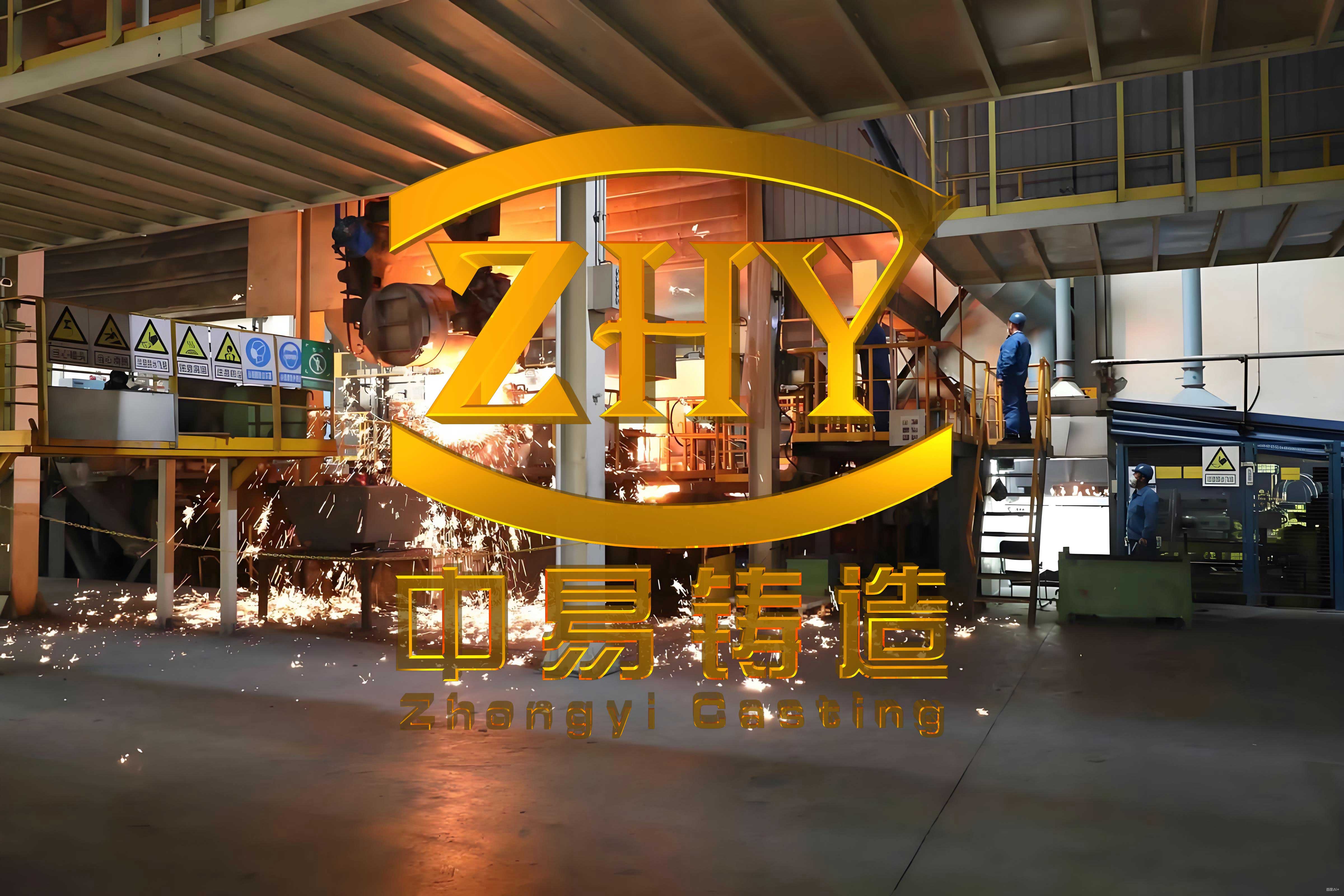
The image above symbolizes the advanced capabilities of modern foundries, including sand casting manufacturers, in producing high-quality steel components. This visual representation underscores the technological prowess that sand casting manufacturers bring to the industry, enabling them to meet stringent safety and performance requirements. In the context of the European foundry sector, sand casting manufacturers are increasingly adopting such state-of-the-art facilities to stay competitive. This aligns with the collaborative efforts seen in the industry, where partnerships between foundries and technology suppliers drive innovation. For sand casting manufacturers, investing in such infrastructure can help bridge the gap between current positive assessments and future pessimistic expectations, as highlighted by the FISI trends.
Furthermore, the role of sand casting manufacturers in sustainability cannot be overstated. As Europe pushes towards greener manufacturing, sand casting manufacturers are exploring ways to reduce environmental impact through recycled sand and energy-efficient processes. The carbon footprint of sand casting manufacturers can be modeled using:
$$ CF = \sum_{i=1}^{n} E_i \cdot EF_i $$
where \( CF \) is the total carbon footprint, \( E_i \) is the energy consumption from source \( i \), and \( EF_i \) is the emission factor for that source. Sand casting manufacturers that adopt low-emission technologies can not only comply with regulations but also attract eco-conscious clients, thereby improving their business prospects. This proactive approach can positively influence the FISI and BCI, as sentiment indices often reflect confidence in long-term viability. By prioritizing sustainability, sand casting manufacturers can turn potential challenges into opportunities for growth.
In terms of market dynamics, sand casting manufacturers are influenced by global supply chain shifts and raw material availability. The recent fluctuations in metal prices, such as iron and aluminum, directly affect the cost structures of sand casting manufacturers. To analyze this, we can use a table summarizing key input costs for sand casting manufacturers in 2023.
| Raw Material | Average Price per Tonne (EUR) | Impact on Production Cost (%) | Trend for Sand Casting Manufacturers |
|---|---|---|---|
| Iron | 600 | 40% | Stable to Increasing |
| Aluminum | 2,200 | 30% | Volatile |
| Sand (Silica) | 50 | 10% | Stable |
| Binder Materials | 150 | 20% | Increasing |
Table 3 shows that sand casting manufacturers face significant cost pressures from materials like iron and aluminum, which constitute up to 70% of production expenses. This aligns with the BCI’s observation of reduced sales price expectations, as sand casting manufacturers may struggle to pass on costs to customers. To cope, sand casting manufacturers are investing in process optimization, such as using alternative materials or improving yield rates. The yield in sand casting, defined as the ratio of usable castings to total material input, can be expressed as:
$$ Y = \frac{W_u}{W_t} \times 100\% $$
where \( Y \) is the yield percentage, \( W_u \) is the weight of usable castings, and \( W_t \) is the total weight of metal poured. By maximizing \( Y \), sand casting manufacturers can offset cost increases and maintain competitiveness. This technical focus is essential for navigating the sentiment shifts captured by industry indices.
The European Foundry Association (CAEF) plays a key role in supporting sand casting manufacturers through advocacy and data dissemination. As the umbrella organization for national foundry associations, CAEF provides a platform for sand casting manufacturers to share best practices and address common challenges. The monthly FISI report, based on surveys from foundries including sand casting manufacturers, offers valuable insights for strategic planning. For sand casting manufacturers, participating in such initiatives enhances visibility and fosters collaboration, which can mitigate the pessimistic outlook highlighted in recent indices. Moreover, CAEF’s efforts in promoting the economic and technological interests of sand casting manufacturers contribute to the overall resilience of the European foundry industry.
Looking at future projections, sand casting manufacturers must balance short-term operational efficiency with long-term innovation. The integration of Industry 4.0 technologies, such as IoT sensors and AI-driven quality control, is becoming increasingly important for sand casting manufacturers. These technologies enable real-time monitoring of casting parameters, reducing defects and improving throughput. A predictive maintenance model for sand casting manufacturers can be described using:
$$ P_f(t) = 1 – e^{-\lambda t} $$
where \( P_f(t) \) is the probability of failure at time \( t \), and \( \lambda \) is the failure rate. By implementing such models, sand casting manufacturers can minimize downtime and enhance reliability, directly impacting the Business Climate Indicator’s production expectations. This proactive approach aligns with the need for sand casting manufacturers to adapt to evolving market conditions, as reflected in the FISI’s mixed signals.
In conclusion, sand casting manufacturers are integral to the European foundry industry, driving economic value and technological advancement. The recent declines in the European Foundry Sentiment Index and Business Climate Indicator highlight both challenges and opportunities for sand casting manufacturers. While current business conditions remain positive due to backlog orders, pessimistic future expectations call for strategic adjustments. Through data analysis, mathematical modeling, and technological adoption, sand casting manufacturers can navigate these fluctuations and sustain growth. Tables and formulas presented in this article underscore the complexity and resilience of sand casting manufacturers. As the industry evolves, sand casting manufacturers will continue to play a crucial role in supporting diverse sectors, from automotive to electrical engineering, ensuring that no industrial department operates without castings. By focusing on efficiency, sustainability, and innovation, sand casting manufacturers can turn sentiment indices into tools for proactive management, securing their place in the global manufacturing landscape.
To further elaborate, let’s consider a comprehensive table summarizing the key performance indicators (KPIs) for sand casting manufacturers in relation to the FISI and BCI. This table integrates multiple dimensions, offering a holistic view for sand casting manufacturers to benchmark their performance.
| KPI Category | Metric | Target for Sand Casting Manufacturers | Current Average | Impact on FISI/BCI |
|---|---|---|---|---|
| Operational Efficiency | Defect Rate (D) | < 2% | 2.5% | Negative if high |
| Cost Management | Yield Percentage (Y) | > 85% | 80% | Positive if improved |
| Market Sentiment | Order Book Growth | 5% quarterly | 3% | Directly linked to BCI |
| Sustainability | Carbon Footprint (CF) | Reduce by 10% annually | 7% reduction | Indirect positive effect |
| Innovation | R&D Investment (% of turnover) | 4% | 3% | Enhances long-term expectations |
Table 4 provides a roadmap for sand casting manufacturers to align their strategies with industry indices. By targeting improvements in these KPIs, sand casting manufacturers can influence the FISI and BCI positively, turning pessimistic forecasts into actionable plans. For instance, reducing the defect rate through better process control can boost current business assessments, while increasing R&D investment can lift future expectations. Sand casting manufacturers that excel in these areas are likely to outperform peers, even in a volatile climate.
Finally, the mathematical interplay between these factors can be encapsulated in a comprehensive model for sand casting manufacturers’ performance:
$$ P = \alpha \cdot S_c + \beta \cdot E_f + \gamma \cdot I_n $$
where \( P \) represents overall performance, \( S_c \) is the current business score (from FISI), \( E_f \) is future expectation score, \( I_n \) is innovation index, and \( \alpha, \beta, \gamma \) are weighting coefficients specific to sand casting manufacturers. This formula highlights how sand casting manufacturers can balance present and future metrics to achieve sustainable success. By continuously refining such models, sand casting manufacturers can stay ahead of trends and contribute to a robust European foundry industry.
In summary, the European foundry sector, with sand casting manufacturers at its core, is navigating a complex landscape marked by sentiment shifts and economic indicators. Through detailed analysis, technological integration, and strategic foresight, sand casting manufacturers can overcome challenges and capitalize on opportunities. The insights from tables and formulas in this article underscore the multifaceted role of sand casting manufacturers, ensuring their continued relevance and growth in the global market. As we move forward, sand casting manufacturers will remain pivotal in shaping the future of manufacturing, driven by innovation and resilience.